

Polymer creep is a phenomenon that can significantly impact the long-term performance of plastic components. Understanding and predicting this behavior is essential for engineers designing products that must withstand sustained loads over extended periods.
This article explores the complexities of polymer creep, providing insights into its causes, influencing factors, and methods for prediction and mitigation. By gaining a comprehensive understanding of polymer creep behavior, engineers can make informed decisions to ensure the reliability and longevity of their designs.
Let’s examine the definition of creep in polymers, the factors that influence it, and the experimental techniques used to measure it. We will also discuss strategies for minimizing creep and highlight applications where creep is a critical design consideration, focusing on the importance of understanding viscoelasticity.
Defining Creep in Polymers: A Time-Dependent Phenomenon
Polymer creep is the slow, time-dependent deformation of a material under sustained stress. Unlike elastic deformation, which is instantaneous and fully recoverable upon removal of the load, creep is a gradual process that continues over time, even under constant stress.
This phenomenon is particularly pronounced in polymers due to their viscoelastic nature, exhibiting both viscous and elastic characteristics. Viscoelasticity means that polymers respond to stress with a combination of elastic deformation, which is recoverable, and viscous flow, which is permanent.
At a molecular level, creep in polymers involves the movement and rearrangement of polymer chains in response to the applied stress. This movement is facilitated by the thermal energy within the material, which allows the chains to overcome intermolecular forces and slide past each other.
The rate of creep is influenced by several factors, including the magnitude of the applied stress, the temperature, and the material’s inherent properties. High stress and temperature accelerate the creep process, while the polymer’s molecular structure and composition also play a significant role.
Creep can ultimately lead to dimensional changes, loss of functionality, and even structural failure of polymer components. Therefore, it is crucial to consider creep behavior during the design and selection of materials for load-bearing applications. It is important to understand the long-term implications of creep.
The time-dependent nature of creep distinguishes it from other forms of deformation, such as elastic deformation and plastic deformation. Elastic deformation is instantaneous and fully recoverable, while plastic deformation is permanent but occurs relatively quickly. Creep, in contrast, is a slow and continuous process that can take months or even years to reach a significant level.
The viscoelastic behavior of polymers is a key factor contributing to creep. This behavior is a consequence of the long-chain molecular structure of polymers, which allows them to exhibit both solid-like (elastic) and liquid-like (viscous) properties. The elastic component of viscoelasticity allows the polymer to store energy and deform elastically under stress, while the viscous component allows the polymer to dissipate energy and flow slowly over time.
The balance between elastic and viscous behavior determines the creep resistance of a polymer. Polymers with a higher elastic component tend to exhibit lower creep rates, while polymers with a higher viscous component tend to exhibit higher creep rates. Understanding the interplay between these two components is crucial for predicting and controlling creep in polymers.
Factors Influencing Polymer Creep
Several factors can significantly influence the creep behavior of polymers. These factors can be broadly categorized into environmental conditions, material properties, and applied stress levels, all affecting viscoelasticity.
Temperature is a critical environmental factor, as higher temperatures increase the mobility of polymer chains, accelerating creep. Material properties, such as molecular weight, crystallinity, and the presence of additives, also play a crucial role.
Higher molecular weight polymers tend to exhibit lower creep rates due to increased chain entanglement. Crystalline polymers generally have better creep resistance than amorphous polymers because the crystalline regions restrict chain movement.
The addition of reinforcing fillers, such as glass fibers or carbon fibers, can significantly reduce creep by providing a rigid framework that supports the polymer matrix. The level of applied stress is another critical factor, with higher stress levels leading to faster creep rates.
Humidity can also play a role, particularly in hydrophilic polymers, as absorbed moisture can plasticize the material and increase chain mobility. The chemical structure of the polymer backbone also influences creep resistance, with polymers containing rigid aromatic rings generally exhibiting lower creep rates than those with flexible aliphatic chains.
The duration of the applied stress is another important factor. Creep is a time-dependent phenomenon, and the longer the stress is applied, the greater the creep deformation will be. This highlights the importance of considering long-term loading conditions when designing with polymers.
The type of loading can also affect creep behavior. Polymers may exhibit different creep rates under tensile, compressive, or shear stress. Therefore, it is important to select the appropriate creep test method to simulate the actual loading conditions in the application.
The presence of defects, such as voids or cracks, can also accelerate creep by providing stress concentration points. These defects can initiate creep deformation and lead to premature failure. Proper manufacturing and processing techniques are crucial for minimizing defects and improving creep resistance.
Modeling and Predicting Creep Behavior
Accurately modeling and predicting creep behavior is essential for designing polymer components that can withstand long-term loading conditions. Several mathematical models have been developed to describe the time-dependent deformation of polymers under sustained stress, helping understand polymer creep behavior.
These models range from simple empirical equations to more complex viscoelastic models that account for the material’s elastic and viscous properties. These models are used to predict time-dependent behavior.
| Model Type | Description | Advantages | Limitations |
|---|---|---|---|
| Power Law Model | Empirical model relating creep strain to time and stress. | Simple to use, requires few parameters. | Limited accuracy, doesn’t capture all creep stages. |
| Burger’s Model | Combines a Maxwell model and a Kelvin-Voigt model. | Captures primary and secondary creep stages. | More complex than power law, requires more parameters. |
| Time-Temperature Superposition (TTS) | Uses temperature dependence to predict long-term creep from short-term tests. | Allows for accelerated creep testing. | Assumes thermorheological simplicity, not valid for all polymers. |
| Finite Element Analysis (FEA) | Numerical method to simulate creep behavior in complex geometries. | Handles complex shapes and loading conditions. | Requires accurate material properties and constitutive models. |
The choice of creep model depends on the accuracy required and the complexity of the loading conditions. Empirical models, such as the power law model, are simple to use but may not accurately capture the creep behavior over a wide range of conditions. Viscoelastic models, such as the Burger’s model, are more complex but can provide a more accurate representation of creep behavior.
Time-temperature superposition (TTS) is a technique used to accelerate creep testing by performing short-term tests at elevated temperatures. The results of these tests can then be extrapolated to predict long-term creep behavior at lower temperatures. However, TTS assumes that the creep mechanism is the same at all temperatures, which may not always be the case.
Finite element analysis (FEA) is a powerful numerical method that can be used to simulate creep behavior in complex geometries and under complex loading conditions. FEA requires accurate material properties and constitutive models, but it can provide valuable insights into the stress and strain distribution within a component and predict its long-term creep performance.
Advanced models incorporate damage mechanics to account for the initiation and propagation of cracks during creep. These models are essential for predicting creep rupture and the lifetime of polymer components. They often require extensive experimental data for calibration and validation.
Experimental Techniques for Measuring Creep
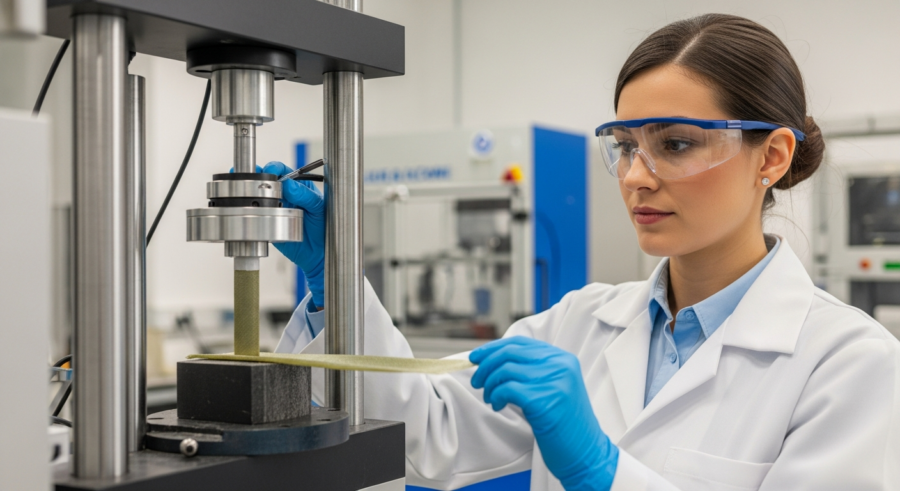
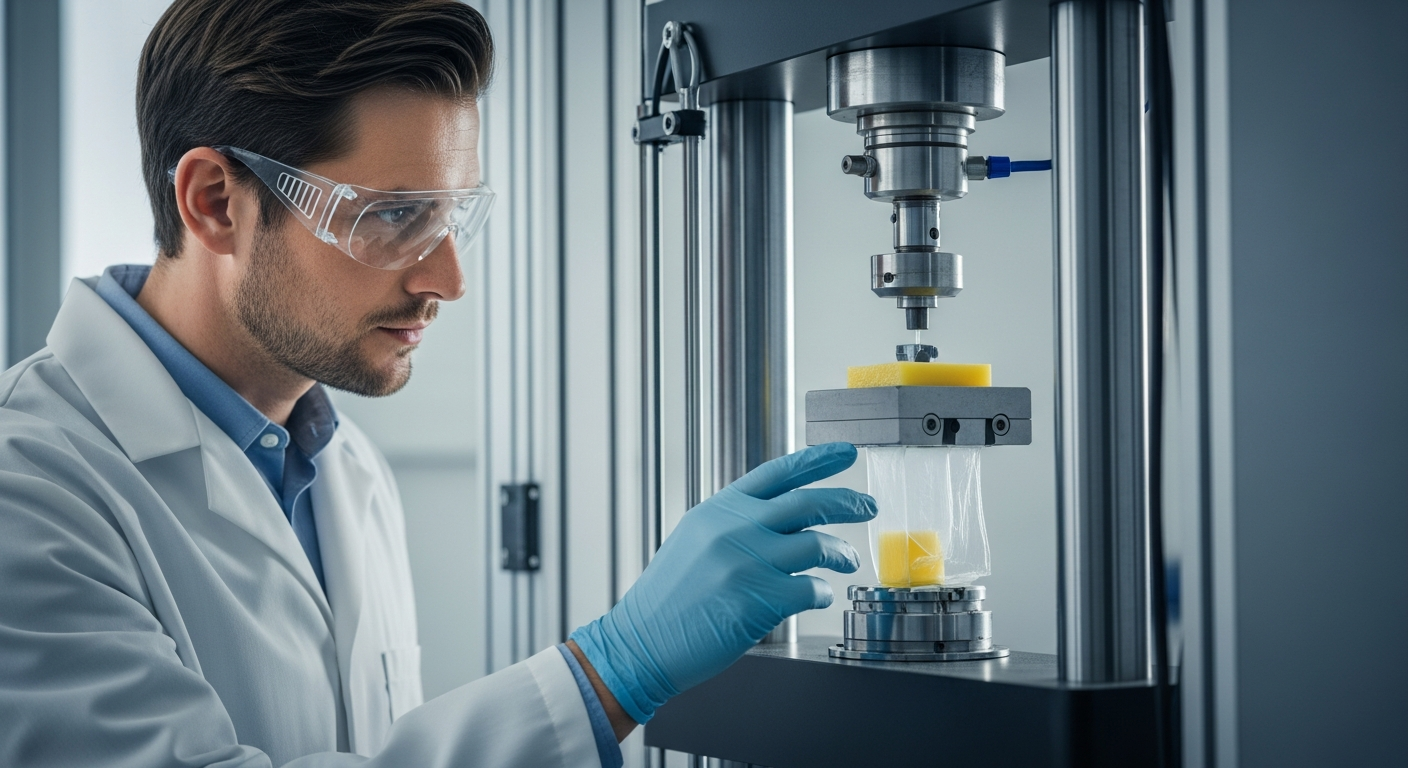
Experimental techniques play a crucial role in characterizing the creep behavior of polymers and validating predictive models. Creep testing involves subjecting a polymer sample to a constant tensile or compressive load and monitoring its deformation over time.
The resulting data is typically plotted as a creep curve, which shows the strain as a function of time. This curve provides valuable information about the material’s creep resistance and its long-term deformation characteristics.
Several variations of creep testing exist, including tensile creep, compressive creep, and flexural creep, each suited for different applications and loading conditions. Tensile creep is commonly used to evaluate the creep resistance of polymers under tension, while compressive creep is used for materials subjected to compressive loads.
Flexural creep is used to assess the creep behavior of beams or plates under bending loads. Dynamic Mechanical Analysis (DMA) is another technique used to study the viscoelastic properties of polymers, including creep.
In addition to standard creep tests, stress relaxation tests can also provide valuable information about the viscoelastic behavior of polymers. Stress relaxation tests involve subjecting a polymer sample to a constant strain and monitoring the decrease in stress over time. The stress relaxation data can be used to determine the material’s relaxation modulus, which is a measure of its ability to dissipate stress.
Creep rupture tests are conducted to determine the time it takes for a polymer sample to fail under a constant load. These tests are typically performed at elevated temperatures to accelerate the failure process. Creep rupture data can be used to develop lifetime prediction models for polymer components.
Advanced experimental techniques, such as atomic force microscopy (AFM) and nanoindentation, can be used to study creep behavior at the micro- and nanoscale. These techniques provide valuable insights into the mechanisms of creep deformation at the molecular level. They allow researchers to observe the movement and rearrangement of polymer chains under stress.
Digital Image Correlation (DIC) is a non-contact optical technique used to measure surface deformation during creep testing. DIC provides full-field strain measurements, which can be used to identify areas of high stress concentration and to validate FEA models. It is a powerful tool for understanding the complex deformation behavior of polymers under creep conditions.
Strategies for Minimizing Creep in Polymer Applications
Minimizing creep is essential for ensuring the long-term performance and reliability of polymer components in various applications. Several strategies can be employed to reduce creep, including material selection, design optimization, and the use of reinforcing additives.
Selecting polymers with high molecular weight and crystallinity can improve creep resistance, as these materials exhibit increased chain entanglement and restricted chain movement. Design optimization involves minimizing stress concentrations and ensuring uniform load distribution to reduce the driving force for creep.
- Use high molecular weight polymers
- Incorporate reinforcing fillers (glass, carbon)
- Optimize part geometry to minimize stress concentrations
- Reduce operating temperature if possible
- Apply surface treatments to enhance stability
Annealing can also improve creep resistance by increasing the crystallinity and reducing internal stresses in the polymer. Annealing involves heating the polymer to a temperature below its melting point and then slowly cooling it down. This process allows the polymer chains to rearrange themselves into a more ordered structure, which improves its mechanical properties.
Surface treatments, such as plasma treatment or chemical etching, can be used to improve the adhesion between the polymer and reinforcing fillers. This can enhance the effectiveness of the fillers in reducing creep. Stronger adhesion leads to better load transfer from the polymer matrix to the filler material.
Proper processing techniques, such as injection molding or extrusion, are crucial for minimizing defects and ensuring uniform material properties. Defects can act as stress concentration points and accelerate creep. Controlled cooling rates can also reduce residual stresses.
Consider using composite materials that combine polymers with metals or ceramics. These hybrid materials can offer improved creep resistance compared to polymers alone. The metal or ceramic component provides a rigid framework that supports the polymer matrix.
Applications Where Creep is a Critical Design Consideration
Creep is a critical design consideration in a wide range of applications where polymer components are subjected to sustained loads over extended periods. In the automotive industry, polymer components such as bumpers, dashboards, and structural supports must withstand constant stress and varying temperatures without significant deformation.
In the aerospace industry, polymer composites used in aircraft structures must maintain their dimensional stability under high stress and temperature conditions to ensure flight safety. In the construction industry, polymer pipes and fittings used in plumbing and drainage systems must resist creep to prevent leaks and structural failures.
Medical implants, such as artificial joints and spinal implants, also require excellent creep resistance to ensure long-term functionality and patient safety. These implants are subjected to constant mechanical stress within the body, and any significant creep can lead to implant failure or complications.
Consumer products, such as plastic furniture and appliances, must also be designed to minimize creep to maintain their appearance and functionality over their intended lifespan. Understanding polymer creep behavior is therefore essential for engineers designing products across diverse industries.
In the packaging industry, plastic containers used for food and beverages must resist creep to maintain their shape and prevent leakage during storage and transportation. Creep can lead to deformation of the container, compromising its integrity and potentially affecting the quality of the contents.
In the electronics industry, polymer insulators used in electrical connectors and circuit boards must maintain their dimensional stability under high voltage and temperature conditions to prevent electrical shorts and failures. Creep can cause the insulator to deform, reducing its insulating properties and increasing the risk of electrical breakdown.
Geomembranes used in landfill liners and containment systems must resist creep to prevent the escape of hazardous materials into the environment. Creep can lead to thinning and cracking of the geomembrane, compromising its barrier function and potentially causing environmental pollution.
Offshore oil and gas pipelines utilize polymeric materials for insulation and protection against corrosion. These materials must withstand high hydrostatic pressures and temperatures for extended periods. Creep can lead to a reduction in the insulation thickness, increasing the risk of heat loss and corrosion.
The Role of Additives in Modifying Creep Resistance
Additives play a significant role in modifying the creep resistance of polymers by altering their molecular structure and properties. Reinforcing fillers, such as glass fibers, carbon fibers, and mineral fillers, are commonly added to polymers to enhance their stiffness and reduce creep.
These fillers provide a rigid framework that supports the polymer matrix and restricts chain movement, thereby reducing creep deformation. Plasticizers, on the other hand, can have a detrimental effect on creep resistance by increasing the mobility of polymer chains and lowering the glass transition temperature.
However, some plasticizers can also improve the impact resistance and flexibility of polymers, which can be beneficial in certain applications. Anti-aging additives, such as antioxidants and UV stabilizers, can also indirectly improve creep resistance by preventing polymer degradation and maintaining the material’s mechanical properties over time.
The choice of additives and their concentration must be carefully considered to achieve the desired balance of properties and optimize the creep resistance of the polymer compound. Certain nanoparticles can improve creep resistance by providing a large surface area for polymer chain interaction, thereby increasing stiffness.
Nucleating agents can increase the crystallinity of polymers, leading to improved creep resistance. By promoting the formation of more crystalline regions, these agents restrict chain movement and enhance the material’s stiffness. They are particularly effective in semi-crystalline polymers.
Chain extenders can increase the molecular weight of polymers, resulting in enhanced chain entanglement and reduced creep. These additives react with the end groups of polymer chains, linking them together and increasing the overall chain length. This is effective in polymers that have undergone degradation.
Crosslinking agents can create chemical bonds between polymer chains, forming a network structure that restricts chain movement and improves creep resistance. Crosslinking is commonly used in thermosetting polymers, but it can also be applied to some thermoplastic polymers. The degree of crosslinking affects the creep resistance.
Impact modifiers can sometimes improve creep resistance indirectly by preventing crack initiation and propagation. By increasing the toughness of the polymer, these modifiers reduce the likelihood of creep failure. This is particularly important in applications where the polymer is subjected to impact loading.
Advanced Polymer Materials with Enhanced Creep Performance
The development of advanced polymer materials with enhanced creep performance has expanded the range of applications where polymers can be used under sustained loading conditions. High-performance polymers, such as polyimides, polyetheretherketone (PEEK), and liquid crystal polymers (LCPs), exhibit excellent creep resistance due to their high glass transition temperatures and strong intermolecular forces.
These materials are often used in demanding applications such as aerospace components, high-temperature seals, and electrical connectors. Polymer nanocomposites, which consist of a polymer matrix reinforced with nanoscale fillers, also offer improved creep resistance compared to conventional filled polymers.
The nanoscale fillers provide a large surface area for polymer chain interaction, leading to increased stiffness and reduced creep. Shape memory polymers (SMPs) are another class of advanced materials that can exhibit unique creep behavior.
These materials can recover their original shape after being deformed under sustained stress, which can be useful in applications where creep deformation needs to be reversed. Fiber-reinforced polymer (FRP) composites have high strength-to-weight ratios and can be engineered for specific creep resistance needs.
Self-healing polymers are emerging as a promising class of materials that can repair damage caused by creep, extending their service life. These polymers contain embedded healing agents that are released upon crack formation, filling the cracks and restoring the material’s mechanical properties. This greatly improves long-term durability.
Bio-based polymers, such as polylactic acid (PLA) and polyhydroxyalkanoates (PHAs), are being developed with improved creep resistance to replace traditional petroleum-based polymers in certain applications. While their creep resistance is generally lower than that of high-performance polymers, advancements in processing and additives are improving their performance. They are a sustainable alternative.
Thermoplastic polyurethanes (TPUs) can be tailored for specific creep resistance requirements by varying their chemical composition and morphology. TPUs offer a good balance of flexibility, toughness, and creep resistance, making them suitable for a wide range of applications. They are often used in demanding environments.
Carbon nanotube (CNT) reinforced polymers offer exceptional creep resistance due to the high stiffness and strength of CNTs. The uniform dispersion of CNTs within the polymer matrix is crucial for achieving optimal creep performance. This is a promising area of research.
Creep Failure Mechanisms in Polymers
Understanding creep failure mechanisms in polymers is crucial for predicting the long-term durability and reliability of polymer components. Creep failure can occur through various mechanisms, including chain scission, crazing, and void growth.
Chain scission involves the breaking of polymer chains under sustained stress, leading to a reduction in molecular weight and a decrease in mechanical properties. Crazing is the formation of microcracks in the polymer matrix, which can propagate and lead to macroscopic failure.
Void growth involves the formation and growth of voids within the polymer matrix, which can weaken the material and accelerate creep deformation. The dominant creep failure mechanism depends on the polymer’s molecular structure, the applied stress level, and the temperature.
In amorphous polymers, creep failure is often associated with crazing and void growth, while in crystalline polymers, chain scission and chain slippage can play a more significant role. Environmental factors, such as exposure to chemicals or UV radiation, can also accelerate creep failure by promoting polymer degradation.
Intergranular cracking can occur in multiphase polymers, where cracks propagate along the interfaces between different phases. This is often observed in polymer blends and composites. The strength of the interface is a critical factor in determining the creep resistance.
Shear banding is a localized deformation mechanism that can occur in polymers under shear stress. Shear bands are narrow regions of intense plastic deformation that can lead to crack initiation and failure. This is more common at higher stress levels.
Environmental stress cracking (ESC) is a form of creep failure that occurs when polymers are exposed to certain chemicals while under stress. The chemicals can accelerate crack growth and lead to premature failure. The chemical resistance of the polymer is crucial in these applications.
Thermo-oxidative degradation can lead to chain scission and crosslinking, altering the polymer’s mechanical properties and accelerating creep failure. Antioxidants are often added to polymers to prevent thermo-oxidative degradation. Temperature control is important to minimize this effect.
Creep Testing Standards and Regulations
Creep testing standards and regulations provide guidelines for conducting creep tests and evaluating the creep resistance of polymer materials. These standards ensure that creep tests are performed in a consistent and reproducible manner, allowing for meaningful comparisons between different materials and test results.
Several international standards organizations, such as ASTM International and the International Organization for Standardization (ISO), have developed creep testing standards for polymers. ASTM D2990 is a standard test method for tensile, compressive, and flexural creep and creep-rupture of plastics.
ISO 899 specifies methods for determining the creep behavior of plastics under tensile, compressive, and flexural loads. These standards define the test specimen geometry, the loading conditions, the temperature, and the duration of the test.
They also specify the procedures for measuring creep strain and calculating creep parameters, such as creep modulus and creep rate. Regulatory bodies, such as the Food and Drug Administration (FDA) and the European Medicines Agency (EMA), may also have specific requirements for creep testing of polymer materials used in medical devices and pharmaceutical packaging.
ASTM D638 provides standard test methods for tensile properties of plastics, which can be used to assess the initial mechanical properties of the material before creep testing. This helps to understand the material’s baseline performance. It is a common starting point for material characterization.
ISO 527 specifies methods for determining the tensile properties of plastics, including creep behavior. This standard provides detailed guidelines for specimen preparation, test setup, and data analysis. It is widely used in Europe and internationally.
MIL-STD-810 is a United States military standard that addresses environmental engineering considerations and laboratory tests. It includes methods for assessing the creep resistance of materials under various environmental conditions. This is relevant for defense and aerospace applications.
REACH (Registration, Evaluation, Authorisation and Restriction of Chemicals) is a European Union regulation that requires manufacturers to provide information on the properties and potential hazards of chemicals used in their products. This includes information on the creep resistance of polymer materials. It is important for regulatory compliance.
Conclusion
Polymer creep is a complex phenomenon that can significantly impact the long-term performance of polymer components. Understanding the factors that influence creep, the mechanisms of creep deformation, and the methods for predicting and mitigating creep is essential for engineers designing products that must withstand sustained loads over extended periods.
By carefully selecting materials, optimizing designs, and employing appropriate testing techniques, engineers can minimize creep and ensure the reliability and longevity of their polymer-based products. Continuous research and development in advanced polymer materials and creep modeling techniques will further enhance our ability to predict and manage creep in polymer applications.
The future of polymer creep research lies in developing more accurate and efficient predictive models that can account for the complex interactions between material properties, environmental conditions, and loading conditions. This will require a multidisciplinary approach involving materials science, mechanical engineering, and computational modeling. It is a challenging but rewarding field.
The development of new and improved polymer materials with enhanced creep resistance will also play a crucial role in expanding the range of applications where polymers can be used. This includes the development of novel additives, nanocomposites, and self-healing polymers. Innovation is key to overcoming the limitations of traditional polymers.
Ultimately, a comprehensive understanding of polymer creep is essential for ensuring the safe and reliable performance of polymer components in a wide range of applications. By investing in research and development in this area, we can unlock the full potential of polymers and create more sustainable and durable products. This will benefit society as a whole.