
Aramid fibers have revolutionized industries from aerospace to protective clothing, offering an unparalleled combination of strength, heat resistance, and durability. These synthetic organic polymers stand out for their exceptional performance in demanding environments. When people talk about high-performance materials, aramid fibers often come up quickly.
Understanding aramid fiber properties manufacturing processes is key to appreciating their widespread utility. We’re talking about materials that can stop bullets, protect firefighters, and reinforce spacecraft. It is pretty amazing how these fibers can achieve such diverse and critical functions.
This article will explore the fascinating world of aramid fibers, diving into their unique characteristics and how they are produced. We will examine the distinct types, such as Kevlar and Nomex, and their specific applications across various sectors. You’ll gain a solid understanding of why these materials are so highly valued in modern engineering.
What Are Aramid Fibers and How Are They Made
Aramid fibers are a class of heat-resistant and strong synthetic fibers, belonging to the polyamide family. The term “aramid” itself is a shortened form of “aromatic polyamide,” which describes their chemical structure. These fibers are distinct from common nylons due to the presence of aromatic rings within their polymer chains.
Their unique molecular arrangement gives aramid fibers their remarkable properties, including high strength-to-weight ratio and excellent thermal stability. This makes them incredibly valuable in situations where traditional materials simply won’t cut it. The specific arrangement of chemical bonds contributes directly to the aramid fiber properties manufacturing engineers rely on.
The general production process for aramid fibers involves synthesizing a polymer from specific aromatic diamines and aromatic diacids. This polymerization reaction forms long, linear polymer chains that are then dissolved in a strong solvent. The resulting viscous solution is critical for the next stage of fiber formation.
This solution is then extruded through tiny spinnerets, similar to how pasta is made, into a coagulation bath or a heated environment. This spinning process aligns the polymer chains, which is absolutely essential for developing the fiber’s incredible strength. Without proper alignment, the fibers would not exhibit their characteristic high performance.
The aligned chains form a highly ordered, crystalline structure that provides aramids with their stiffness and tensile strength. Subsequent drawing and heat treatments further enhance these mechanical properties. This careful control over the microstructure is a defining feature of aramid fiber manufacturing.
Early development of aramid fibers began in the 1960s, driven by the need for materials that could withstand extreme conditions. Researchers at DuPont were particularly instrumental in pioneering the commercial production of these advanced materials. Their work laid the groundwork for the widespread adoption we see today.
The inherent chemical stability of the aromatic rings also provides exceptional resistance to degradation from heat and many chemicals. This chemical resilience is another reason why aramid fibers perform so well in harsh environments. It is a critical aspect of their overall durability.
Different types of aramid fibers exist, each tailored through specific chemical compositions and manufacturing parameters to achieve particular performance profiles. For example, some are designed for maximum tensile strength, while others prioritize flame resistance. This customization allows engineers to select the perfect aramid for their needs.
Comparing Para-Aramid and Meta-Aramid Fiber Types
Aramid fibers are broadly categorized into two main types: para-aramids and meta-aramids, distinguished by the orientation of the aromatic rings in their polymer chains. This subtle difference in molecular structure leads to vastly different performance characteristics. Understanding this distinction is crucial for selecting the right fiber for a given application.
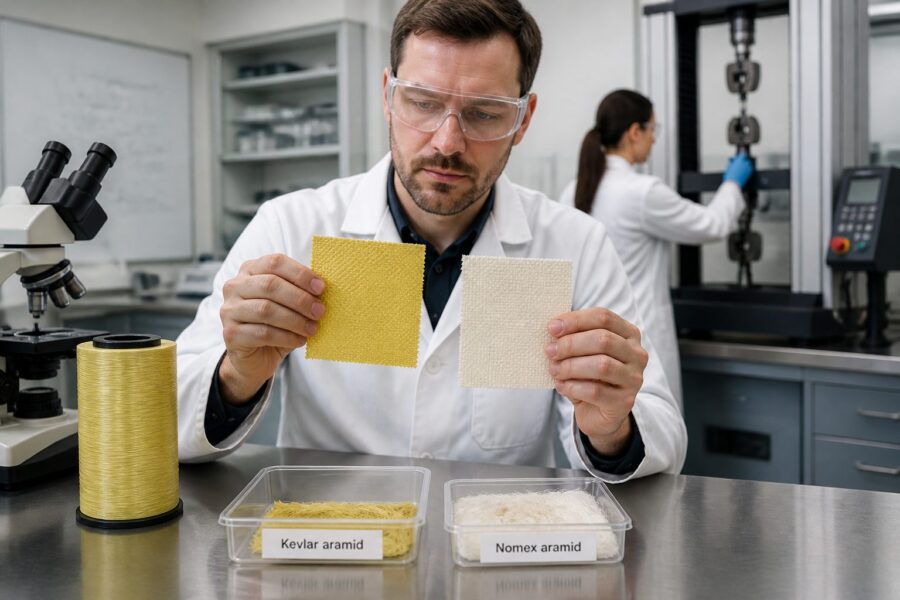
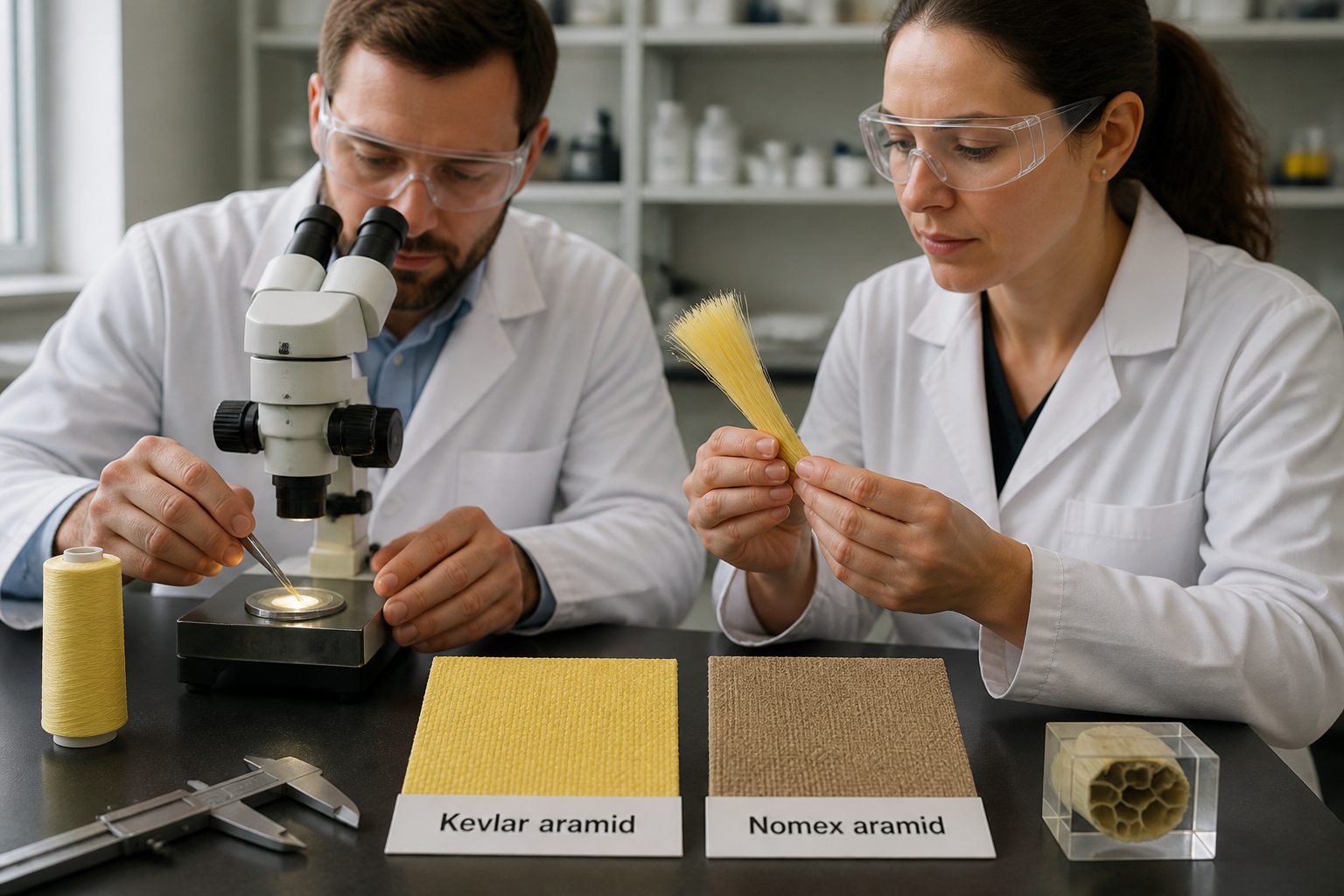
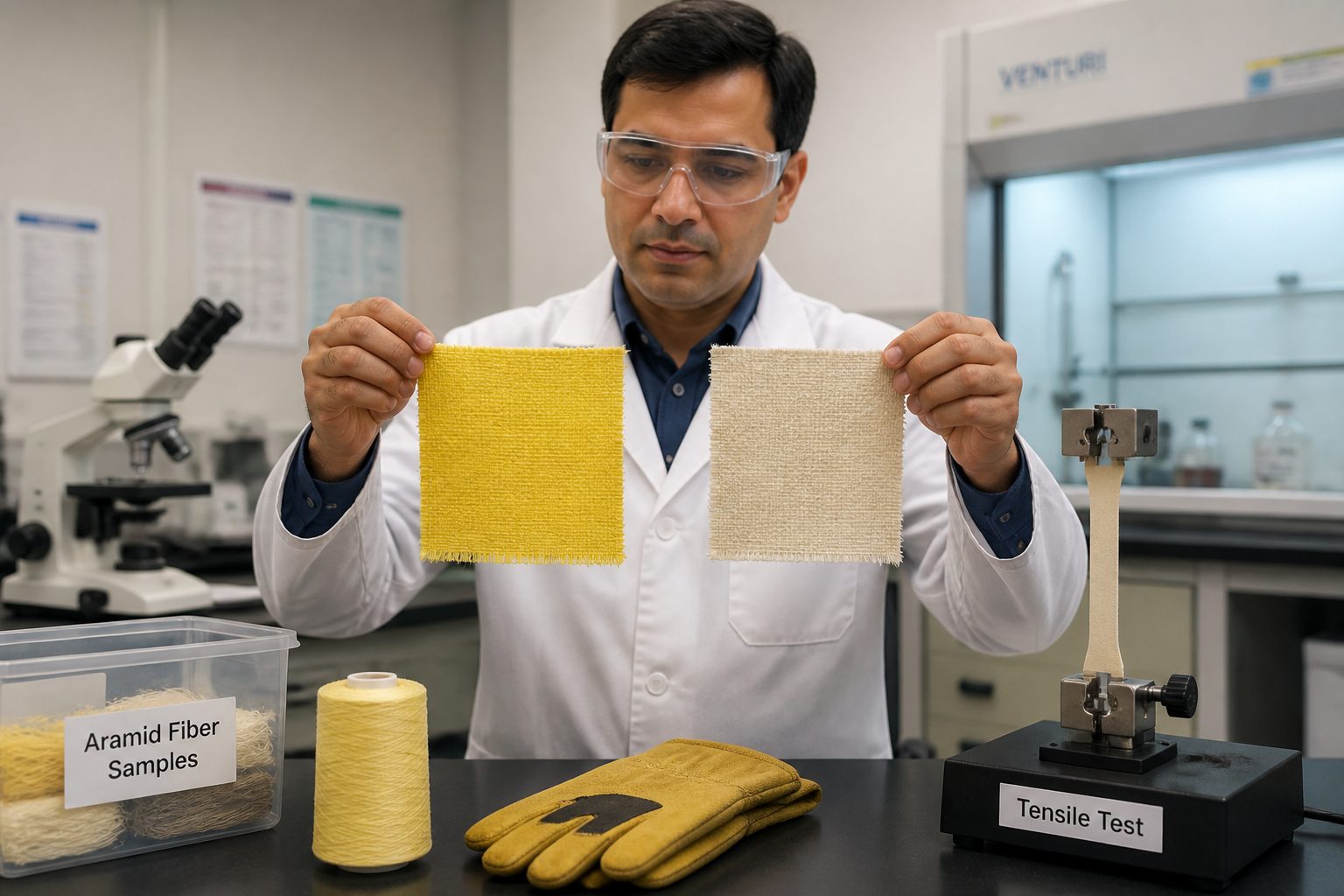
Para-aramid fibers, like Kevlar, feature aromatic rings linked at the para-position, resulting in highly rigid, rod-like polymer chains that align very efficiently. This exceptional alignment directly contributes to the remarkable para-aramid fiber strength. Meta-aramid fibers, such as Nomex, have their aromatic rings linked at the meta-position, creating a more kinked or zig-zag polymer chain structure.
| Feature | Para-Aramid (e.g., Kevlar) | Meta-Aramid (e.g., Nomex) |
|---|---|---|
| Aromatic Ring Linkage | Para-position (linear) | Meta-position (kinked) |
| Primary Property | High tensile strength and modulus | Excellent thermal and flame resistance |
| Typical Applications | Ballistic protection, composites, ropes | Protective clothing, electrical insulation |
| Fiber Appearance | Yellowish golden | White |
| Decomposition Temperature | ~450-500°C | ~370-400°C (charring) |
| Chemical Resistance | Good to acids/alkalis | Good to acids/alkalis |
Mechanical and Thermal Properties of Aramid Fibers
The mechanical and thermal properties of aramid fibers are truly what set them apart from many other materials. These characteristics make them indispensable in applications where extreme conditions are the norm. You simply cannot find this combination of attributes in many other synthetic options.
Para-aramid fibers, especially those like Kevlar, boast extraordinary tensile strength, often five to ten times stronger than steel on an equal weight basis. This incredible strength is due to the highly oriented, extended polymer chains and strong intermolecular hydrogen bonding. This makes them ideal for reinforcing structures and ballistic protection.
They also exhibit a high modulus, meaning they are very stiff and resist stretching under load. This stiffness is crucial for maintaining structural integrity in composites and other high-stress applications. The combination of strength and stiffness defines the superior aramid fiber properties manufacturing engineers seek.
Meta-aramid fibers, like Nomex, while having good tensile strength, are primarily known for their exceptional thermal stability and flame resistance. They do not melt or drip when exposed to high temperatures; instead, they char and thicken, forming a protective barrier. This characteristic is life-saving in many scenarios.
Nomex can withstand temperatures up to 370°C for extended periods, and even higher temperatures for shorter durations, without significant degradation. This inherent flame resistance is a molecular property, meaning it doesn’t wash out or wear away over time. It’s a built-in safety feature.
Both types of aramid fibers also possess good resistance to organic solvents, fuels, and lubricants. However, they can be degraded by strong acids, strong bases, and UV radiation, which are considerations for long-term outdoor use. Designers must account for these environmental factors.
The low density of aramid fibers is another significant advantage, contributing to their high strength-to-weight ratio. This makes them attractive for aerospace and automotive industries where weight reduction is critical for fuel efficiency and performance. Lightweight strength is a powerful combination.
Aramid fibers also exhibit good vibration damping characteristics, which can be beneficial in certain engineering applications. This ability to absorb energy helps to reduce fatigue and extend the lifespan of components. It is a less celebrated but still important property.
Impact resistance is particularly notable for para-aramids, allowing them to absorb significant energy before failure. This property is fundamental to their use in ballistic vests and protective equipment. The ability to dissipate impact forces is truly impressive.
Understanding these specific aramid fiber properties manufacturing decisions become clearer and more purposeful. Each fiber type brings a unique set of advantages to the table. These materials are not just strong; they are engineered for specific challenges.
Aramid Fiber Manufacturing: From Precursor to Finished Fiber
The manufacturing of aramid fibers is a complex, multi-stage process that demands precision and controlled conditions. It begins with the synthesis of specialized monomers, the molecular building blocks of the polymer. This initial chemical reaction sets the stage for the fiber’s ultimate characteristics.
For para-aramids like Kevlar, the monomers, typically p-phenylenediamine and terephthaloyl chloride, are reacted together in a solvent to form the poly(p-phenylene terephthalamide) polymer. This polymerization step creates long, rigid polymer chains in a highly acidic solution. The purity of these precursors is absolutely critical.
Meta-aramids, such as Nomex, use different monomers, usually m-phenylenediamine and isophthaloyl chloride, to form poly(m-phenylene isophthalamide). The resulting polymer chains are more flexible and less extended compared to their para-aramid counterparts. This difference in molecular geometry dictates their distinct properties.
Once the polymer is synthesized, it is dissolved in a strong, often concentrated sulfuric acid solvent to create a liquid crystalline spinning dope. This highly viscous solution is then pushed through a spinneret, which is essentially a plate with many fine holes. The pressure and precise hole size are carefully controlled.
The spinning process is where the magic truly happens for aramid fiber manufacturing. For para-aramids, a “dry-jet wet spinning” method is typically employed. Here, the polymer solution is extruded through an air gap before entering a coagulation bath, allowing for significant chain orientation.
This air gap allows the polymer chains to align parallel to the direction of flow, creating the highly ordered structure necessary for superior para-aramid fiber strength. The coagulation bath then removes the solvent, solidifying the continuous filaments. This step is crucial for fiber integrity.
Meta-aramids typically use a “wet spinning” process, where the polymer solution is directly extruded into a coagulation bath. While still achieving chain alignment, the inherent kinked structure of meta-aramid polymers prevents the same level of perfectly straight alignment seen in para-aramids. This difference results in their distinct mechanical properties.
After spinning, the nascent fibers undergo several washing steps to remove residual solvent and by-products. This cleaning ensures the final product is pure and free from contaminants that could compromise its performance. Cleanliness is paramount in high-performance material production.
The fibers are then subjected to a drawing process, where they are stretched under tension, often at elevated temperatures. This drawing further enhances the orientation of the polymer chains and refines the crystalline structure, maximizing the aramid fiber properties manufacturing aims to achieve. It is a final touch that significantly boosts strength.
Finally, the fibers may undergo additional heat treatment to stabilize their structure and improve thermal resistance. The finished aramid fibers are then wound onto bobbins, ready for various applications. This meticulous process ensures consistent quality and performance across batches.
Applications of Kevlar in Ballistic and Structural Uses
Kevlar, the most famous para-aramid fiber, has become synonymous with extreme strength and protection, finding its way into countless critical applications. Its unique properties make it ideal for situations demanding high performance and reliability. The impact of Kevlar fiber applications on safety and engineering is truly profound.
One of the most well-known Kevlar fiber applications is in ballistic protective gear, including bulletproof vests, helmets, and vehicle armor. Its extraordinary tensile strength and energy-absorbing capabilities allow it to effectively stop projectiles. This material literally saves lives every day.
- Personal ballistic protection (vests, helmets)
- Vehicle and aircraft armor reinforcement
- High-strength ropes and cables
- Composite materials for aerospace and marine
- Cut-resistant gloves and protective apparel
- Reinforcement in tires and brake pads
- Sporting goods (kayaks, racing sails)
Nomex in Flame-Resistant Protective Gear
While Kevlar excels in strength, Nomex is the undisputed champion when it comes to flame resistance and thermal protection. This meta-aramid fiber provides a crucial layer of safety in environments where heat and fire are constant threats. The importance of Nomex flame resistance cannot be overstated.
Firefighters, military personnel, and industrial workers frequently rely on Nomex for their protective clothing. The material’s inherent ability to resist ignition and self-extinguish when exposed to flames is life-saving. It does not melt, drip, or support combustion, offering precious seconds for escape or rescue.
The secret to Nomex flame resistance lies in its molecular structure, which chars and thickens when exposed to extreme heat, creating a stable, insulative barrier. This char layer protects the wearer from direct heat and significantly reduces burn injuries. It is a passive yet incredibly effective defense mechanism.
Beyond clothing, Nomex is also widely used in electrical insulation, particularly in transformers and motors, where high temperatures and electrical stresses are common. Its excellent dielectric properties, combined with thermal stability, ensure reliable performance. This application helps prevent electrical failures and fires.
In aerospace, Nomex honeycomb structures are employed as lightweight core materials in aircraft panels and components. These structures offer outstanding strength-to-weight ratios and provide inherent fire protection. This contributes to both structural integrity and passenger safety.
Racing drivers and pit crews wear Nomex suits to protect against flash fires that can occur during high-speed motorsports. The material provides a critical barrier against intense heat, allowing them to survive accidents that would otherwise be catastrophic. It’s a testament to the fiber’s protective capabilities.
Industrial applications include protective blankets, hot gas filtration systems, and conveyor belts that operate in high-temperature environments. Nomex’s ability to maintain its integrity under heat makes it indispensable for these heavy-duty uses. It prevents costly equipment damage and ensures operational continuity.
The material also finds use in military applications, from flight suits to combat vehicle interiors, where protection against thermal threats is paramount. Soldiers and pilots benefit from the advanced thermal barrier Nomex provides. It is a trusted component in defense technology.
Nomex is often blended with other fibers, like Kevlar or PBI (polybenzimidazole), to create fabrics with enhanced properties. These blends can offer improved tear resistance, comfort, or even better thermal performance. Customizing fabric blends allows for optimized protective solutions.
The longevity and consistent performance of Nomex flame resistance make it a cost-effective solution in the long run. Unlike some treated fabrics, its protective qualities are inherent and do not degrade with washing or wear. This ensures continuous, reliable safety for users.
Conclusion
Aramid fibers, encompassing formidable materials like Kevlar and Nomex, represent a pinnacle of polymer engineering and material science. Their remarkable aramid fiber properties manufacturing processes have unlocked capabilities previously unimaginable. These fibers genuinely push the boundaries of what synthetic materials can achieve.
From the incredible para-aramid fiber strength of Kevlar, which protects our bravest in ballistic vests and reinforces critical infrastructure, to the life-saving Nomex flame resistance that shields firefighters and industrial workers, these materials are indispensable. They embody the blend of advanced chemistry and precise engineering that defines high-performance applications. It’s a testament to human ingenuity.
The meticulous aramid fiber manufacturing process, from monomer synthesis to controlled spinning and drawing, is what imbues these fibers with their distinctive characteristics. Every step plays a vital role in aligning polymer chains and optimizing molecular structure. This detailed control ensures consistent, high-quality output.
Kevlar fiber applications continue to expand, finding new roles in lightweight composites for aerospace, high-performance sports equipment, and durable ropes and cables. Its unparalleled strength-to-weight ratio offers engineers incredible design flexibility. The material helps create stronger, lighter products across many industries.
Meanwhile, Nomex continues to be the gold standard for thermal and flame protection, crucial for personal safety and industrial equipment. Its inherent ability to resist burning and form a protective char layer makes it invaluable in hazardous environments. This material truly makes a difference in preventing injuries and saving lives.
The ongoing research and development in aramid fiber technology promise even more advanced materials with enhanced properties and broader applications. Scientists are always looking for ways to improve these fibers, making them even more versatile. We can expect exciting innovations in the years to come.
As industries demand increasingly robust, lightweight, and resilient materials, aramid fibers will undoubtedly remain at the forefront of innovation. Their proven track record and continuous evolution secure their place as critical components in modern engineering. These fibers are not just materials; they are solutions to complex problems.
The ability to tailor aramid fiber properties manufacturing processes to specific needs, whether for extreme strength or superior flame resistance, highlights their versatility. This adaptability allows them to address diverse challenges across many sectors. Engineers have a powerful tool at their disposal with these fibers.
Ultimately, aramid fibers are more than just advanced polymers; they are enablers of safety, performance, and efficiency in our increasingly complex world. They allow for designs and protective measures that would be impossible with traditional materials. It is hard to imagine many modern industries without them.
Their impact on everything from personal protective equipment to advanced structural components is undeniable and continues to grow. These fibers represent a significant leap forward in material science. We are fortunate to have such powerful tools at our disposal.