
Polymer foams represent a fascinating class of materials, combining the inherent versatility of polymers with unique cellular structures. They have transformed countless industries by offering an unparalleled combination of lightweight properties and robust performance. From the packaging that protects our goods to the insulation that keeps our homes warm, foams provide high strength-to-weight ratios, excellent thermal and acoustic insulation, and superior energy absorption capabilities, making them indispensable in modern engineering and design.
This article explores the diverse world of polymer foams, covering their classification, manufacturing techniques, and the critical properties that define their utility. We will also examine specific applications, including the widespread use of polyurethane foam engineering, structural foam composites, and foam core sandwich panels across various sectors.
Continuous innovation in polymer science and processing technologies allows for immense customization in terms of density, cell structure, and chemical composition, enabling an immense range of tailored solutions. This adaptability, coupled with modern advancements in sustainability and the integration of smart functionalities, ensures their enduring relevance and growth in various industrial landscapes.
Classification of Polymer Foams by Structure and Density
Polymer foams are primarily categorized by their cellular structure: open-cell or closed-cell. Open-cell foams feature interconnected pores, allowing gases or liquids to pass through the material easily, making them excellent for sound absorption and filtration applications. However, this porosity also means they are susceptible to water absorption. Closed-cell foams, conversely, have discrete, sealed cells that trap gas within, preventing fluid penetration and providing superior thermal insulation and buoyancy. This fundamental structural difference dictates a foam’s mechanical and physical properties, influencing its suitability for various uses.
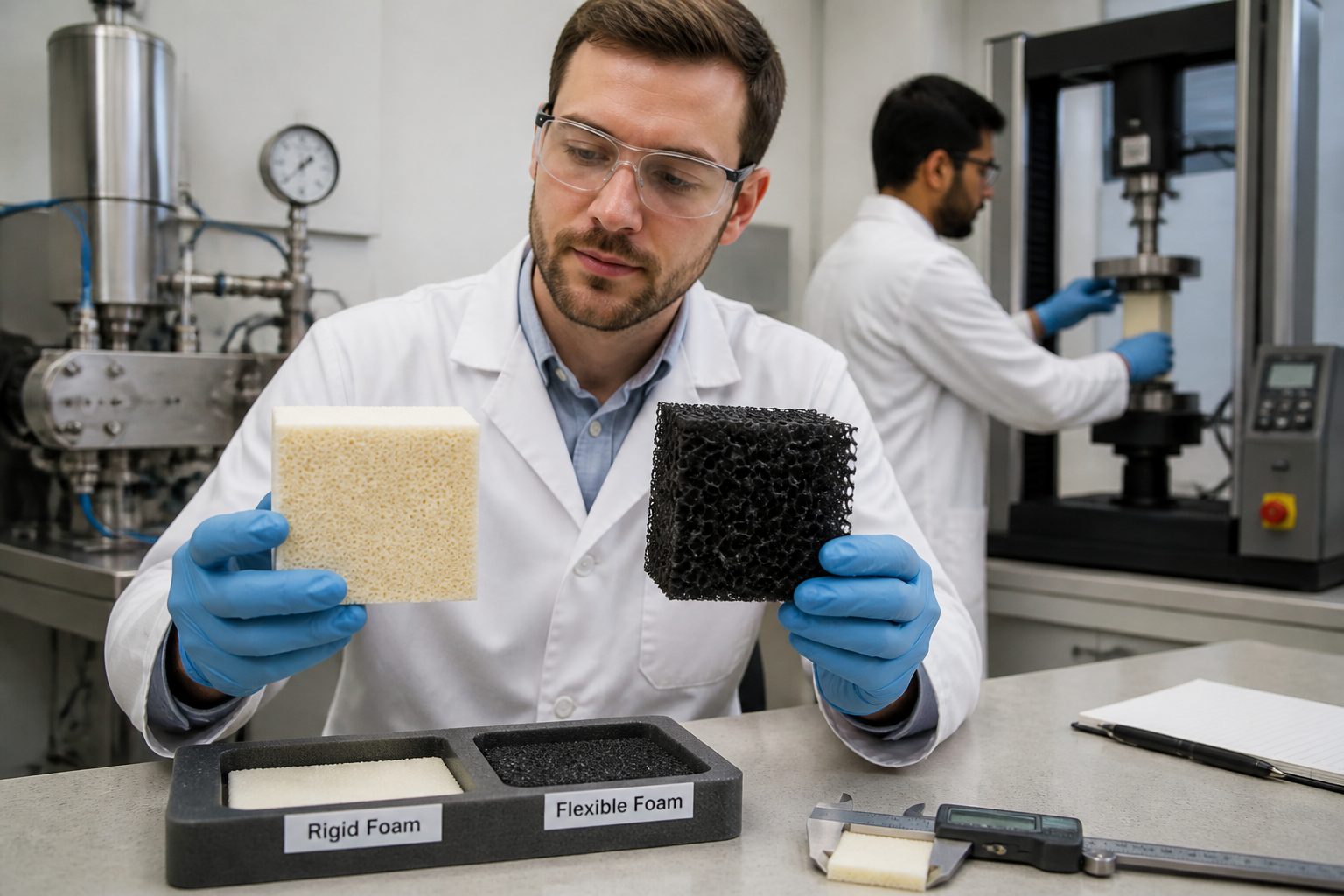
Another primary classification distinguishes foams by their flexibility: rigid or flexible. Rigid foams, like many polyurethane or polystyrene types, maintain their shape under stress and offer excellent structural support. They are often used in construction and as core materials in composites due to their high stiffness and compressive strength. Flexible foams, such as those found in seating cushions, can deform significantly under load and recover their original shape, providing comfort and impact protection in applications like upholstery and automotive interiors.
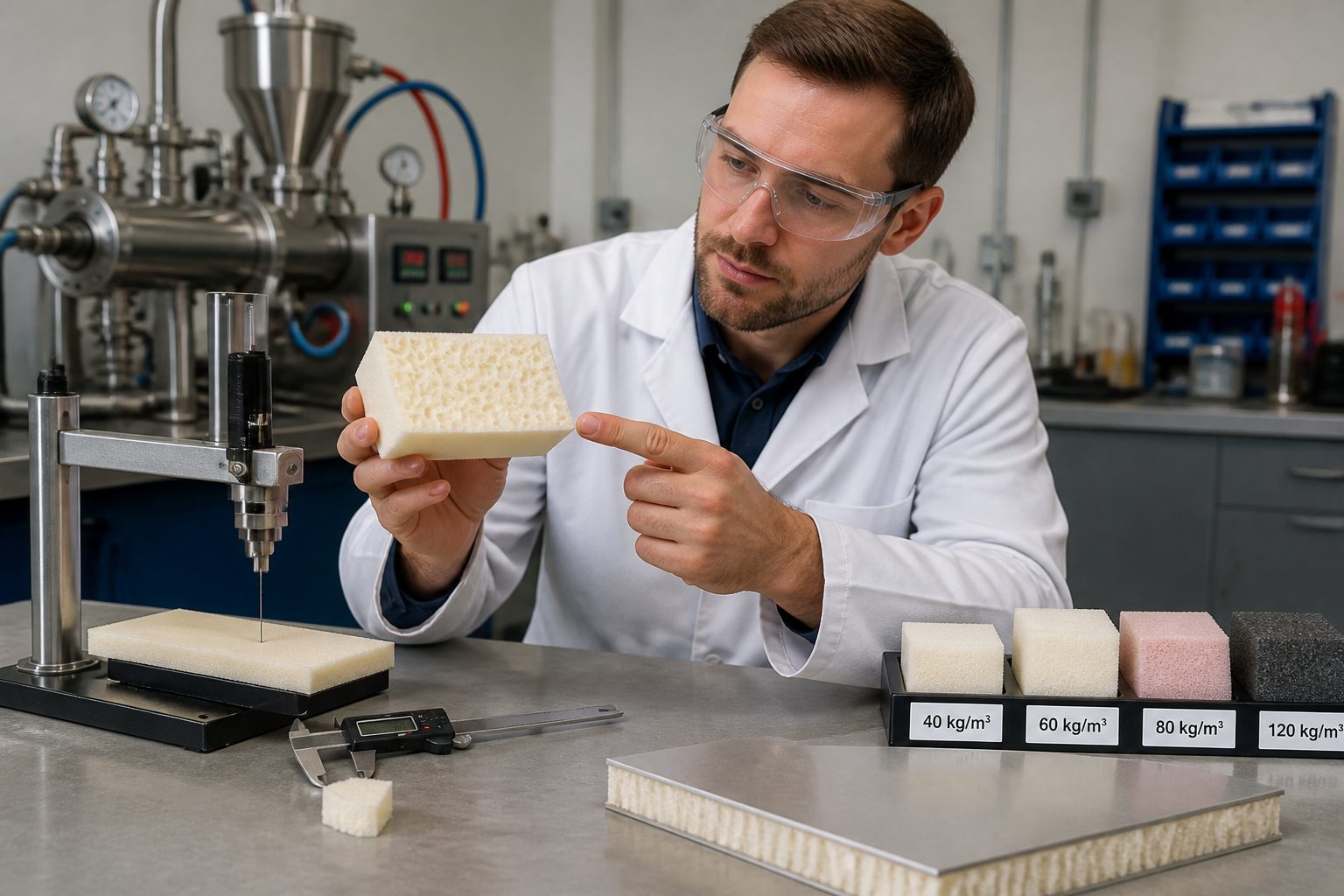
Density also serves as a crucial parameter, ranging from ultralight foams (below 50 kg/m³) primarily for insulation and cushioning, to medium-density foams (50-200 kg/m³) that strike a balance between mechanical performance and lightweight properties for construction and automotive, to high-density foams (exceeding 200 kg/m³) engineered for demanding structural applications where high compressive strength and rigidity are critical. The specific polymer used, alongside its chosen manufacturing process, dictates the achievable density and cell structure, determining the overall polymer foam manufacturing properties.
Beyond these primary classifications, foams can also be described by their cell morphology, such as uniform or non-uniform cell sizes, and isotropic or anisotropic structures, which further influence properties like permeability, strength, and thermal conductivity. The choice of polymer (e.g., polystyrene, polyurethane, polyethylene, or PVC) fundamentally impacts the inherent properties of the foam, bringing its own chemical resistance, temperature stability, and mechanical characteristics. Furthermore, the presence of specific additives, such as flame retardants, UV stabilizers, or antimicrobial agents, can significantly modify a foam’s performance, allowing it to meet stringent industry standards and perform reliably in challenging environments.
Key Manufacturing Methods for Polymer Foams
The production of polymer foams involves introducing a gas or volatile liquid into a polymer matrix, causing it to expand. This process can occur through several distinct methods, each tailored to specific polymers and desired foam characteristics. Chemical foaming agents, which decompose upon heating to release gas, are widely used, as are physical foaming agents, such as inert gases or supercritical fluids.
| Manufacturing Method | Primary Mechanism | Typical Foams Produced | Key Advantage |
|---|---|---|---|
| Extrusion Foaming | Physical blowing agent injection into polymer melt | Polystyrene (XPS), Polyethylene, Polypropylene | Continuous production, cost-effective for sheets/boards |
| Reaction Injection Molding (RIM) | Chemical reaction generates gas and polymerizes | Polyurethane (PU) foams, Integral skin foams | Complex shapes, good surface finish, rapid cycle times |
| Bead Foaming (EPS/EPE) | Pre-expanded beads fused in a mold | Expanded Polystyrene (EPS), Expanded Polypropylene (EPP) | Excellent energy absorption, intricate geometries |
| Batch Foaming | Polymer dissolved in blowing agent, then heated | Specialty foams, some flexible PU foams | Precise control over cell structure, custom formulations |
| Spray Foaming | Two-component liquid reacts and expands on site | Polyurethane insulation foams | In-situ application, seamless insulation |
Extrusion foaming involves injecting a blowing agent into a polymer melt within an extruder, followed by rapid cooling and expansion. This method is common for producing continuous sheets or profiles of foams like extruded polystyrene (XPS). Precise control of temperature, pressure, and blowing agent concentration is crucial for achieving the desired cell structure and density, making it highly efficient for large-volume production.
Reaction injection molding (RIM) is particularly important for polyurethane foam engineering, where liquid precursors are mixed and injected into a mold. The exothermic reaction simultaneously polymerizes the material and generates gas, forming complex, intricate shapes with varying wall thicknesses and often an integral, durable outer skin. Rapid curing times contribute to high production rates for automotive and industrial parts.
Bead foaming, used for expanded polystyrene (EPS) and expanded polypropylene (EPP), involves pre-expanding polymer beads with a blowing agent before fusing them together in a mold, typically with steam. This creates lightweight, rigid, and highly energy-absorbent structures, effective for custom-shaped packaging, insulation, and protective components.
Spray foaming, predominantly used for polyurethane, involves mixing two liquid components at the nozzle, which then react and expand upon contact with a surface. This allows for in-situ application, filling irregular cavities and creating seamless insulation layers directly on construction sites, minimizing thermal bridging and ensuring excellent air sealing.
Beyond these primary methods, other techniques include batch foaming, offering exceptional control over foam morphology for specialty foams, and syntactic foaming, where hollow microspheres are dispersed in a polymer matrix. Supercritical fluid foaming uses gases like CO2 or nitrogen as environmentally friendly blowing agents, offering precise control over cell nucleation and growth for unique properties.
The selection of the blowing agent is a critical aspect, impacting cell structure and environmental considerations. Modern blowing agents include hydrofluorocarbons (HFCs), hydrofluoroolefins (HFOs), hydrocarbons (HCs), and inert gases like nitrogen and CO2, chosen for their lower environmental impact. The choice of polymer matrix also plays a significant role, as different polymers respond uniquely to foaming processes. Understanding the intricate relationship between polymer chemistry, blowing agent, and processing parameters is essential for controlling the final foam properties, ensuring they meet stringent performance specifications.
Mechanical and Thermal Properties of Engineering Foams
Engineering foams are valued for their exceptional balance of mechanical and thermal properties, making them suitable for demanding applications. Their cellular structure provides a high strength-to-weight ratio, a critical advantage in lightweight design for industries like aerospace and automotive, allowing significant stiffness and load-bearing capacity at a fraction of a solid material’s weight. Foams also excel at energy absorption, deforming under impact to dissipate kinetic energy through cell collapse or compression, making them excellent for cushioning and crash protection in automotive safety and protective packaging.
Compressive strength, the ability to withstand crushing forces, varies widely depending on foam density and cell structure; rigid closed-cell foams typically exhibit higher compressive strengths, making them ideal for structural applications. Beyond compressive strength, foams also possess tensile and shear properties, with closed-cell foams generally offering better shear resistance due to continuous cell walls. Understanding these anisotropic properties is vital for accurate structural design, especially when foams are used as core materials in sandwich panels.
On the thermal front, polymer foams are renowned for their outstanding insulation capabilities. The trapped gas within the cells, especially in closed-cell structures, acts as a poor conductor of heat, significantly reducing thermal transfer. This low thermal conductivity (k-value) makes foams indispensable in building insulation, refrigeration, and cryogenic applications. The R-value, a common measure of thermal resistance, is directly proportional to the foam’s thickness and inversely proportional to its k-value, making foams highly effective at achieving high R-values with relatively thin cross-sections.
Fire resistance is an increasingly important property for engineering foams, particularly in construction and transportation. Manufacturers often incorporate flame retardants into the polymer formulation to enhance fire safety, slowing down ignition and flame spread by mechanisms such as forming a char layer or releasing non-combustible gases. While enhancing fire safety, the choice of flame retardant must also consider environmental impact and potential health concerns, with ongoing research focusing on more sustainable solutions.
Acoustic properties are another crucial aspect, especially for foams used in noise reduction and vibration damping. Open-cell foams excel at sound absorption, as sound waves penetrate the interconnected pores and dissipate energy through friction and viscous losses, making them ideal for acoustic panels and soundproofing. Vibration damping is achieved by foams through their viscoelastic properties, converting mechanical energy into heat, with flexible foams being particularly effective at reducing transmitted vibrations and improving comfort.
Environmental stability, including resistance to moisture, UV radiation, and chemical exposure, is also vital for the long-term performance of engineering foams. Depending on the polymer type and additives, foams can be engineered to withstand harsh conditions, preventing degradation and maintaining their properties over time. This ensures durability and reliability in diverse operational environments, from marine to industrial settings.
Polyurethane Foams in Construction and Insulation
Polyurethane (PU) foams are ubiquitous in the construction industry, primarily due to their superior thermal insulation properties and versatility. These foams are produced by reacting a polyol and an isocyanate, along with catalysts and blowing agents, to create a vast range of densities and rigidities. The excellent thermal resistance of closed-cell rigid polyurethane foams makes them a top choice for energy-efficient buildings, minimizing heat transfer and leading to significant reductions in heating and cooling costs.
Polyurethane foam engineering extends to various forms, including spray foam insulation, rigid insulation boards, and structural insulated panels (SIPs). Spray foam, applied as a liquid, expands rapidly to fill cavities and seal gaps, creating an airtight barrier that conforms to irregular shapes. Rigid insulation boards, factory-made and pre-cut, offer consistent R-values and are easy to install on exterior and interior walls, allowing for thinner wall constructions while meeting energy codes.
Beyond insulation, polyurethane foams contribute to the structural integrity of buildings. Structural Insulated Panels (SIPs), which use a rigid PU foam core sandwiched between two structural facings like oriented strand board (OSB), offer a highly efficient building system. SIPs provide superior thermal performance, airtightness, and structural strength compared to traditional stick-built construction, also speeding up construction time and reducing on-site waste.
Flexible polyurethane foams are also widely used in construction for sealing, gasketing, and sound dampening. Their resilience and ability to compress make them ideal for joint fillers around windows and doors, preventing drafts and moisture ingress, while their open-cell structure makes them excellent sound absorbers for interior partitions and flooring underlays.
Advancements in PU foam technology include the development of polyisocyanurate (PIR) foams, which offer enhanced fire resistance by forming a robust char layer when exposed to fire. Furthermore, the ongoing development of bio-based polyols and blowing agents derived from renewable resources is making polyurethane foams more sustainable, reducing reliance on petroleum-based raw materials and lowering their carbon footprint.
The versatility of PU foams also extends to specialized applications like pipe insulation, cold storage facilities, and foundation waterproofing. Their ability to maintain thermal performance in extreme conditions and resist moisture makes them critical for preserving temperatures and protecting structures, solidifying their position as a cornerstone material in modern construction.
Structural Foam Cores in Sandwich Panel Applications
Structural foam composites are integral to the design and performance of modern sandwich panels, which are engineered structures made of two thin, strong face sheets bonded to a lightweight core material. This composite architecture achieves remarkable stiffness and strength with minimal weight. The foam core provides continuous support to the face sheets, preventing buckling and maintaining overall structural integrity, while carrying shear loads and maximizing the panel’s bending stiffness.
- Significant weight reduction compared to solid structures
- High stiffness-to-weight and strength-to-weight ratios
- Excellent thermal and acoustic insulation properties
- Improved impact resistance and energy absorption
- Enhanced fatigue performance for dynamic loads
- Design flexibility for complex geometries
- Corrosion resistance in harsh environments
Common foam core materials include polyvinyl chloride (PVC), polyurethane (PU), polyethylene terephthalate (PET), and polymethacrylimide (PMI) foams, each offering specific polymer foam manufacturing properties tailored to different performance requirements. PVC foams are often used in marine applications due to their good moisture resistance and mechanical properties. PET foams are gaining popularity for their recyclability and balanced mechanical properties in wind energy and transportation. PMI foams offer exceptional mechanical performance at elevated temperatures, making them suitable for aerospace components and high-performance industrial applications.
The selection of the foam core depends heavily on the application’s demands, considering factors like operating temperature, environmental exposure, and required mechanical loads. Engineers carefully match the foam’s characteristics with the face sheet materials, which commonly include fiberglass, carbon fiber, aluminum, or thin plywood, to optimize the composite’s overall performance and cost.
Manufacturing processes for sandwich panels often involve adhesive bonding, where pre-cured skins are bonded to the foam core using structural adhesives, or co-curing techniques, which involve curing the face sheets and bonding them to the core simultaneously in a single process, often under heat and pressure, resulting in a stronger, more integrated structure.
Applications for foam core sandwich panels are incredibly diverse, ranging from aircraft interior panels and automotive floorboards to marine bulkheads and wind turbine nacelles. Their use in recreational vehicles, portable shelters, and architectural facades highlights their versatility in providing both structural and insulating functions. The ability to tailor the foam core’s density and mechanical properties allows for precise engineering, optimizing performance for specific requirements like impact, fatigue, and environmental resistance.
Specialty Foams in Aerospace and Automotive Design
Aerospace and automotive industries constantly seek materials that offer the best combination of lightweight design and high performance. Specialty polymer foams are perfectly suited to meet these rigorous demands, contributing significantly to fuel efficiency and safety. In aerospace, ultralight foams are used in aircraft interiors, such as seating, overhead bins, and galley components, reducing overall aircraft weight and translating into lower fuel consumption and increased payload capacity.
High-performance structural foam composites, such as polymethacrylimide (PMI) foams, are employed in wing structures, fuselage sections, and rotor blades, offering exceptional strength at high temperatures. For aircraft interiors, foams must meet strict fire, smoke, and toxicity (FST) regulations, with specialty polyimide foams often chosen for their inherent flame retardancy and thermal stability. In space applications, cryogenic insulation foams, often based on polyurethane or polyimide, are vital for maintaining the super-cold temperatures of liquid propellants, requiring extreme temperature stability and low outgassing properties.
Automotive design leverages polymer foams for both lightweighting and enhanced safety. Foam cores in body panels, floorboards, and bumpers help reduce vehicle mass, improving fuel economy and electric vehicle range. Energy-absorbing foams are critical components in passenger protection systems, including dashboards, door panels, and headrests, effectively mitigating impact forces during a collision to reduce the risk of injury to occupants.
Acoustic foams are also used extensively to dampen noise and vibration, enhancing passenger comfort inside the cabin. Polyurethane and polyethylene foams are strategically placed in various parts of the vehicle to absorb sound and dampen vibrations from the engine, road, and wind, significantly enhancing the overall driving experience. In electric vehicles (EVs), lightweight foams are increasingly important for offsetting the weight of heavy battery packs, maintaining vehicle range and performance, and are used in battery enclosures for structural support, thermal management, and fire protection.
Specialty foams also contribute to automotive aesthetics and comfort, with flexible polyurethane foams providing ergonomic support in seat cushions, armrests, and headliners. The development of syntactic foams, which incorporate hollow microspheres into a polymer matrix, offers unique properties for specific aerospace and automotive applications, achieving extremely low densities while maintaining high compressive strength for buoyancy or lightweight structural fillers.
The trend towards autonomous vehicles and advanced driver-assistance systems (ADAS) also presents new opportunities for specialty foams, which can be integrated into sensor housings and protective covers, offering both structural integrity and protection from environmental elements. Ongoing research into self-healing foams and bio-composite foams promises even more advanced, sustainable solutions for these demanding sectors, underscoring the dynamic and evolving role of polymer foams in high-tech engineering.
Conclusion
Polymer foams stand as a testament to material science innovation, offering a unique blend of lightweight construction and versatile performance. Their tailored cellular structures provide an array of properties, from excellent insulation to superior energy absorption, with diverse manufacturing methods allowing for precise control over their characteristics. This adaptability has cemented their indispensable role in numerous critical applications.
From the pervasive use of polyurethane foam engineering in construction and insulation to the high-performance demands met by structural foam composites in aerospace, these materials enable robust yet lightweight designs across industries. Foam core sandwich panels exemplify this, offering strength, efficiency, and multi-functional properties that minimize the need for multiple components, simplifying manufacturing and reducing overall system weight.
As industries continue to push for lighter, stronger, and more energy-efficient solutions, the importance of polymer foams will only grow. Ongoing research focuses on developing bio-based foams, improving fire resistance, and enhancing mechanical properties for even more demanding environments. Advancements in digital design and simulation tools are also accelerating the development of new materials, ensuring they meet stringent performance criteria with greater efficiency.
Ultimately, polymer foams are not just materials; they are enablers of innovation, allowing for designs that were previously impossible or impractical. Their versatile nature ensures they will remain at the forefront of material science, driving progress across a multitude of industries and promising a future filled with even more ingenious applications.