
Polymer blends are physical mixtures of two or more polymers to create a new material with tailored properties. The goal is to combine the strengths of individual polymers, resulting in a material that outperforms its components in specific applications.
However, achieving the desired properties in a polymer blend hinges on a critical factor: polymer blends compatibility. When polymers mix well at a molecular level, the blend exhibits enhanced mechanical strength, thermal stability, and processability.
This article explores the science behind polymer blends compatibility, discussing the factors that influence it, the techniques used to improve it, and the methods employed to characterize it. We will also look at the myriad applications where compatible polymer blends play a crucial role.
Understanding Polymer Blends
A polymer blend is essentially a combination of different polymer types mixed together. Think of it like mixing different ingredients in a recipe to create a new dish with unique characteristics.
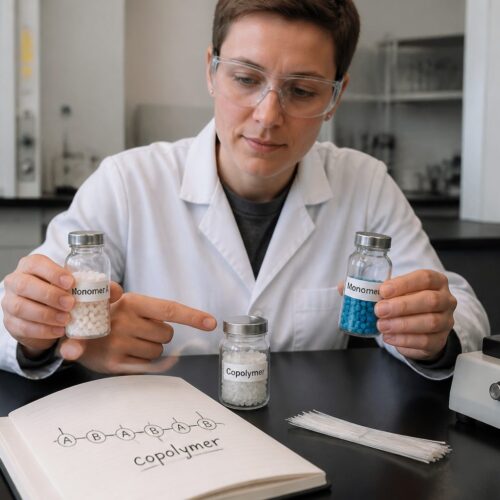
Unlike copolymers, where different monomers are chemically bonded within a single polymer chain, polymer blends are physical mixtures. The properties of the resulting blend depend on the individual polymers, their proportions, and how well they mix, also known as their compatibility.
Polymer blends can be broadly classified into two categories: miscible polymers and immiscible blends. Miscible polymers form a single-phase system where the polymers are uniformly mixed at a molecular level.
Immiscible blends, on the other hand, exhibit phase separation, resulting in a multi-phase structure. The morphology of immiscible blends can range from dispersed droplets of one polymer in a matrix of another to more complex co-continuous structures.
To further illustrate the concept, consider mixing oil and water. They naturally separate into two distinct layers, representing an immiscible system.
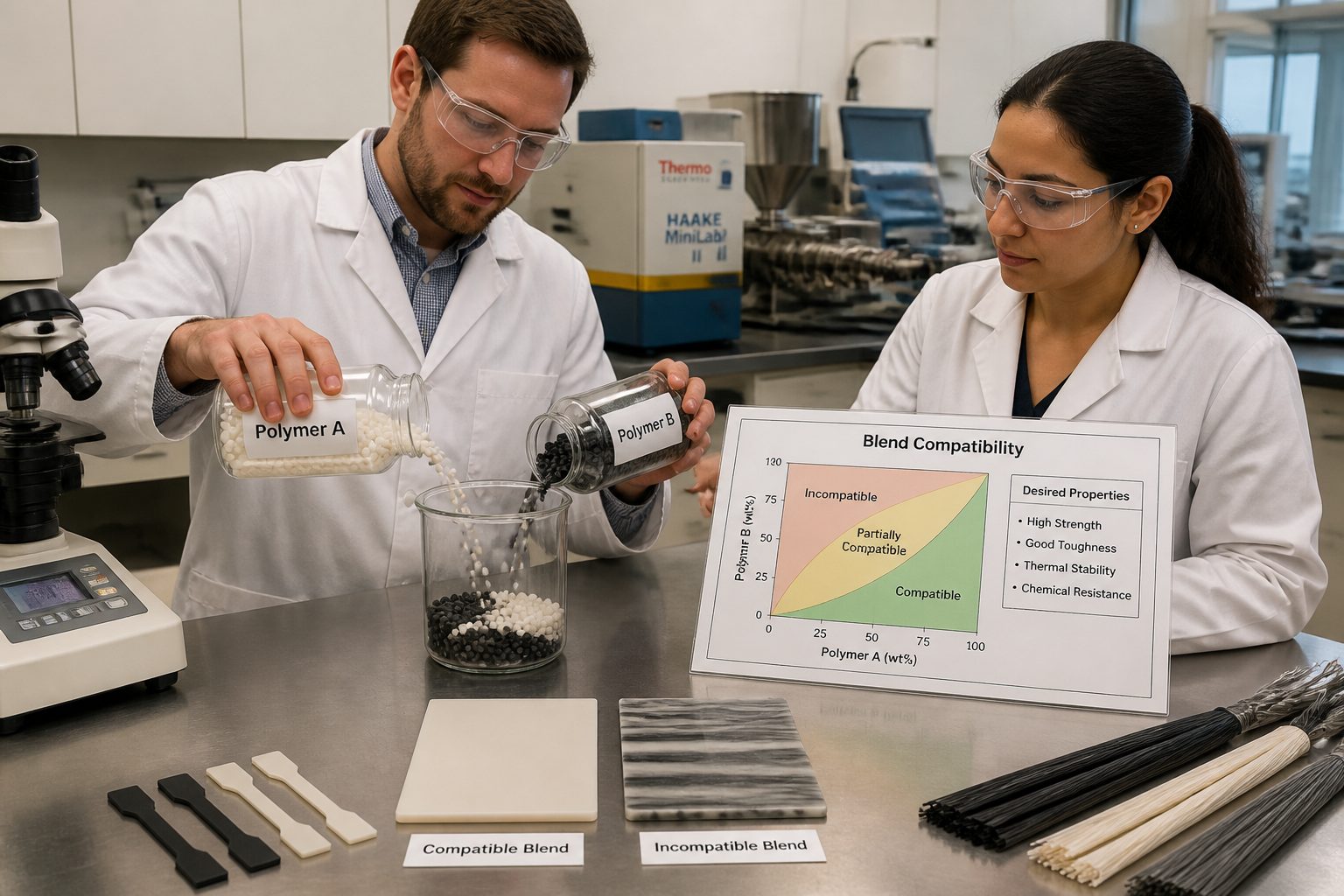
In contrast, sugar dissolving in water forms a homogeneous solution, analogous to a miscible polymer blend. The behavior of polymer blends is significantly more complex than these simple examples due to the large size and entanglement of polymer chains.
The characteristics of each polymer within the blend contribute to the overall properties of the final material. Factors such as chain stiffness, intermolecular interactions, and molecular weight all play a role in determining the blend’s behavior.
Understanding the nuances of polymer blend behavior is essential for tailoring materials to specific applications. This knowledge allows engineers and scientists to create materials with enhanced performance and novel functionalities.
The Importance of Compatibility
The compatibility of the constituent polymers is a critical determinant of the final properties of the blend. Compatible blends typically exhibit superior mechanical properties, such as tensile strength and impact resistance.
This is because good mixing promotes efficient stress transfer between the phases. In contrast, immiscible blends often suffer from poor mechanical performance due to weak interfacial adhesion.
Furthermore, compatibility affects the thermal stability and processability of the blend. Compatible blends tend to have a narrower range of glass transition temperatures, indicating a more homogeneous material.
This can lead to improved dimensional stability and ease of processing. Achieving polymer blends compatibility is therefore essential for tailoring material properties to meet specific application requirements.
Imagine a concrete structure with poorly mixed cement. The resulting structure would be weak and prone to cracking, similar to an incompatible polymer blend.
On the other hand, well-mixed concrete creates a strong and durable structure, reflecting the benefits of a compatible polymer blend. The interfacial adhesion between the polymers directly impacts the blend’s ability to withstand external forces.
Incompatible blends often exhibit phase separation, leading to stress concentrations at the interfaces and premature failure. This is why compatibilization techniques are so crucial for improving the performance of immiscible polymer blends.
Ultimately, compatibility dictates whether a polymer blend can achieve its intended purpose. By carefully considering compatibility, engineers can design materials that are both functional and durable.
Factors Affecting Polymer Compatibility
Several factors govern the compatibility of polymer blends, and understanding these factors is crucial for designing blends with desired properties. One of the primary factors is the chemical similarity between the polymers.
Polymers with similar chemical structures and intermolecular forces tend to be more compatible. For example, polymers with similar solubility parameters are more likely to mix well.
| Factor | Description | Effect on Compatibility |
|---|---|---|
| Chemical Similarity | Similarity in chemical structure and intermolecular forces. | Higher similarity promotes compatibility. |
| Molecular Weight | The average size of the polymer chains. | Lower molecular weight generally increases compatibility. |
| Blend Composition | The relative amounts of each polymer in the blend. | Specific ratios may promote better mixing. |
| Processing Conditions | Temperature, pressure, and mixing time during blend preparation. | Optimized conditions can enhance compatibility. |
The molecular weight of the polymers also plays a significant role. Lower molecular weight polymers generally exhibit better compatibility due to increased chain mobility and reduced entanglement.
Blend composition is another important factor, as certain ratios of polymers may result in better mixing than others. Finally, processing conditions such as temperature, pressure, and mixing time can significantly influence the compatibility of the blend.
Think of it like trying to mix different types of paint. Oil-based and water-based paints don’t mix well due to their different chemical compositions.
Similarly, polymers with significantly different chemical structures tend to be immiscible. The strength of intermolecular forces, such as van der Waals forces and hydrogen bonding, also influences compatibility.
Stronger intermolecular forces between similar polymer chains promote miscibility. Molecular weight affects compatibility because longer polymer chains are more likely to entangle and resist mixing.
Optimizing processing conditions, such as using high shear mixing, can help to overcome these challenges and improve compatibility. Careful consideration of these factors is essential for designing polymer blends with the desired properties.
Techniques for Improving Compatibility
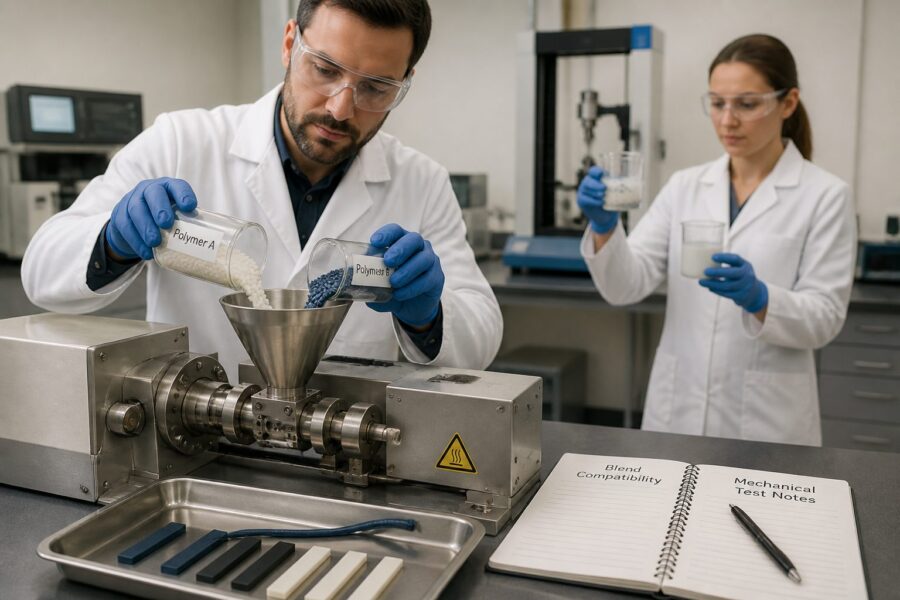
When polymers are inherently immiscible, several techniques can be employed to enhance their compatibility. One common approach is the use of compatibilizers, which are substances added to the blend to promote interfacial adhesion.
Compatibilizers typically have segments that are miscible with each of the constituent polymers. These segments act as “molecular bridges,” reducing interfacial tension and stabilizing the blend morphology.
Another technique is reactive blending, where chemical reactions occur during the mixing process to create covalent bonds between the polymers. This can be achieved by incorporating functional groups into the polymer chains that can react with each other under specific conditions.
Surface modification of one or more of the polymers can also improve compatibility. For example, grafting a polymer with a different chemical structure onto the surface of another polymer can enhance its interaction with the surrounding matrix.
Compatibilizers can be block copolymers, graft copolymers, or reactive polymers. Block copolymers consist of long sequences of each polymer, while graft copolymers have one polymer grafted onto the backbone of another.
Reactive polymers contain functional groups that can react with the other polymers in the blend. Reactive blending can be achieved through various chemical reactions, such as transesterification or condensation reactions.
Surface modification techniques include plasma treatment, chemical grafting, and layer-by-layer assembly. Plasma treatment can alter the surface energy of the polymer, making it more compatible with other materials.
These techniques offer a range of options for improving the compatibility of polymer blends. The choice of technique depends on the specific polymers involved and the desired properties of the blend.
Characterization of Polymer Blends
Characterizing polymer blends is crucial for understanding their morphology, properties, and ultimately, their suitability for specific applications. A variety of techniques are used to assess the compatibility and structure of polymer blends.
Microscopy techniques such as scanning electron microscopy (SEM) and transmission electron microscopy (TEM) provide valuable information about the blend morphology. These techniques can reveal the size and distribution of the dispersed phases, as well as the nature of the interfaces between them.
- Scanning Electron Microscopy (SEM)
- Transmission Electron Microscopy (TEM)
- Differential Scanning Calorimetry (DSC)
- Dynamic Mechanical Analysis (DMA)
- X-ray Diffraction (XRD)
Thermal analysis techniques, such as differential scanning calorimetry (DSC), are used to determine the glass transition temperatures of the blend components. A single glass transition temperature indicates miscibility, while multiple glass transition temperatures suggest phase separation.
Mechanical testing, including tensile, flexural, and impact testing, provides insights into the mechanical performance of the blend. These tests can reveal the effects of compatibility on the strength, stiffness, and toughness of the material.
SEM uses a focused electron beam to scan the surface of a sample, providing high-resolution images of the morphology. TEM involves transmitting an electron beam through a thin sample, allowing for the visualization of internal structures.
DSC measures the heat flow associated with phase transitions, such as melting and glass transition. Dynamic Mechanical Analysis (DMA) measures the mechanical properties of a material as a function of temperature and frequency.
X-ray Diffraction (XRD) provides information about the crystalline structure of the blend components. These techniques provide a comprehensive understanding of the structure-property relationships in polymer blends.
The data obtained from these characterization methods is essential for optimizing blend composition and processing conditions. This ensures that the final material meets the required performance specifications.
Applications of Polymer Blends
Compatible polymer blends find widespread applications across various industries due to their tailored properties and cost-effectiveness. In the automotive industry, polymer blends are used to produce lightweight and durable components.
For example, blends of polypropylene (PP) and ethylene-propylene rubber (EPR) are used in bumpers and dashboards to improve impact resistance. The electronics industry utilizes polymer blends in housings, connectors, and insulators.
Blends of polycarbonate (PC) and acrylonitrile butadiene styrene (ABS) offer a balance of strength, heat resistance, and processability for these applications. In packaging, polymer blends are employed to create films and containers with specific barrier properties.
Polyethylene (PE) and polyamide (PA) blends, for example, provide excellent oxygen and moisture barrier properties for food packaging. Polymer blends are also essential in biomedical applications, such as drug delivery systems and tissue engineering scaffolds.
In the construction industry, polymer blends are used in roofing materials, pipes, and insulation. Blends of polyvinyl chloride (PVC) and acrylic polymers enhance the weather resistance and durability of roofing materials.
In the textile industry, polymer blends are used to create fabrics with improved comfort, durability, and wrinkle resistance. Polyester and cotton blends, for example, combine the strength and wrinkle resistance of polyester with the comfort and breathability of cotton.
Polymer blends are also used in sporting goods, such as helmets, protective gear, and athletic shoes. The ability to tailor the properties of polymer blends makes them ideal for a wide range of demanding applications.
The versatility and cost-effectiveness of polymer blends contribute to their widespread use across various sectors. As new polymers and blending techniques are developed, the applications of polymer blends will continue to expand.
Emerging Trends in Polymer Blend Technology
The field of polymer blends is constantly evolving, with ongoing research focused on developing new materials with enhanced properties and functionalities. One exciting trend is the use of bio-based and biodegradable polymers in blends.
Combining these sustainable polymers with conventional polymers can create environmentally friendly materials with tailored performance characteristics. Another area of interest is the development of nanocomposites based on polymer blends.
Incorporating nanoparticles into polymer blends can significantly improve their mechanical, thermal, and electrical properties. For instance, adding carbon nanotubes to a polymer blend can enhance its strength and conductivity.
The use of artificial intelligence and machine learning is also gaining traction in polymer blend research. These tools can be used to predict the compatibility and properties of polymer blends based on their chemical structures and processing conditions, accelerating the development of new materials.
Bio-based polymers, such as polylactic acid (PLA) and polyhydroxyalkanoates (PHAs), are derived from renewable resources. Blending these polymers with conventional polymers can reduce the reliance on fossil fuels and decrease the environmental impact of plastics.
Nanocomposites offer the potential to create polymer blends with exceptional properties. Nanoparticles, such as clay, silica, and carbon nanotubes, can significantly enhance the strength, stiffness, and barrier properties of polymer blends.
AI and machine learning algorithms can analyze large datasets of polymer properties and predict the behavior of polymer blends. This can significantly reduce the time and cost associated with developing new polymer blend materials.
These emerging trends are driving innovation in the field of polymer blends. They are leading to the development of materials that are more sustainable, functional, and cost-effective.
Challenges and Future Directions
Despite the significant advances in polymer blend technology, several challenges remain. Achieving true miscibility in polymer blends can be difficult, especially when dealing with chemically dissimilar polymers.
Phase separation can lead to poor mechanical properties and reduced long-term stability. Compatibilization strategies can be complex and expensive, requiring careful selection of appropriate additives and optimization of processing conditions.
Future research directions include the development of novel compatibilizers that are more effective and environmentally friendly. There is also a need for improved characterization techniques that can provide a more detailed understanding of polymer blend morphology and properties at the nanoscale.
Furthermore, the integration of computational modeling and simulation can help to accelerate the design and optimization of polymer blends with specific properties. Overcoming these challenges will pave the way for the development of advanced polymer blend materials with a wider range of applications.
The development of universal compatibilizers that can effectively blend a wide range of polymers is a major goal. These compatibilizers would simplify the process of designing polymer blends and reduce the need for custom-designed additives.
Advanced characterization techniques, such as atomic force microscopy (AFM) and neutron scattering, can provide detailed information about the nanoscale structure of polymer blends. This information is crucial for understanding the relationship between morphology and properties.
Computational modeling and simulation can be used to predict the compatibility, morphology, and properties of polymer blends. This can significantly reduce the time and cost associated with experimental development.
Addressing these challenges and pursuing these future directions will lead to significant advances in polymer blend technology. This will enable the development of new materials with improved performance and sustainability.
Case Studies of Successful Polymer Blends
Examining successful examples of polymer blends can provide valuable insights into the principles of blend design and the importance of compatibility. One notable example is the blend of high-impact polystyrene (HIPS) and polyphenylene oxide (PPO).
HIPS is a low-cost polymer with good impact resistance, while PPO offers high heat resistance and dimensional stability. Blending these two polymers results in a material with a combination of these desirable properties, making it suitable for applications such as automotive parts and appliance housings.
Another successful blend is that of polycarbonate (PC) and polybutylene terephthalate (PBT). PC provides high impact strength and transparency, while PBT offers excellent chemical resistance and processability.
This blend is used in electrical connectors and automotive components where a combination of mechanical strength and chemical resistance is required. These case studies demonstrate how careful selection of polymers and optimization of blend composition can lead to materials with superior performance characteristics.
The HIPS/PPO blend is often compatibilized with a styrene-butadiene block copolymer. This compatibilizer improves the interfacial adhesion between the two polymers, resulting in enhanced mechanical properties.
The PC/PBT blend is often used in applications where high impact strength and chemical resistance are required. This blend is also easily processed, making it a cost-effective alternative to other high-performance polymers.
Another successful example is the blend of polyethylene (PE) and ethylene-vinyl acetate (EVA). This blend is used in flexible packaging applications, providing a combination of flexibility, toughness, and barrier properties.
These case studies highlight the importance of understanding the properties of individual polymers and how they interact in a blend. Careful design and optimization can lead to materials with superior performance characteristics and a wide range of applications.
Conclusion
Polymer blends offer a versatile approach to creating materials with tailored properties by combining the strengths of different polymers. However, achieving the desired performance hinges on ensuring polymer blends compatibility.
By understanding the factors that influence compatibility and employing appropriate techniques to enhance it, engineers can design polymer blends for a wide range of applications. The ongoing research and development in this field promise to yield even more advanced and sustainable polymer blend materials in the future.
The ability to tailor the properties of polymer blends makes them an essential tool for materials scientists and engineers. As new polymers and blending techniques are developed, the potential applications of polymer blends will continue to expand.
The future of polymer blend technology is bright. Continued innovation in this field will lead to the development of materials that are more sustainable, functional, and cost-effective.
Ultimately, polymer blends will play a crucial role in addressing the challenges facing society. These challenges include the need for more sustainable materials, improved energy efficiency, and advanced healthcare solutions.