
Clean water access is a pressing global concern, driving intense research into effective purification technologies. Polymer membranes have emerged as a critical solution in modern water treatment and desalination processes. Their ability to selectively remove contaminants at various scales makes them indispensable for producing potable water.
These advanced filtration systems leverage specific polymer chemistries and intricate structural designs to achieve high separation efficiencies. Understanding the science behind these materials is key to optimizing their performance and expanding their applications. Engineers and scientists are constantly refining polymer membranes for water treatment desalination, seeking improved durability and lower operating costs.
From large-scale municipal plants to specialized industrial processes, polymer-based filtration systems offer a robust and energy-efficient alternative to traditional methods. Their versatility allows for tailored solutions addressing a wide spectrum of water quality challenges. The ongoing development in high-performance fiber science and polymer engineering continues to push the boundaries of what these membranes can achieve.
The demand for fresh water is only increasing, placing greater emphasis on reliable and sustainable water purification methods. Polymer membranes are at the forefront of this effort, providing the technological backbone for future water security. Their role is undeniably central to global public health and environmental sustainability.
Membrane Types Used in Water Treatment
Water treatment employs a hierarchy of membrane technologies, each designed for specific contaminant removal sizes. These range from microfiltration, which tackles larger suspended solids, to reverse osmosis, capable of separating dissolved salts. The choice depends heavily on the raw water quality and the desired purity of the treated water.
Microfiltration (MF) membranes typically have pore sizes between 0.1 and 10 micrometers, effectively removing bacteria, protozoa, and larger particulates. This method often serves as a pretreatment step for more advanced membrane processes. Its relatively low operating pressure makes it an energy-efficient option for initial clarification.
Ultrafiltration (UF) membranes feature smaller pores, generally from 0.01 to 0.1 micrometers, making them effective against viruses, macromolecules, and colloids. Ultrafiltration membrane applications include drinking water purification, industrial wastewater treatment, and dairy processing. This technology provides a higher level of purification than microfiltration without requiring the extreme pressures of reverse osmosis.
Nanofiltration (NF) membranes sit between ultrafiltration and reverse osmosis in terms of pore size, typically removing particles in the 1 to 10 nanometer range. They are particularly adept at softening water by removing multivalent ions like calcium and magnesium. Nanofiltration water purification also excels at removing organic micropollutants and specific heavy metals.
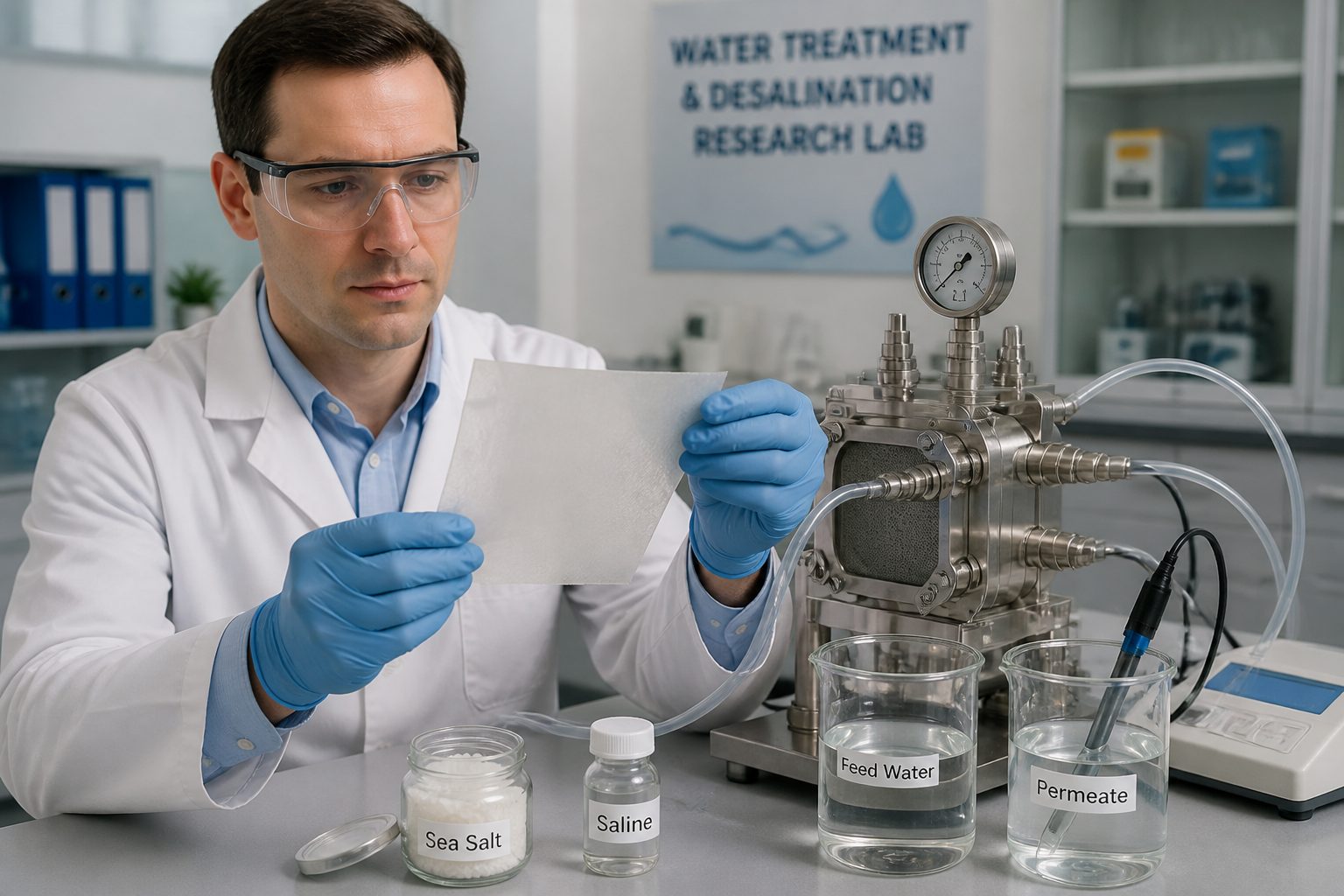
Reverse osmosis (RO) membranes represent the finest level of filtration, with pore sizes often less than 1 nanometer. These membranes reject nearly all dissolved salts, minerals, and microorganisms, making them suitable for desalination and producing ultra-pure water. The high selectivity of reverse osmosis membrane polymer materials is crucial for their effectiveness.
Each membrane type operates on distinct principles, driven by varying pressure differentials and material properties. The careful selection and integration of these membrane types allow for a multi-stage approach to water purification. This layered strategy ensures comprehensive contaminant removal while optimizing energy consumption for polymer membranes water treatment desalination.
Developing new polymer materials with enhanced selectivity and durability remains a primary focus in membrane science. Researchers are continually exploring novel polymer chemistries to improve the performance of existing membrane types. This innovation helps address challenges like fouling and extends membrane lifespan.
Reverse Osmosis Membranes: Principles and Polymer Chemistry
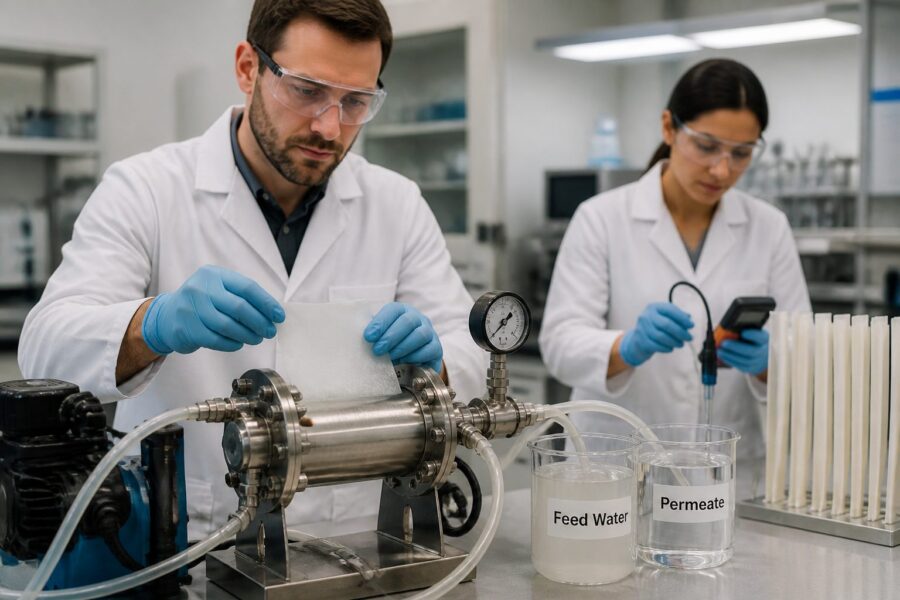
Reverse osmosis stands as a cornerstone technology for desalination and advanced water purification, relying on semi-permeable polymer membranes. This process forces water through a membrane against its natural osmotic pressure, leaving dissolved salts and other impurities behind. The effectiveness of a reverse osmosis membrane polymer depends entirely on its material science and manufacturing precision.
The majority of commercial RO membranes are thin-film composite (TFC) membranes, consisting of three distinct layers. A thin, dense polyamide active layer provides the primary separation barrier, supported by a porous polysulfone layer and a non-woven fabric backing. This composite structure balances mechanical strength with high flux and excellent rejection capabilities for polymer membranes water treatment desalination.
| Polymer Type | Key Properties | Common Applications |
|---|---|---|
| Polyamide (PA) | High salt rejection, chemical resistance | Desalination, ultra-pure water production |
| Cellulose Acetate (CA) | Chlorine tolerance, biodegradable | Older RO systems, specific industrial uses |
| Polysulfone (PSf) | Mechanical strength, support layer | Substrate for TFC membranes, UF membranes |
| Polyvinylidene Fluoride (PVDF) | Chemical inertness, good for UF/MF | UF membranes, specialized RO support |
Polyamide is the material of choice for the active layer due to its exceptional ability to reject salts while maintaining reasonable water flow. The cross-linked aromatic polyamide structure creates a dense, negatively charged surface that effectively repels ions. This intricate chemical design allows for the selective passage of water molecules while blocking larger hydrated ions.
Manufacturing these membranes involves interfacial polymerization, where two reactive monomers meet at an interface to form the ultrathin polyamide layer. This precise chemical reaction dictates the membrane’s pore size distribution and surface charge, directly impacting its performance. Optimizing this synthesis route is a continuous area of research for improving reverse osmosis membrane polymer characteristics.
Researchers are exploring new polymer chemistries to enhance membrane performance, focusing on materials with improved chlorine resistance and reduced fouling propensity. Graphene oxide and carbon nanotubes are examples of nanomaterials being integrated into polyamide layers to create next-generation membranes. These innovations aim to boost water permeability without sacrificing salt rejection, making polymer membranes water treatment desalination more efficient.
The durability of the reverse osmosis membrane polymer is also a significant factor, as these membranes operate under high pressure for extended periods. Developing polymers that withstand harsh chemical cleaning and resist compaction is essential for long-term operational stability. Continuous advancements in polymer science are driving the evolution of these critical components.
Ultrafiltration and Microfiltration Membrane Design
Ultrafiltration and microfiltration membranes play foundational roles in water purification, acting as essential pretreatment steps or standalone purification systems. These membranes operate on a size-exclusion principle, physically blocking particles larger than their defined pore size. Their design focuses on robust mechanical properties and high water flux rates.
Microfiltration membranes, with pore sizes typically above 0.1 micrometers, are effective for removing suspended solids, bacteria, and large colloids. They are often made from polymers like polypropylene, polyethylene, or PVDF, chosen for their chemical resistance and mechanical strength. These materials allow for the creation of stable, uniform pore structures.
Ultrafiltration membrane applications extend to removing viruses, proteins, and macromolecules, given their smaller pore sizes, usually between 0.01 and 0.1 micrometers. Common polymers for UF membranes include polysulfone (PSf), polyethersulfone (PES), and PVDF, which offer good hydrophilicity and resistance to chemical degradation. The choice of polymer significantly impacts the membrane’s performance and longevity.
Membrane morphology, or structure, is critical for both UF and MF performance. Asymmetric membranes, featuring a dense skin layer on a highly porous support, are common, providing both selective filtration and mechanical integrity. Hollow fiber configurations are particularly popular for these membrane types due to their high packing density and self-supporting nature.
The manufacturing process, such as phase inversion, allows for precise control over pore size and distribution in the polymer matrix. Adjusting parameters like polymer concentration, solvent type, and coagulation bath composition directly influences the final membrane structure. This fine-tuning is essential for optimizing filtration efficiency and minimizing pressure drop.
Hydrophilicity is a key property for UF and MF membranes, promoting water flow and reducing the tendency for foulants to adhere to the surface. Many hydrophobic polymers are modified post-production to increase their surface hydrophilicity, often through grafting or blending with hydrophilic additives. This modification helps maintain high flux and extends cleaning cycles for polymer membranes water treatment desalination.
Durability under varying operational conditions, including pressure fluctuations and chemical cleaning, is another important design consideration. Developing membranes that resist compaction and maintain their structural integrity over time ensures consistent performance. Research into novel polymer blends and advanced fabrication techniques continues to improve the robustness of these essential filtration components.
Nanofiltration for Selective Ion Removal
Nanofiltration occupies a unique niche in membrane technology, bridging the gap between ultrafiltration and reverse osmosis. This process excels at selectively removing multivalent ions, organic micropollutants, and larger dissolved molecules while allowing monovalent ions and water to pass through. Nanofiltration water purification is a powerful tool for softening water and removing specific contaminants.
NF membranes typically have pore sizes ranging from 1 to 10 nanometers, making them highly effective for targeted separation. They operate at lower pressures than reverse osmosis, which translates to reduced energy consumption and lower operational costs. This makes NF an attractive option for specific water treatment challenges where full desalination is not required.
The primary polymer materials for nanofiltration membranes often include polyamides, polysulfones, or a blend of polymers with specific surface charge characteristics. The membrane’s surface charge plays a significant role in its separation mechanism, as electrostatic repulsion contributes to the rejection of charged species. This charge effect works in conjunction with size exclusion to achieve high selectivity.
One of the most common applications for nanofiltration is water softening, where it effectively removes hardness-causing ions like calcium and magnesium. This reduces scaling in pipes and industrial equipment, extending their lifespan and improving efficiency. NF also finds use in removing natural organic matter (NOM), which can cause taste, odor, and disinfection by-product formation.
The ability of nanofiltration water purification to selectively remove certain pollutants while retaining beneficial minerals makes it ideal for producing high-quality drinking water. It can target specific heavy metals or pesticides, ensuring compliance with strict regulatory standards. The balance between removal and retention is a key advantage of this technology.
Advancements in polymer chemistry are leading to the development of novel NF membranes with even greater selectivity and anti-fouling properties. Researchers are exploring zwitterionic polymers and self-assembled monolayers to create membranes with tailored surface chemistries. These innovations aim to improve performance and reduce the need for frequent cleaning cycles for polymer membranes water treatment desalination.
Designing NF membranes for specific industrial applications, such as pharmaceutical purification or wastewater reuse, requires careful consideration of the target contaminants. The precise tuning of pore size, surface charge, and hydrophilicity is crucial for achieving optimal separation outcomes. Nanofiltration continues to evolve as a versatile and energy-efficient membrane solution.
Fouling Mechanisms and Anti-Fouling Strategies
Membrane fouling is a major operational challenge across all polymer membrane applications in water treatment and desalination. It refers to the accumulation of unwanted materials on the membrane surface or within its pores, leading to reduced water flux and increased operating pressure. Understanding these mechanisms is essential for developing effective anti-fouling strategies.
Fouling can be broadly categorized into several types: biofouling from microorganisms, organic fouling from natural organic matter or humic substances, inorganic fouling from scaling minerals, and particulate fouling from colloids or suspended solids. Each type requires specific approaches for prevention and mitigation to maintain the efficiency of polymer membranes water treatment desalination.
- Optimize pretreatment processes
- Modify membrane surface chemistry
- Implement regular physical cleaning
- Apply chemical cleaning protocols
- Design efficient membrane modules
- Control operating conditions
- Develop bio-resistant membrane materials
Pretreatment is often the first line of defense against fouling, removing larger particles and reducing the organic load before water reaches the membranes. Coagulation, flocculation, sedimentation, and granular media filtration are common pretreatment steps. Effective pretreatment significantly extends the lifespan and performance of delicate reverse osmosis membrane polymer systems.
Membrane surface modification is a promising strategy, aiming to make membranes less attractive to foulants. Increasing surface hydrophilicity, for instance, can reduce the adhesion of hydrophobic organic molecules and bacteria. Researchers are exploring novel coatings and grafting techniques using zwitterionic polymers or hydrophilic nanoparticles to create fouling-resistant surfaces.
Operational strategies also play a role, including optimizing flux rates and implementing periodic backwashing or air scouring for UF and MF membranes. For RO and NF membranes, chemical cleaning-in-place (CIP) with acids, bases, or specialized detergents helps restore flux by dissolving or dislodging foulants. Careful selection of cleaning agents prevents damage to the polymer membrane itself.
Developing new polymer materials with inherent anti-fouling properties is a long-term goal for high-performance fiber science and polymer engineering. Creating membranes that actively repel foulants or even possess antimicrobial properties would revolutionize membrane technology. This ongoing research seeks to minimize energy consumption and chemical usage associated with fouling mitigation.
Industrial and Municipal Applications of Polymer Membranes
Polymer membranes have found widespread adoption across a diverse range of industrial and municipal applications, transforming how we approach water purification and resource recovery. Their efficiency, selectivity, and relatively small footprint make them ideal for many scenarios. These applications highlight the versatility of polymer membranes water treatment desalination technologies.
In municipal settings, polymer membranes are increasingly used for producing drinking water from various sources, including surface water, groundwater, and even treated wastewater. Ultrafiltration membrane applications ensure the removal of pathogens and turbidity, providing a safe and consistent water supply. Reverse osmosis systems are critical for communities facing water scarcity, converting brackish water or seawater into potable resources.
Industrial sectors, such as food and beverage, pharmaceuticals, and electronics, rely heavily on polymer membranes for process water purification and wastewater treatment. The food industry uses UF and NF for concentrating milk, clarifying fruit juices, and separating proteins. These processes not only purify water but also enable valuable product recovery, minimizing waste.
The pharmaceutical industry requires ultra-pure water for manufacturing and uses membranes for sterile filtration, pyrogen removal, and active ingredient concentration. Reverse osmosis membrane polymer technology is indispensable here, ensuring the highest water quality standards. Similarly, the electronics industry demands extremely pure water for semiconductor manufacturing, often achieved through multi-stage membrane filtration.
Wastewater treatment and reuse represent a significant area for membrane application, helping industries meet discharge regulations and conserve water. Membrane bioreactors (MBRs), which combine biological treatment with ultrafiltration or microfiltration, are particularly effective for treating complex industrial wastewater. This integration offers superior effluent quality compared to conventional methods.
Desalination plants, both large-scale municipal facilities and smaller industrial units, rely almost exclusively on reverse osmosis membrane polymer technology. These plants convert seawater or brackish groundwater into fresh water, addressing critical water shortages in arid regions. The continuous innovation in polymer membranes water treatment desalination makes these facilities more energy-efficient and cost-effective.
Emerging applications include resource recovery from wastewater, such as nutrient extraction or heavy metal removal, demonstrating the broader environmental impact of membrane technology. Nanofiltration water purification is proving useful for removing specific contaminants from industrial effluents, allowing for safe discharge or further reuse. The ongoing development of robust and selective polymer membranes drives these advancements.
Conclusion
Polymer membranes are undeniably essential to the future of water treatment and desalination. Their unique ability to selectively separate contaminants across various scales provides indispensable solutions for global water challenges. We rely on these advanced materials for everything from drinking water purification to industrial process optimization.
The evolution of reverse osmosis membrane polymer materials, alongside breakthroughs in ultrafiltration membrane applications and nanofiltration water purification, continues to drive progress. Each membrane type offers distinct advantages, allowing for tailored approaches to complex water quality issues. This layered technological approach ensures comprehensive and efficient contaminant removal.
Addressing fouling remains a central focus for researchers and engineers, as successful anti-fouling strategies are key to long-term operational success. Innovations in membrane materials and pretreatment methods are continuously improving performance and reducing maintenance demands. These efforts contribute directly to the sustainability of polymer membranes water treatment desalination systems.
From municipal water supply to specialized industrial processes, polymer membranes are proving their worth by providing clean, safe, and often reusable water sources. The ongoing research in high-performance fiber science and polymer engineering promises even more efficient and resilient membrane technologies. This scientific pursuit directly impacts public health and environmental stewardship.
The global demand for fresh water will only intensify, making the role of polymer membranes more critical than ever before. Their versatility, combined with continuous advancements, positions them as a cornerstone technology for securing our water future. We must continue to invest in and develop these crucial filtration systems.