
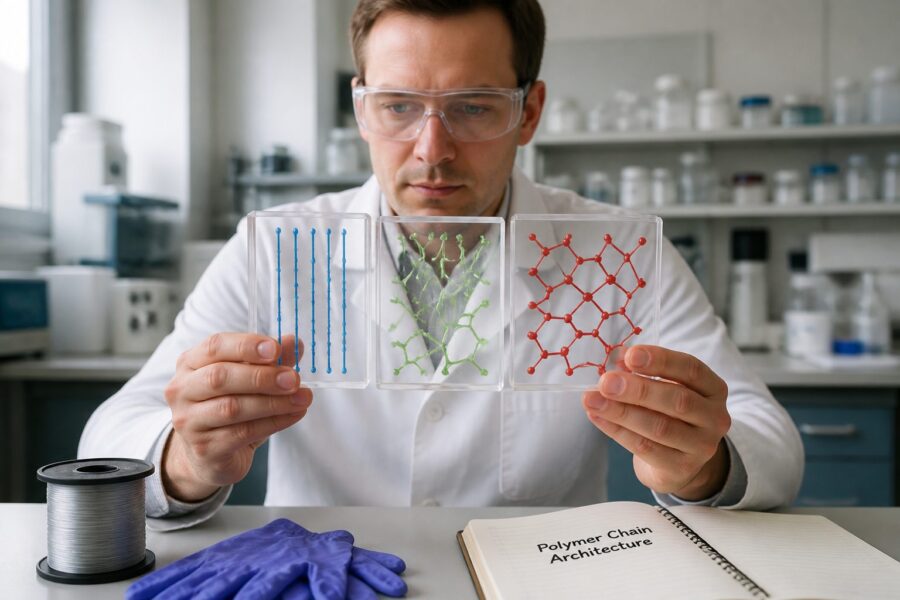
The world of polymers is incredibly diverse, offering materials from soft rubbers to rigid engineering plastics. This vast array of properties stems critically from how monomers link to form complex polymer chain architecture structures. Understanding these fundamental arrangements—whether linear, branched, or cross-linked—unlocks a material’s performance and dictates its suitability for specific applications. This intricate relationship between molecular structure and macroscopic behavior is central to polymer science.
Different polymer chain architecture structures fundamentally influence everything from melt viscosity and solubility to mechanical strength and thermal stability. Precise control over monomer connection and arrangement allows for astonishing customization, enabling polymers with specific functionalities, from electrical conductivity to biocompatibility. Subtle architectural differences can mean the difference between a brittle plastic and a flexible film, or a soluble coating and a durable adhesive, all designed to meet specific performance criteria.
From food packaging to aerospace composites, polymer chain architecture structures are the silent heroes dictating reliability and innovation. A deep understanding of these structures is paramount for anyone working with polymeric materials.
The Role of Chain Architecture in Polymer Behavior
Polymer architecture defines how chains are spatially organized and interconnected, profoundly impacting a polymer’s bulk properties and making it a primary design parameter. This organization dictates chain movement, influencing a polymer’s ability to flow or dissolve. Morphology, whether amorphous or crystalline, is also heavily influenced, with ordered structures leading to increased stiffness and strength, and disordered arrangements resulting in more flexible materials.
Material scientists carefully control polymerization conditions to achieve desired architectures, as even subtle changes can drastically alter performance. The choice of polymer chain architecture structures is a deliberate engineering decision to balance processability, mechanical integrity, and environmental resistance, underpinning advanced polymer material design.
Chain entanglement, the physical intertwining of polymer chains, strongly depends on architecture, leading to higher melt viscosity and improved mechanical properties in more entangled systems. Rheological behavior, describing flow and deformation, is particularly sensitive to architecture, influencing processing parameters. Viscoelastic properties, combining viscous and elastic characteristics, are also shaped by chain architecture, determining behavior under varying deformation rates, critical for applications like shock absorption.
Beyond bulk mechanics, architecture influences surface properties, adhesion, and chemical resistance. Tightly packed or cross-linked structures often provide superior barrier properties against chemical attack. Optical properties like transparency or opacity are affected by crystallinity and scattering centers, consequences of chain arrangement.
Thermal transitions, such as glass transition (Tg) and melting temperature (Tm), are directly impacted by chain arrangement; architectures restricting mobility tend to increase these temperatures. The mechanical response, including elasticity, ductility, and toughness, is a direct manifestation of molecular interactions facilitated or hindered by the polymer chain architecture structures. Engineers fine-tune these architectures for the desired balance of strength and flexibility.
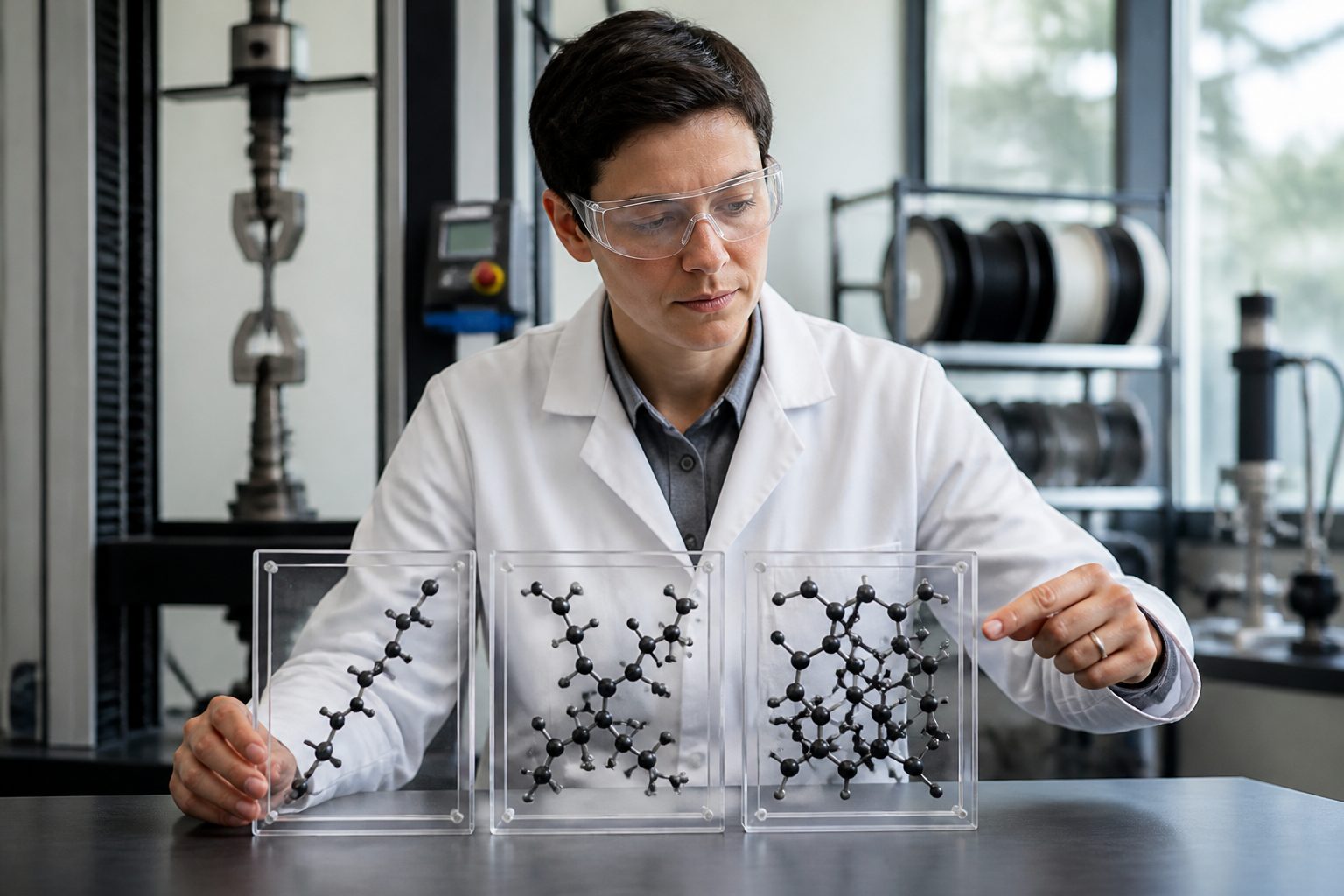
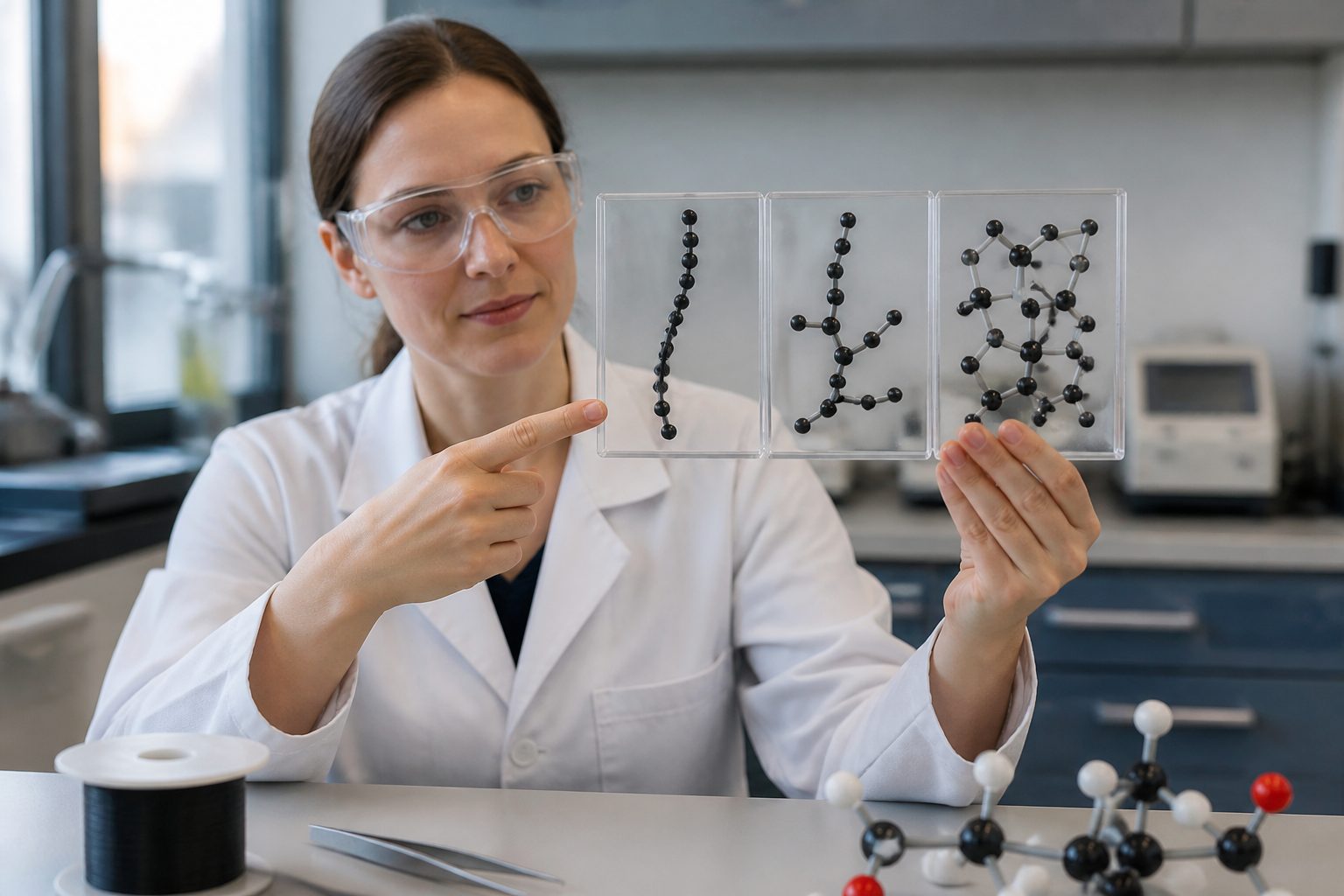
Thus, manipulating polymer architecture offers a powerful lever for tailoring materials to meet the stringent demands of modern engineering, enabling the rational design of polymers for everything from robust infrastructure to delicate biomedical devices.
Linear Polymers: Properties and Processing Characteristics
Linear polymers consist of long, continuous chains linked end-to-end without significant side branches or cross-links. This straightforward structure allows for efficient chain packing, especially in crystalline regions, minimizing steric hindrance. This results in relatively high density, high tensile strength, and stronger intermolecular forces, contributing to mechanical robustness and higher melting points. The ease with which these chains slide past one another when heated provides distinct melt processing advantages, making materials like high-density polyethylene (HDPE) and polyethylene terephthalate (PET) common in injection molding and film extrusion.
However, this ease of chain movement can lead to lower melt viscosities, potentially causing melt fracture at high shear rates. Careful control of molecular weight and processing parameters is essential to mitigate these issues, enabling the production of high-quality films and complex molded parts.
The ability of linear polymer chains to align closely allows for higher degrees of crystallinity, yielding materials with greater stiffness and superior barrier properties against gas or moisture permeation. This ordered structure also contributes to good solvent resistance, vital for chemical storage and protective coatings. Furthermore, high chain alignment in drawn linear polymer fibers results in exceptional tensile strength, crucial for textiles, ropes, and reinforcing components.
Their predictable flow behavior makes linear polymers highly amenable to various manufacturing processes, including extrusion, injection molding, and film blowing, a major reason for their widespread industrial adoption. Examples like nylon and polypropylene exhibit excellent linear polymer properties, offering high strength-to-weight ratios and good fatigue resistance for automotive parts and durable consumer products.
The straightforward molecular structure of linear polymers contributes to easier characterization and modeling, allowing for more accurate predictions of their behavior. Additionally, the recyclability of many linear thermoplastics, like PET and HDPE, is facilitated by their ability to be repeatedly melted and reformed without significant degradation, making them environmentally attractive.
The balance of stiffness, strength, and processability inherent in linear polymer chain architecture structures ensures their continued dominance in a vast array of everyday and specialized applications. Their fundamental simplicity belies their profound utility in modern materials science.
Branched Polymers: How Side Chains Change Performance
Branched polymers feature side chains extending from the main polymer backbone, disrupting the neat, parallel packing of linear structures. These branches introduce steric hindrance, reducing crystallinity, leading to lower density, decreased tensile strength, and often increased flexibility. This modification of polymer chain architecture structures is a powerful tool for tailoring material performance, especially where weight reduction is key.
Short-chain branching (SCB), with numerous short side chains, significantly lowers the density and melting point of polymers like low-density polyethylene (LDPE), making it highly flexible for films and bags. Long-chain branching (LCB), characterized by fewer but longer side chains, profoundly impacts melt rheology, increasing melt strength and elasticity. This is crucial for processes like film blowing and foam extrusion, where melt integrity is paramount. Increased entanglement from LCB also leads to non-Newtonian flow behavior, including strain hardening, improving processability in operations requiring high extensional viscosity by preventing melt sag and promoting uniform material distribution.
Beyond these, reduced crystallinity often translates to improved optical clarity in some branched polymers due to less light scattering, beneficial for clear packaging films. Branched polymers tend to have lower glass transition temperatures (Tg) and broader melting ranges due to greater free volume. Branches can also enhance impact strength, as the less rigid structure absorbs and dissipates energy more effectively, making them suitable for applications requiring toughness. Additionally, branches can influence solubility, sometimes increasing it by disrupting chain packing, important for coating formulations and adhesive systems.
Controlling the degree and type of branching is a sophisticated aspect of polymer synthesis, allowing manufacturers to fine-tune properties for specific end-uses. Metallocene catalysts, for instance, create highly controlled branched polyethylene structures, offering a balance of strength, flexibility, and processability, enabling tailored performance characteristics through precise engineering of polymer chain architecture structures.
| Architecture Type | Key Characteristic | Impact on Properties |
|---|---|---|
| Linear | Long, uninterrupted chains | High density, high tensile strength, good crystallinity, lower melt viscosity |
| Short-Chain Branched (SCB) | Small, frequent side branches | Reduced crystallinity, increased flexibility, lower density, improved processability |
| Long-Chain Branched (LCB) | Infrequent, long side branches | Enhanced melt strength, strain hardening, improved foamability, higher elasticity |
| Star Polymers | Multiple linear chains from a central core | Lower viscosity than linear, specific rheological behavior, unique solution properties |
Cross-Linked Networks and Their Effect on Mechanical Properties
Cross-linked polymer network structures involve permanent chemical bonds between individual polymer chains, creating a three-dimensional network. This transforms a material from a thermoplastic to a thermoset or elastomer. These covalent links severely restrict chain movement, preventing melting or dissolving, even at elevated temperatures, making cross-linked materials exceptionally stable and solvent-resistant. A primary effect is a dramatic increase in mechanical strength and rigidity, exemplified by vulcanized rubber, which gains elasticity and durability from sulfur cross-links preventing permanent chain slippage.
While cross-linking enhances properties, it also makes the material challenging to process and recycle. Once formed, the network cannot be easily reshaped or broken down without degrading the polymer. The irreversible nature of thermosets presents recycling challenges compared to thermoplastics, though their superior performance often justifies this trade-off for high-performance applications. This limitation drives ongoing research into recyclable thermosets and dynamic cross-linked networks.
The degree of cross-linking directly influences properties; higher cross-link density generally results in a harder, more brittle material, while lower densities yield more elastic products. These permanent connections provide excellent dimensional stability, resisting deformation under sustained loads (creep resistance), crucial for demanding environments like automotive engine parts. Mechanical properties such as modulus and hardness are directly proportional to cross-link density, allowing engineers to precisely tune material stiffness.
Common examples of cross-linked polymer network structures include epoxies, phenolics, and unsaturated polyesters, widely used in adhesives, coatings, and composites for their rigid, durable matrices. Elastomers, like natural or silicone rubber, represent a class with relatively low cross-link density, allowing significant elastic deformation and recovery. The process of forming this network, often called curing or vulcanization, involves chemical reactions initiated by heat, radiation, or chemical agents, essential for achieving desired network structure and properties.
The network structure also provides enhanced solvent resistance, as covalent bonds prevent chains from separating and dissolving, making them suitable for harsh chemical environments. Thermal stability is significantly improved, as the network maintains integrity at temperatures where linear polymers would melt and flow, ideal for high-temperature applications.
Ultimately, cross-linked polymer network structures are indispensable for applications demanding high mechanical strength, chemical resistance, and thermal stability where traditional thermoplastics fall short. Their robust nature makes them critical components in countless engineered products.
Dendrimers and Hyperbranched Architectures
Beyond traditional linear, branched, and cross-linked structures, polymer science explores highly ordered, tree-like architectures: dendrimers and less perfectly structured hyperbranched polymers. Dendrimers are precisely synthesized macromolecules with a central core, radiating branches, and terminal functional groups, forming a highly symmetrical, globular shape. Hyperbranched polymers share a similar branching pattern but with less perfect symmetry and a broader molecular weight distribution, representing a fascinating frontier in polymer chain architecture structures.
The unique globular shape of dendrimers provides distinct properties, including a large number of surface functional groups and relatively low solution viscosity compared to linear polymers of similar molecular weight. Their compact, spherical nature also ensures excellent solubility by minimizing intermolecular entanglements. Precise control over “generation” (number of branching layers) allows for unparalleled fine-tuning of their size, shape, and surface chemistry, making them ideal for various chemical modifications.
Hyperbranched polymers, while less structurally perfect, offer advantages in easier and more cost-effective synthesis. Both dendrimers and hyperbranched polymers exhibit high surface areas for catalysis or adsorption, making them valuable as supports for heterogeneous catalysts or scavengers. Hyperbranched polymers find applications as rheology modifiers, compatibilizers for polymer blends, and components in high-performance coatings and resins, where their unique flow properties improve processing and performance.
Dendrimers, with their precise molecular weight and monodispersity, are particularly attractive for biomedical applications, including targeted drug delivery, gene therapy, and diagnostic imaging agents, as their controlled size allows specific interactions with biological systems. Their internal cavities can encapsulate small molecules, making them potential nanocarriers for pharmaceuticals or catalysts. Emerging applications for these complex polymer chain architecture structures also include advanced lubricants, where their spherical shape reduces friction, and in electronics as dielectric materials or components in organic light-emitting diodes (OLEDs), enabling high-tech solutions.
- High density of surface functional groups
- Low solution viscosity for their molecular weight
- Excellent solubility in various solvents
- Precise control over molecular size and shape
- Potential for drug delivery systems
- Catalyst supports with high surface area
- Coatings with enhanced scratch resistance
- Rheology modifiers for improved processing
- Compatibilizers in polymer blends
- Components in advanced electronic materials
- Building blocks for nanomedicine
- Sensors with enhanced sensitivity
Characterizing Polymer Architecture in the Laboratory
Accurately determining polymer chain architecture structures is essential for predicting and controlling material performance. Scientists employ a suite of sophisticated analytical techniques, often in combination, to unravel these complex molecular arrangements. This multi-faceted, synergistic approach is indispensable for advanced polymer design, quality control, and fully understanding the intricate relationship between synthesis, architecture, and ultimate material performance.
For molecular weight and branching insights, Gel Permeation Chromatography (GPC), also known as Size Exclusion Chromatography (SEC), is widely used. It separates polymers by hydrodynamic volume, distinguishing linear from branched polymers of the same molecular weight. Multi-detector GPC, coupling with refractive index, viscometer, and light scattering detectors, offers even more detailed information on molecular weight, intrinsic viscosity, and branching. Light scattering techniques (SLS, DLS) determine molecular weight and size in solution, with a larger radius of gyration often suggesting a more branched structure. Dilute solution viscosity analysis also provides an initial assessment of chain stiffness and branching, as branched polymers typically have lower intrinsic viscosities.
Spectroscopic methods like Nuclear Magnetic Resonance (NMR) spectroscopy provide detailed information on the chemical environment of individual atoms, identifying the presence and type of branching, with Carbon-13 NMR being invaluable for detecting specific branch points. Fourier-Transform Infrared (FTIR) spectroscopy identifies specific functional groups and chemical bonds, offering insights into monomer composition and cross-linking agents, serving as a rapid, non-destructive structural verification technique.
Rheology, the study of flow and deformation, offers critical clues about polymer architecture through a material’s response to stress or strain. Branched polymers, especially those with long-chain branching, exhibit distinct rheological behaviors like higher melt elasticity and shear thinning. For highly cross-linked systems, Dynamic Mechanical Analysis (DMA) is essential to probe viscoelastic properties and determine cross-link density, measuring mechanical response to oscillating forces to provide data on stiffness and damping behavior.
Techniques like Small-angle X-ray scattering (SAXS) and small-angle neutron scattering (SANS) provide information on larger-scale structure and morphology, revealing crystallinity and domain sizes. Emerging techniques such as Atomic Force Microscopy (AFM) allow direct visualization of polymer chain architecture structures at the nanoscale, revealing surface morphology, chain entanglement, and individual branches or cross-links. Cryo-Transmission Electron Microscopy (Cryo-TEM) offers direct visualization of polymer morphology and nanoscale structures, particularly for block copolymers or self-assembled systems.
Thermal analysis methods like Differential Scanning Calorimetry (DSC) and Thermogravimetric Analysis (TGA) are crucial for characterizing thermal properties, which indicate chain architecture and crystallinity, helping determine glass transition temperatures, melting points, and degradation profiles. Mass spectrometry, particularly MALDI-TOF, complements these by providing information on molecular weight and end-group analysis, confirming architectural features and ensuring a thorough understanding of complex polymer designs.
Conclusion
The intricate world of polymer chain architecture structures is fundamental to unlocking a vast spectrum of material properties and performances. From the straightforward elegance of linear chains, offering strength and processability, to the flexibility and unique rheological characteristics of branched polymers, and the unyielding, heat-resistant networks of cross-linked polymers, each architectural choice dictates a material’s destiny. This ability to engineer properties at the molecular level makes polymer science profoundly compelling and directly influences product development.
Ongoing research into novel architectures, like hyperbranched polymers, continues to push the boundaries of what materials can achieve. Mastery over polymer chain architecture structures is not merely about synthesizing new compounds but about intelligently designing materials for a future demanding specialized, high-performing solutions. Refinement of polymerization techniques allows for unprecedented control, enabling custom-designed materials with properties previously unimagined. This precision engineering drives innovation across sectors from healthcare to aerospace, allowing for precise tuning of mechanical, thermal, and chemical properties to meet highly specific application requirements.
As scientists and engineers explore molecular design, insights from polymer chain architecture structures will lead to even more advanced and sustainable materials. The future will involve sophisticated architectural designs, potentially combining elements to create hybrid materials with synergistic properties. Furthermore, the drive towards circular economy principles emphasizes designing polymers with architectures that facilitate recycling or biodegradability, extending design considerations beyond performance to environmental impact. A comprehensive grasp of these structures is a practical necessity for advancing technology, addressing global challenges, and ensuring the field remains at the forefront of materials science through continuous exploration of new synthesis and characterization techniques.