
The world of advanced materials constantly seeks innovative ways to create stronger, lighter, and more durable components. One manufacturing method that stands out for its efficiency and ability to produce high-performance structural elements is pultrusion. This continuous fiber profile manufacturing process has revolutionized how we think about composite materials in various industries.
Pultrusion is essentially the opposite of extrusion, where material is pushed through a die. Instead, in pultrusion, fibers are pulled through a resin bath and then a heated die, forming a continuous profile with consistent properties. This technique allows for the creation of complex cross-sections that maintain their integrity over long lengths.
Understanding pultrusion manufacturing composite profiles means appreciating the blend of material science and engineering ingenuity involved. It’s a precise operation that delivers excellent mechanical characteristics, making pultruded composite sections a go-to choice for demanding applications. We’ll explore the intricacies of this process, from raw materials to final products and their diverse uses.
How the Pultrusion Process Works
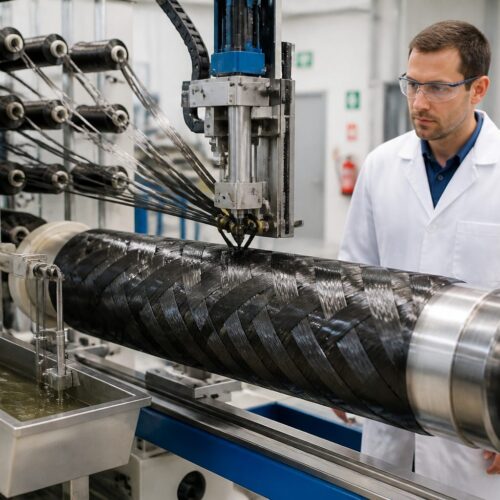
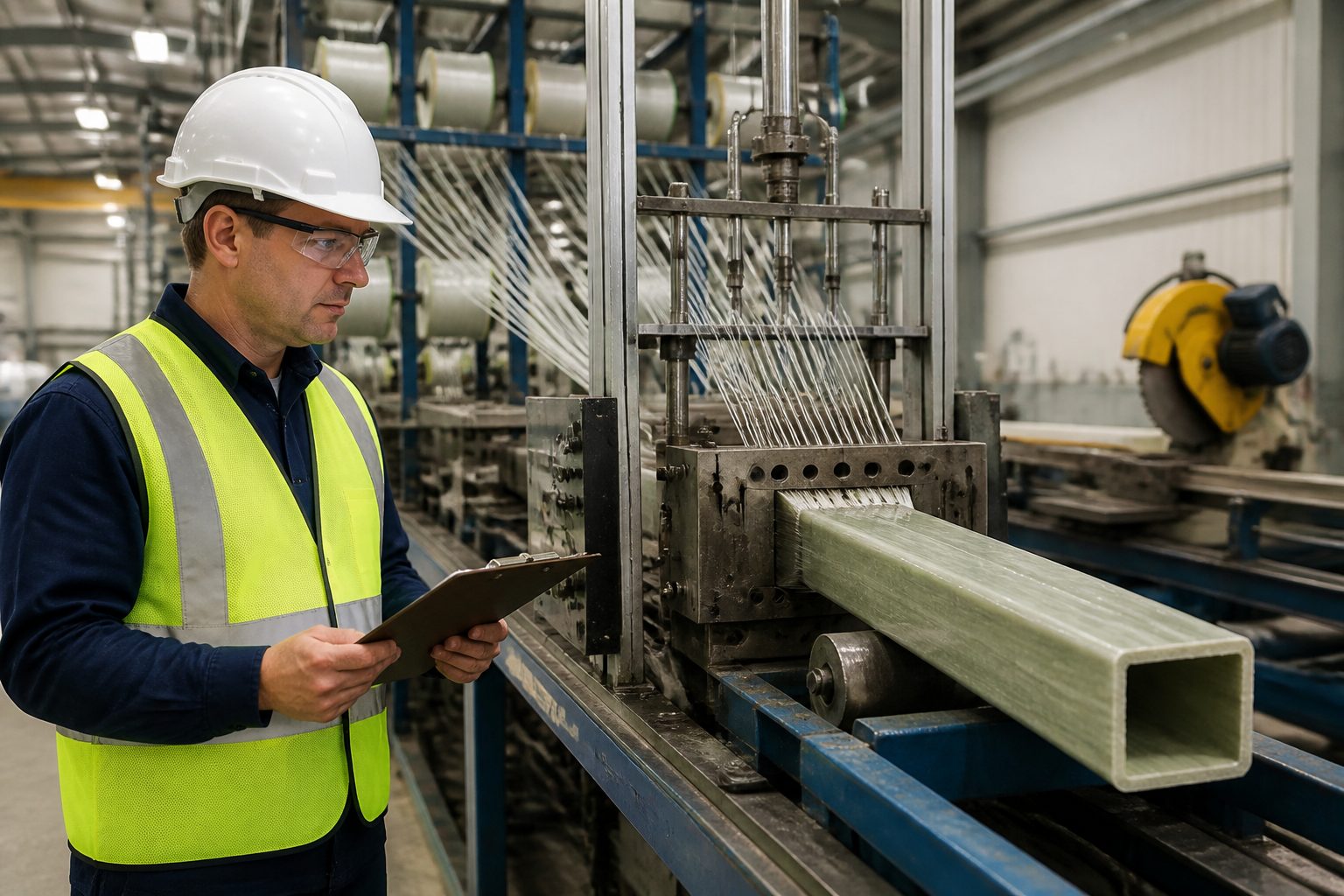
The pultrusion process begins with large creels holding spools of continuous fibers, which are the backbone of the final composite. These fibers are guided through a series of tensioning and aligning mechanisms to ensure they enter the resin bath uniformly. Proper fiber alignment is absolutely critical for achieving the desired mechanical strength in the pultruded composite sections.
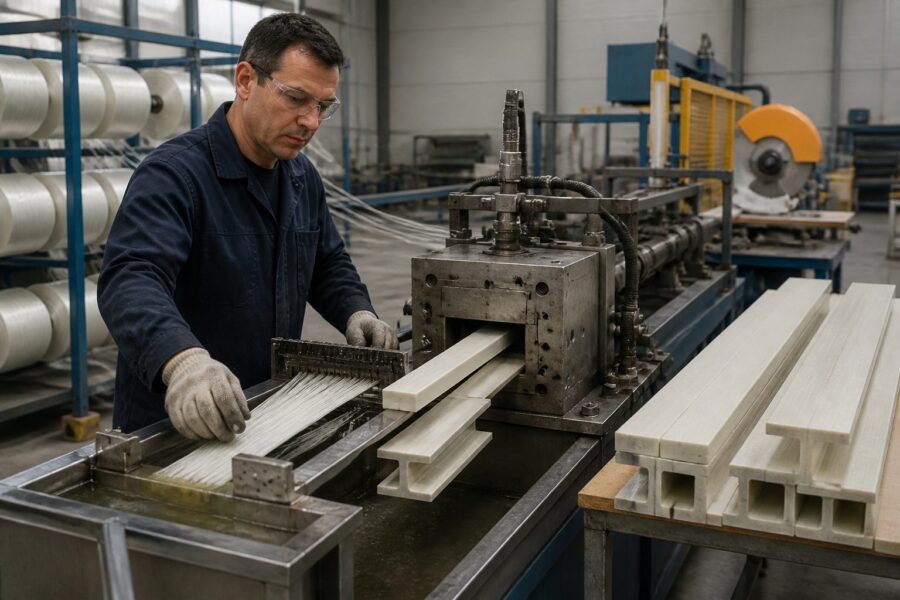
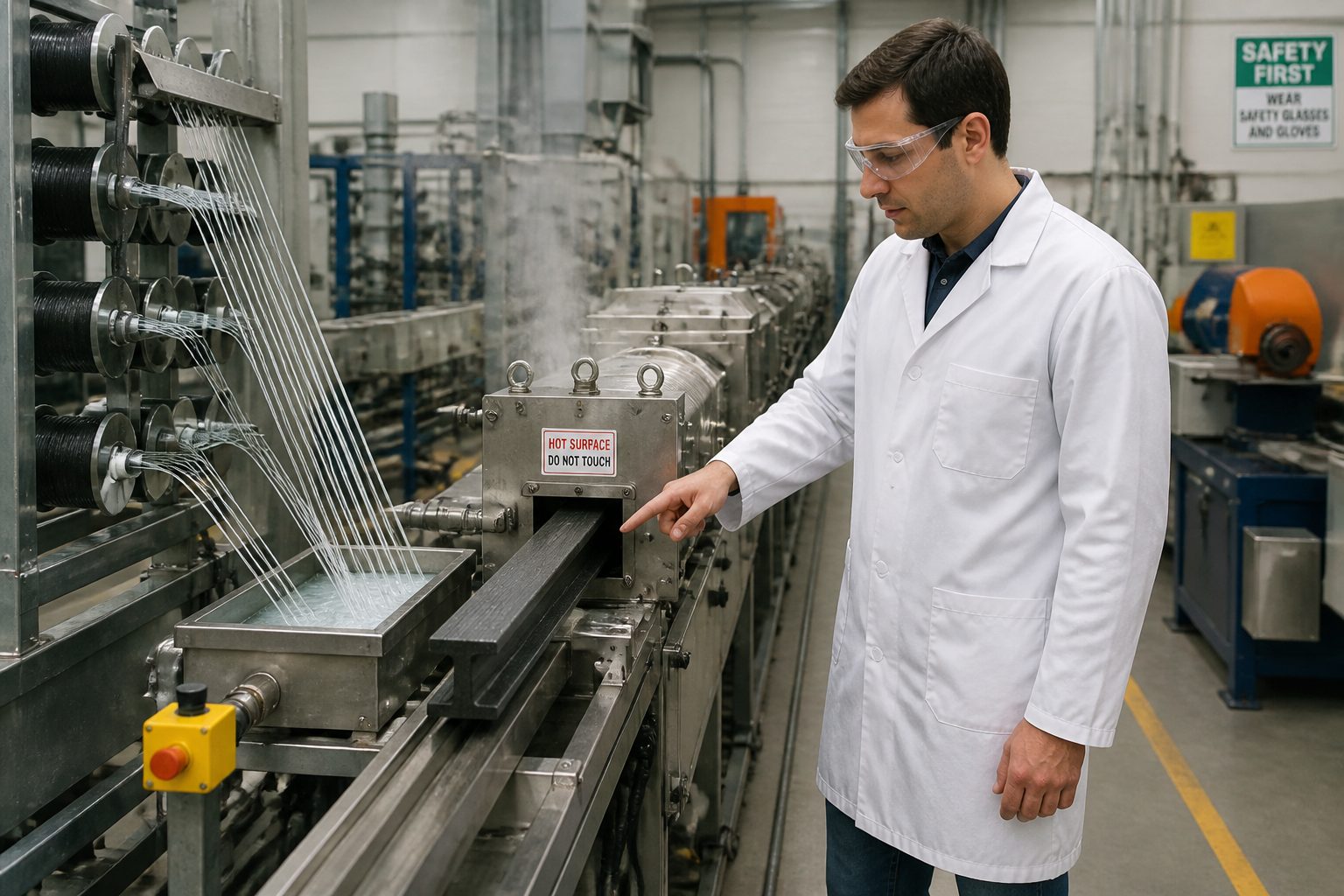
After alignment, the dry fibers pass through a resin impregnation tank. Here, they are thoroughly wetted out with a thermosetting resin system, which typically includes catalysts and other additives. This step ensures that every fiber is encapsulated in resin, which will later bind them together into a solid matrix.
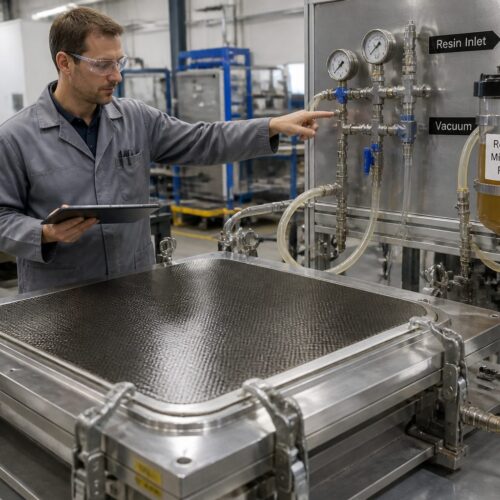
Once saturated with resin, the wet fiber bundle enters a heated steel die. This precisely shaped die gives the pultrusion manufacturing composite profiles their final cross-sectional geometry. Inside the die, the heat triggers the polymerization of the thermosetting resin, transforming it from a liquid into a rigid solid.
The continuous pulling action is performed by a set of reciprocating clamps or a caterpillar-style puller located downstream from the die. These pullers grip the cured profile and steadily draw the uncured materials through the entire system. This constant, controlled pulling speed is essential for maintaining consistent product quality and process stability.
As the cured profile exits the die, it is a rigid, finished part, ready for subsequent operations. Often, the profile passes through a cooling station to stabilize its temperature and prevent warping. Finally, a flying cutoff saw precisely cuts the continuous profile into specified lengths without interrupting the ongoing production line.
The efficiency of continuous fiber profile manufacturing lies in its ability to run uninterrupted for long periods. This leads to high production rates and significant cost savings compared to batch manufacturing processes. The automated nature of pultrusion also contributes to its consistency and reduced labor requirements.
Maintaining precise control over temperature, resin viscosity, and pulling speed is paramount for successful pultrusion. Any deviations can lead to defects such as voids, inconsistent curing, or poor surface finish. Experienced operators constantly monitor these parameters to ensure optimal output.
The choice of release agents applied to the die surface also plays a subtle but important role. These agents prevent the cured composite from sticking to the die, ensuring a smooth exit and extending die life. Without proper release, the continuous process could quickly grind to a halt due to material buildup.
Pultrusion is particularly effective for producing profiles with a high fiber volume fraction and unidirectional fiber orientation. This design maximizes the strength and stiffness along the length of the profile, which is highly beneficial for structural applications. The straightforward material flow helps maintain this critical fiber alignment.
The entire setup of pultrusion manufacturing composite profiles requires careful engineering, from the initial fiber creels to the final cutting station. Each component must work in harmony to deliver a high-quality, continuous product. This integrated approach is what makes pultrusion such a robust manufacturing method for advanced composites.
Raw Materials: Fiber Types and Resin Systems
The performance of pultruded composite sections hinges entirely on the selection of appropriate raw materials. Fibers provide the primary strength and stiffness, while the resin matrix binds them together and transfers loads between them. This synergistic relationship dictates the final properties of the continuous fiber profile manufacturing output.
Glass fibers are by far the most common reinforcement used in pultrusion due to their excellent balance of cost, strength, and electrical insulation properties. Specifically, E-glass is widely employed for general-purpose applications, while S-glass offers higher strength and stiffness for more demanding structural needs. A glass fiber pultruded beam is a common example of this material combination.
| Fiber Type | Key Properties | Typical Applications |
|---|---|---|
| E-Glass | High strength-to-weight ratio, good electrical insulation, low cost | Construction, electrical components, marine structures |
| S-Glass | Higher tensile strength and modulus than E-glass, improved fatigue resistance | Aerospace, high-performance industrial equipment, military |
| Carbon Fiber | Exceptional stiffness, very high strength, lightweight, electrically conductive | Aerospace, sporting goods, high-end industrial parts, medical devices |
| Aramid Fiber (Kevlar) | High toughness, excellent impact resistance, vibration damping | Ballistic protection, pressure vessels, marine fendering |
| Basalt Fiber | Good high-temperature resistance, chemical inertness, environmentally friendly | Infrastructure, automotive, fire-resistant structures |
Die Design and Temperature Control in Pultrusion
The pultrusion die is arguably the most critical component in defining the final shape and quality of the composite profile. Its design directly influences the fiber consolidation, resin curing, and surface finish of the pultrusion manufacturing composite profiles. A poorly designed die can lead to significant production issues and product defects.
Dies are typically made from hardened tool steel, precisely machined to the inverse of the desired profile cross-section. The internal surfaces are polished to a mirror finish to minimize friction and ensure a smooth flow of materials. This careful attention to surface quality also helps in achieving an excellent aesthetic finish on the final pultruded composite sections.
The die generally consists of several zones, each with a specific function. The entry zone allows for initial compaction and shaping of the wetted fiber bundle, gradually transitioning to the final profile. This gradual compression helps to remove excess resin and eliminate air voids, which can compromise structural integrity.
Following the entry zone is the heating section, where precise temperature control is paramount. The die is heated using electrical resistance elements, and multiple zones allow for differential temperature settings along its length. This staged heating ensures a controlled and progressive curing of the resin, preventing premature gelling or overheating.
An optimal temperature profile within the die prevents thermal stresses that could cause warping or internal cracks in the continuous fiber profile manufacturing process. Too low a temperature results in incomplete cure, leading to a weak and tacky profile. Too high a temperature can cause resin degradation or rapid gelling, making the pulling process difficult and potentially damaging the profile.
The exit zone of the die typically maintains a slightly lower temperature to allow the cured profile to cool gradually before exiting. This controlled cooling helps to lock in the final shape and minimize residual stresses. The dimensional stability of the finished part heavily relies on this careful temperature management.
Die wear is a significant concern, especially when processing abrasive fibers like glass or carbon. Over time, the internal surfaces of the die can degrade, affecting the profile’s dimensions and surface quality. Regular maintenance and, eventually, replacement are necessary to uphold product standards.
Advanced die designs might incorporate specialized coatings, such as chrome plating or ceramic liners, to enhance wear resistance and improve release properties. These coatings can significantly extend the operational life of the die, reducing downtime and maintenance costs in continuous fiber profile manufacturing.
The complexity of the profile cross-section directly impacts die design and manufacturing costs. Simple shapes like rods, bars, and I-beams are relatively straightforward. More intricate geometries with varying wall thicknesses or internal voids demand more sophisticated die engineering and precise temperature mapping.
Effective die design is a blend of material science, thermal engineering, and practical experience. It ensures that the pultrusion manufacturing composite profiles emerge with the desired structural integrity, dimensional accuracy, and surface finish. This foundational element is what truly unlocks the potential of the pultrusion technique.
Mechanical Properties of Pultruded Profiles
Pultruded composite sections are celebrated for their exceptional mechanical properties, which often surpass those of traditional materials like steel, aluminum, or timber on a strength-to-weight basis. This makes them highly attractive for applications where weight reduction and high performance are critical. The unidirectional alignment of fibers is a primary driver of these impressive characteristics.
One of the most defining features is their high tensile strength along the longitudinal axis, parallel to the fiber orientation. This strength is directly attributable to the continuous, unbroken fibers running the entire length of the profile. A glass fiber pultruded beam, for instance, can offer impressive load-bearing capabilities in tension.
Similarly, pultruded profiles exhibit excellent flexural strength and stiffness. When subjected to bending loads, the fibers resist deformation, contributing significantly to the section’s rigidity. Engineers can design structures with longer spans and lighter supporting frameworks by leveraging these properties.
While longitudinal properties are outstanding, it’s important to note that transverse properties (perpendicular to the fibers) are generally lower. The resin matrix primarily governs these properties, and while strong, it cannot match the strength provided by the continuous fibers. This anisotropy is a characteristic feature of unidirectional composites.
Pultruded materials also boast superior fatigue resistance compared to many metals. They can withstand repeated loading cycles without succumbing to material degradation as quickly. This makes them ideal for dynamic applications where components are subject to constant stress variations.
Impact resistance varies depending on the fiber and resin system chosen. While carbon fiber composites can be brittle, glass fiber pultruded beam sections often demonstrate good toughness. The specific formulation of the resin and the presence of any secondary reinforcement, like chopped strand mat, also play a role in mitigating impact damage.
Another significant advantage is their excellent corrosion resistance. Unlike metals that can rust or degrade in harsh chemical environments, pultruded composites are largely unaffected by moisture, acids, and alkalis. This property makes them invaluable in marine, chemical processing, and wastewater treatment plants.
Thermal stability is another key property, particularly for profiles used in high-temperature environments. While thermosetting resins have a specific heat deflection temperature, the composite as a whole retains its structural integrity better than many plastics. This allows them to perform reliably under varying thermal conditions.
The specific combination of fiber type, resin system, and fiber volume fraction allows for tailoring the mechanical properties of pultrusion manufacturing composite profiles. Engineers can specify materials to meet precise strength, stiffness, weight, and environmental resistance requirements. This design flexibility is a major benefit of continuous fiber profile manufacturing.
Understanding the anisotropic nature and specific mechanical advantages of pultruded composites is crucial for their effective application. When properly designed and utilized, these materials offer a compelling alternative to traditional engineering materials, pushing the boundaries of what’s possible in structural design.
Standard and Custom Pultruded Structural Shapes
The versatility of pultrusion manufacturing composite profiles extends to the vast array of shapes that can be produced. While many standard structural profiles are readily available, the process truly shines in its capability to create custom cross-sections tailored to specific project needs. This adaptability is a huge selling point for engineers.
Standard pultruded composite sections mimic many common metal profiles, making them easy to integrate into existing designs and construction practices. These include familiar shapes like I-beams, W-beams, channels, angles, round rods, square bars, and rectangular tubes. A glass fiber pultruded beam is a staple in many industrial and infrastructure projects.
- I-Beams and Wide Flange Beams: Excellent for bending and load-bearing
- Channels and Angles: Used for bracing, framing, and support structures
- Round Rods and Square Bars: Ideal for dowels, rebar, and small structural elements
- Rectangular and Square Tubes: Enclosures, structural framing, and handrails
- Flat Sheets and Plates: Panels, flooring, and protective barriers
- Custom Profiles: Unique geometries for specific functions or aesthetic requirements
- Window and Door Frames: Non-conductive and weather-resistant
- Electrical Conduit and Cable Trays: Corrosion-resistant and electrically insulating
- Ladder Rungs and Handrails: Lightweight and durable
- Antenna Masts and Radomes: Low dielectric constant, transparent to radio waves
Applications in Construction, Electrical, and Industrial Sectors
The unique combination of properties offered by pultruded composite sections has opened doors to their widespread adoption across numerous industries. From resisting harsh environments to providing crucial electrical insulation, these profiles offer solutions where traditional materials fall short. Pultrusion manufacturing composite profiles are truly versatile.
In the construction sector, pultruded materials are gaining significant traction. Their high strength-to-weight ratio allows for lighter structures, reducing foundation costs and simplifying installation. The corrosion resistance of a glass fiber pultruded beam makes it an excellent choice for bridges, boardwalks, and marine structures, especially in saltwater environments where steel would rapidly degrade.
Pultruded profiles are also increasingly used as rebar in concrete structures, particularly in areas exposed to de-icing salts or marine conditions. Unlike steel rebar, FRP (Fiber Reinforced Polymer) rebar does not corrode, preventing concrete spalling and extending the lifespan of infrastructure. This is a game-changer for long-term durability.
The electrical sector heavily relies on the excellent dielectric properties of pultruded composites. Components like utility poles, cross-arms, standoff insulators, and cable trays benefit from their non-conductive nature. This ensures safety for workers and prevents electrical shorts, making continuous fiber profile manufacturing crucial for modern power grids.
For telecommunications, pultruded profiles are used in antenna masts, radomes, and equipment housings. Their transparency to radio frequencies minimizes signal interference, while their light weight and corrosion resistance ensure reliable performance in all weather conditions. This is a specialized application where composites truly excel.
The industrial sector finds countless uses for pultruded products, especially in corrosive chemical processing plants. Walkways, handrails, platforms, and structural supports made from pultruded composite sections offer a safe and long-lasting alternative to metal components. They withstand exposure to acids, alkalis, and solvents without degradation.
Cooling towers, wastewater treatment facilities, and mining operations also benefit from these durable materials. The resistance to moisture, chemicals, and microbial attack ensures a much longer service life and reduced maintenance requirements. This translates directly into lower operational costs over time.
Beyond these major sectors, pultruded profiles appear in sporting goods, automotive components, and even medical devices. Their ability to be custom-engineered for specific mechanical and environmental challenges makes them incredibly adaptable. The versatility of pultrusion manufacturing composite profiles continues to drive innovation in product design.
Consider the increasing demand for sustainable materials; many pultruded products offer a longer service life, reducing the need for frequent replacement. This contributes to a lower lifecycle environmental impact, which is an important factor in today’s engineering decisions. It’s a testament to their practicality and forward-thinking design.
The ongoing research into new fiber and resin combinations, alongside advanced process controls, promises even broader applications for continuous fiber profile manufacturing. As engineers become more familiar with these materials, we expect to see them integrated into even more challenging and innovative projects. The potential for pultruded composites is still expanding.
Conclusion
Pultrusion represents a powerful and efficient method for continuous fiber profile manufacturing, delivering composite products with exceptional performance characteristics. Its ability to create strong, lightweight, and corrosion-resistant pultruded composite sections has firmly established its place in modern engineering. This process is a true workhorse in the advanced materials landscape.
We’ve walked through the meticulous steps of the pultrusion process, from the precise alignment of continuous fibers to their impregnation with specialized resins and subsequent curing in a heated die. Each stage demands careful control to ensure the integrity and quality of the final pultrusion manufacturing composite profiles. It’s a testament to engineering precision.
The selection of raw materials, particularly the fiber type and resin system, directly dictates the mechanical and environmental performance of the finished product. Whether it’s a high-strength glass fiber pultruded beam or a lightweight carbon fiber spar, the material science behind the choice is critical. This tailoring ability is a major advantage.
Die design and rigorous temperature control within the pultrusion line are not merely technical details; they are fundamental to achieving dimensional accuracy, optimal cure, and a superior surface finish. These elements directly impact the structural integrity and aesthetic appeal of the pultruded components. This precision is what makes the process so reliable.
The remarkable mechanical properties, including high tensile and flexural strength, along with excellent fatigue and corrosion resistance, position pultruded profiles as indispensable in demanding applications. They offer engineers a robust alternative to traditional materials, often providing performance that metals simply cannot match under certain conditions. This is a compelling argument for their use.
From standard I-beams and channels to complex custom shapes, the versatility in profile geometry allows for endless design possibilities. This adaptability ensures that pultrusion can meet the diverse and evolving needs of various industries. The ability to create specific solutions is truly invaluable.
The widespread applications across construction, electrical infrastructure, and industrial environments underscore the practical value of pultrusion manufacturing composite profiles. Their contribution to building safer, more durable, and more efficient structures and systems is undeniable. We see their impact everywhere, often without realizing it.
As material science continues to advance, we expect pultrusion technology to evolve further, incorporating even more advanced fibers and resin chemistries. This ongoing innovation will undoubtedly expand the horizons for continuous fiber profile manufacturing. The future of high-performance composites looks very promising indeed.
For engineers and designers seeking materials that combine high performance with long-term reliability and environmental resistance, pultruded composite sections offer a compelling solution. They represent a smart investment in durability and efficiency for a wide array of structural and functional applications. This technology is here to stay.
Ultimately, pultrusion is not just a manufacturing process; it’s a cornerstone of modern composite engineering, enabling the creation of components that push the boundaries of design and performance. It consistently delivers high-quality, continuous profiles that solve complex engineering challenges. That’s a powerful capability in any industry.