
Polymer science has evolved from bulk synthesis to molecular-level engineering, allowing chemists to design materials with unprecedented specificity. Traditional polymerization often yields broad molecular weight distributions and uncontrolled structures, limiting performance. Living polymerization techniques represent a monumental leap forward, enabling the creation of polymers with tailored properties essential for modern engineering and high-performance material development.
This precise control over polymer architecture leads directly to materials with superior mechanical, thermal, and optical characteristics, making it a cornerstone of contemporary polymer engineering. Researchers routinely employ these advanced synthetic strategies to explore novel material properties, with their impact felt across numerous scientific disciplines.
The Concept of Living Polymerization
Living polymerization describes a chain growth process where active centers persist throughout the reaction, allowing for continuous chain extension. The key characteristic is the absence of irreversible chain termination or transfer reactions, meaning polymer chains continue to grow as long as monomer is available.
This sustained reactivity allows for the sequential addition of different monomers, leading to the creation of block copolymers and other complex architectures. The ability to restart or extend polymerization makes these techniques incredibly versatile, offering a modular approach to polymer design.
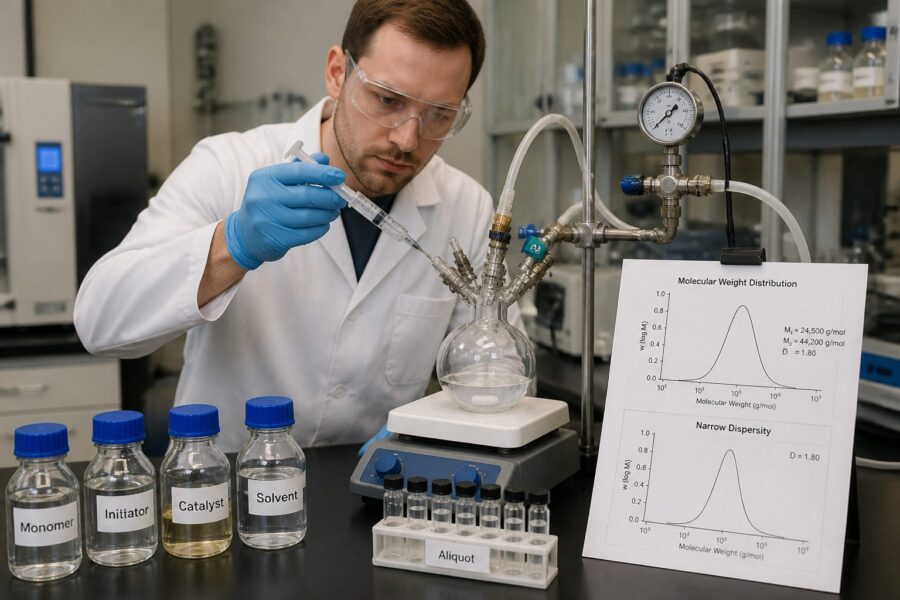
A narrow molecular weight distribution is a direct outcome, as all polymer chains initiate and grow at similar rates. This controlled growth allows for predictable molecular weights, directly proportional to the monomer-to-initiator ratio, a hallmark of living polymerization.
The term “living” denotes a chemical state of sustained reactivity, providing unparalleled synthetic flexibility. Controlling initiation, propagation, and termination steps is paramount, requiring meticulous selection of initiators and reaction conditions to ensure minimal side reactions.
Understanding these fundamental principles is essential for designing high-performance materials, moving beyond simple polymer synthesis to molecular-level sculpting. The concept hinges on maintaining a precise balance between active and dormant species, minimizing dead chains and ensuring pseudo-first-order kinetics.
Anionic Living Polymerization: Mechanism and Control
Anionic living polymerization stands as one of the oldest and most well-understood living polymerization techniques. It involves the propagation of a polymer chain by an anionic active center. This method was pioneered by Michael Szwarc in the 1950s, demonstrating true living characteristics.
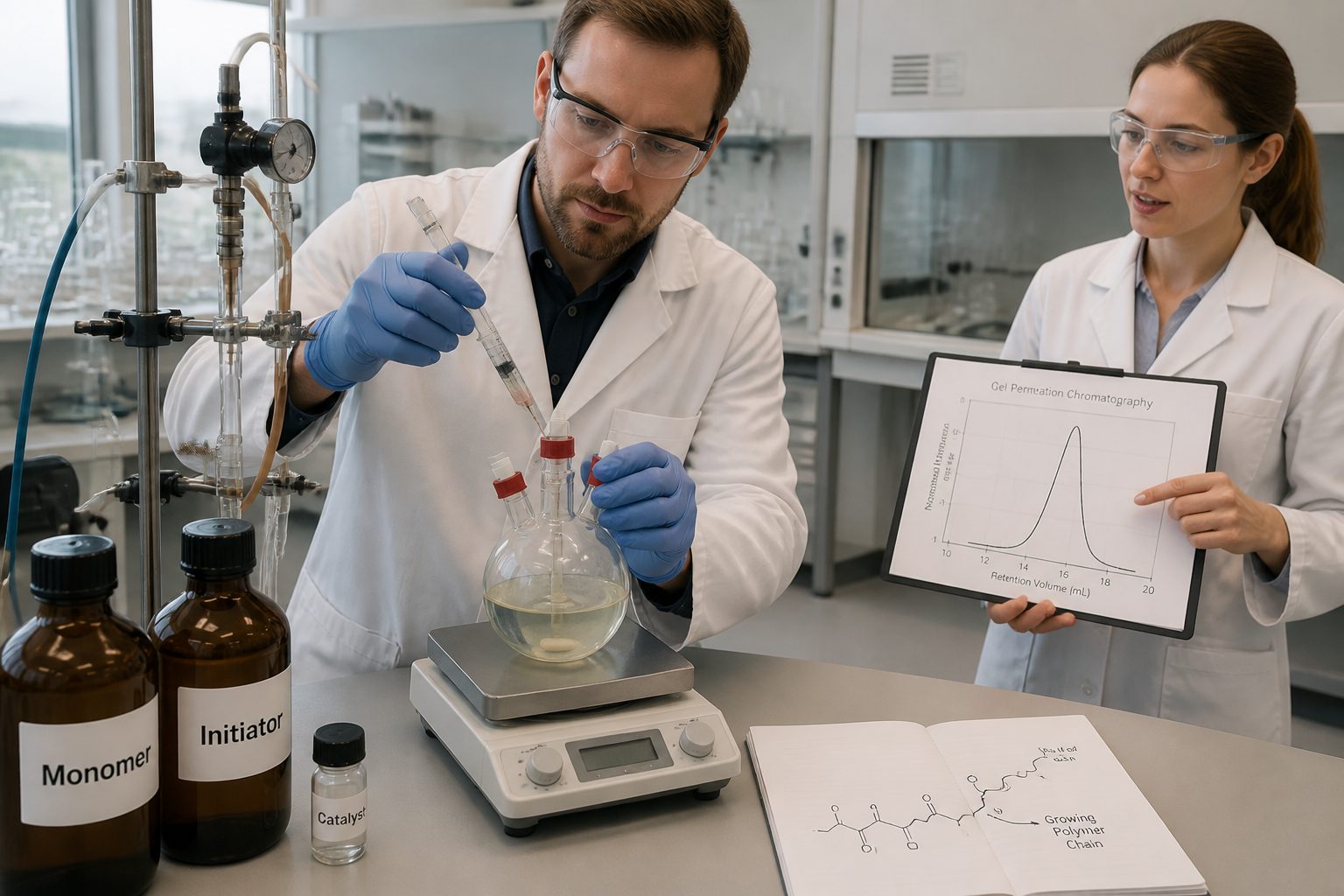
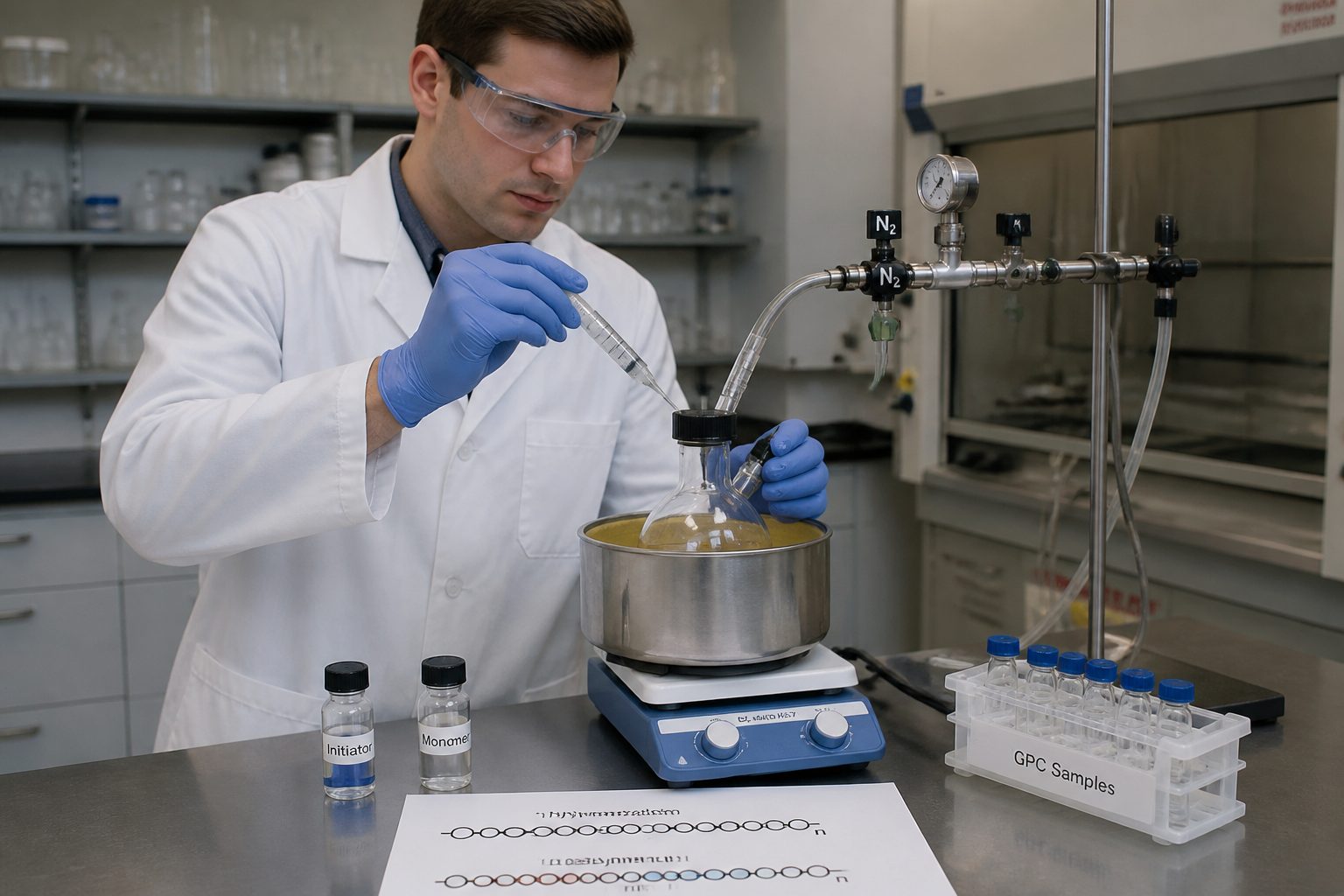
The mechanism typically begins with a strong nucleophile, like an alkyllithium compound, initiating the polymerization of specific monomers. Styrene and dienes like butadiene and isoprene are classic examples of monomers amenable to this technique. The anionic active end then adds successive monomer units.
| Characteristic | Description | Control Parameter |
|---|---|---|
| Initiator Type | Strong nucleophiles (e.g., alkyllithiums, sodium naphthalenide) | Concentration of initiator |
| Monomer Scope | Non-polar, electron-deficient monomers (e.g., styrene, dienes, acrylates) | Monomer purity, reaction temperature |
| Active Species | Carbanions at chain ends | Solvent polarity, counterion |
| Termination/Transfer | Virtually absent under ideal conditions | Exclusion of impurities (water, oxygen) |
| Molecular Weight Control | Directly proportional to monomer/initiator ratio | Ratio of monomer to initiator |
| Architecture Control | Block copolymers by sequential monomer addition | Order and type of monomer addition |
Controlling anionic polymerization relies heavily on meticulously purified reagents and inert reaction conditions. Even trace amounts of impurities such as water, oxygen, or carbon dioxide can irreversibly terminate the growing polymer chains. This sensitivity makes it a challenging but highly effective method.
The choice of solvent also significantly influences the reaction kinetics and the microstructure of the resulting polymer. Polar solvents can lead to faster propagation rates and different stereoregularity compared to non-polar solvents. This fine-tuning capability allows for precise material design.
Anionic living polymerization is particularly renowned for producing polymers with exceptionally narrow molecular weight distribution, as all chains initiate almost simultaneously and grow at similar rates.
Beyond simple linear chains, this technique facilitates the synthesis of complex architectures like star, comb, and even dendritic polymers. By using multifunctional initiators or coupling agents, chemists can create intricate macromolecular structures. This versatility makes it a powerful tool for advanced material synthesis.
The active carbanion chain ends can be quenched with various electrophiles to introduce specific functional groups. This functionalization capability allows for tailoring the polymer’s surface properties or enabling further chemical modifications. It opens pathways to creating highly specialized materials.
Despite its stringent requirements, anionic living polymerization remains a cornerstone for synthesizing high-quality, well-defined polymers. Its robust control over molecular weight, architecture, and end-group functionality makes it indispensable for materials requiring exact specifications. Researchers continue to explore new monomer systems and initiator combinations, addressing challenges like monomer compatibility and reaction scalability, ensuring its continued relevance in modern polymer science.
Atom Transfer Radical Polymerization (ATRP)
Atom Transfer Radical Polymerization, or ATRP, is a highly versatile and widely used method for controlled radical polymerization. This technique employs a transition metal catalyst to reversibly activate and deactivate dormant polymer chains. It offers precise control over molecular weight and architecture.
The mechanism involves a rapid equilibrium between a dormant, halogen-terminated polymer chain and an active radical species. A transition metal complex, typically based on copper, abstracts a halogen atom from the dormant chain, generating a propagating radical. This active radical then adds monomer units.
The key to ATRP lies in the catalyst’s ability to rapidly and reversibly transfer the halogen atom, maintaining a low concentration of active radicals. This minimizes termination reactions and ensures synchronized growth, resulting in polymers with narrow molecular weight distribution.
ATRP accommodates a broad range of monomers, including acrylates, methacrylates, styrene, and acrylonitrile. This wide monomer scope makes it incredibly useful for synthesizing diverse polymeric materials. The versatility extends to various functional monomers as well.
Controlling ATRP involves careful selection of the initiator, catalyst, and ligand. Ligands are critical for stabilizing the transition metal complex and tuning its redox potential, optimizing atom transfer for improved control and faster reactions.
One significant advantage of ATRP controlled radical polymerization is its tolerance to a variety of reaction conditions, including protic solvents and higher temperatures. This robustness allows for greater flexibility in experimental design. It makes the technique more accessible than anionic methods.
ATRP enables the synthesis of complex polymer architectures like block, graft, and star polymers. The active halogen chain ends can also be easily transformed into other functional groups or reactivated, expanding the utility of ATRP-derived polymers.
The development of ICAR and ARGET ATRP techniques has enhanced practicality by reducing catalyst loading, making the process more environmentally friendly and scalable. ATRP’s ability to combine living polymerization advantages with radical polymerization versatility makes it a powerful platform for precision synthesis.
RAFT Polymerization and Its Advantages
Reversible Addition-Fragmentation Chain Transfer, or RAFT polymerization technique, stands as another powerful method for controlled radical polymerization. It achieves living characteristics through the use of a specially designed chain transfer agent (CTA). This agent reversibly traps propagating radicals.
The RAFT mechanism involves a rapid degenerative chain transfer process between active propagating radicals and dormant polymer chains. The CTA, typically a thiocarbonylthio compound, facilitates this reversible transfer, maintaining a low concentration of active radicals. This equilibrium ensures controlled growth.
During RAFT polymerization, the CTA is constantly involved in addition-fragmentation reactions, effectively “shuttling” radical activity between chains. This rapid exchange ensures all chains grow at a similar rate, leading to polymers with narrow molecular weight distribution.
A major advantage of RAFT is its compatibility with a vast array of monomers and reaction conditions, including water, and across a wide range of temperatures. This broad scope and robustness make it suitable for diverse applications.
The choice of CTA is critical for successful RAFT polymerization, as its structure influences the efficiency of chain transfer. Different dithioester or trithiocarbonate CTAs are optimized for specific monomer types. Selecting the right CTA ensures optimal control and minimal side reactions.
Like ATRP, RAFT polymerization enables the synthesis of complex polymer architectures with high precision. Block copolymers, star polymers, and gradient copolymers are readily accessible using sequential monomer addition or multifunctional CTAs. This architectural versatility is a significant benefit.
The thiocarbonylthio end-group of RAFT-derived polymers can be readily transformed into other functionalities or removed entirely. This post-polymerization modification capability allows for further tailoring of polymer properties. It adds another layer of control for material scientists.
RAFT is generally considered more robust and less sensitive to impurities compared to anionic or some earlier controlled radical methods. The absence of metal catalysts in many RAFT systems is another significant advantage, especially for biomedical or electronic applications where metal contamination is undesirable.
The predictable molecular weights and narrow molecular weight distribution achieved by RAFT polymerization are crucial for high-performance materials. This precision, combined with its broad applicability and robust nature, cements its position as a leading method for living polymerization controlled synthesis, driving innovation in polymer science.
Achieving Precise Molecular Weight and Architecture
The core promise of living polymerization techniques is unprecedented control over polymer molecular weight and architecture. Achieving a narrow molecular weight distribution (dispersity, Đ, close to 1.0) is a primary goal, ensuring uniform chain length and consistent material properties. This control directly relates to the initial monomer-to-initiator ratio, allowing for precise targeting of desired molecular weights.
- Careful initiator selection
- Optimized monomer-to-initiator ratio
- Rigorous purification of reagents
- Precise temperature control
- Appropriate solvent choice
- Efficient catalyst/CTA system
- Minimal chain transfer/termination
- Controlled reaction time
- Sequential monomer addition for blocks
- Use of multifunctional initiators
Beyond simple linear chains, living polymerization offers unparalleled ability to construct complex architectures like block copolymers, star polymers, graft copolymers, and brush polymers. These diverse structures, each with unique properties, enable applications from microphase separation to specialized lubrication, drug delivery, and surface modification.
The living nature of the chain ends means they can be further functionalized with specific chemical groups. This end-group control allows for the attachment of biologically active molecules, fluorescent tags, or cross-linkable moieties. Such functionalization greatly expands the utility of these precision polymers.
The ability to design and synthesize polymers with such exacting specifications directly impacts their performance. Predictable material behavior stems from predictable molecular structure, translating into tangible benefits like sharper thermal transitions, improved mechanical strength, and more consistent optical properties.
The pursuit of even greater precision continues, with researchers exploring new catalytic systems and polymerization mechanisms. The goal is always to push the boundaries of macromolecular engineering. This ongoing innovation ensures the continued relevance and impact of living polymerization controlled synthesis.
Applications of Precision Polymers from Living Techniques
The precision polymers synthesized using living polymerization techniques find widespread application across numerous high-tech industries. Their tailored properties, including predictable molecular weights and diverse architectures, make them indispensable for advanced materials. These materials often outperform those made by conventional methods.
In the biomedical field, these polymers are revolutionizing drug delivery systems. Block copolymers, for instance, can self-assemble into micelles or vesicles that encapsulate therapeutic agents, protecting them and enabling targeted delivery. This precise control over structure is essential for biocompatibility and efficacy.
Biocompatible polymers with specific functionalities are also employed in tissue engineering and regenerative medicine. They can form scaffolds that mimic natural extracellular matrices, guiding cell growth and differentiation. The ability to control degradability and mechanical properties is crucial here.
The electronics industry benefits significantly from polymers with tailored electrical and optical properties, used in OLEDs, flexible electronics, and sensors. Block copolymers can form highly ordered nanostructures, serving as templates for fabricating nanoscale electronic components, enabling smaller, more efficient devices.
Coatings and adhesives represent another major application area for these advanced polymers. Tailored block copolymers can provide superior adhesion, scratch resistance, and weatherability. Their ability to form robust, uniform films is critical for long-lasting performance.
Smart materials, responsive to stimuli like temperature or pH, are often developed using living polymerization. Thermoresponsive polymers, for instance, can change solubility or shape at specific temperatures, providing dynamic functionality for smart textiles, sensors, and environmental remediation.
In filtration and separation technologies, precision polymers are utilized to create membranes with highly selective pore sizes. Block copolymers can form ordered porous structures that allow for efficient separation of molecules. This selectivity is vital for water purification and industrial processing.
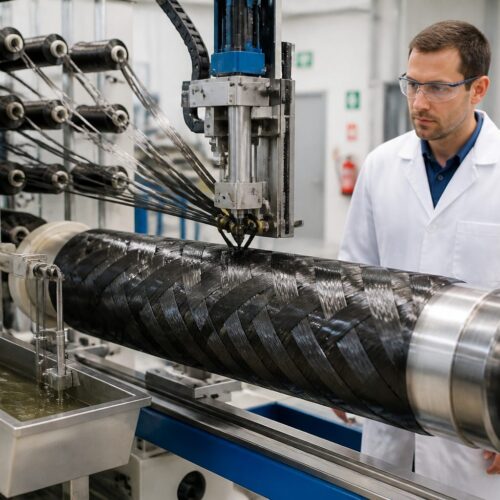
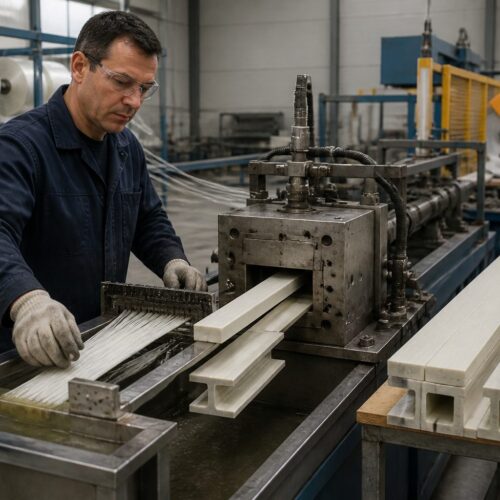
The automotive and aerospace sectors also leverage these materials for lightweight composites and high-performance components. Polymers with specific thermal and mechanical properties contribute to fuel efficiency and enhanced safety. Their reliability under extreme conditions is paramount.
The demand for polymers with precisely controlled structures continues to grow across sectors like automotive and aerospace, where they contribute to lightweight composites and high-performance components. Ongoing development of new living polymerization techniques promises even more innovative applications, translating molecular control into macroscopic performance.
Conclusion
Living polymerization techniques have transformed polymer science, offering precision synthesis of macromolecules with controlled molecular weights and diverse architectures. From anionic to ATRP and RAFT, these methods provide a comprehensive toolkit for crafting polymers with exacting specifications. The ability to achieve narrow molecular weight distribution and complex architectures is crucial for high-performance applications, stemming from meticulous control over initiation, propagation, and termination.
The applications of these precision polymers are vast and continue to expand, impacting fields from medicine and electronics to automotive and aerospace. They enable innovations that improve quality of life and push technological boundaries. Their utility is only limited by our imagination.
Ongoing research aims to further refine these techniques, reduce catalyst loadings, and expand monomer scope, making them more accessible and sustainable. The integration of AI and automation also holds promise for enhancing precision and efficiency in polymer design and synthesis.
Mastering the principles and applications of living polymerization is essential for developing advanced materials and innovative solutions. This journey from bulk synthesis to molecular-level precision highlights incredible progress, establishing living polymerization as the pinnacle of controlled polymer synthesis.