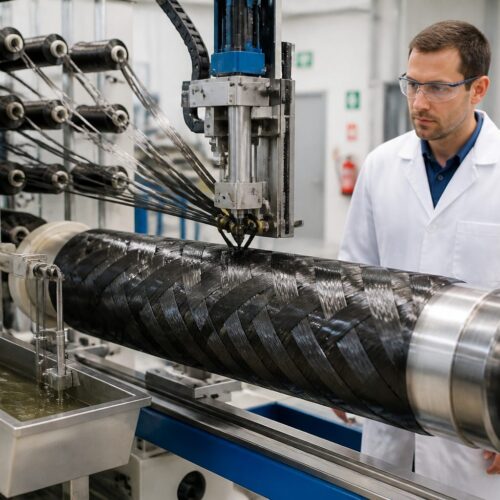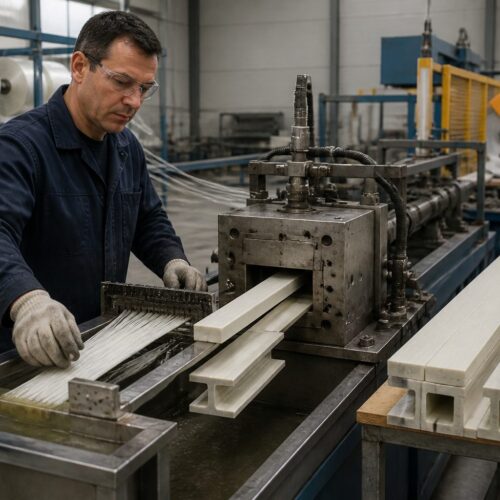

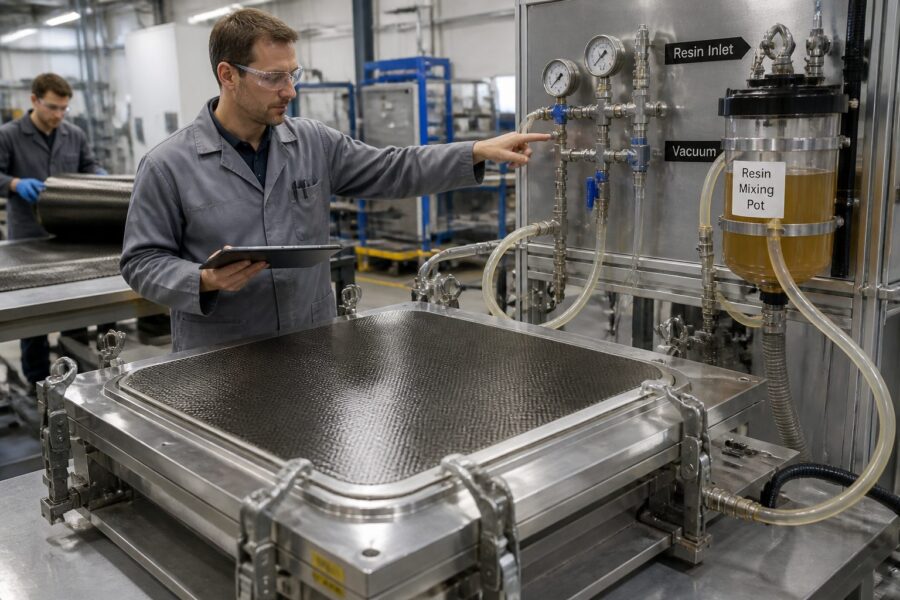
Resin Transfer Molding (RTM) is a formidable technique for high-volume production of fiber-reinforced polymer composites. It offers design flexibility and superior part quality, making it ideal for demanding applications. The resin transfer molding process for composites is gaining traction across industries from automotive to aerospace.
Engineers and material scientists value RTM for its ability to produce complex geometries with excellent surface finish on both sides. Unlike open-mold processes, RTM uses a closed mold, which reduces volatile organic compound (VOC) emissions and enhances worker safety. This closed mold process also allows precise control over fiber volume fraction and laminate thickness, critical for performance.
RTM involves placing a dry fiber preform inside a rigid mold, closing it, and then injecting a low-viscosity resin under pressure. This fiber preform resin infusion saturates the reinforcement, curing to form a solid, high-strength composite part. Mastering the resin transfer molding process for composites enhances composite manufacturing efficiency.
Principles of Resin Transfer Molding
The fundamental principle of the resin transfer molding process for composites is impregnating a dry fiber reinforcement within a sealed mold cavity. This method ensures a controlled environment for resin flow and curing, crucial for consistent part quality. It eliminates the mess and inconsistency of hand lay-up techniques.
First, a precisely shaped fiber preform, from woven fabrics, chopped strand mats, or stitched multi-axial textiles, is positioned inside the lower half of a rigid mold. This preform defines the final shape and structural properties of the composite part. The choice of fiber reinforcement impacts the mechanical performance of the finished component.
Once the preform is in place, the mold closes and seals, creating a vacuum-tight cavity. This sealed environment is essential to prevent air entrapment during resin injection, preventing critical defects. A closed mold process like RTM supports automation and repeatability.
A thermosetting resin (e.g., polyester, vinyl ester, or epoxy) is then injected into the mold cavity through strategically placed ports. The resin travels through the fiber preform, displacing air and fully saturating the reinforcement. Resin viscosity and injection pressure are critical parameters for successful infusion.
Injection continues until the resin fills the mold cavity and exits through vent ports. This ensures full fiber preform resin infusion. Monitoring resin flow fronts and pressure gradients provides real-time feedback during this stage.


After impregnation, the resin cures, often with heat, solidifying the composite part. The curing cycle is controlled for optimal material properties and minimal residual stresses. This transforms the liquid resin and dry fibers into a strong, integrated structure.
RTM offers distinct advantages over open molding, particularly in process control and environmental impact. The controlled injection and closed environment lead to higher fiber volume fractions and lower void content, leading to better mechanical performance. This makes the resin transfer molding process for composites a preferred choice for high-performance applications.
The closed mold also limits worker exposure to styrene and other volatile organic compounds, creating a safer, more compliant manufacturing environment. This is crucial for sustainable, health-conscious production.
Tooling and mold design for RTM
Effective tooling and mold design are critical for successful Resin Transfer Molding, influencing part quality and production efficiency. The mold must withstand high injection pressures and temperatures while maintaining precise dimensional accuracy. Poor design leads to production issues.
RTM molds are typically rigid, from steel, aluminum, or high-strength composites for shorter runs. Steel molds offer excellent durability and thermal stability for high-volume production, but are costly and have long lead times. Aluminum molds balance cost and performance for medium volumes, being easier to machine and lighter.
| Mold Material | Typical Application Volume | Advantages | Disadvantages |
|---|---|---|---|
| Steel | High (10,000+ parts) | Excellent durability, thermal stability, long lifespan | High cost, heavy, long lead time for fabrication |
| Aluminum | Medium (1,000-10,000 parts) | Good thermal conductivity, lighter, easier to machine | Less durable than steel, can wear over time |
| Epoxy/Composite | Low (100-1,000 parts) | Low cost, fast fabrication, complex shapes possible | Limited lifespan, lower pressure/temperature resistance |
| Nickel Shell | High (10,000+ parts) | Excellent surface finish, good thermal control | Complex fabrication, high cost |
Mold design incorporates injection ports, vent ports, and sometimes vacuum ports for complex parts or complete fiber preform resin infusion. Their placement and sizing are critical for uniform resin flow, preventing dry spots or voids. Simulation software often optimizes placement before mold construction.
Heating and cooling channels are integrated into RTM molds to control the resin’s temperature during injection and curing. Precise temperature control manages resin viscosity and cure kinetics, affecting cycle time and material properties. This thermal management is key to consistent, high-quality composite parts.
The mold halves must seal to contain the injected resin under pressure and maintain vacuum during the RTM closed mold process. Gasketing and clamping mechanisms prevent resin leakage and ensure dimensional accuracy. Gaps compromise part integrity.
Surface finish requirements for the final composite part also dictate mold material and internal surface quality. A highly polished mold surface yields a smooth, aesthetically pleasing part surface. Important for aerospace or automotive exterior panels.
Designing for demolding is crucial, incorporating draft angles and release agents for easy, damage-free part removal. An efficient demolding process enhances composite manufacturing efficiency.
The overall cost of tooling is a significant investment, especially for large or complex RTM molds. This initial outlay often justifies RTM for medium to high-volume production, amortizing cost over many parts. This balances upfront expense with per-part cost savings.
Fiber preform preparation and placement
Fiber preform preparation and precise placement are critical steps for the resin transfer molding process for composites, impacting the structural integrity of the final part. The preform defines the fiber architecture, dictating mechanical properties and performance.
Preforms are created from dry reinforcement materials like woven fabrics, stitched multi-axial fabrics, chopped strand mats, or non-crimp fabrics. These materials are chosen for desired strength, stiffness, and impact resistance. Different fiber types, like carbon, glass, or aramid, offer distinct performance.
The process begins with cutting the reinforcement material to the exact shape and size for the mold cavity. Automated cutting machines, like CNC knife or laser cutters, ensure precision and repeatability. This minimizes material waste and ensures consistent part geometry.
For complex geometries, multiple layers of fabric are shaped and consolidated into a single preform. Techniques like thermoforming, using heat-activated binders to hold plies together, are common for stable, 3D preforms. This consolidation prevents fiber movement during resin injection.
Stitching or binder application maintains the preform’s integrity and prevents fiber washout during fiber preform resin infusion. Without a stable preform, resin flow can cause fibers to shift, leading to inconsistent fiber volume fraction or dry spots.
Once prepared, the preform is placed into the lower half of the RTM mold. This placement requires precise alignment, avoiding wrinkles or folds. Misalignment leads to localized stress concentrations in the finished part.
Automation, like robotic placement systems, improves the accuracy and speed of preform loading for high-volume production. These systems reduce human error and boost composite manufacturing efficiency. They also assist with larger, heavier preforms.
Proper seating of the preform against the mold surfaces ensures consistent part thickness and intimate contact for efficient resin flow. Vacuum assistance during preform placement can draw the preform snugly into complex mold features.
Quality control at this stage involves visual inspection for defects like wrinkles, tears, or misplaced plies. Digital imaging techniques can provide objective, quantitative assessments of preform quality before mold closure. Early detection prevents costly rework.
The fiber volume fraction is determined by the preform design and compaction within the mold. A higher fiber volume fraction leads to higher mechanical properties, but can challenge resin infusion.
Resin injection parameters and process control
Controlling resin injection parameters is critical for the resin transfer molding process for composites, dictating impregnation quality and cycle time. Precision prevents defects like voids and ensures optimal mechanical properties. Deviations cause material flaws.
Resin injection pressure is a primary parameter. Too low a pressure causes incomplete impregnation or long fill times, while excessive pressure risks damaging the fiber preform or causing resin leakage. Careful management is key to efficient manufacturing.
Resin viscosity influences resin flow through the fiber preform. Low-viscosity resins infuse faster and more completely but have shorter pot lives. High viscosity resins may require higher pressures or longer fill times.
Temperature control of both the resin and the mold manages viscosity and cure kinetics. Heating the resin lowers viscosity, aiding flow, while mold temperature influences cure rate. This thermal management is vital for the RTM closed mold process.
The injection rate needs careful calibration. A fast injection rate might trap air in complex geometries, while a very slow rate prolongs cycle time, risking premature gelling. Balancing these factors ensures full, defect-free impregnation.
Vacuum assistance is employed prior to and during resin injection, especially for large or intricate fiber preform resin infusion. Pulling a vacuum on the mold cavity removes trapped air, reducing void content and improving laminate quality.
The placement of injection gates and vent ports influences the resin flow front and overall fill pattern. Engineers use flow simulation software to predict resin flow through a preform and mold design. This optimizes port locations, avoiding common issues like race-tracking or dry spots.
Process control systems monitor real-time parameters like injection pressure, resin temperature, mold temperature, and resin flow rates. These systems dynamically adjust parameters to maintain optimal conditions during injection. This automation is crucial for composite manufacturing efficiency and consistency.
Automated mixing and dispensing equipment ensure accurate proportioning and thorough mixing of multi-component resins just before injection. Inconsistent mixing can lead to incomplete cure or variations in mechanical properties. Precise material preparation ensures batch consistency.
Once the mold is filled, the resin undergoes a curing cycle, often by heating the mold. The curing profile, including ramp rates and hold times, is critical for full polymerization and desired mechanical properties. An optimized cure cycle impacts the strength and durability of the finished part.
Variants of RTM: VARTM, RRIM, and SRIM
The core resin transfer molding process for composites has inspired variants tailored to specific manufacturing needs and material systems. These address challenges from tooling costs to material types, expanding RTM’s applicability.
Vacuum-Assisted Resin Transfer Molding (VARTM) is a widely used modification. Instead of high injection pressure, VARTM relies on vacuum to draw resin into the fiber preform, often using a single-sided rigid mold and a flexible vacuum bag. This lowers tooling costs and simplifies the RTM closed mold process, making it accessible for larger parts or lower volumes.
- VARTM (Vacuum-Assisted RTM): Uses vacuum to draw resin, often with a flexible bag.
- RRIM (Reinforced Reaction Injection Molding): Injects short fibers directly into the resin stream.
- SRIM (Structural Reaction Injection Molding): Combines dry fiber preforms with RRIM-like injection.
- LRTM (Light RTM): Similar to VARTM, but uses a semi-rigid counter mold under vacuum.
- HP-RTM (High-Pressure RTM): Focuses on very fast cycle times with high pressure and rapid curing resins.
Reinforced Reaction Injection Molding (RRIM) integrates short, chopped fibers directly into the resin stream. This process uses highly reactive resin systems (e.g., polyurethanes) that cure rapidly. RRIM is excellent for complex shapes and good mechanical properties at high production rates, seen in automotive bumpers and body panels.
Structural Reaction Injection Molding (SRIM) combines RRIM advantages with a continuous fiber preform. In SRIM, a dry fiber preform is placed in the mold, then low-viscosity, fast-reacting resin is injected under low pressure, similar to an RTM closed mold process. This allows higher fiber content and superior structural performance than RRIM, bridging traditional RTM and pure RIM.
Light RTM (LRTM) uses a semi-rigid, lightweight counter-mold instead of a full vacuum bag. This counter-mold allows controlled cavity thickness and achieves good surface finish on both sides, while offering lower tooling costs than traditional RTM.
High-Pressure RTM (HP-RTM) is designed for ultra-fast cycle times, often just minutes. This process uses highly reactive resins, high injection pressures, and heated molds for rapid curing. HP-RTM is a key technology for automotive structural components, where composite manufacturing efficiency is paramount.
Each RTM variant is suited for specific part size, complexity, production volume, and cost. VARTM suits large, less complex parts without extreme surface finish demands. HP-RTM excels in high-speed, high-performance applications, often leveraging automation for precision and speed.
The choice of RTM variant depends on evaluating end-use application requirements, including mechanical properties, aesthetic demands, and target production volume. Understanding these distinctions optimizes manufacturing strategies.
Quality assurance and defect prevention in RTM parts
Ensuring high quality and preventing defects are critical for the resin transfer molding process for composites, as flaws compromise structural integrity and performance. A robust quality assurance program is essential from raw materials to finished part.
One of the most common defects is void formation, occurring when air pockets are trapped within the laminate during fiber preform resin infusion. Voids reduce mechanical strength and can initiate cracks. Proper vacuum application and controlled resin flow are critical to minimize void content.
Dry spots, where resin fails to impregnate the fiber preform, are another critical defect. These areas lack reinforcement, creating weak points in the composite structure. Optimized injection gate and vent port placement, and careful preform preparation prevent dry spots.
Fiber washout or displacement occurs if resin injection pressure is too high or the preform is unstable. Fiber shifting leads to inconsistent local fiber volume fraction and uneven mechanical properties across the part.
Incomplete cure or variations in cure result from improper resin mixing, incorrect catalyst ratios, or inadequate mold temperature. An undercured part has poor mechanical properties and may exhibit creep or degradation. Consistent thermal management throughout the RTM closed mold process is essential.
Surface defects like porosity, waviness, or resin-rich areas impact aesthetic appeal and sometimes performance. These stem from issues with mold surface quality, release agents, or uneven resin flow at the mold interface.
Dimensional inaccuracies arise from mold design errors, improper clamping, or thermal expansion/contraction during cure. Precise mold manufacturing and careful control of process temperatures are vital for tight tolerances.
Non-destructive testing (NDT) methods are employed for quality assurance, including ultrasonic inspection, radiography, and thermography. These techniques detect internal defects like voids, delaminations, or fiber misalignment without damaging the part. NDT provides confidence in structural integrity.
Statistical Process Control (SPC) monitors key process parameters over time to identify trends and prevent defects. Tracking injection pressure, temperature, and fill times maintains consistent production within specified limits. This proactive approach boosts composite manufacturing efficiency.
Regular maintenance and inspection of RTM molds are crucial for preventing defects from wear, damage, or contamination. A clean, well-maintained mold produces high-quality parts. Neglecting mold care leads to costly production issues and scrap.
Conclusion
Resin Transfer Molding is a cornerstone technology for producing high-performance fiber-reinforced composites at scale. Its ability to create complex, strong, lightweight parts with excellent surface finishes makes it indispensable across numerous advanced industries.
The resin transfer molding process for composites offers design freedom, superior part quality, and environmental benefits (closed mold). This method allows precise control over fiber architecture and resin impregnation, translating into reliable mechanical performance.
From robust tooling design to fiber preform preparation, each stage demands precision and expertise. The success of the fiber preform resin infusion hinges on controlling parameters such as resin viscosity, injection pressure, and temperature. Lapses in control lead to costly defects.
The evolution of RTM into variants like VARTM, RRIM, SRIM, and HP-RTM demonstrates its adaptability to diverse manufacturing challenges. These specialized processes allow optimization for cost, speed, or specific material requirements, widening composite applications.
Quality assurance and defect prevention are central to maximizing RTM’s potential. Rigorous inspection protocols and non-destructive testing ensure parts meet stringent performance standards.
As industries continue to push for lighter, stronger, and more efficient materials, the RTM closed mold process will grow in importance. Its advantages in producing high-quality, complex parts with reduced environmental impact make it a sustainable choice for future manufacturing.
Ongoing research into faster curing resins, more efficient injection equipment, and advanced simulation tools promises to further enhance composite manufacturing efficiency.
For engineers and manufacturers leveraging fiber-reinforced composites, understanding and mastering resin transfer molding is essential. It offers a sophisticated pathway to producing high-performance components for modern applications.
RTM’s ability to integrate complex shapes with excellent mechanical properties and consistent quality sets it apart. This makes it a preferred method for critical structural parts in sectors like aerospace, automotive, and renewable energy.
Greater adoption of RTM and its variants is expected as material science and automation advance. The drive for lightweighting and performance will accelerate, placing RTM at the forefront of composite production.
Ultimately, the success of any resin transfer molding process for composites relies on a deep understanding of material behavior, process dynamics, and rigorous quality control.