
Civil infrastructure faces immense challenges as structures age and endure increasing loads. Engineers are always looking for better ways to maintain and extend the life of essential public works. Traditional repair methods often come with significant disruptions and short-term fixes.
Fiber Reinforced Polymer (FRP) composites offer a robust and efficient alternative for FRP civil infrastructure repair strengthening. These advanced materials provide exceptional strength-to-weight ratios and impressive durability. They are changing how we approach the rehabilitation of bridges, buildings, and other critical structures.
This article explores the application of FRP in civil infrastructure repair, focusing on its role in strengthening existing bridges and structures. We will examine specific techniques like carbon fiber wrap bridge repair and discuss the substantial benefits these methods bring to modern construction. Understanding these innovations is key to building more resilient and sustainable infrastructure.
The Imperative for Infrastructure Rehabilitation
Many countries grapple with aging infrastructure, much of which was built decades ago and now shows signs of wear. Environmental exposure, increased traffic volumes, and evolving design standards all contribute to structural deterioration. Neglecting these issues leads to safety concerns, costly emergency repairs, and potential service interruptions.
The original design lives of many bridges and buildings are being surpassed by current demands. Modern vehicles are heavier, and population growth strains existing transportation networks. This constant stress accelerates fatigue and reduces the load-bearing capacity of concrete and steel elements.
Common problems like cracking, spalling, and corrosion compromise structural integrity. Water penetration causes rebar corrosion, leading to expansion and further damage to concrete. These issues demand comprehensive and long-lasting repair solutions beyond superficial patches.
Traditional repair techniques, such as concrete patching or steel plate bonding, often have limitations. They can be heavy, difficult to install, and may not fully restore original strength or provide adequate long-term protection. Engineers need materials that effectively address these complex challenges.
The goal is to enhance a structure’s resilience against future stresses, improving seismic resistance, increasing load capacity, and extending service life. FRP civil infrastructure repair strengthening offers a reliable pathway to achieving these ambitious goals. It addresses degradation in bridges, buildings, tunnels, pipelines, and marine structures.
Proactive rehabilitation using advanced materials can prevent catastrophic failures and reduce overall lifecycle costs. Investing in durable solutions now saves significantly in the long run, especially as climate change introduces more intense environmental conditions. Public safety and economic stability are paramount concerns.
Regulatory bodies continually update standards, often requiring upgrades to existing structures. FRP provides a flexible method to achieve compliance without complete reconstruction, offering a sustainable and economically sound choice. This holistic approach to infrastructure rehabilitation, leveraging advanced materials like FRP, is crucial for societal well-being.
Introducing FRP Composite Systems in Repair
Fiber Reinforced Polymer (FRP) composites are advanced materials made from high-strength fibers embedded in a polymer matrix. This combination yields exceptional performance, with fibers providing stiffness and strength, and the polymer matrix protecting them while transferring loads. Applied as externally bonded reinforcement, FRP adds strength without significant weight, allowing efficient upgrades.
Common fibers include carbon, glass, aramid, and basalt, each with distinct mechanical properties. Carbon fibers are prized for high tensile strength and stiffness. The polymer matrix, typically an epoxy, binds fibers, protects against environmental degradation, and facilitates stress transfer. Resin choice impacts cure time, adhesion, and chemical resistance.
FRP materials are anisotropic, allowing engineers to orient fibers precisely to resist specific forces like flexural or shear stresses. Unlike steel, FRP is non-corrosive, eliminating a primary cause of concrete deterioration in harsh environments and ensuring longer service life.
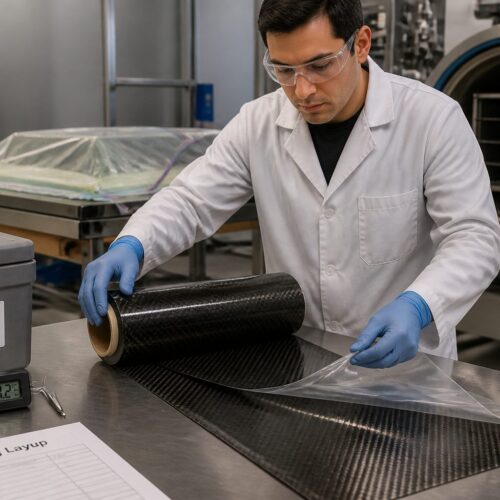
FRP composites are manufactured using wet lay-up, pre-preg, or pultrusion techniques. Quality control during manufacturing and on-site application is critical, verifying fiber content, resin properties, and proper curing.
FRP systems are versatile, available as fabrics, laminates, or pre-fabricated shells, allowing customized solutions. The bond between FRP and the substrate is crucial for load transfer, necessitating specialized primers, adhesives, and proper surface preparation.
These composites offer excellent fatigue resistance, vital for structures under repetitive loading like bridges, ensuring long-term reliability. Their flexibility allows conformity to complex geometries, simplifying installation and ensuring comprehensive strengthening.
In summary, FRP composite systems represent a paradigm shift in civil infrastructure repair, offering strength, durability, and versatility. They enhance structural performance with minimal disruption, positioning them as a cornerstone of modern rehabilitation strategies.
| FRP Type | Primary Fiber | Typical Applications |
|---|---|---|
| CFRP | Carbon Fiber | Column confinement, beam flexural strengthening, seismic upgrades |
| GFRP | Glass Fiber | Bridge deck repair, shear strengthening, crack repair |
| AFRP | Aramid Fiber | Impact resistance, blast protection, specialized structural repairs |
| BFRP | Basalt Fiber | Corrosion resistance, environmentally friendly alternatives, marine structures |
| Hybrid FRP | Mixed Fibers | Optimized performance for specific load conditions, multi-directional strengthening |
Advancements in Externally Bonded Reinforcement
Externally bonded reinforcement (EBR) FRP methods apply composites to exterior structural surfaces, creating a new composite section that significantly enhances strength. This technique is highly effective for concrete structures needing increased flexural, shear, or confinement capacity, offering FRP structural rehabilitation with minimal disruption.
EBR’s faster installation compared to traditional methods reduces traffic closures and project timelines, translating into cost savings and less public inconvenience. Its lightweight nature adds negligible dead load, crucial for load-limited bridges and older buildings.
FRP materials also exhibit excellent corrosion resistance, unlike steel plates, eliminating a common cause of concrete deterioration in harsh environments. This inherent durability contributes to the long-term effectiveness of FRP civil infrastructure repair strengthening.
Proper surface preparation is critical for successful EBR. The concrete surface must be clean, dry, and profiled (e.g., via abrasive blasting) for a strong bond. A primer is then applied, followed by leveling mortar if needed, creating a smooth base.
FRP fabrics or laminates are applied using an impregnating resin. For flexural strengthening, sheets bond to the tension face of beams or slabs. For shear strengthening, strips or wraps apply to beam sides. Column confinement involves wrapping FRP sheets around columns to enhance axial load capacity and ductility, particularly beneficial in seismic regions.
FRP offers superior handling due to lightness, requiring less heavy machinery and personnel, further saving costs and time. FRP systems can also repair damaged concrete elements, restoring strength by bridging cracks. Their versatility extends to masonry and timber structures, making FRP a broad strengthening solution.
Long-term performance studies consistently demonstrate EBR system effectiveness and durability. Ongoing research aims to improve bonding agents, develop self-sensing FRPs, and enhance fire resistance, continually expanding EBR capabilities and safety.
Carbon Fiber Wrapping: Strengthening Columns and Beams
Carbon fiber wrap bridge repair is a prominent FRP application for strengthening columns and beams. Carbon fiber composites offer superior tensile strength and stiffness, ideal for enhancing stressed structural elements and increasing component capacity.
For columns, carbon fiber wrapping provides excellent confinement, significantly increasing axial load capacity and ductility. This is crucial in seismic zones, as the wrap acts as a continuous, high-strength jacket, preventing concrete spalling and delaying internal steel reinforcement buckling. It transforms brittle concrete behavior into a more ductile response, essential for earthquake-resistant design.
On beams, carbon fiber sheets are oriented to resist flexural or shear forces. Flexural strengthening involves bonding sheets to the tension face, increasing bending capacity and stiffness, and reducing deflection. Shear strengthening uses wraps or U-jackets on beam webs, with fibers aligned to resist shear forces, effective for insufficient internal shear reinforcement.
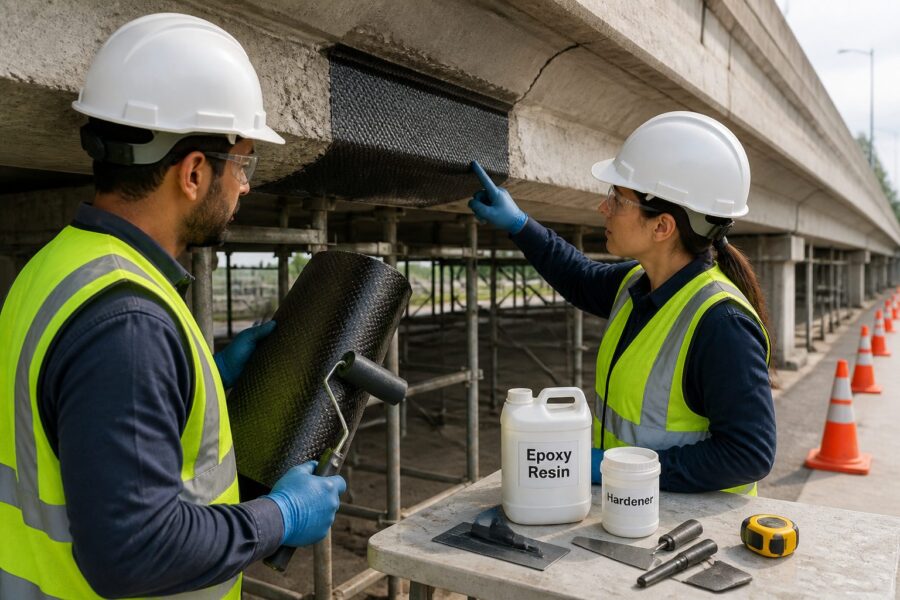
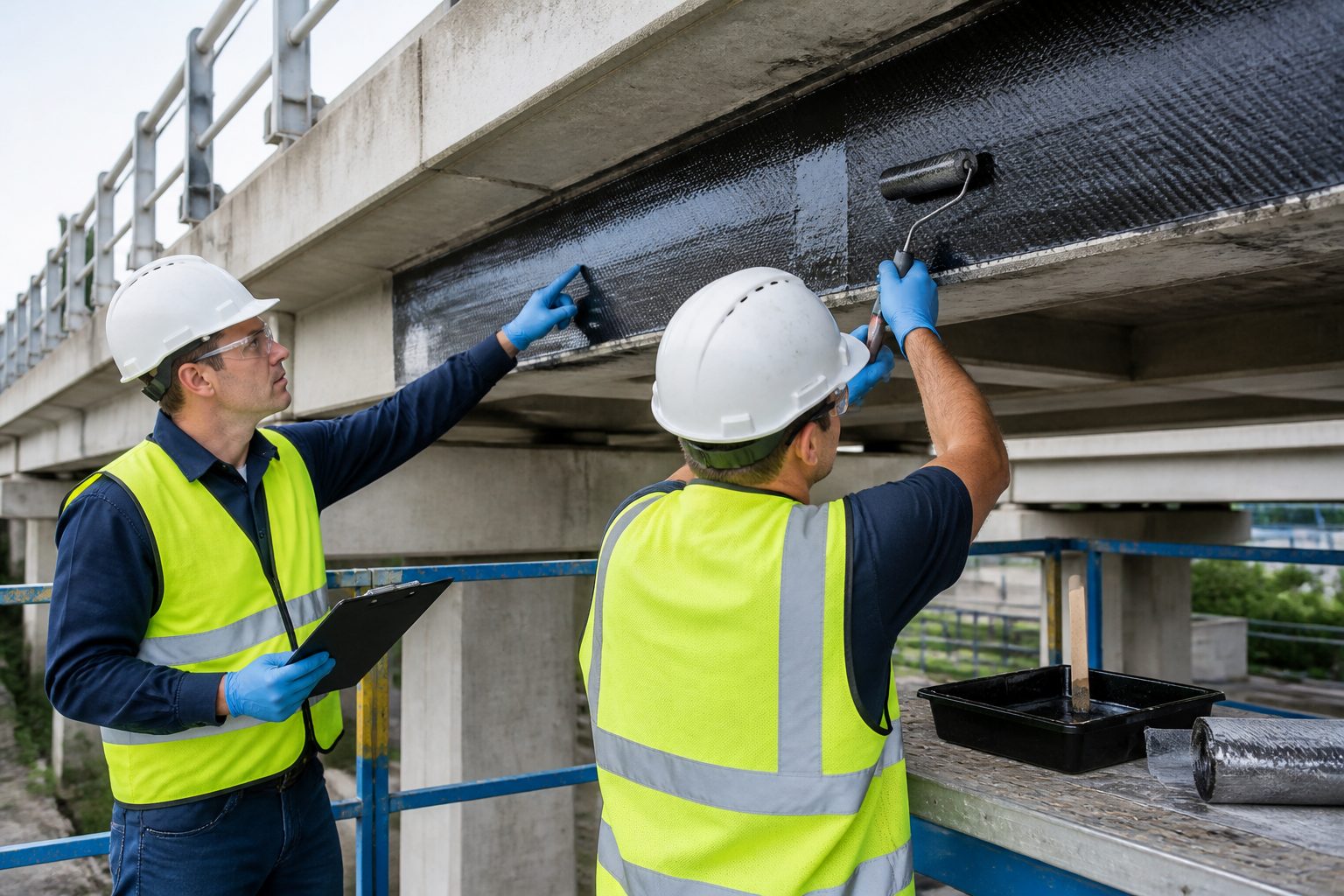
Installation involves careful surface preparation, followed by epoxy primer and saturating resin. Workers meticulously apply carbon fiber fabric, ensuring full saturation and air bubble removal for a monolithic composite layer. This technique is effective for both repair and preventative strengthening, allowing structures to meet higher performance standards for heavier loads or changes in use.
The high tensile strength of carbon fibers allows significant load carrying with minimal material thickness, preserving architectural aesthetics and clearance. This minimal increase in dimensions is valuable for heritage structures. Carbon fiber wrapping also strengthens concrete walls, silos, and chimneys, demonstrating its versatility.
Durability studies confirm carbon fiber reinforced polymers maintain mechanical properties over extended periods, resisting corrosion, chemicals, and UV radiation. Advancements in technology, including higher modulus fibers and advanced resin systems, continuously enhance performance. Researchers also explore self-healing epoxies for durability.
In conclusion, carbon fiber wrapping offers a strong, durable, and adaptable solution for critical civil infrastructure elements. Its proven effectiveness in enhancing load capacity, ductility, and seismic resistance makes it an indispensable tool for modern engineers, vital for maintaining and upgrading public works.
FRP Laminates for Bridge Deck and Girder Repair
FRP laminates offer a specialized approach to repairing and strengthening bridge decks and girders, critical components bearing direct traffic loads. These pre-cured strips are typically bonded to the tension side of concrete girders or the underside of bridge decks, providing additional flexural capacity. Their high tensile strength increases overall load-carrying capacity, preventing further cracking and deflection under heavy traffic.
For bridge decks, FRP laminates repair localized damage or enhance stiffness, applied either to the top surface (covered by a wearing course) or bonded to the underside. This versatility suits various types of bridge deck deterioration. FRP structural rehabilitation using laminates is less invasive than traditional methods, allowing faster project completion and reduced traffic disruption, appealing for busy transportation corridors.
Manufactured through pultrusion, FRP laminates feature continuous, unidirectional fibers, ensuring consistent mechanical properties. When applied to concrete girders, they bond to the soffit using a high-strength epoxy adhesive, increasing resistance to positive bending moments. For decks, laminates restore stiffness and prevent water ingress, protecting reinforcement from corrosion and prolonging functional life.
Installation requires meticulous surface preparation for maximum bond strength. The epoxy adhesive is critical, designed for high shear strength and creep resistance, applied uniformly for full contact and load transfer. FRP laminates are effective for strengthening prestressed concrete girders, enhancing flexural capacity without inducing additional prestress, offering a non-invasive upgrade.
Beyond flexural use, laminates can be designed for shear strengthening. Their lightweight nature minimizes additional dead load, crucial for older bridges. Excellent fatigue resistance extends the life of steel reinforcement and concrete, preventing fatigue-induced cracks.
FRP laminates resist chemical attack from de-icing chemicals or marine environments, ensuring long-term integrity. Ease and speed of installation reduce project timelines and traffic disruption, yielding significant economic benefits. In summary, FRP laminates provide an effective, durable, and efficient solution for bridge deck and girder strengthening, vital for transportation infrastructure longevity and safety.
Engineering Design and Load Capacity for FRP
Successful FRP structural rehabilitation relies on rigorous engineering design and accurate load capacity calculations. Engineers must thoroughly assess the existing structure’s condition, understanding current stresses and future demands, to determine specific strengthening requirements.
Design standards like ACI 440.2R-17 and AASHTO LRFD provide guidelines for material selection, procedures, and quality control, ensuring FRP systems are safe and effective. The design process begins with detailed structural analysis to identify existing capacity and deficiencies, often involving field investigations and non-destructive testing.
Engineers define target performance levels (restoring capacity, increasing load rating, enhancing seismic resistance) to guide FRP reinforcement type and extent. Critical inputs include FRP material properties (tensile strength, elastic modulus, ultimate strain), with environmental reduction and safety factors applied for robust performance.
The interaction between FRP and the substrate is modeled to predict composite behavior, aiming for ductile failure over brittle debonding. Design calculations account for various failure modes—flexural, shear, and anchorage—to determine required FRP layers or cross-sectional area for identified deficiencies.
For flexural strengthening, FRP acts as external tensile reinforcement, increasing moment capacity. In shear strengthening, FRP wraps or strips resist diagonal tension. Column confinement design increases concrete compressive strength and ductility, crucial for seismic performance. Proper anchorage details are essential to prevent premature debonding.
Environmental factors (temperature, moisture, chemicals) are considered with reduction factors. Quality control and inspection during material supply and installation are integral, ensuring adherence to specifications. The design must verify both ultimate (strength, stability) and serviceability (deflection, crack control) limit states, ensuring the strengthened structure performs acceptably under daily use.
- Determine existing structural capacity
- Identify failure modes needing upgrade
- Select appropriate FRP material type
- Calculate required FRP area and layers
- Design for proper anchorage and termination
- Consider environmental exposure factors
- Account for creep and fatigue effects
- Specify surface preparation requirements
- Plan for quality control and inspection
- Verify ultimate and serviceability limit states
Economic Benefits of FRP Over Traditional Methods
FRP civil infrastructure repair strengthening offers significant economic advantages over traditional methods. While initial material costs might be higher, overall project expenses and long-term savings often favor FRP, making it a smart economic choice.
FRP excels in installation time due to its lightweight nature and ease of handling, leading to faster application. Reduced construction time means lower labor costs and less disruption to traffic or facility operations, yielding substantial indirect savings for busy bridges or critical public buildings. This minimizes societal costs from detours and delays, keeping communities and businesses operating smoothly.
The extended service life and corrosion resistance of FRP materials contribute to significant lifecycle cost savings. Structures strengthened with FRP require less maintenance and fewer future repairs, reducing total cost of ownership and freeing up budgets. This inherent durability provides a maintenance-free solution for decades, preventing recurring expenses associated with steel corrosion.
FRP applications are generally cleaner and less disruptive than traditional methods, which often involve extensive concrete removal and waste generation. This minimizes environmental impact and disposal costs, aligning with modern sustainability goals. Minimal need for heavy equipment also reduces rental costs and fuel consumption.
Reduced project risk due to shorter construction periods and less complex logistics translates into more predictable budgets and schedules. For historical structures, FRP offers a non-invasive, economically viable solution to preserve original aesthetics. Improved structural performance and increased load capacity also add long-term value by accommodating heavier loads or new uses.
Asset owners and government agencies increasingly recognize FRP’s long-term value, favoring durable, low-maintenance solutions. The ability to quickly restore full service provides immense public value through reduced inconvenience and improved safety. Ultimately, FRP’s economic benefits extend beyond initial costs, encompassing significant savings in time, maintenance, disruption, and long-term asset value, positioning it as a superior choice for modern infrastructure rehabilitation.
The Future of FRP in Civil Infrastructure
FRP civil infrastructure repair strengthening is a leading solution for modernizing and extending the life of our built environment. Its unique combination of high strength, light weight, and corrosion resistance makes it an invaluable tool for engineers, with benefits widely recognized.
Further innovations in FRP materials and application techniques are anticipated, including new fiber types, resin systems, and smart FRP composites with embedded sensors. These advancements will enhance FRP’s versatility and effectiveness for complex structural challenges, making FRP structural rehabilitation even more robust.
FRP adoption is set to grow as infrastructure ages and new construction funding remains constrained. Governments and municipalities increasingly recognize the long-term value and economic efficiency of these advanced repair methods, investing in solutions that deliver lasting performance and align with sustainable construction practices.
Exciting developments include integrating structural health monitoring (SHM) systems into FRP composites, using embedded fiber optic sensors for real-time data. Self-healing polymer matrices are also explored to automatically repair cracks, extending lifespan and enhancing resilience.
Hybrid FRP systems, combining different fiber types, are engineered to optimize performance for specific load conditions, offering greater design flexibility. Beyond repair, FRP is increasingly used in new construction as non-corrosive internal reinforcement for bridges, marine structures, and chemical plants, expanding its role from rehabilitation to initial build.
Standardization of FRP design codes and installation procedures continues to evolve, facilitating wider global acceptance. Education and training programs for engineers and technicians are crucial to ensure proper design and installation. Research into recyclability and end-of-life management is also gaining momentum, enhancing FRP’s environmental credentials.
FRP application is expanding into new areas like blast protection and impact resistance for critical infrastructure. Government initiatives and collaborations between academia, industry, and government agencies will further accelerate FRP adoption. As the need for rapid and durable infrastructure solutions grows, FRP composites will play an even more central role, positioned as a cornerstone of future construction and rehabilitation efforts.