
Basalt fiber, derived from volcanic rock, is emerging as a compelling material in high-performance engineering. This natural fiber offers a unique combination of strength, heat resistance, and environmental benefits. Engineers and material scientists are increasingly exploring its potential across various industries.
For too long, glass and carbon fibers have dominated the advanced composites market. However, basalt presents a fascinating alternative with its distinct characteristics and competitive advantages. Understanding basalt fiber properties applications is becoming essential for innovation in material science.
This article explores the journey of basalt fiber, from its geological origins to its sophisticated manufacturing processes. We will compare its performance against established materials and examine its growing use in demanding environments. Get ready to discover why volcanic rock fiber reinforcement is more than just a niche material.
The quest for sustainable yet robust materials drives much of modern research and development. Basalt fiber offers an answer to this challenge, combining ecological appeal with impressive mechanical performance. Its natural abundance and non-toxic production make it a truly attractive option.
As we push the boundaries of material science, basalt fiber stands out for its versatility and potential for future advancements. Its adoption signals a shift towards more environmentally conscious and high-performing solutions. Let’s dive into the specifics of this remarkable volcanic material.
What Is Basalt Fiber and Where Does It Come From
Basalt fiber originates from basalt rock, a common extrusive igneous rock formed from the rapid cooling of lava. This rock makes up a significant portion of the Earth’s oceanic crust and is found in volcanic regions worldwide. The raw material itself is incredibly abundant, which is a major advantage.
Unlike synthetic fibers, basalt fiber starts as a naturally occurring mineral deposit. This geological origin gives it an inherent sustainability edge over many manufactured materials. The rock is simply melted and extruded, without needing complex chemical reactions or additives.
Basalt rock typically contains high percentages of oxides like silicon dioxide, aluminum oxide, iron oxide, and magnesium oxide. These oxides contribute directly to the final basalt fiber properties applications, influencing its strength and thermal stability. The specific mineral composition can vary slightly depending on the source quarry.
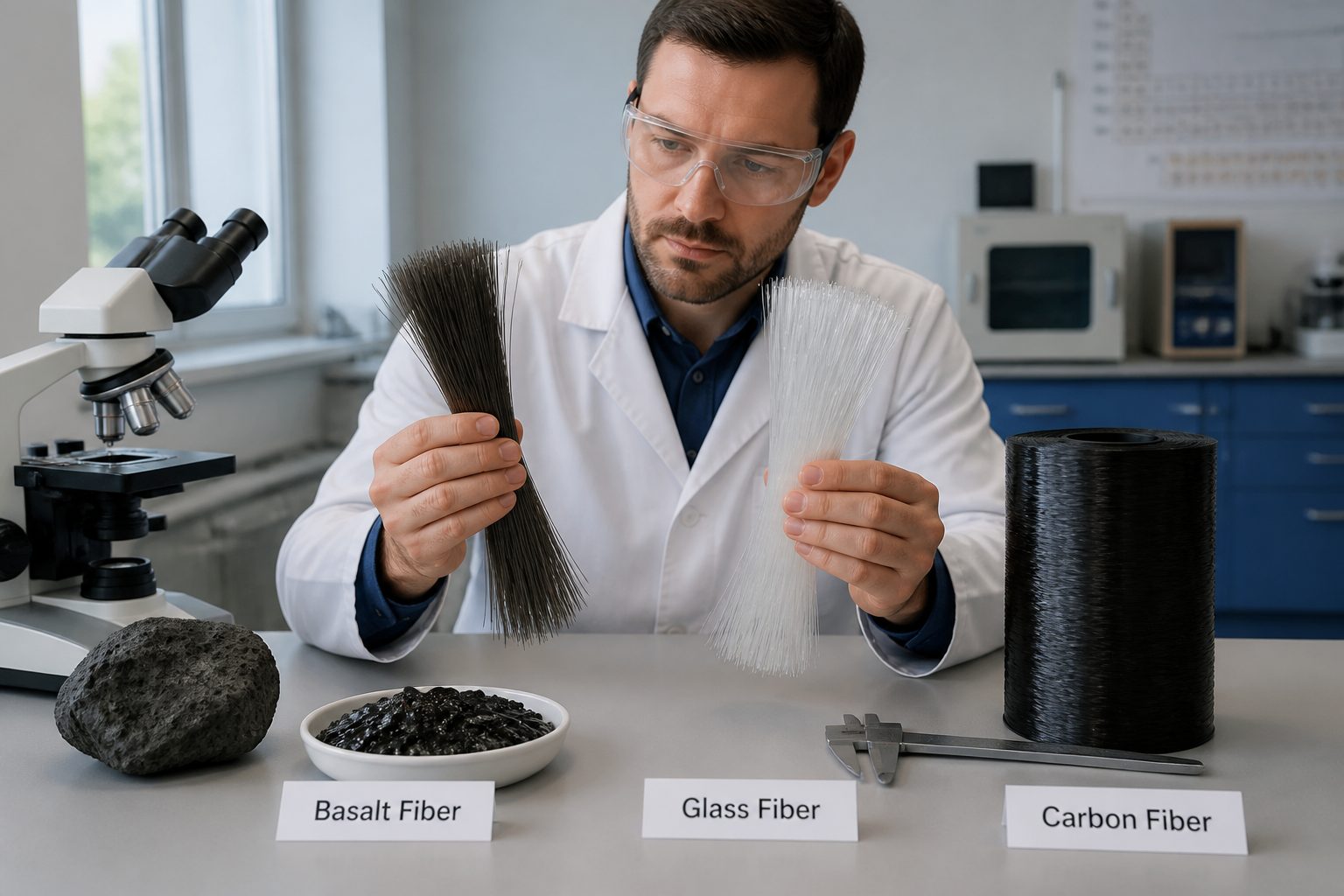
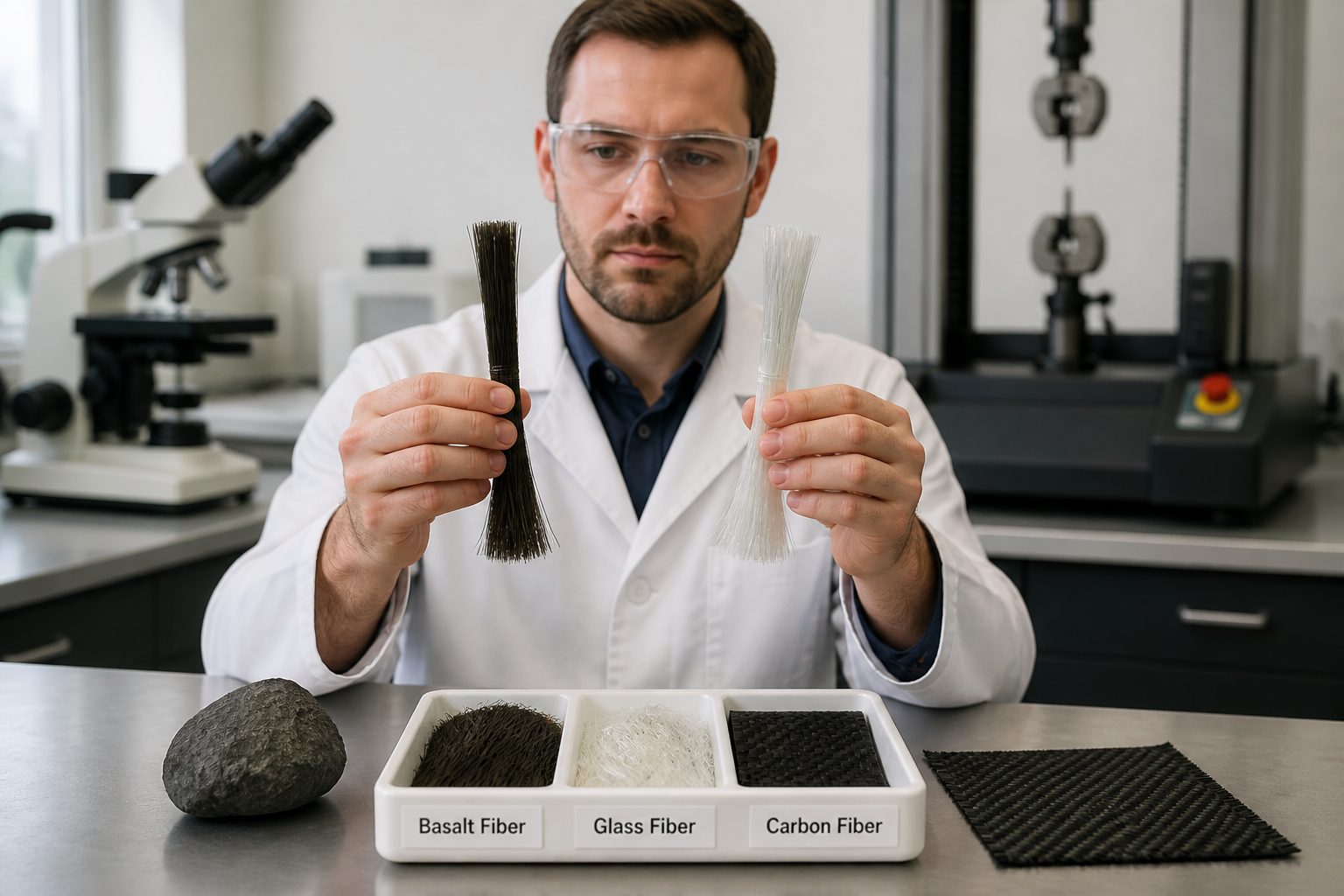
The formation of basalt fiber begins deep within the Earth’s mantle, where magma rises and solidifies upon reaching the surface. This intense geological process creates a material with incredible natural resilience. Extracting basalt rock for fiber production involves standard quarrying techniques.
Its natural composition means basalt fiber is chemically inert and non-toxic, which is a significant benefit for both production workers and end-users. This inherent safety profile distinguishes it from some synthetic fibers that require special handling. The environmental footprint of its raw material acquisition is relatively low.
The idea of using basalt for fiber production is not entirely new, with research dating back to the mid-20th century. However, advancements in processing technology have only recently made large-scale commercial production economically viable. Modern methods ensure consistent quality and performance.
Countries with significant volcanic activity, such as Russia, Ukraine, and China, have been at the forefront of developing basalt fiber production capabilities. These regions leverage their natural resources to establish a competitive advantage. The availability of raw material is rarely a limiting factor.
The consistency of basalt rock composition across different geological sites is generally high enough for industrial applications. Minor variations can be managed through careful selection and blending of raw materials. This ensures a uniform quality for basalt fiber properties applications.
Ultimately, basalt fiber’s story starts billions of years ago with the Earth’s fiery geological processes. Tapping into this ancient material for modern engineering represents a fascinating blend of natural science and industrial innovation. Its volcanic origins are truly what make it unique.
The inherent durability of basalt rock translates directly into the strength and resilience of the manufactured fibers. This raw material is a testament to nature’s engineering prowess, providing a sturdy foundation for advanced composites. Volcanic rock fiber reinforcement stands as a testament to natural strength.
The Basalt Fiber Manufacturing Process
The manufacturing of basalt fiber is a fascinating high-temperature process that transforms solid rock into continuous filaments. It begins with crushing basalt rock into small chips, typically between 10-50 mm in size. These chips are then meticulously cleaned to remove any impurities.
The cleaned basalt chips are fed into a large, high-temperature furnace, often heated by electricity or natural gas. Here, the basalt melts at temperatures ranging from 1350°C to 1500°C, becoming a viscous liquid. Maintaining precise temperature control is absolutely critical at this stage.
Once molten, the liquid basalt flows through a platinum-rhodium alloy bushing, which contains hundreds or thousands of tiny nozzles. The molten material is extruded through these nozzles, forming continuous filaments. This extrusion process is similar to how glass fiber is made.
These fine filaments are then rapidly cooled by air or water as they exit the nozzles. The rapid cooling solidifies the basalt into thin, strong strands. This quick solidification locks in the material’s amorphous structure, which is key to its mechanical performance.
A sizing agent is applied to the newly formed fibers immediately after cooling. This sizing, a chemical coating, protects the fibers from abrasion during subsequent processing and enhances their adhesion to various polymer matrices. The choice of sizing significantly impacts the final basalt fiber properties applications.
The coated filaments are gathered into strands, or rovings, and then wound onto bobbins. These rovings can be further processed into various forms, such as chopped fibers, woven fabrics, or non-woven mats. Each form caters to different reinforcement needs and manufacturing techniques.
Quality control is rigorous throughout the entire manufacturing chain, from raw material selection to final product inspection. Parameters like fiber diameter, tensile strength, and chemical composition are constantly monitored. This ensures the consistent quality required for high-performance volcanic rock fiber reinforcement.
One notable advantage of basalt fiber production is its relatively low energy consumption compared to carbon fiber. While still energy-intensive, it avoids the complex chemical precursors and multiple processing steps needed for carbon fiber. This contributes to a more favorable environmental profile.
The process generates minimal waste, as any off-spec basalt can often be remelted and re-extruded. This circularity further enhances its sustainability credentials. The simplicity of using natural rock as the sole input material is a major draw.
Developing new sizing agents is an ongoing area of research to optimize basalt fiber properties applications for specific polymer systems. Better interfacial adhesion between fiber and matrix leads to stronger, more durable composites. This continuous improvement drives wider adoption of basalt composite properties.
Comparing Basalt, Glass, and Carbon Fiber Properties
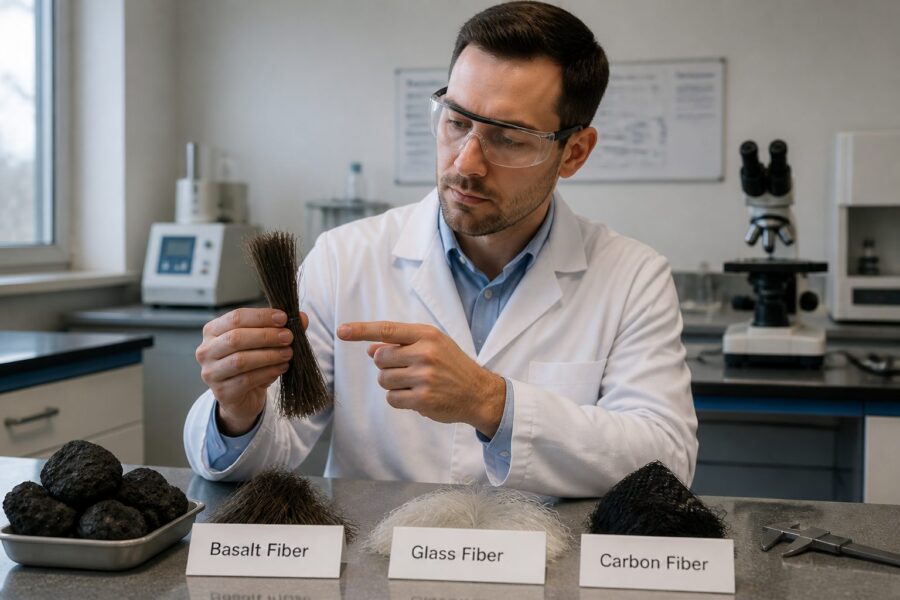
When selecting a fiber for composite reinforcement, engineers consider a range of properties, including strength, stiffness, weight, and cost. Basalt, glass, and carbon fibers each offer distinct advantages and disadvantages. A direct basalt vs glass fiber comparison reveals interesting trade-offs.
Carbon fiber typically leads in tensile strength and stiffness, making it ideal for applications demanding extreme performance and low weight. However, its high cost and brittle nature can be prohibitive for many projects. Basalt fiber properties applications offer a compelling balance for many uses.
| Property | Basalt Fiber | E-Glass Fiber | Carbon Fiber (Standard Modulus) |
|---|---|---|---|
| Tensile Strength (GPa) | 2.8 – 4.8 | 2.0 – 3.5 | 3.0 – 7.0 |
| Tensile Modulus (GPa) | 70 – 110 | 70 – 80 | 200 – 250 |
| Density (g/cm³) | 2.6 – 2.8 | 2.5 – 2.6 | 1.7 – 1.9 |
| Operating Temperature (°C) | -260 to +650 | -50 to +450 | -100 to +2000 (inert atmos.) |
| Chemical Resistance | Excellent (acid/alkali) | Good (acid, poor alkali) | Good (acid/alkali) |
| Cost (Relative) | Medium | Low | High |
Mechanical and Chemical Resistance of Basalt Fiber
The mechanical strength of basalt fiber is a major reason for its growing popularity in advanced composites. It exhibits high tensile strength, often comparable to or exceeding E-glass fiber, providing robust reinforcement for structural applications. This makes it an excellent candidate for volcanic rock fiber reinforcement.
Its tensile modulus, a measure of stiffness, also sits comfortably between that of E-glass and carbon fiber. This balance allows for the design of materials that are stiff enough for structural integrity but retain some flexibility. Engineers appreciate this versatility when considering basalt fiber properties applications.
One of basalt fiber’s standout features is its exceptional resistance to high temperatures. It can withstand continuous operating temperatures up to 650°C without significant degradation, far surpassing E-glass fiber’s limits. This thermal stability is invaluable in fire-resistant and high-temperature environments.
Beyond heat, basalt fiber demonstrates impressive cryogenic properties, maintaining its strength and integrity at extremely low temperatures down to -260°C. This wide operational temperature range makes it suitable for diverse and challenging climatic conditions. It truly performs well under extreme thermal cycling.
Chemical resistance is another area where basalt fiber truly shines, especially compared to E-glass. It exhibits excellent resistance to aggressive chemicals, including acids, alkalis, and salt solutions. This durability ensures longer service life for basalt composite properties in harsh chemical environments.
This superior chemical inertness means basalt fiber composites are less susceptible to degradation when exposed to elements like seawater or corrosive industrial effluents. Such resilience is critical for infrastructure projects and marine applications. The fiber’s natural origins contribute to this robustness.
The fatigue resistance of basalt fiber composites is also noteworthy, allowing them to withstand repeated stress cycles without premature failure. This property is vital for components subjected to dynamic loads, such as those in transportation or machinery. It enhances the overall reliability of the final product.
Impact resistance is another key characteristic where basalt fiber performs well, often absorbing more energy before failure than traditional glass fibers. This makes basalt composite properties a safer choice in applications where sudden impacts might occur. It adds an extra layer of protection.
Basalt fiber also offers good electrical insulation properties, making it suitable for applications requiring dielectric strength. This broad range of physical and chemical advantages positions basalt fiber as a truly versatile material. Its inherent toughness is hard to beat.
When considering the full spectrum of basalt fiber properties applications, its combined mechanical and chemical resilience stands out. It provides a robust, long-lasting solution for environments where other materials might quickly degrade. This makes it a smart choice for engineers looking for reliability.
Basalt Fiber Composites in Construction and Infrastructure
The construction and infrastructure sectors are increasingly recognizing the immense potential of basalt fiber composites. Its superior strength-to-weight ratio and corrosion resistance make it an ideal material for reinforcing concrete structures. This volcanic rock fiber reinforcement promises longer-lasting buildings and bridges.
Traditional steel rebar is prone to corrosion, especially in harsh environments like coastal areas or where de-icing salts are used. Basalt rebar offers a non-corrosive alternative, significantly extending the lifespan of concrete structures. This is a game-changer for critical infrastructure projects.
- Reinforcing concrete slabs and foundations
- Producing durable bridge decks and barriers
- Manufacturing corrosion-resistant marine structures
- Strengthening roads and airport runways
- Creating lightweight, high-strength architectural panels
- Developing fire-resistant building materials
- Repairing and retrofitting existing structures
Automotive and Marine Applications of Basalt Reinforcement
The automotive industry constantly seeks materials that can reduce vehicle weight while enhancing safety and performance. Basalt fiber, with its excellent strength-to-weight ratio, is proving to be a valuable asset in this quest. It offers a compelling alternative to traditional glass and carbon fibers.
Components made with basalt fiber can lead to lighter vehicles, which translates into improved fuel efficiency and reduced emissions. This aligns perfectly with the industry’s drive towards sustainability and stricter environmental regulations. Basalt fiber properties applications are being explored extensively for these benefits.
In marine applications, the story of basalt fiber is equally compelling, primarily due to its exceptional corrosion resistance. Seawater is incredibly corrosive, and traditional materials often degrade rapidly, requiring frequent maintenance or replacement. Basalt composite properties offer a durable solution.
Boat hulls, decks, and other structural components can benefit significantly from volcanic rock fiber reinforcement. The material’s resistance to saltwater, UV radiation, and temperature fluctuations ensures a longer service life and lower maintenance costs. This makes it an attractive option for both commercial and recreational vessels.
For automotive parts, basalt fiber is being used in areas like battery enclosures for electric vehicles, where its fire resistance and structural integrity are highly valued. It also finds use in interior panels, engine covers, and even brake pads. The versatility of basalt fiber properties applications is truly impressive.
The acoustic dampening properties of basalt fiber also make it useful for reducing noise and vibration in vehicles. This contributes to a more comfortable and quieter ride for passengers. Engineers are always looking for materials that offer multiple benefits.
In the marine sector, beyond structural components, basalt fiber is also being considered for fishing gear, offshore platforms, and even subsea cables. Its non-conductivity and strength are particularly advantageous in these underwater applications. The material can withstand immense pressures.
Comparing basalt vs glass fiber in these demanding environments often highlights basalt’s superior performance in terms of durability and longevity. While E-glass is more common, basalt’s resistance to hydrolysis and fatigue gives it a significant edge. This makes it a preferred choice for long-term reliability.
The relatively lower cost of basalt fiber compared to carbon fiber also makes it a more economically viable option for mass-produced automotive and marine components. This helps drive wider adoption without compromising on performance. Manufacturers are keenly aware of cost-effectiveness.
As these industries continue to innovate, the demand for high-performance, sustainable, and cost-effective materials will only grow. Basalt fiber is perfectly positioned to meet these evolving needs. Its unique blend of attributes makes it a material of the future for transportation.
Conclusion
Basalt fiber, born from the Earth’s fiery core, is rapidly establishing itself as a formidable contender in the world of high-performance materials. Its unique combination of strength, thermal stability, and chemical resistance offers compelling advantages over traditional glass and carbon fibers. We have only scratched the surface of its full potential.
From its environmentally friendly manufacturing process to its impressive basalt fiber properties applications, this volcanic rock fiber reinforcement is more than just an alternative; it is a superior choice for many demanding scenarios. Engineers and designers are discovering new ways to leverage its inherent strengths. The material’s natural origins add to its appeal.
Whether it is extending the life of concrete infrastructure, lightening vehicles for better fuel efficiency, or providing durable marine components, basalt fiber is proving its worth across diverse industries. The basalt vs glass fiber comparison often highlights basalt’s long-term durability in harsh conditions. Its versatility is truly a standout feature.
The ongoing research into optimizing basalt composite properties, particularly through advanced sizing agents and hybrid material designs, promises even greater performance in the years to come. This continuous innovation will unlock new possibilities and broaden its market reach. The future for basalt fiber looks incredibly promising.
Embracing basalt fiber means choosing a material that aligns with both performance demands and sustainability goals. It represents a significant step forward in material science, offering a robust, eco-conscious solution for the challenges of modern engineering. This volcanic marvel is certainly here to stay.