
The entire gel spinning process represents a sophisticated marriage of polymer chemistry and mechanical engineering. It transforms a common polymer into a material with properties that rival, and often surpass, steel. This specialized production method is a cornerstone of UHMWPE’s success.
Mechanical properties that set UHMWPE apart
UHMWPE fibers exhibit a combination of mechanical properties that truly set them apart from other high-performance materials. Their exceptional strength-to-weight ratio is perhaps the most celebrated attribute. This allows for incredibly robust structures with minimal mass.
The tensile strength of UHMWPE fibers can be up to 15 times stronger than steel on a weight-for-weight basis. This phenomenal strength makes it ideal for applications requiring extreme durability and reliability. It truly represents a high strength low weight fiber solution.
| Property | UHMWPE Fiber | Aramid Fiber (e.g., Kevlar) | High Carbon Steel Wire |
|---|---|---|---|
| Tensile Strength (GPa) | 2.5 – 4.5 | 2.7 – 3.6 | 1.5 – 2.5 |
| Density (g/cm³) | 0.97 | 1.44 | 7.85 |
| Specific Strength (GPa/(g/cm³)) | 2.58 – 4.64 | 1.88 – 2.50 | 0.19 – 0.32 |
| Elongation at Break (%) | 2.5 – 5.0 | 2.5 – 4.5 | 0.5 – 2.0 |
| Abrasion Resistance | Excellent | Good | Moderate |
| UV Resistance | Moderate to Good | Poor | Excellent (Corrodes) |
Applications in marine and mooring industries
The marine and mooring industries have embraced UHMWPE fibers with open arms, recognizing their superior performance over traditional steel wire ropes. Its high strength low weight fiber characteristics are particularly advantageous in these demanding environments. The material offers significant operational benefits.
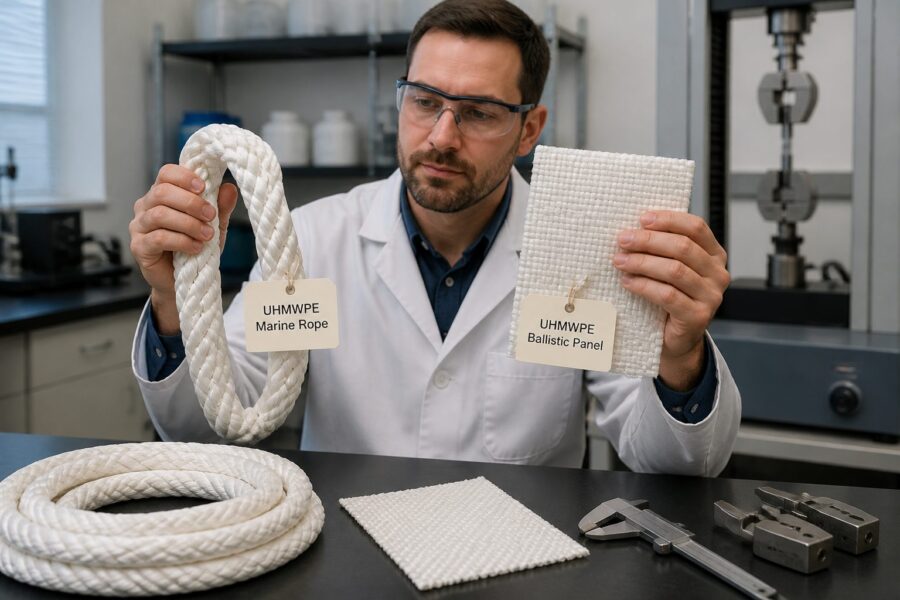
UHMWPE ropes, often sold under brand names like Dyneema or Spectra, are used extensively for towing, lifting, and mooring operations. They are dramatically lighter than steel, making them easier and safer to handle for crews. This reduction in weight also lowers fuel consumption for vessels.
The fibers exhibit exceptional resistance to saltwater, UV radiation, and most marine chemicals. Unlike steel, UHMWPE does not corrode, which extends the lifespan of ropes and reduces maintenance costs significantly. This durability is crucial for long-term marine applications.
In offshore oil and gas operations, UHMWPE fiber applications ballistic mooring lines provide reliable and safe connections for platforms and vessels. Their high strength and fatigue resistance ensure stability even in turbulent seas. They withstand dynamic loads better than many alternatives.
Fishing nets and aquaculture cages made from UHMWPE are lighter, stronger, and more resistant to abrasion. This leads to less damage from marine life and harsh underwater conditions, improving efficiency and reducing replacement frequency. Fishermen appreciate the enhanced durability.
Sailors and yacht owners frequently choose UHMWPE lines for rigging, halyards, and sheets due to their low stretch and minimal weight. These properties contribute to better sailing performance and easier handling of sails. The high strength low weight fiber enhances maneuverability.
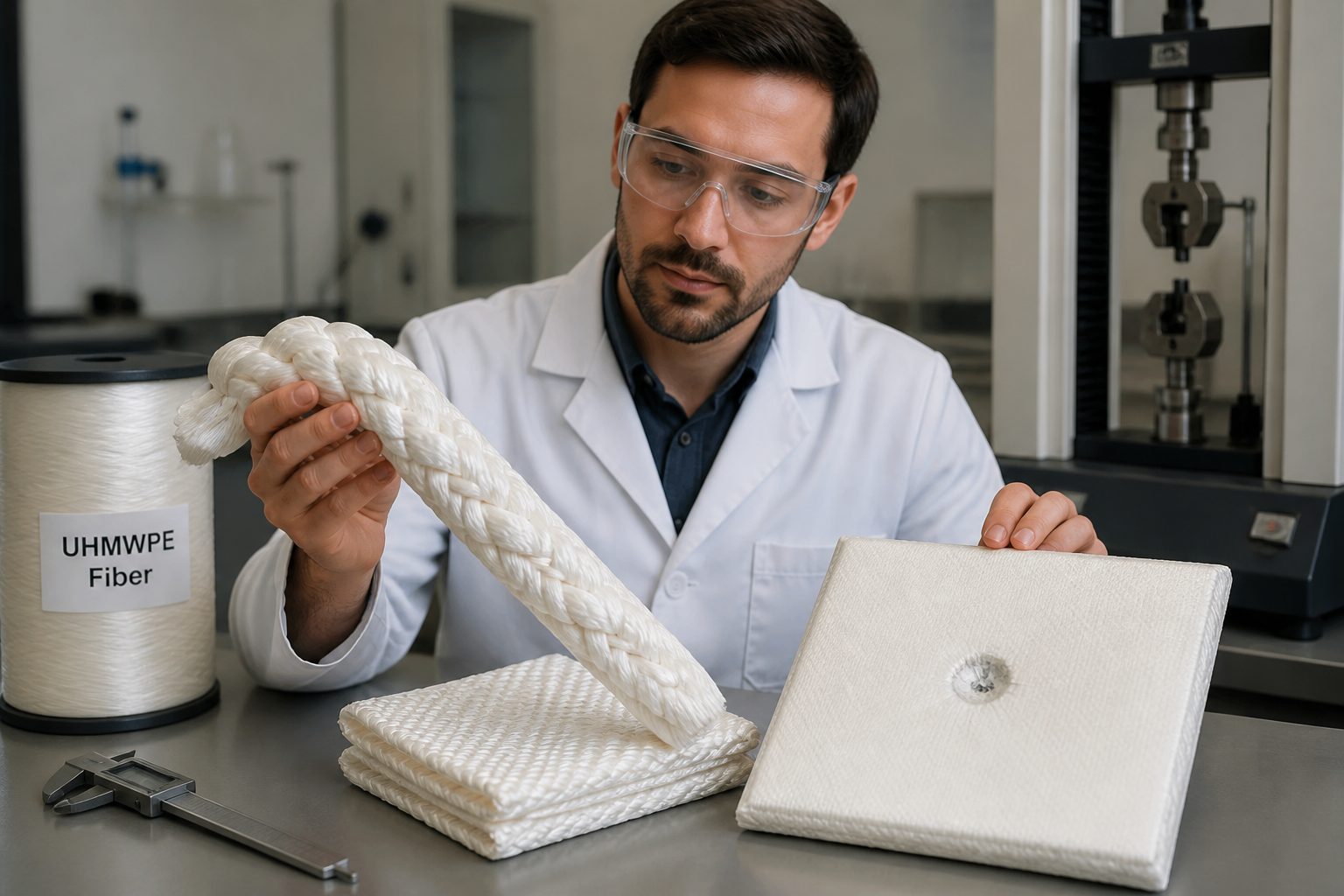
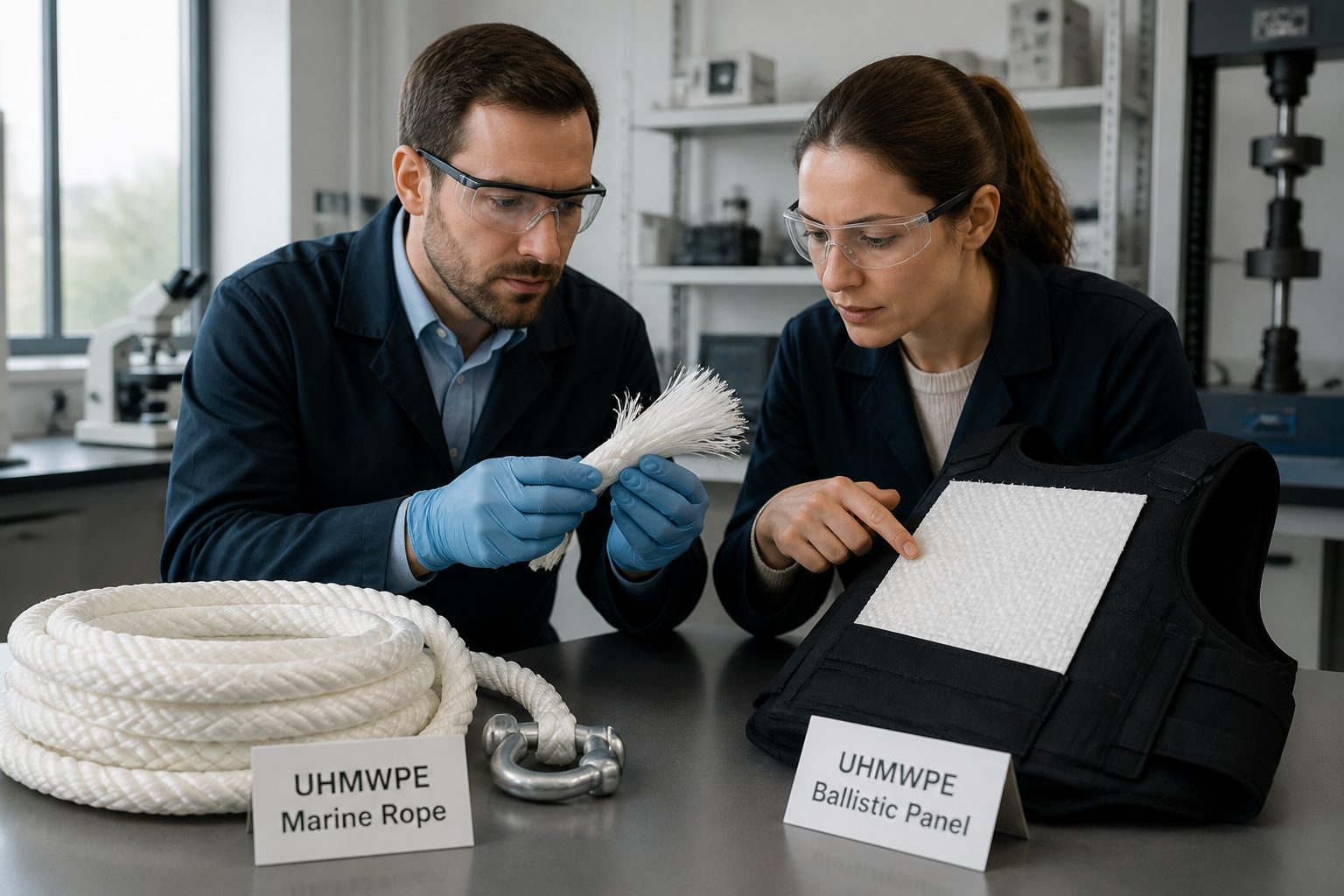
The material’s ability to float is another significant advantage in marine settings, preventing ropes from sinking and snagging on underwater obstacles. This buoyancy improves safety and simplifies retrieval operations. It also prevents damage to sensitive marine ecosystems.
For deepwater recovery and scientific exploration, UHMWPE fiber applications ballistic strength is crucial for deploying and retrieving heavy equipment. The reduced weight of the cables allows for deeper deployments and larger payloads. This expands the possibilities for underwater research.
The low creep properties of UHMWPE mean that ropes maintain their length under sustained load over long periods. This stability is vital for precise mooring and positioning tasks in offshore industries. It ensures reliable performance without constant adjustments.
In summary, the adoption of ultra-high molecular weight polyethylene in marine and mooring applications underscores its transformative impact. Its combination of strength, lightness, and environmental resilience makes it an indispensable material. UHMWPE is truly changing how operations are conducted at sea.
UHMWPE in body armor and ballistic protection
UHMWPE fiber applications ballistic protection represent one of the most critical and life-saving uses of this advanced material. Its ability to absorb and dissipate extreme impact energy makes it ideal for body armor, vehicle protection, and other defensive systems. This is where its high strength low weight fiber characteristics truly shine.
The unique molecular structure and precise orientation of Dyneema fiber properties allow it to effectively stop high-velocity projectiles. Layers of these fibers are arranged in specific patterns to maximize their energy absorption capabilities. This advanced engineering creates formidable protective barriers.
- Lightweight body armor plates
- Soft ballistic vests
- Helmet shells
- Vehicle armor panels
- Shield inserts
- Blast containment blankets
- Spall liners
Medical and industrial uses of UHMWPE fibers
Beyond marine and ballistic applications, UHMWPE fibers have found significant niches in the medical and broader industrial sectors. Its unique combination of properties makes it invaluable for challenging environments and critical human interfaces. This material’s versatility continues to impress.
In the medical field, ultra-high molecular weight polyethylene is a gold standard for joint replacement components, particularly in hip and knee implants. Its exceptional wear resistance and biocompatibility ensure long-term functionality within the human body. Patients benefit from its durability and inertness.
UHMWPE is also used in surgical sutures, allowing for strong, flexible, and biologically inert stitching that minimizes tissue reaction. Its high strength low weight fiber properties make these sutures incredibly reliable for various surgical procedures. They provide robust closure without irritation.
For industrial applications, UHMWPE fibers are woven into cut-resistant gloves and protective apparel. Workers in industries handling sharp objects, like glass manufacturing or meat processing, rely on these gloves for superior hand protection. The fibers resist cuts far better than traditional materials.
Conveyor belts and chute liners made from UHMWPE reduce friction and wear in material handling systems. This extends equipment life and improves efficiency in industries like mining, agriculture, and bulk material transport. Its low coefficient of friction is a major asset here.
In the sporting goods industry, UHMWPE is used in fishing lines, archery strings, and paragliding lines due to its strength, low stretch, and water resistance. Athletes and enthusiasts benefit from the enhanced performance and durability these fibers provide. They offer a competitive edge.
UHMWPE sheets and rods serve as components in machinery, offering excellent impact strength and abrasion resistance. They are used for guide rails, star wheels, and bearings in bottling and packaging lines. This helps reduce noise and maintenance requirements.
The material’s chemical inertness makes it suitable for lining tanks and pipes that transport corrosive chemicals. It provides a robust barrier against aggressive substances, preventing leaks and ensuring safe containment. This protects infrastructure and personnel.
In construction, UHMWPE pads are used under heavy equipment to distribute weight and protect sensitive surfaces. These lightweight yet incredibly strong pads prevent damage to roads, turf, and other ground conditions. They are a practical solution for temporary support.
The use of UHMWPE in high-performance filtration membranes is growing, leveraging its chemical resistance and fine pore structure. These membranes are crucial for water purification and industrial separation processes. They provide efficient and reliable filtration.
From surgical suites to factory floors, the applications of ultra-high molecular weight polyethylene continue to expand. Its unique properties solve complex material challenges across a vast spectrum of industries. UHMWPE truly demonstrates the power of specialized polymer science.
Conclusion
The journey through the world of UHMWPE fibers reveals a material of extraordinary capabilities and versatility. From the depths of the ocean to the front lines of defense, its unique properties provide solutions where traditional materials often fail. This high strength low weight fiber consistently outperforms expectations.
The meticulous gel spinning process transforms ordinary polyethylene into an ultra-high molecular weight polyethylene with unparalleled strength and durability. This specialized manufacturing technique is the secret behind its exceptional performance. It unlocks the material’s full potential.
We’ve seen how Dyneema fiber properties make it indispensable in demanding marine environments, offering superior strength, buoyancy, and corrosion resistance. Its adoption has revolutionized everything from massive mooring lines to delicate fishing nets. The benefits are clear and substantial.
Crucially, UHMWPE fiber applications ballistic protection have saved countless lives by providing lightweight yet incredibly effective body armor and vehicle shielding. This ability to stop high-velocity threats without burdening the wearer is a monumental achievement in material science. It underscores the material’s life-saving potential.
Beyond these high-profile uses, UHMWPE’s role in medical implants, cut-resistant gloves, and various industrial components highlights its broad applicability. Its biocompatibility, abrasion resistance, and low friction make it a go-to material for critical functions. The impact across diverse sectors is profound.
The continuous innovation surrounding ultra-high molecular weight polyethylene promises even more groundbreaking applications in the future. Researchers are constantly exploring new ways to enhance its properties and expand its utility. This material science frontier remains incredibly dynamic.
As industries demand stronger, lighter, and more durable materials, UHMWPE stands ready to meet these challenges. Its consistent performance in extreme conditions solidifies its position as a material of choice for high-stakes applications. Engineers rely on its proven track record.
This remarkable polymer truly embodies the spirit of high-performance fiber science and polymer engineering. Its impact on safety, efficiency, and technological advancement is undeniable. UHMWPE will undoubtedly continue to shape the future of material design.
The journey from a simple polymer to a complex, multi-faceted high-performance fiber is a testament to human ingenuity. UHMWPE represents a triumph of material science over conventional limitations. Its story is far from over, with new uses constantly emerging.
Ultimately, ultra-high molecular weight polyethylene is more than just a material; it is a solution. It addresses critical needs across diverse sectors, delivering superior performance where it matters most. Its continued evolution will undoubtedly bring even more impressive advancements.
Ultra-high molecular weight polyethylene, often simply called UHMWPE, stands out as a material marvel in modern engineering. Its unique properties have revolutionized industries ranging from deep-sea exploration to personal protection. This remarkable polymer delivers incredible strength without adding significant weight, a combination previously thought impossible.
For years, material scientists have pursued lightweight yet robust solutions for demanding applications. UHMWPE fiber applications ballistic protection and marine ropes demonstrate its versatility across extreme environments. The material’s exceptional performance pushes the boundaries of what engineers can achieve with polymers.
This article explores the fascinating world of UHMWPE fibers, from their complex production methods to their diverse real-world uses. We will examine how this advanced material provides solutions where traditional materials fall short. Understanding Dyneema fiber properties and other UHMWPE variants reveals why it holds such a critical place in high-performance design.
The journey of UHMWPE from a laboratory curiosity to an industrial staple is a testament to polymer science innovation. Its ability to withstand incredible forces while remaining extraordinarily light continues to inspire new applications. We’ll uncover why this ultra-high molecular weight polyethylene is so much more than just another plastic.
Engineers and designers constantly seek materials that offer a superior strength-to-weight ratio. UHMWPE fiber applications ballistic protection provide a clear example of this relentless pursuit. The material’s unique molecular structure is the secret behind its impressive capabilities.
Understanding ultra-high molecular weight polyethylene
Ultra-high molecular weight polyethylene is a thermoplastic polyethylene with an extremely long chain of molecules. These chains, often between 3.5 and 7.5 million atomic mass units, are significantly longer than those found in standard HDPE. This extended chain length is what gives UHMWPE its extraordinary characteristics.
The longer molecular chains allow for a higher degree of intermolecular entanglement, creating a stronger, more cohesive material. This entanglement translates directly into superior mechanical properties, including high impact strength and abrasion resistance. Standard polyethylene simply cannot achieve this level of performance.
Unlike other polymers, UHMWPE does not melt and flow easily when heated, making conventional processing methods challenging. Its unique thermal behavior requires specialized techniques to form it into useful products. This resistance to melting is another key differentiator for the material.
The material exhibits excellent chemical resistance, standing up to many harsh acids, bases, and organic solvents. This resilience makes it suitable for applications in corrosive environments where other materials would quickly degrade. It maintains its integrity even under extreme chemical exposure.
UHMWPE also boasts a very low coefficient of friction, making it an ideal material for wear strips, bearings, and other sliding components. This self-lubricating property reduces friction and extends the lifespan of machinery. It performs exceptionally well in high-wear situations.
The density of ultra-high molecular weight polyethylene is remarkably low, typically ranging from 0.930 to 0.940 g/cm³. This low density is a crucial factor in achieving a high strength low weight fiber. It allows for the creation of incredibly strong products without adding bulk.
Its non-toxic nature and biocompatibility make it suitable for medical implants, particularly in joint replacements. The human body tolerates UHMWPE well, making it a preferred choice for long-term internal use. This application highlights its safety and inertness.
The material’s outstanding abrasion resistance means it can endure repeated rubbing and scraping without significant wear. This property is vital in heavy industrial applications and protective gear. UHMWPE outlasts many metals in abrasive conditions.
Considering its impressive array of attributes, ultra-high molecular weight polyethylene stands as a pinnacle of polymer engineering. Its combination of strength, lightness, and durability is hard to match. This material truly redefines what a plastic can achieve.
The molecular structure of UHMWPE consists of long, linear chains of polyethylene that are highly oriented and tightly packed. This ordered arrangement contributes significantly to its exceptional mechanical performance. The absence of branching in its polymer chains allows for tighter packing and stronger intermolecular forces.
How UHMWPE fibers are produced: Gel spinning process
The production of UHMWPE fibers relies on a specialized technique known as the gel spinning process. This method is distinct from conventional melt spinning used for most other polymers. It is essential for achieving the material’s unparalleled strength.
The process begins by dissolving the ultra-high molecular weight polyethylene in a solvent at an elevated temperature. This creates a dilute solution that is then extruded through a spinneret to form continuous filaments. The solvent helps to untangle the long polymer chains.
Upon exiting the spinneret, the filaments enter a cooling bath, typically containing water, where the solvent is partially removed. This step causes the polymer to precipitate, forming a gel-like fiber. The gel state is crucial for the subsequent drawing steps.
The resulting gel fibers are then stretched, or drawn, multiple times at varying temperatures. This drawing process aligns the polymer chains along the fiber’s axis, significantly increasing its tensile strength. The stretching can be up to 100 times the original length.
This high degree of molecular orientation and chain extension is what gives UHMWPE its incredible strength and stiffness. Without proper alignment, the fibers would not exhibit their characteristic high performance. The gel spinning method is perfectly suited to this task.
After stretching, the remaining solvent is extracted from the fibers, leaving behind a highly crystalline, strong UHMWPE filament. This drying step must be carefully controlled to prevent fiber damage. The final product is a pure, high-performance fiber.
The gel spinning process allows for the creation of Dyneema fiber properties, renowned for their exceptional strength-to-weight ratio. This intricate manufacturing method transforms the raw polymer into a material with extraordinary capabilities. It truly unlocks the potential of ultra-high molecular weight polyethylene.
Controlling parameters like solution concentration, extrusion speed, and drawing ratio is vital for optimizing fiber performance. Even slight variations can impact the final strength and modulus of the UHMWPE fibers. Precision is paramount throughout the entire production chain.
The solvent used in the gel spinning process is typically decalin or mineral oil, chosen for its ability to dissolve UHMWPE without degrading the polymer. Recycling this solvent is an important aspect of making the process more sustainable. Environmental considerations are increasingly important in advanced material production.
The entire gel spinning process represents a sophisticated marriage of polymer chemistry and mechanical engineering. It transforms a common polymer into a material with properties that rival, and often surpass, steel. This specialized production method is a cornerstone of UHMWPE’s success.
Mechanical properties that set UHMWPE apart
UHMWPE fibers exhibit a combination of mechanical properties that truly set them apart from other high-performance materials. Their exceptional strength-to-weight ratio is perhaps the most celebrated attribute. This allows for incredibly robust structures with minimal mass.
The tensile strength of UHMWPE fibers can be up to 15 times stronger than steel on a weight-for-weight basis. This phenomenal strength makes it ideal for applications requiring extreme durability and reliability. It truly represents a high strength low weight fiber solution.
| Property | UHMWPE Fiber | Aramid Fiber (e.g., Kevlar) | High Carbon Steel Wire |
|---|---|---|---|
| Tensile Strength (GPa) | 2.5 – 4.5 | 2.7 – 3.6 | 1.5 – 2.5 |
| Density (g/cm³) | 0.97 | 1.44 | 7.85 |
| Specific Strength (GPa/(g/cm³)) | 2.58 – 4.64 | 1.88 – 2.50 | 0.19 – 0.32 |
| Elongation at Break (%) | 2.5 – 5.0 | 2.5 – 4.5 | 0.5 – 2.0 |
| Abrasion Resistance | Excellent | Good | Moderate |
| UV Resistance | Moderate to Good | Poor | Excellent (Corrodes) |
Applications in marine and mooring industries
The marine and mooring industries have embraced UHMWPE fibers with open arms, recognizing their superior performance over traditional steel wire ropes. Its high strength low weight fiber characteristics are particularly advantageous in these demanding environments. The material offers significant operational benefits.
UHMWPE ropes, often sold under brand names like Dyneema or Spectra, are used extensively for towing, lifting, and mooring operations. They are dramatically lighter than steel, making them easier and safer to handle for crews. This reduction in weight also lowers fuel consumption for vessels.
The fibers exhibit exceptional resistance to saltwater, UV radiation, and most marine chemicals. Unlike steel, UHMWPE does not corrode, which extends the lifespan of ropes and reduces maintenance costs significantly. This durability is crucial for long-term marine applications.
In offshore oil and gas operations, UHMWPE fiber applications ballistic mooring lines provide reliable and safe connections for platforms and vessels. Their high strength and fatigue resistance ensure stability even in turbulent seas. They withstand dynamic loads better than many alternatives.
Fishing nets and aquaculture cages made from UHMWPE are lighter, stronger, and more resistant to abrasion. This leads to less damage from marine life and harsh underwater conditions, improving efficiency and reducing replacement frequency. Fishermen appreciate the enhanced durability.
Sailors and yacht owners frequently choose UHMWPE lines for rigging, halyards, and sheets due to their low stretch and minimal weight. These properties contribute to better sailing performance and easier handling of sails. The high strength low weight fiber enhances maneuverability.
The material’s ability to float is another significant advantage in marine settings, preventing ropes from sinking and snagging on underwater obstacles. This buoyancy improves safety and simplifies retrieval operations. It also prevents damage to sensitive marine ecosystems.
For deepwater recovery and scientific exploration, UHMWPE fiber applications ballistic strength is crucial for deploying and retrieving heavy equipment. The reduced weight of the cables allows for deeper deployments and larger payloads. This expands the possibilities for underwater research.
The low creep properties of UHMWPE mean that ropes maintain their length under sustained load over long periods. This stability is vital for precise mooring and positioning tasks in offshore industries. It ensures reliable performance without constant adjustments.
In summary, the adoption of ultra-high molecular weight polyethylene in marine and mooring applications underscores its transformative impact. Its combination of strength, lightness, and environmental resilience makes it an indispensable material. UHMWPE is truly changing how operations are conducted at sea.
UHMWPE in body armor and ballistic protection
UHMWPE fiber applications ballistic protection represent one of the most critical and life-saving uses of this advanced material. Its ability to absorb and dissipate extreme impact energy makes it ideal for body armor, vehicle protection, and other defensive systems. This is where its high strength low weight fiber characteristics truly shine.
The unique molecular structure and precise orientation of Dyneema fiber properties allow it to effectively stop high-velocity projectiles. Layers of these fibers are arranged in specific patterns to maximize their energy absorption capabilities. This advanced engineering creates formidable protective barriers.
- Lightweight body armor plates
- Soft ballistic vests
- Helmet shells
- Vehicle armor panels
- Shield inserts
- Blast containment blankets
- Spall liners
Medical and industrial uses of UHMWPE fibers
Beyond marine and ballistic applications, UHMWPE fibers have found significant niches in the medical and broader industrial sectors. Its unique combination of properties makes it invaluable for challenging environments and critical human interfaces. This material’s versatility continues to impress.
In the medical field, ultra-high molecular weight polyethylene is a gold standard for joint replacement components, particularly in hip and knee implants. Its exceptional wear resistance and biocompatibility ensure long-term functionality within the human body. Patients benefit from its durability and inertness.
UHMWPE is also used in surgical sutures, allowing for strong, flexible, and biologically inert stitching that minimizes tissue reaction. Its high strength low weight fiber properties make these sutures incredibly reliable for various surgical procedures. They provide robust closure without irritation.
For industrial applications, UHMWPE fibers are woven into cut-resistant gloves and protective apparel. Workers in industries handling sharp objects, like glass manufacturing or meat processing, rely on these gloves for superior hand protection. The fibers resist cuts far better than traditional materials.
Conveyor belts and chute liners made from UHMWPE reduce friction and wear in material handling systems. This extends equipment life and improves efficiency in industries like mining, agriculture, and bulk material transport. Its low coefficient of friction is a major asset here.
In the sporting goods industry, UHMWPE is used in fishing lines, archery strings, and paragliding lines due to its strength, low stretch, and water resistance. Athletes and enthusiasts benefit from the enhanced performance and durability these fibers provide. They offer a competitive edge.
UHMWPE sheets and rods serve as components in machinery, offering excellent impact strength and abrasion resistance. They are used for guide rails, star wheels, and bearings in bottling and packaging lines. This helps reduce noise and maintenance requirements.
The material’s chemical inertness makes it suitable for lining tanks and pipes that transport corrosive chemicals. It provides a robust barrier against aggressive substances, preventing leaks and ensuring safe containment. This protects infrastructure and personnel.
In construction, UHMWPE pads are used under heavy equipment to distribute weight and protect sensitive surfaces. These lightweight yet incredibly strong pads prevent damage to roads, turf, and other ground conditions. They are a practical solution for temporary support.
The use of UHMWPE in high-performance filtration membranes is growing, leveraging its chemical resistance and fine pore structure. These membranes are crucial for water purification and industrial separation processes. They provide efficient and reliable filtration.
From surgical suites to factory floors, the applications of ultra-high molecular weight polyethylene continue to expand. Its unique properties solve complex material challenges across a vast spectrum of industries. UHMWPE truly demonstrates the power of specialized polymer science.
Conclusion
The journey through the world of UHMWPE fibers reveals a material of extraordinary capabilities and versatility. From the depths of the ocean to the front lines of defense, its unique properties provide solutions where traditional materials often fail. This high strength low weight fiber consistently outperforms expectations.
The meticulous gel spinning process transforms ordinary polyethylene into an ultra-high molecular weight polyethylene with unparalleled strength and durability. This specialized manufacturing technique is the secret behind its exceptional performance. It unlocks the material’s full potential.
We’ve seen how Dyneema fiber properties make it indispensable in demanding marine environments, offering superior strength, buoyancy, and corrosion resistance. Its adoption has revolutionized everything from massive mooring lines to delicate fishing nets. The benefits are clear and substantial.
Crucially, UHMWPE fiber applications ballistic protection have saved countless lives by providing lightweight yet incredibly effective body armor and vehicle shielding. This ability to stop high-velocity threats without burdening the wearer is a monumental achievement in material science. It underscores the material’s life-saving potential.
Beyond these high-profile uses, UHMWPE’s role in medical implants, cut-resistant gloves, and various industrial components highlights its broad applicability. Its biocompatibility, abrasion resistance, and low friction make it a go-to material for critical functions. The impact across diverse sectors is profound.
The continuous innovation surrounding ultra-high molecular weight polyethylene promises even more groundbreaking applications in the future. Researchers are constantly exploring new ways to enhance its properties and expand its utility. This material science frontier remains incredibly dynamic.
As industries demand stronger, lighter, and more durable materials, UHMWPE stands ready to meet these challenges. Its consistent performance in extreme conditions solidifies its position as a material of choice for high-stakes applications. Engineers rely on its proven track record.
This remarkable polymer truly embodies the spirit of high-performance fiber science and polymer engineering. Its impact on safety, efficiency, and technological advancement is undeniable. UHMWPE will undoubtedly continue to shape the future of material design.
The journey from a simple polymer to a complex, multi-faceted high-performance fiber is a testament to human ingenuity. UHMWPE represents a triumph of material science over conventional limitations. Its story is far from over, with new uses constantly emerging.
Ultimately, ultra-high molecular weight polyethylene is more than just a material; it is a solution. It addresses critical needs across diverse sectors, delivering superior performance where it matters most. Its continued evolution will undoubtedly bring even more impressive advancements.