
Glass fiber stands as a cornerstone material in modern engineering, offering an exceptional blend of strength, stiffness, and lightweight properties. Its widespread use ranges from reinforcing composite materials in aerospace to strengthening everyday household items. Understanding the intricate glass fiber manufacturing process reveals the scientific precision behind this versatile material.
Engineers and material scientists rely on glass fibers for their performance in demanding applications. This reliance stems from a carefully controlled production sequence that transforms common minerals into highly specialized filaments. We will explore each critical stage of this fascinating industrial endeavor.
The journey from raw silica to a final reinforcement product is a testament to innovation in materials science. It involves high temperatures, precise drawing, and sophisticated chemical treatments. This detailed look at fiberglass production steps will uncover the science and engineering that makes glass fiber indispensable.
The consistent quality and specific properties of glass fibers are not accidental outcomes. They are the direct result of meticulous control at every point in the manufacturing chain. This article provides a comprehensive overview of how these robust fibers come to life, from initial ingredients to finished goods.
Many industries depend on the consistent availability of high-performance glass fibers for their products. This dependence drives continuous research and refinement within the glass fiber manufacturing process. The ability to tailor fiber properties for specific uses is a major advantage of current production methods.
The development of glass fiber has revolutionized many sectors, enabling lighter, stronger, and more durable products. This transformation starts with understanding the basic ingredients and how they are carefully combined. We can appreciate the material’s impact by tracing its origins.
Raw Materials and Composition of Glass Fibers
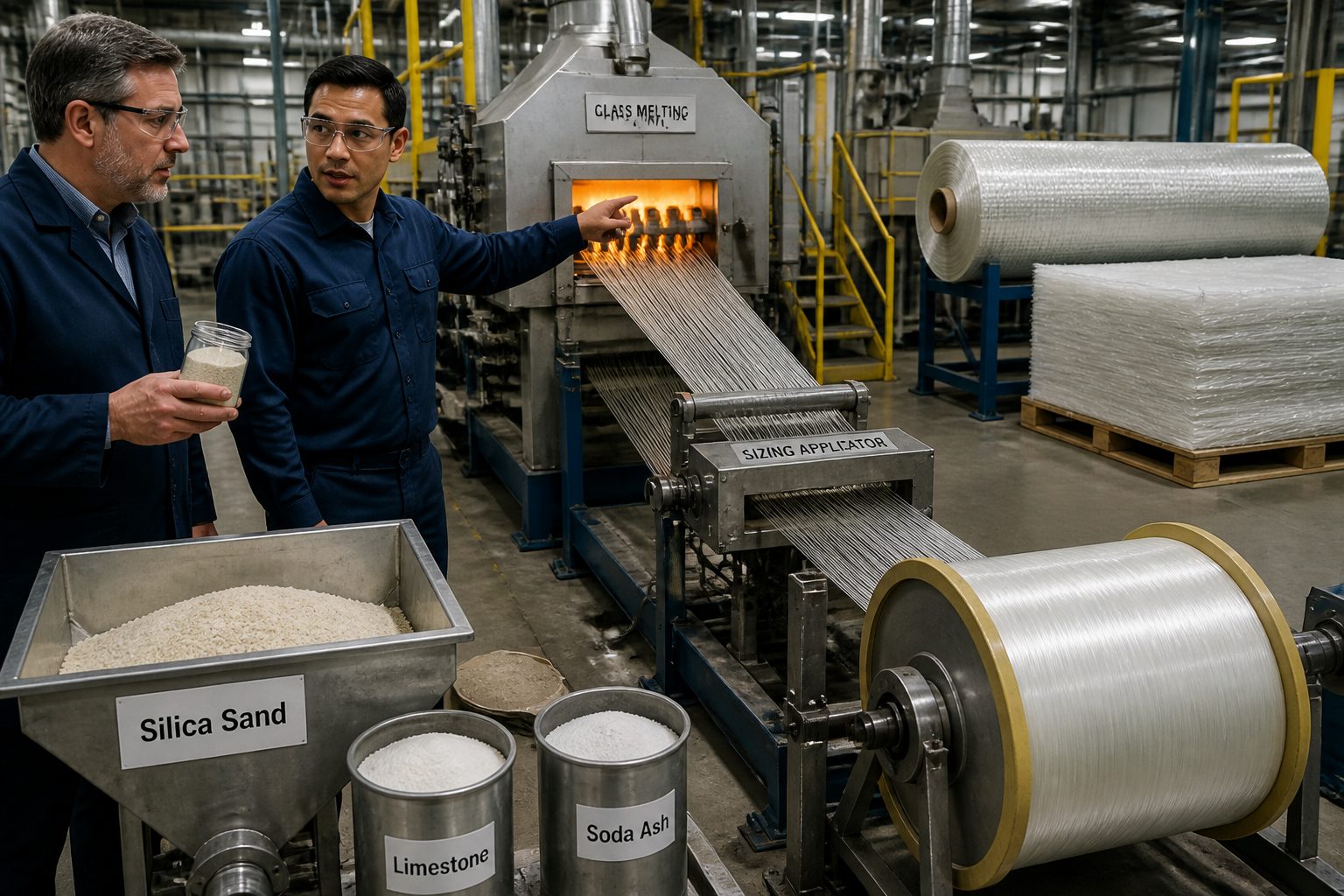
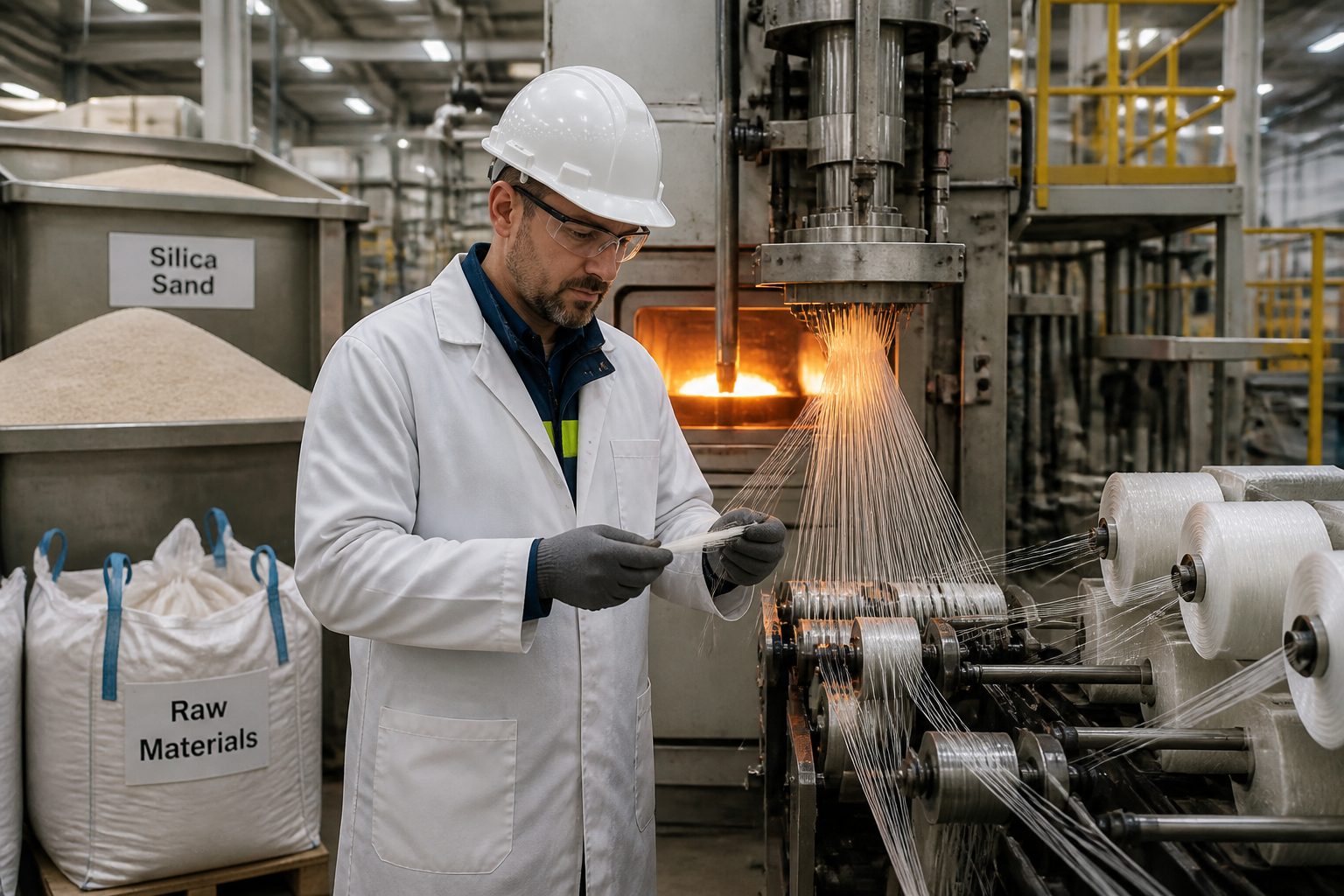
The foundation of any glass fiber begins with its raw materials, which dictate the final mechanical and chemical properties of the fiber. Silica sand, a common and abundant mineral, forms the primary constituent. This material provides the fundamental glass-forming oxide necessary for fiber production.
Beyond silica, a carefully selected blend of other oxides is introduced to modify the glass properties. These additives lower the melting temperature and improve the flow characteristics of the molten glass. Calcium oxide and aluminum oxide are common examples of such modifying agents.
Boron oxide is another critical component, especially in the popular E-glass fiber composition. This ingredient significantly enhances the electrical insulation properties of the glass. It also helps to reduce the viscosity of the melt, making the glass fiber drawing process more efficient.
Magnesium oxide and sodium oxide also play roles in adjusting the glass’s thermal expansion and chemical resistance. Each additive is chosen for its specific effect on the overall performance of the finished glass fiber. Manufacturers select precise ratios to achieve desired outcomes.
For instance, an E-glass fiber composition typically contains 52-56% silicon dioxide, 12-16% calcium oxide, and 12-16% aluminum oxide. Boron oxide usually makes up 5-10% of the mix, with smaller amounts of magnesium oxide and sodium oxide. This exact recipe ensures consistent electrical and mechanical performance.
The purity of these raw materials is absolutely essential for producing high-quality glass fibers. Even trace impurities can compromise the strength, durability, or optical clarity of the final product. Suppliers must provide materials that meet stringent specifications for use in the glass fiber manufacturing process.
Manufacturers meticulously control the particle size and moisture content of the raw materials before mixing. These factors impact how efficiently the batch melts and how uniformly the glass forms. Careful preparation prevents defects in the subsequent fiberglass production steps.
The precise blending of these raw ingredients is crucial for creating a homogeneous glass melt. Any inconsistencies at this stage can lead to variations in fiber diameter or strength later in the process. Modern facilities use automated systems to ensure accurate and repeatable mixing.
The Melting and Fiberizing Process
Once the raw materials are thoroughly blended, they are introduced into a large, high-temperature furnace, known as a melting tank. Here, the batch is heated to temperatures typically ranging from 1370°C to 1650°C (2500°F to 3000°F) until it transforms into a molten glass. This intense heat ensures a complete and uniform melt, eliminating any unreacted particles.
The molten glass then flows through a refining section to remove any trapped gas bubbles, which would cause defects in the final fiber. After refining, the glass passes into a forehearth, where its temperature is precisely controlled to achieve the optimal viscosity for fiberization. This careful temperature management is critical for the subsequent glass fiber drawing process.
| Process Stage | Description | Key Outcome |
|---|---|---|
| Batch Mixing | Precise blending of silica, fluxes, and modifiers. | Homogeneous raw material mix. |
| Melting | Heating raw materials in a furnace to molten state. | Uniform, fully liquid glass. |
| Refining | Removing gas bubbles from the molten glass. | Optically clear, defect-free glass. |
| Forehearth Conditioning | Adjusting molten glass to exact fiberizing temperature. | Optimal viscosity for fiber drawing. |
| Fiberization | Extruding molten glass through small orifices. | Initial continuous glass filaments. |
| Cooling | Rapid cooling of extruded filaments. | Solidification of glass fibers. |
Fiber Drawing and Sizing Operations
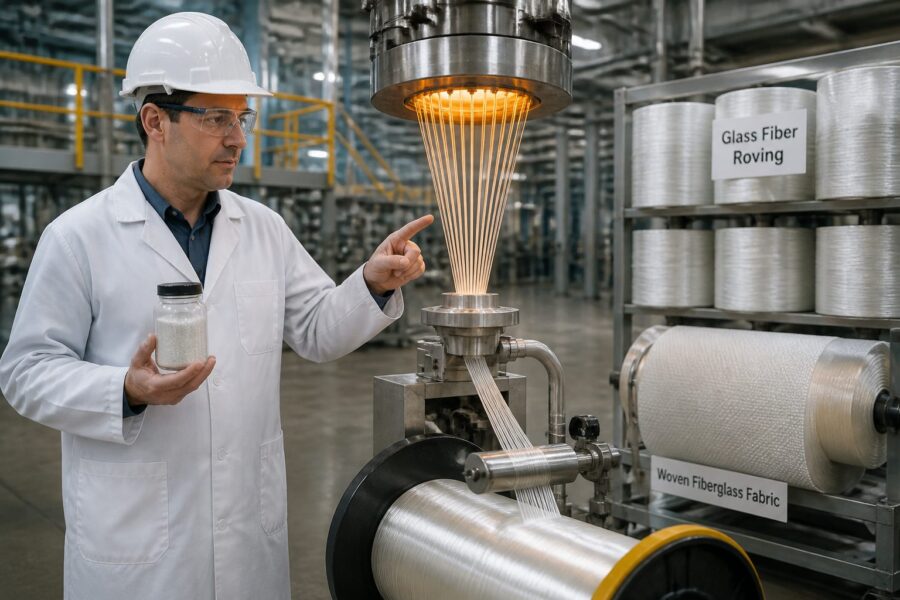
The actual fiber drawing process begins when the molten glass, at its optimal viscosity, flows through small platinum-rhodium bushings located at the bottom of the forehearth. These bushings contain hundreds, or even thousands, of tiny orifices, each extruding a continuous filament of glass. The precious metal alloy resists the extreme temperatures and corrosive nature of the molten glass, ensuring consistent hole size.
Immediately after extrusion, a high-speed winder rapidly pulls these molten streams of glass downwards. This pulling action attenuates the streams into fine fibers, often only a few micrometers in diameter. The speed of the winder directly controls the final diameter of the glass fiber, which is a critical parameter for its performance.
As the newly formed fibers cool rapidly in the air, they pass through an applicator that applies a chemical sizing agent. This sizing is a complex mixture of film-forming polymers, coupling agents, and lubricants. It serves multiple functions essential for the integrity and processability of the glass fiber.
The primary role of the sizing is to protect the delicate glass filaments from abrasion during subsequent handling and processing. Without this protective layer, the fibers would easily break or abrade each other, significantly reducing their strength. It also binds the individual filaments into a manageable strand.
Furthermore, the sizing acts as a chemical coupling agent, promoting adhesion between the glass fiber and the matrix resin in composite applications. Different composite systems, such as polyester, epoxy, or vinyl ester, require specific coupling agents to achieve optimal bonding. This chemical compatibility is vital for the mechanical performance of the final composite product.
Lubricants within the sizing reduce friction between the fibers and processing equipment. This helps prevent damage during weaving, chopping, or winding operations. The selection of the right sizing agent is a specialized part of the glass fiber manufacturing process, tailored to the fiber’s intended application.
After sizing, the bundled strands of fibers are wound onto large bobbins at very high speeds. These bobbins can contain kilometers of continuous fiber, ready for further processing. The winding tension and speed are carefully controlled to prevent damage to the delicate strands.
The subsequent fiberglass production steps depend on the final product form. Fibers can be chopped into short lengths for molding compounds, woven into fabrics for laminates, or combined into rovings for filament winding. Each form leverages the unique properties of glass fiber in different ways.
Types of Glass Fiber: E-Glass, S-Glass, and Specialty Grades
While the general glass fiber manufacturing process follows similar steps, the specific composition of the glass melt leads to distinct types of glass fibers, each with tailored properties. E-glass, or “Electrical glass,” is by far the most common and widely used type. Its excellent electrical insulation properties and good mechanical strength make it a standard choice for many reinforcement applications.
The E-glass fiber composition, characterized by its low alkali content, provides a balance of cost-effectiveness and performance. This makes it suitable for general-purpose composites, circuit boards, and various structural components. You find E-glass in everything from boat hulls to wind turbine blades.
S-glass, or “Strength glass,” represents a higher-performance category, developed specifically for applications requiring superior mechanical strength and stiffness. It typically contains a higher percentage of magnesium oxide and aluminum oxide than E-glass. This altered composition results in significantly enhanced tensile strength and modulus.
Aerospace and military applications frequently employ S-glass due to its exceptional strength-to-weight ratio. While more expensive to produce than E-glass, its performance benefits often justify the increased cost in critical designs. The demand for lightweight, high-strength materials drives the continued use and development of S-glass.
Beyond E-glass and S-glass, several specialty grades exist, each designed for particular performance requirements. C-glass, or “Chemical glass,” for example, offers superior resistance to chemical corrosion, particularly in acidic environments. This makes it ideal for applications like chemical storage tanks and pipes where exposure to harsh chemicals is common.
A-glass, or “Alkali glass,” contains a higher alkali content compared to E-glass, making it less resistant to water and acids. It is generally used for less demanding applications or in situations where cost is the primary driver. You might see A-glass in some general insulation products.
D-glass, or “Dielectric glass,” is formulated for even better electrical performance than E-glass, possessing a very low dielectric constant. This makes it suitable for specialized electronic applications where minimizing signal loss is paramount. Its niche use reflects its highly specific properties.
Another specialty grade is AR-glass, or “Alkali-Resistant glass,” which incorporates zirconium dioxide to resist the highly alkaline environment of cement. This type of glass fiber is specifically designed for reinforcing concrete and cementitious products. Its use extends the durability and strength of these construction materials significantly.
Each glass type necessitates precise control over its raw material inputs during the glass fiber manufacturing process. A slight deviation in composition can alter the final properties dramatically. Manufacturers invest heavily in R&D to optimize these formulations for specific market needs.
The choice of glass fiber type directly impacts the performance and cost of the final composite product. Engineers must carefully consider the required mechanical, electrical, and chemical properties when specifying materials. This decision influences the entire design and manufacturing workflow.
Quality Control and Testing in Glass Fiber Manufacturing
Maintaining stringent quality control is absolutely paramount throughout the glass fiber manufacturing process to ensure product consistency and reliability. Manufacturers implement rigorous testing at every stage, from raw material inspection to final product verification. This meticulous approach guarantees that the fibers meet demanding industrial standards.
Statistical process control (SPC) methods are commonly employed to monitor key parameters in real-time. This includes tracking fiber diameter, sizing content, and tensile strength, allowing for immediate adjustments to the fiberglass production steps if deviations occur. Consistent quality means predictable performance for customers.
- Raw material impurity analysis
- Molten glass viscosity measurement
- Fiber diameter consistency checks
- Tensile strength and modulus testing
- Sizing content and distribution analysis
- Chemical resistance evaluation
- Electrical insulation property verification
- Moisture absorption testing
- Thermal stability assessment
Applications of Glass Fiber Reinforcement Products
The versatility and performance of glass fiber reinforcement products have led to their adoption across an incredibly diverse range of industries. From high-tech aerospace components to everyday consumer goods, glass fibers provide crucial strength and durability. Their lightweight nature also offers significant advantages in many designs.
One of the most prominent applications is in the automotive industry, where fiberglass composites contribute to lighter vehicle bodies and improved fuel efficiency. Parts like bumpers, dashboards, and even structural elements now incorporate glass fiber. This helps meet strict emissions regulations and enhances vehicle performance.
The construction sector heavily relies on glass fiber for its reinforcing capabilities. Fiberglass rebar offers a corrosion-resistant alternative to steel in concrete structures, particularly in marine environments or areas exposed to de-icing salts. Glass fiber mesh also reinforces plasters and renders, preventing cracks and improving longevity.
Wind energy represents another major growth area for glass fiber applications, specifically in the construction of massive wind turbine blades. The incredible length and intricate aerodynamic shapes of these blades demand materials with high strength-to-weight ratios. Glass fiber composites provide the necessary stiffness and fatigue resistance to withstand constant stress.
In the marine industry, fiberglass has been the material of choice for boat hulls for decades. Its resistance to water, rot, and corrosion, combined with its ease of molding into complex shapes, makes it ideal for building durable and low-maintenance vessels. From small dinghies to large yachts, fiberglass remains a staple.
Aerospace applications leverage the high strength and low density of S-glass fibers in secondary structures and interior components of aircraft. While carbon fiber often takes the lead for primary structures, glass fiber offers a cost-effective and electrically insulating option for many parts. This contributes to overall aircraft safety and efficiency.
Electrical and electronic industries utilize E-glass fibers extensively in printed circuit boards (PCBs) due to their excellent dielectric properties. The fiberglass fabric provides mechanical support and electrical insulation for the copper traces and electronic components. This ensures reliable operation of countless devices.
Consumer goods also benefit from glass fiber reinforcement, enhancing the durability and performance of various products. Sporting equipment like skis, tennis rackets, and fishing rods gain strength and flexibility from glass fiber composites. Even appliance housings and furniture components often incorporate fiberglass for added robustness.
The pipeline industry uses glass fiber to reinforce pipes for water, gas, and oil transport. Fiberglass reinforced plastic (FRP) pipes offer superior corrosion resistance compared to metal pipes, reducing maintenance costs and extending service life. This is especially important for underground infrastructure.
Agricultural equipment and industrial machinery frequently use glass fiber composites for parts that require impact resistance and weather durability. Tractor components, storage tanks, and protective covers often benefit from the resilience of fiberglass. These applications highlight the material’s ability to withstand harsh operating conditions.
Conclusion
The glass fiber manufacturing process is a sophisticated blend of chemistry, physics, and engineering, transforming simple raw materials into high-performance reinforcement products. From the precise mixing of silica and other oxides to the delicate glass fiber drawing process, every step contributes to the material’s final properties. This detailed sequence of fiberglass production steps ensures consistency and quality.
The careful formulation of different glass types, such as the widely used E-glass fiber composition and the high-strength S-glass, allows for tailored performance across countless applications. Understanding these variations helps engineers select the right material for specific challenges. This adaptability makes glass fiber invaluable in modern industry.
Strict quality control measures, including continuous monitoring and rigorous testing, underpin the reliability of glass fiber products. These checks ensure that each batch meets the demanding specifications required by industries ranging from aerospace to construction. Customers rely on this consistency for their own product integrity.
Glass fiber’s ability to enhance strength, reduce weight, and resist corrosion has cemented its role as an indispensable material in advanced composites. Its widespread use continues to drive innovation in material science and engineering. The future will likely see even more specialized applications emerge.
The development and refinement of the glass fiber manufacturing process have directly enabled advancements in numerous sectors. It provides designers with materials that offer unparalleled performance characteristics. This continuous evolution ensures glass fiber remains a relevant and powerful tool.
As industries demand ever lighter, stronger, and more durable materials, the science behind glass fiber production will only grow more critical. Researchers are constantly exploring new compositions and processing techniques to push the boundaries of what is possible. This ongoing innovation benefits everyone.
The impact of glass fiber reinforcement products on modern technology is undeniable and continues to expand. Their contribution to sustainable solutions, like lighter vehicles and efficient wind turbines, is particularly noteworthy. This material helps shape a more resource-efficient world.
Ultimately, the journey of glass fiber, from its raw mineral origins to its sophisticated final forms, exemplifies human ingenuity in materials engineering. It is a testament to how fundamental scientific principles translate into tangible, high-impact industrial solutions. This understanding gives a deeper appreciation for the materials around us.