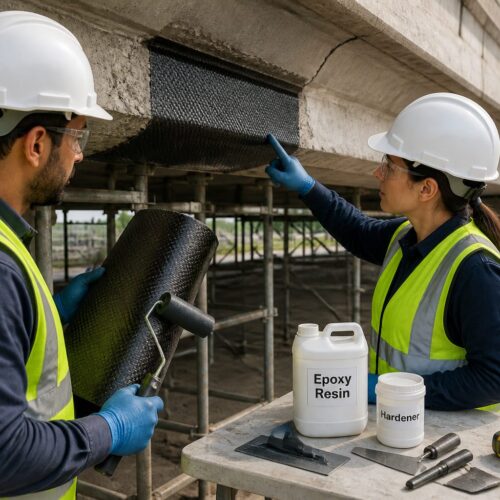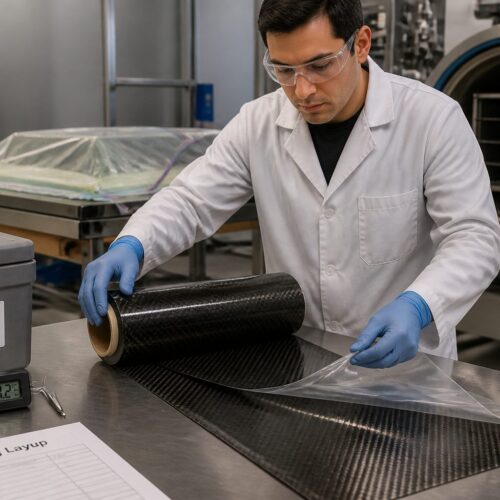

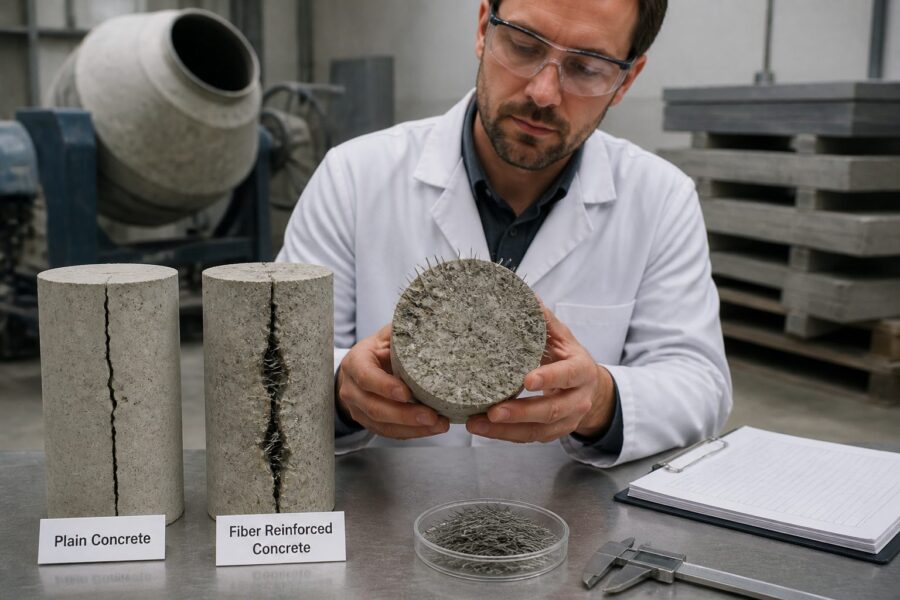
Fiber reinforced concrete (FRC) is a composite material that enhances the mechanical properties of concrete by incorporating various types of fibers. These fibers act as internal reinforcement, improving the concrete’s tensile strength, ductility, and resistance to cracking. This innovative material has found its way into numerous construction applications, offering solutions to challenges in traditional concrete structures.
From pavements to bridges and tunnel linings, the versatility of FRC is evident in its widespread use. This article will explore the diverse fiber reinforced concrete applications and the benefits they bring to the construction industry, focusing on how FRC improves structural integrity.
We’ll examine how different fiber types impact concrete performance, and why engineers are increasingly turning to FRC for durable and resilient infrastructure. Understanding the specific advantages of FRC in each application is key to appreciating its potential and optimizing its use in future projects.
Understanding Fiber Reinforced Concrete (FRC)
Fiber reinforced concrete is a composite material consisting of cement, aggregate, and various types of fibers. These fibers, which can be steel, glass, synthetic polymers, or natural materials, are distributed throughout the concrete mix to enhance its properties.
The primary function of these fibers is to bridge cracks that form in the concrete, preventing them from widening and propagating. This crack-bridging mechanism significantly improves the concrete’s tensile strength, toughness, and resistance to impact and fatigue.
Different fiber types impart different characteristics to the concrete. Steel fibers, for example, provide high tensile strength and improve the concrete’s ability to withstand heavy loads, while synthetic fibers like polypropylene enhance its resistance to plastic shrinkage cracking.
Glass fibers offer good chemical resistance and are suitable for applications where corrosion is a concern. Natural fibers, such as coconut or sisal, are environmentally friendly and can be used in low-load applications, but they are not as durable as other options.
The distribution of fibers within the concrete matrix is crucial for optimal performance. Even and consistent dispersion ensures that crack bridging occurs effectively throughout the material.
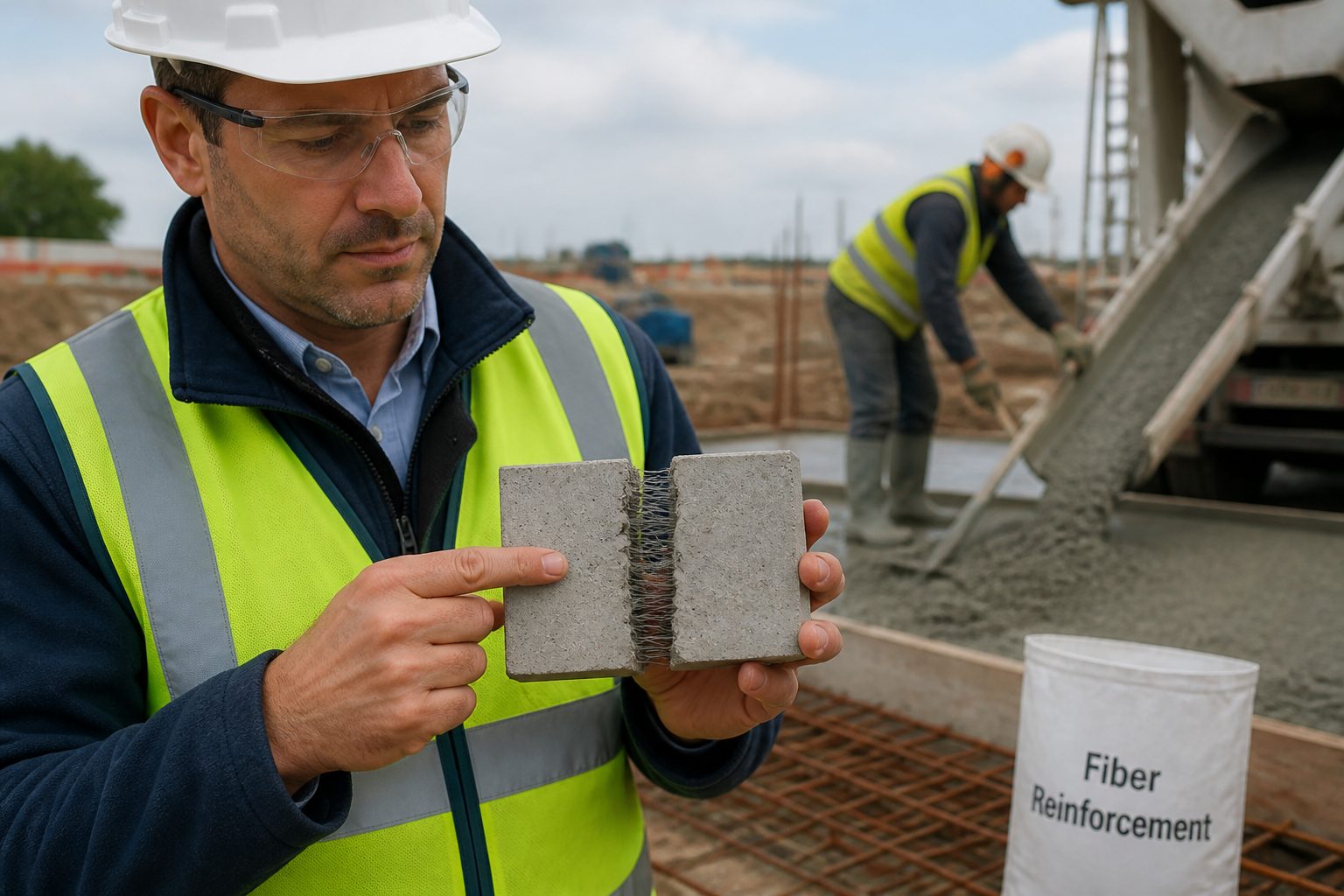

Factors like fiber aspect ratio (length-to-diameter ratio) and fiber volume fraction play significant roles in determining the final properties of the FRC. A higher aspect ratio generally leads to better crack bridging, but can also make mixing and placing the concrete more challenging.
FRC’s enhanced properties make it a superior choice over traditional concrete in many applications. It can withstand greater stresses and strains before failure, leading to longer-lasting and more reliable structures.
The use of FRC can also reduce the need for conventional steel reinforcement in certain applications. This can lead to cost savings and simplified construction processes.
Applications in Pavement Construction
Fiber reinforced concrete applications are particularly beneficial in pavement construction, where durability and resistance to cracking are critical. Traditional concrete pavements are prone to cracking due to thermal stresses, traffic loads, and environmental factors.
By incorporating fibers into the concrete mix, the pavement’s resistance to cracking is significantly improved, extending its service life and reducing maintenance requirements. FRC pavements also exhibit improved resistance to abrasion and erosion, making them ideal for high-traffic areas and environments with harsh weather conditions.
One common application is in airport runways, where the heavy loads imposed by aircraft can quickly deteriorate conventional concrete pavements. FRC runways can withstand these loads more effectively, reducing the need for frequent repairs and minimizing disruptions to airport operations.
Another application is in highway pavements, where the continuous pounding of vehicles can lead to premature cracking and failure. FRC overlays can be used to rehabilitate existing pavements, providing a durable and cost-effective solution for extending their service life.
The reduced cracking in FRC pavements also translates to a smoother ride for vehicles. This improves fuel efficiency and reduces wear and tear on vehicles.
Furthermore, the increased durability of FRC pavements can lead to lower life-cycle costs. While the initial cost of FRC may be higher than traditional concrete, the reduced maintenance and extended service life can result in significant savings over the long term.
Specific fiber types, such as steel fibers, are often preferred for pavement applications due to their high tensile strength. These fibers provide excellent crack bridging and load-bearing capacity, making them well-suited for withstanding the heavy traffic loads on pavements.
The use of FRC in pavement construction is a growing trend, driven by the need for more durable and sustainable infrastructure. As traffic volumes continue to increase and budgets remain tight, FRC offers a cost-effective solution for extending the life of pavements and reducing maintenance costs.
Using FRC in Bridge Decks and Overlays
Bridge decks are constantly exposed to heavy traffic loads, temperature fluctuations, and corrosive elements, making them susceptible to deterioration and cracking. Fiber reinforced concrete offers a solution for improving the durability and extending the lifespan of bridge decks.
By incorporating fibers into the concrete mix, the bridge deck’s resistance to cracking, deflection, and impact is significantly enhanced. FRC bridge decks also exhibit improved resistance to chloride penetration, which is a major cause of corrosion in reinforced concrete structures.
| Fiber Type | Benefits in Bridge Decks | Typical Applications |
|---|---|---|
| Steel Fibers | High tensile strength, improved load-bearing capacity | New bridge deck construction, heavy-traffic bridges |
| Synthetic Fibers | Reduced plastic shrinkage cracking, enhanced durability | Bridge deck overlays, rehabilitation projects |
| Glass Fibers | Good chemical resistance, suitable for corrosive environments | Coastal bridges, areas with high salt exposure |
| Carbon Fibers | High strength-to-weight ratio, corrosion resistance | High-performance bridge decks, specialized applications |
FRC overlays are also commonly used to rehabilitate existing bridge decks. These overlays provide a thin, durable layer that protects the underlying concrete from further deterioration, while also improving the ride quality for vehicles.
The improved resistance to chloride penetration is particularly important in bridge decks located in coastal areas or regions that use de-icing salts. Chloride ions can penetrate the concrete and corrode the steel reinforcement, leading to significant structural damage.
FRC’s ability to reduce deflection is also beneficial, as it can improve the overall stability and performance of the bridge. Excessive deflection can lead to cracking and fatigue of the concrete, as well as discomfort for drivers.
The use of FRC in bridge deck construction can also reduce the need for extensive repairs and replacements. This can save time and money, as well as minimize disruptions to traffic flow.
In some cases, FRC bridge decks can be designed with thinner sections than traditional concrete decks. This can reduce the overall weight of the bridge, which can be particularly important for long-span bridges.
FRC in Tunnel Linings and Ground Support
In underground construction, tunnel linings and ground support systems must be able to withstand significant loads and resist cracking caused by ground movement. Fiber reinforced concrete provides an effective solution for enhancing the stability and durability of these structures.
By incorporating fibers into the concrete mix, the tunnel lining’s resistance to cracking, spalling, and deformation is significantly improved. FRC tunnel linings also offer enhanced resistance to fire, which is a critical safety consideration in underground environments.
One common application is in sprayed concrete, also known as shotcrete, which is used to stabilize tunnel walls and provide immediate ground support. FRC shotcrete exhibits improved bond strength and reduced rebound, making it easier to apply and more effective in preventing ground collapse.
Another application is in precast tunnel lining segments, which are manufactured off-site and then assembled in the tunnel. FRC precast segments offer improved durability and reduced weight, making them easier to handle and install.
The improved fire resistance of FRC tunnel linings is due to the fibers’ ability to prevent the concrete from cracking and spalling under high temperatures. This helps to maintain the structural integrity of the tunnel and protect occupants in the event of a fire.
The reduced rebound of FRC shotcrete is also a significant advantage, as it minimizes waste and reduces the cost of the application. Rebound is the material that bounces off the surface during spraying, and it can be a significant issue with traditional shotcrete.
FRC’s ability to withstand ground movement is crucial in tunnels, as the surrounding soil can shift and settle over time. The fibers help to distribute the stresses and prevent the concrete from cracking under these conditions.
The use of FRC in tunnel linings can also reduce the need for extensive ground stabilization measures. This can save time and money, as well as minimize the impact on the surrounding environment.
Applications in Precast Concrete Elements
Precast concrete elements are widely used in construction due to their high quality, dimensional accuracy, and speed of installation. Fiber reinforced concrete can further enhance the performance of precast elements, making them more durable and resistant to cracking.
By incorporating fibers into the concrete mix, the precast element’s resistance to handling stresses, transportation loads, and in-service stresses is significantly improved. FRC precast elements also offer reduced weight and improved fire resistance, making them suitable for a wide range of applications.
One common application is in precast wall panels, which are used in building construction to create exterior walls and interior partitions. FRC wall panels offer improved resistance to cracking and impact, making them more durable and easier to maintain.
Another application is in precast bridge beams, which are used to support bridge decks and transfer loads to the substructure. FRC bridge beams offer improved load-carrying capacity and reduced deflection, making them suitable for longer spans and heavier traffic loads.
The reduced weight of FRC precast elements can make them easier to transport and install, which can save time and money on construction projects. This is particularly important for large or complex projects.
The improved fire resistance of FRC precast elements can also enhance the safety of buildings and other structures. This is especially important in high-rise buildings and other structures where fire safety is a major concern.
FRC’s ability to resist cracking during handling and transportation is also a significant advantage, as it minimizes the risk of damage and reduces the need for repairs. This can save time and money, as well as improve the overall quality of the construction project.
The use of FRC in precast concrete elements is a growing trend, driven by the need for more durable, sustainable, and cost-effective construction materials. As precast construction becomes more popular, FRC is likely to play an increasingly important role in the industry.
The Role of FRC in Seismic Resistance
In seismically active regions, structures must be able to withstand the forces generated by earthquakes. Fiber reinforced concrete can play a crucial role in enhancing the seismic resistance of buildings and infrastructure.
By incorporating fibers into the concrete mix, the structure’s ductility, energy absorption capacity, and resistance to cracking are significantly improved. FRC structures also exhibit reduced spalling and improved bond strength, which are critical for maintaining structural integrity during an earthquake.
- Improved ductility and energy absorption
- Enhanced resistance to cracking and spalling
- Increased bond strength between concrete and reinforcement
- Reduced deformation and displacement
- Better overall structural integrity during seismic events
One common application is in shear walls, which are designed to resist lateral forces generated by earthquakes. FRC shear walls offer improved resistance to cracking and deformation, making them more effective in protecting buildings from collapse.
The improved ductility of FRC allows it to deform more without fracturing, which is crucial for absorbing energy during an earthquake. This helps to prevent the structure from collapsing and protects occupants.
The enhanced resistance to cracking and spalling helps to maintain the structural integrity of the concrete, even under severe seismic loading. This prevents the concrete from breaking apart and exposing the steel reinforcement to corrosion.
The increased bond strength between the concrete and the reinforcement helps to ensure that the two materials work together effectively to resist the forces generated by an earthquake. This prevents the reinforcement from slipping or pulling out of the concrete.
The use of FRC in seismic design can also reduce the need for extensive and costly retrofitting of existing structures. This can save time and money, as well as improve the overall safety of communities in seismically active regions.
Advantages of Different Fiber Types
The selection of the appropriate fiber type is critical to achieving the desired performance characteristics in fiber reinforced concrete. Each fiber type offers unique advantages and is suitable for different applications.
Steel fibers provide high tensile strength and improve the concrete’s ability to withstand heavy loads, making them ideal for pavements, bridge decks, and tunnel linings. Synthetic fibers, such as polypropylene and nylon, enhance the concrete’s resistance to plastic shrinkage cracking and improve its durability in harsh environments.
Glass fibers offer good chemical resistance and are suitable for applications where corrosion is a concern, such as coastal structures and wastewater treatment plants. Carbon fibers provide exceptional strength-to-weight ratio and corrosion resistance, making them ideal for high-performance applications, such as aerospace components and specialized bridge structures.
Natural fibers, such as coconut and sisal, are environmentally friendly and can be used in low-load applications, such as agricultural structures and temporary works. However, their durability is lower than that of other fiber types, and they may require special treatment to prevent degradation.
The cost of different fiber types can also vary significantly. Steel and carbon fibers are generally more expensive than synthetic and natural fibers.
The workability of the concrete mix can also be affected by the type and amount of fibers used. Some fibers can make the concrete more difficult to mix and place.
The aspect ratio (length-to-diameter ratio) of the fibers is another important consideration. Higher aspect ratios generally lead to better crack bridging, but can also make mixing more challenging.
The choice of fiber type should be based on a careful evaluation of the specific requirements of the application, taking into account factors such as load-bearing capacity, durability, corrosion resistance, fire resistance, and cost.
Design Considerations for FRC Structures
Designing structures with fiber reinforced concrete requires careful consideration of several factors, including the fiber type, fiber content, concrete mix design, and loading conditions. The fiber content, which is the volume fraction of fibers in the concrete mix, is a critical parameter that affects the concrete’s mechanical properties.
Higher fiber contents generally lead to improved tensile strength, toughness, and resistance to cracking, but they can also increase the cost of the concrete and make it more difficult to work with. The concrete mix design should be optimized to ensure proper fiber dispersion and minimize segregation.
This may involve adjusting the water-cement ratio, aggregate grading, and admixture content. The loading conditions, including the magnitude, frequency, and type of loads, must be considered to ensure that the FRC structure can withstand the expected stresses and strains.
Finite element analysis and other advanced modeling techniques can be used to predict the behavior of FRC structures under complex loading conditions. Proper detailing of reinforcement is also essential to ensure that the fibers can effectively bridge cracks and transfer loads.
The orientation of the fibers can also affect the performance of the FRC. Fibers that are aligned parallel to the direction of stress will be more effective in resisting cracking.
The bond between the fibers and the concrete matrix is also crucial for effective crack bridging. Poor bond can lead to fiber pullout and reduced performance.
The durability of the FRC structure must also be considered, particularly in harsh environments. The fibers must be resistant to corrosion and degradation.
The design of FRC structures should be based on established codes and standards, such as those published by the American Concrete Institute (ACI) and other relevant organizations. These codes provide guidance on the selection of fiber types, fiber contents, and mix designs, as well as on the analysis and design of FRC structures.
The Future of Fiber Reinforced Concrete
Fiber reinforced concrete continues to evolve as new fiber types and concrete technologies emerge. Researchers are exploring the use of nanotechnology to develop even stronger and more durable FRC materials.
For example, carbon nanotubes and graphene can be incorporated into the concrete mix to enhance its mechanical properties at the nanoscale. Self-healing concrete, which incorporates bacteria or other agents that can repair cracks automatically, is another promising area of research.
The increasing demand for sustainable construction materials is also driving innovation in FRC technology. Natural fibers, such as bamboo and hemp, are being investigated as alternatives to synthetic fibers, offering a more environmentally friendly option.
The use of recycled aggregates and supplementary cementitious materials, such as fly ash and slag, can further reduce the environmental impact of FRC. As the construction industry continues to embrace sustainable practices, fiber reinforced concrete is poised to play an increasingly important role in building a more resilient and eco-friendly infrastructure.
The development of new fiber types with improved properties, such as higher strength and durability, is also a key area of research. This will allow for the design of even more efficient and cost-effective FRC structures.
The use of advanced modeling techniques, such as artificial intelligence and machine learning, is also being explored to optimize the design and performance of FRC structures. This can help to improve the accuracy of predictions and reduce the need for costly testing.
The development of new construction techniques, such as 3D printing, is also opening up new possibilities for the use of FRC. This can allow for the creation of complex and customized structures with greater efficiency and precision.
The future of fiber reinforced concrete is bright, with ongoing research and development paving the way for even more innovative and sustainable applications. As the construction industry continues to evolve, FRC is likely to play an increasingly important role in shaping the built environment.
Conclusion
Fiber reinforced concrete applications offer numerous benefits in construction, including improved durability, enhanced resistance to cracking, and increased structural integrity. From pavements and bridge decks to tunnel linings and precast elements, FRC has proven its versatility and effectiveness in a wide range of applications.
By understanding the properties of different fiber types and carefully considering design parameters, engineers can optimize the performance of FRC structures and extend their service life. As research and innovation continue to advance, fiber reinforced concrete will undoubtedly play an even greater role in shaping the future of construction.
The initial investment in FRC can often be offset by the long-term savings in maintenance and repair costs. This makes FRC a cost-effective solution for many construction projects.
The environmental benefits of FRC, such as reduced material consumption and extended service life, are also becoming increasingly important. This aligns with the growing focus on sustainable construction practices.
As awareness of the benefits of FRC continues to grow, its use is likely to become even more widespread in the construction industry. This will lead to the development of more durable, sustainable, and resilient infrastructure.