

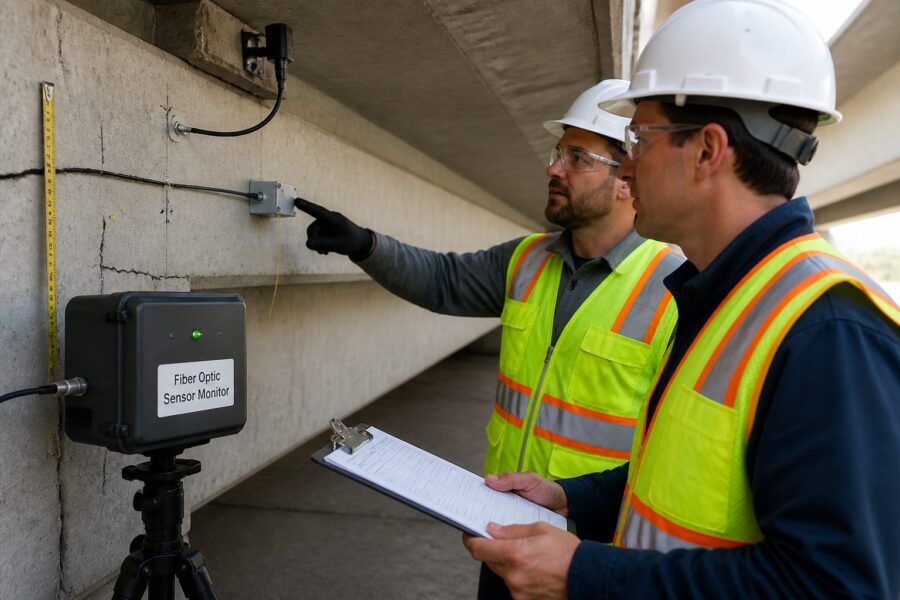
Infrastructure is the backbone of modern society, supporting our daily lives in countless ways. From the bridges we cross to the pipelines that deliver essential resources, the health and integrity of these structures are of paramount importance. The use of fiber optic sensors in infrastructure offers a revolutionary approach to monitoring and maintaining these critical assets.
These advanced sensor technologies provide real-time data on structural conditions, enabling proactive maintenance and preventing catastrophic failures. This article will explore the diverse applications of fiber optic sensor technology in infrastructure, highlighting its benefits and potential for the future.
These sensors are a game-changer for structural health monitoring. They offer a level of precision and comprehensiveness previously unattainable with traditional methods.
How Fiber Optic Sensors Work
Fiber optic sensors operate on the principle of light modulation within an optical fiber. When a physical parameter, such as strain or temperature, changes, it affects the properties of the light traveling through the fiber.
These changes can be measured and correlated to the specific parameter being monitored. There are several types of fiber optic sensors, each designed to detect different physical phenomena.
One common type is the Fiber Bragg Grating (FBG) sensor, which contains a periodic variation in the refractive index of the fiber core. When strain or temperature changes, the grating spacing changes, altering the wavelength of light reflected back from the sensor.
By measuring this wavelength shift, the strain or temperature can be accurately determined. Other types of fiber optic sensors include interferometric sensors, which measure changes in the interference pattern of light, and distributed sensors, which can measure parameters along the entire length of the fiber.
These sensors offer several advantages over traditional electrical sensors. They are immune to electromagnetic interference, making them ideal for use in harsh environments. They are also small, lightweight, and can be easily embedded within structures.
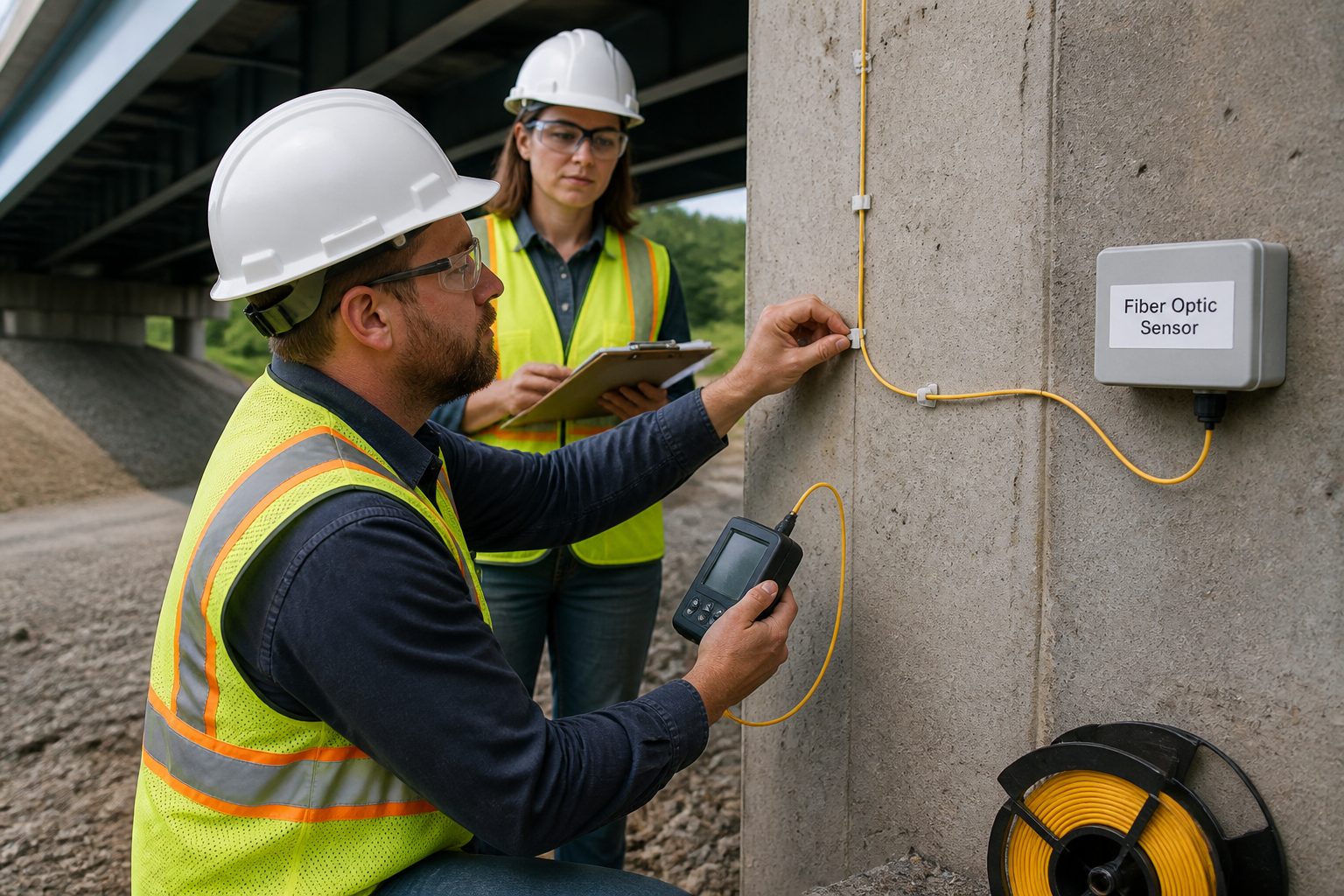

The core of a fiber optic sensor is the optical fiber itself, a thin strand of glass or plastic. Light travels through this fiber, guided by the principle of total internal reflection.
The sensor works by detecting changes in the light’s properties, such as intensity, wavelength, phase, or polarization. These changes are directly related to the physical parameter being measured.
FBG sensors are particularly versatile because they can be tailored to specific wavelengths. This allows for multiple sensors to be placed along a single fiber, each measuring a different parameter or location.
Interferometric sensors, on the other hand, are highly sensitive to small changes in the optical path length. They are often used for applications requiring extremely precise measurements.
Distributed fiber optic sensors offer a unique advantage by providing continuous measurements along the entire fiber length. This is particularly useful for monitoring pipelines or tunnels where localized changes can be easily missed by point sensors.
Monitoring Bridges with Fiber Optics
Bridges are vital components of transportation networks, but they are constantly subjected to heavy loads and environmental stressors. Structural health monitoring (SHM) is crucial for ensuring the safety and longevity of these structures.
Fiber optic sensors in infrastructure provide a powerful tool for SHM of bridges. By embedding fiber optic sensors within the bridge structure, engineers can continuously monitor strain, temperature, and vibration.
This data can be used to detect early signs of damage or deterioration, such as cracks, corrosion, or excessive stress. Early detection allows for timely maintenance and repairs, preventing more serious and costly problems down the road.
For example, fiber optic sensors can be installed on bridge piers to monitor settlement or tilting, which could indicate foundation problems. Sensors can also be placed on bridge decks to measure strain caused by traffic loads, providing valuable information about the bridge’s structural response.
One notable example is the Hardanger Bridge in Norway, which is equipped with hundreds of fiber optic sensors. These sensors monitor various parameters, including wind speed, temperature, and structural strain, providing a comprehensive picture of the bridge’s health.
Traditional bridge monitoring methods often involve visual inspections and periodic load testing. These methods can be time-consuming, costly, and may not detect subtle changes in structural integrity.
Fiber optic sensors offer a more comprehensive and continuous monitoring solution. They can detect changes in strain and temperature that are too small to be detected by visual inspection.
The data from fiber optic sensors can be used to create a baseline of normal bridge behavior. Deviations from this baseline can indicate potential problems that require further investigation.
Furthermore, fiber optic sensors can be integrated with wireless communication systems. This allows for remote monitoring of bridge health, reducing the need for on-site inspections.
The use of fiber optic sensors in bridge monitoring is becoming increasingly common. As the technology matures and costs decrease, it is expected to become the standard for SHM of bridges.
Applications in Dams and Tunnels
Dams and tunnels are critical infrastructure components that require constant monitoring to ensure their stability and safety. Dams, in particular, are subject to immense water pressure, making them vulnerable to cracks, leaks, and other structural issues.
Fiber optic sensors in infrastructure offer a reliable and accurate method for monitoring dam health. These sensors can be embedded within the dam structure during construction or retrofitted into existing dams.
| Parameter | Sensor Type | Importance |
|---|---|---|
| Water Pressure | Pressure Sensors | Detects changes in hydrostatic pressure |
| Strain | Strain Sensors | Monitors deformation and stress |
| Temperature | Temperature Sensors | Detects thermal expansion and contraction |
| Seepage | Moisture Sensors | Identifies water leakage within the structure |
Tunnels also benefit greatly from fiber optic sensor technology. Tunnels are susceptible to ground movement, water infiltration, and structural degradation, all of which can compromise their integrity.
Fiber optic sensors can be used to monitor these parameters in real-time, allowing for proactive maintenance and preventing potential collapses. These sensors are crucial for ensuring the safe operation of these vital infrastructure assets.
In dams, distributed temperature sensing (DTS) can be used to monitor seepage. Changes in temperature along the fiber indicate water flow, which can be a sign of leakage.
Strain sensors can also be used to monitor the deformation of the dam structure under the immense pressure of the water. This data can be used to detect early signs of cracking or other structural problems.
For tunnels, fiber optic sensors can be used to monitor ground movement and deformation. This is particularly important in areas with unstable soil conditions.
Acoustic sensors can also be used to detect rockfalls or other events that could damage the tunnel structure. These sensors provide an early warning system, allowing for timely intervention.
The data from fiber optic sensors can be integrated with building information modeling (BIM) systems. This allows for a comprehensive view of the dam or tunnel structure, facilitating better decision-making.
Using Sensors in Pipelines
Pipelines are essential for transporting oil, gas, water, and other vital resources across long distances. Maintaining the integrity of these pipelines is crucial to prevent leaks, explosions, and environmental damage.
Fiber optic sensors in infrastructure provide a powerful tool for monitoring pipeline health. Distributed fiber optic sensors can be installed along the length of a pipeline to detect strain, temperature changes, and acoustic signatures that may indicate a leak or other anomaly.
For example, a sudden drop in pressure or a change in temperature along the pipeline could indicate a leak. Acoustic sensors can detect the sound of escaping fluid, even if the leak is small and difficult to detect visually.
By continuously monitoring these parameters, operators can quickly identify and respond to potential problems, minimizing the risk of catastrophic failures. This technology can be used on new and existing pipelines.
Furthermore, fiber optic sensors can be used to monitor the condition of pipeline coatings, which protect the pipeline from corrosion. Corrosion is a major threat to pipeline integrity, and early detection is essential to prevent leaks and failures.
Traditional pipeline monitoring methods often involve periodic inspections and pressure testing. These methods can be costly and may not detect small leaks or corrosion before they become major problems.
Fiber optic sensors offer a more continuous and sensitive monitoring solution. They can detect leaks and corrosion at an early stage, allowing for timely repairs and preventing environmental damage.
Distributed acoustic sensing (DAS) is a particularly useful technology for pipeline monitoring. It can detect the acoustic signature of leaks, even in noisy environments.
Fiber optic sensors can also be used to monitor ground movement around the pipeline. This is important in areas with unstable soil conditions or seismic activity.
The data from fiber optic sensors can be integrated with geographic information systems (GIS). This allows for a visual representation of pipeline health, facilitating better decision-making.
Real-Time Monitoring of Buildings
Buildings, especially large or historic structures, require continuous monitoring to ensure their safety and stability. Factors such as ground settlement, seismic activity, and material degradation can compromise the structural integrity of a building.
Fiber optic sensors in infrastructure offer a comprehensive solution for real-time monitoring of buildings. These sensors can be embedded within the building’s foundation, walls, and support beams to measure strain, temperature, and displacement.
This data can be used to detect early signs of structural problems, such as cracks, settlement, or excessive stress. Real-time monitoring allows for proactive maintenance and repairs, preventing more serious and costly damage.
For example, fiber optic sensors can be installed in the foundation of a building to monitor settlement, which could indicate soil instability. Sensors can also be placed on walls to measure strain caused by wind loads or seismic activity.
Historic buildings, in particular, benefit from fiber optic sensor technology. These structures are often fragile and susceptible to damage from environmental factors and human activity. Fiber optic sensors provide a non-invasive way to monitor the condition of these buildings without causing further damage.
- Monitor foundation settlement
- Detect wall strain
- Measure temperature fluctuations
- Assess displacement
- Prevent long-term damage
Traditional building monitoring methods often involve visual inspections and periodic structural assessments. These methods can be time-consuming, costly, and may not detect subtle changes in structural integrity.
Fiber optic sensors offer a more continuous and comprehensive monitoring solution. They can detect changes in strain and temperature that are too small to be detected by visual inspection.
The data from fiber optic sensors can be used to create a baseline of normal building behavior. Deviations from this baseline can indicate potential problems that require further investigation.
Furthermore, fiber optic sensors can be integrated with building management systems (BMS). This allows for automated alerts and predictive maintenance.
The use of fiber optic sensors in building monitoring is becoming increasingly common. As the technology matures and costs decrease, it is expected to become the standard for SHM of buildings, especially for critical infrastructure.
Advantages of Fiber Optic Sensors
Fiber optic sensors offer several advantages over traditional sensing technologies, making them an attractive option for infrastructure monitoring. One key advantage is their immunity to electromagnetic interference (EMI).
This makes them ideal for use in environments with high levels of electrical noise, such as near power lines or radio transmitters. Fiber optic sensors are also small and lightweight, making them easy to install in a variety of locations.
Another advantage is their ability to measure multiple parameters simultaneously. A single fiber optic sensor can measure strain, temperature, pressure, and vibration, providing a comprehensive picture of the structural condition.
Furthermore, fiber optic sensors can be used for long-distance monitoring. The optical signal can travel several kilometers without significant loss of signal strength, allowing for remote monitoring of infrastructure assets.
Fiber optic sensors are also highly durable and resistant to corrosion, making them suitable for use in harsh environments. This is essential for long-term monitoring of infrastructure assets in challenging conditions.
Traditional sensors often require frequent calibration and maintenance. Fiber optic sensors, on the other hand, are more stable and require less maintenance.
The long lifespan of fiber optic sensors also contributes to their cost-effectiveness. They can last for decades, providing continuous monitoring without the need for frequent replacements.
Fiber optic sensors are also intrinsically safe. They do not generate electrical sparks, making them suitable for use in hazardous environments.
The high sensitivity of fiber optic sensors allows for the detection of small changes in structural condition. This enables early detection of potential problems, preventing more serious damage.
The ability to multiplex fiber optic sensors is another significant advantage. Multiple sensors can be connected to a single fiber, reducing the cost and complexity of the monitoring system.
Challenges and Considerations
While fiber optic sensors offer many advantages, there are also some challenges and considerations to keep in mind. One challenge is the initial cost of installation.
Fiber optic sensor systems can be more expensive than traditional sensor systems, especially for large-scale deployments. However, the long-term benefits of improved monitoring and reduced maintenance costs can often offset the initial investment.
Another consideration is the need for specialized expertise to install and maintain fiber optic sensor systems. Proper installation is critical to ensure accurate and reliable data.
Data interpretation can also be challenging, requiring expertise in structural engineering and sensor technology. It’s important to have trained personnel available to analyze the data and make informed decisions about maintenance and repairs.
Furthermore, the long-term durability of fiber optic sensors in harsh environments needs to be carefully considered. While fiber optic sensors are generally resistant to corrosion, they can be susceptible to damage from extreme temperatures, radiation, and mechanical stress.
The integration of fiber optic sensor data with existing infrastructure management systems can also be a challenge. Data formats and communication protocols may need to be adapted to ensure seamless integration.
Power requirements for the interrogator unit, which reads the data from the sensors, can also be a consideration. Battery-powered interrogators are available, but they may require periodic replacement.
Vandalism and theft of fiber optic sensor systems can also be a concern, especially in remote locations. Security measures may need to be implemented to protect the sensors and interrogator units.
The availability of reliable communication networks is also essential for remote monitoring. Cellular or satellite communication may be required in areas without reliable internet access.
Despite these challenges, the benefits of fiber optic sensor technology outweigh the risks. As technology advances and costs decrease, these challenges will become less significant.
The Future of Infrastructure Monitoring
The future of infrastructure monitoring looks promising, with fiber optic sensor technology playing an increasingly important role. Advances in sensor technology, data analytics, and wireless communication are paving the way for more sophisticated and cost-effective monitoring systems.
One trend is the integration of fiber optic sensors with cloud-based data management and analysis platforms. This allows for real-time data visualization, automated alerts, and predictive maintenance.
Another trend is the development of self-powered fiber optic sensors. These sensors harvest energy from the environment, eliminating the need for external power sources and reducing maintenance costs.
The use of artificial intelligence (AI) and machine learning (ML) is also transforming infrastructure monitoring. AI and ML algorithms can analyze sensor data to identify patterns, predict failures, and optimize maintenance schedules.
Ultimately, fiber optic sensors in infrastructure will enable a more proactive and data-driven approach to infrastructure management. This will lead to safer, more reliable, and more sustainable infrastructure systems.
The development of new fiber optic sensor materials and designs will further enhance their performance. This includes sensors that are more sensitive, more durable, and more resistant to harsh environments.
The integration of fiber optic sensors with drones and other autonomous vehicles will also revolutionize infrastructure monitoring. Drones can be used to deploy sensors in hard-to-reach locations and to collect data remotely.
The use of blockchain technology can also enhance the security and transparency of infrastructure monitoring data. Blockchain can be used to create a tamper-proof record of sensor data, ensuring its integrity.
The development of standardized protocols for fiber optic sensor data will also facilitate interoperability and data sharing. This will enable better collaboration between different stakeholders in infrastructure management.
The increasing adoption of digital twins will also drive the demand for fiber optic sensor technology. Digital twins are virtual representations of physical assets that can be used to simulate and optimize their performance.
Conclusion
Fiber optic sensors in infrastructure offer a powerful and versatile tool for monitoring the health and integrity of critical assets. From bridges and dams to pipelines and buildings, these sensors provide real-time data that enables proactive maintenance and prevents catastrophic failures.
While there are challenges to overcome, the benefits of fiber optic sensor technology are clear. As technology advances and costs decrease, these sensors will play an increasingly important role in ensuring the safety and sustainability of our infrastructure for generations to come.
The adoption of fiber optic sensor technology is not just a technological advancement, it’s a paradigm shift in how we manage and maintain our infrastructure. It’s a move towards a more proactive, data-driven, and sustainable approach.
By embracing this technology, we can build a future where our infrastructure is safer, more reliable, and more resilient. This will benefit not only current generations but also future generations to come.
The potential of fiber optic sensors in infrastructure is vast and largely untapped. As research and development continue, we can expect even more innovative applications and benefits to emerge.