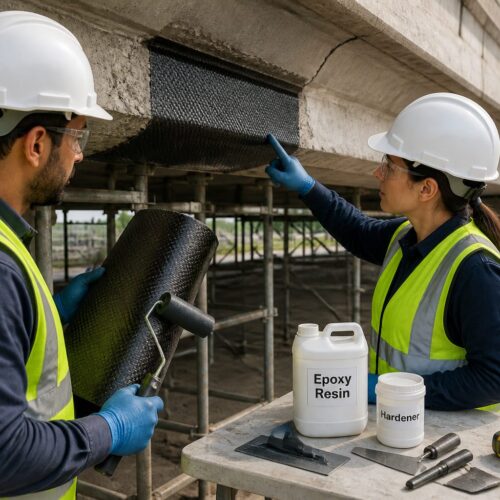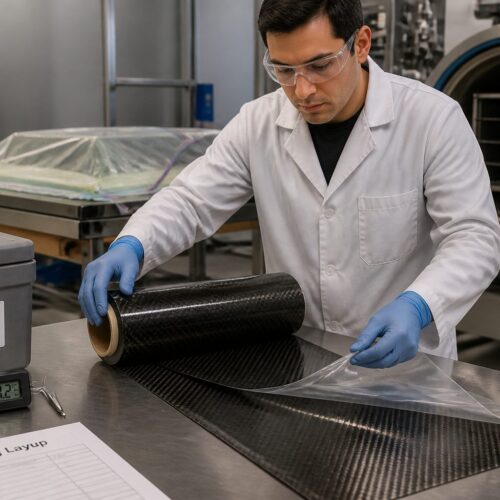

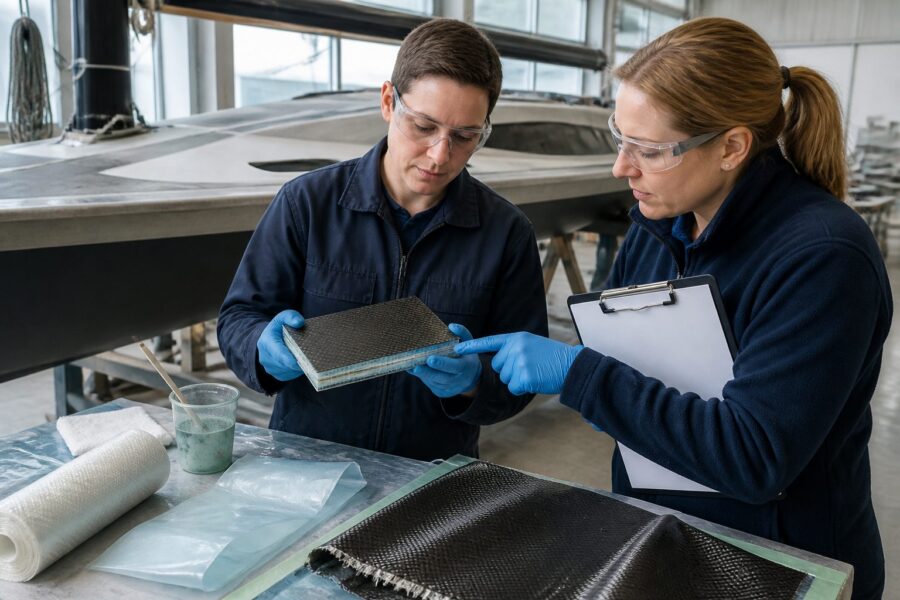
The marine environment presents unique challenges to materials. Saltwater, constant moisture, and the potential for biological growth create a harsh environment.
Traditional materials like steel and aluminum are susceptible to corrosion and degradation, leading to costly maintenance and reduced lifespan. This is where fiber reinforced composites in marine applications offer a superior alternative, providing durability and performance advantages.
These materials combine the strength of reinforcing fibers with the resilience of a polymer matrix. This combination results in materials that are lightweight, strong, and resistant to corrosion.
Why Composites are Ideal for Marine Environments
Fiber reinforced composites are exceptionally well-suited for marine applications due to their inherent properties. Their corrosion resistance is a major advantage over traditional metals.
Unlike steel, which rusts, or aluminum, which can corrode in saltwater, composites remain largely unaffected. This resistance reduces the need for protective coatings and frequent repairs, lowering maintenance costs.
Weight reduction is another significant benefit. Composites are significantly lighter than steel, allowing for improved fuel efficiency and increased payload capacity in boats and other marine vessels.
The design flexibility of composites allows for the creation of complex shapes and streamlined designs. This is crucial for optimizing hydrodynamic performance and reducing drag in boat building.
The ability to mold composites into specific forms allows for better water flow, enhancing speed and maneuverability. This is especially important for racing boats and high-performance vessels.
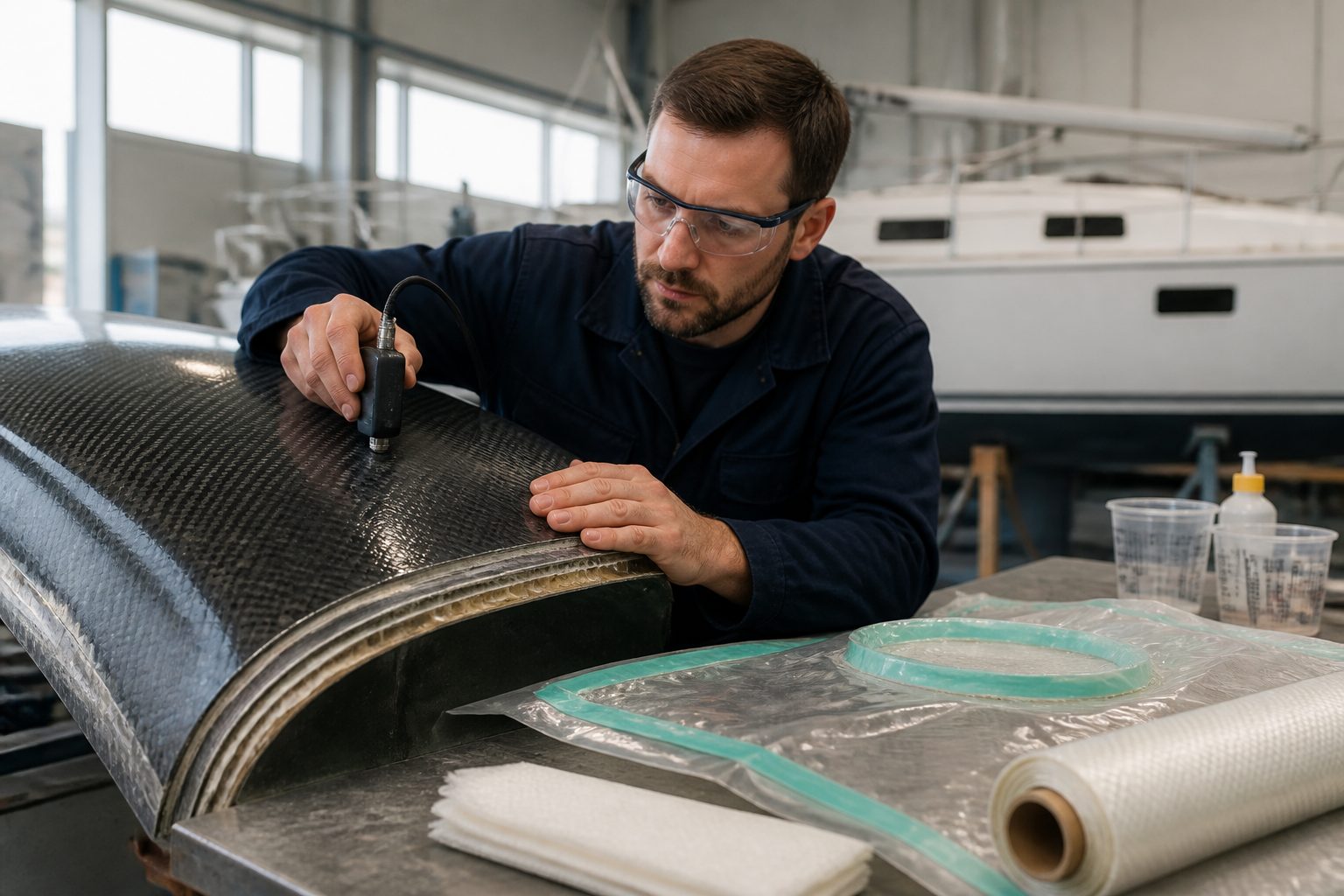

Furthermore, the reduced weight contributes to a lower center of gravity, improving stability and handling in rough seas. This makes composites a preferred material for vessels operating in challenging marine conditions.
Composites also offer excellent fatigue resistance, meaning they can withstand repeated stress and strain without significant degradation. This is vital for marine structures that are constantly subjected to wave action and other dynamic loads.
The long-term durability of composites translates into lower lifecycle costs, making them a cost-effective choice in the long run. They require less maintenance and fewer replacements compared to traditional materials, resulting in significant savings over the lifespan of the structure or vessel.
Another factor to consider is the impact resistance of certain composite materials. Aramid fibers, for instance, are exceptionally good at absorbing energy from impacts, protecting the structure from damage.
This is particularly important for boats and vessels that may encounter floating debris or other hazards in the water. The combination of strength, lightness, and impact resistance makes composites an ideal choice for ensuring safety and reliability in marine environments.
Fiber Types Used in Marine Composites
Several types of fibers are commonly used in marine composites, each offering a unique set of properties. Fiberglass is the most widely used due to its cost-effectiveness and good mechanical properties.
It provides a good balance of strength, stiffness, and resistance to environmental degradation. Carbon fiber offers superior strength and stiffness compared to fiberglass but is more expensive.
Aramid fibers, such as Kevlar, are known for their high impact resistance and toughness. They are often used in applications where impact protection is critical.
Natural fibers, such as flax and hemp, are gaining popularity as sustainable alternatives. They offer good specific strength and stiffness while being biodegradable and renewable.
Fiberglass, also known as glass-reinforced plastic (GRP), is produced by embedding glass fibers in a resin matrix. The glass fibers provide strength, while the resin binds the fibers together and protects them from the environment.
There are different types of fiberglass, such as E-glass, S-glass, and C-glass, each with varying properties and applications. E-glass is the most common type and offers a good balance of strength, electrical resistance, and cost.
Carbon fiber, on the other hand, is made from carbon atoms bonded together in long chains. These fibers are incredibly strong and stiff, making them ideal for high-performance applications where weight is a critical factor.
Carbon fiber composites are often used in racing boats, high-speed vessels, and other applications where maximizing performance is essential. Aramid fibers, like Kevlar, are known for their exceptional toughness and resistance to impact and abrasion.
These fibers are often used in bulletproof vests and other protective equipment, as well as in marine applications where impact resistance is crucial. They provide a high level of protection against damage from collisions or other impacts.
Natural fibers, such as flax and hemp, are derived from plants and offer a more sustainable alternative to synthetic fibers. These fibers are biodegradable and renewable, making them an environmentally friendly choice for marine composites.
While natural fibers may not be as strong or stiff as synthetic fibers, they still offer good specific strength and stiffness, meaning they are strong and stiff for their weight. They are increasingly being used in non-structural components and interior parts of boats and vessels.
Applications in Boat Hulls
Composites have revolutionized boat building, offering significant improvements in performance and durability. Fiber reinforced composites are used extensively in the construction of boat hulls, from small recreational boats to large commercial vessels.
The use of composites allows for the creation of lighter hulls, which translates to improved fuel efficiency and higher speeds. The ability to mold complex shapes also enables designers to optimize hull designs for better hydrodynamic performance.
| Material | Density (kg/m³) | Tensile Strength (MPa) | Application |
|---|---|---|---|
| Fiberglass | 2500 | 2000 | Small boat hulls |
| Carbon Fiber | 1800 | 4000 | High-performance racing boats |
| Aramid Fiber (Kevlar) | 1440 | 3600 | Impact-resistant hull sections |
| Flax Fiber | 1500 | 800 | Sustainable boat building |
For example, carbon fiber is frequently used in racing yachts to achieve maximum stiffness and minimize weight. Fiberglass remains a popular choice for recreational boats due to its balance of cost and performance.
The use of composite materials in boat hulls also allows for greater design freedom. Designers can create more complex and streamlined hull shapes that would be difficult or impossible to achieve with traditional materials like wood or metal.
This design flexibility can lead to improved hydrodynamic efficiency, reduced drag, and enhanced overall performance. In addition to improved performance, composite boat hulls also offer increased durability and resistance to corrosion.
Unlike steel or aluminum, composites do not rust or corrode in saltwater environments, reducing the need for maintenance and repairs. This can significantly lower the long-term cost of ownership for boat owners.
The construction process for composite boat hulls typically involves layering the reinforcing fibers and resin in a mold. The layers are then cured, either at room temperature or in an oven, to create a solid, durable structure.
Different manufacturing techniques can be used, such as hand lay-up, vacuum bagging, and resin infusion, each with its own advantages and disadvantages. The choice of manufacturing technique depends on the size and complexity of the hull, as well as the desired properties of the composite material.
Composite boat hulls are also easier to repair than traditional hulls. Small damages can often be repaired with simple patching techniques, while larger damages can be repaired by replacing sections of the composite material.
This makes composite boat hulls a more practical and cost-effective choice for boat owners who want a durable and easy-to-maintain vessel. The use of composites is not limited to the hull itself.
Decks, superstructures, and other components of boats are also increasingly being made from composite materials. This allows for further weight reduction and improved performance, as well as enhanced design flexibility and durability.
Using Composites in Marine Structures
Beyond boat hulls, fiber reinforced composites are finding increasing use in a variety of marine structures. Docks and piers benefit from the corrosion resistance and durability of composites.
Composite pilings are resistant to marine borers and degradation from saltwater, extending their lifespan compared to traditional wood or concrete pilings. Bridges and walkways in coastal areas can also utilize composites for their structural components.
The lightweight nature of composites simplifies installation and reduces the load on supporting structures. Marine renewable energy devices, such as tidal turbines and wave energy converters, are also incorporating composites.
The blades of tidal turbines, for example, can be made from carbon fiber composites to maximize strength and efficiency while minimizing weight. Offshore platforms and oil rigs are also exploring the use of composites for various components.
The construction of docks and piers using composite materials offers numerous advantages. Traditional wood pilings are susceptible to attack by marine borers, which can weaken the structure and lead to costly repairs.
Concrete pilings, while more resistant to marine borers, can still be damaged by saltwater corrosion and freeze-thaw cycles. Composite pilings, on the other hand, are impervious to marine borers and resistant to corrosion, making them a much more durable and long-lasting option.
The lightweight nature of composites also simplifies the installation process for docks and piers. Composite pilings can be installed more quickly and easily than traditional pilings, reducing construction time and costs.
Bridges and walkways in coastal areas are also benefiting from the use of composite materials. The corrosion resistance of composites makes them an ideal choice for structures that are exposed to saltwater and harsh weather conditions.
Composite bridge decks are lighter than traditional concrete decks, which reduces the load on the supporting structure and can extend the lifespan of the bridge. The use of composites in marine renewable energy devices is also a growing trend.
Tidal turbines and wave energy converters are often located in harsh marine environments, where they are exposed to strong currents, waves, and saltwater. Composite materials are well-suited for these applications due to their strength, durability, and resistance to corrosion.
The blades of tidal turbines, for example, can be made from carbon fiber composites to maximize efficiency and minimize weight. Offshore platforms and oil rigs are also exploring the use of composites for various components, such as pipes, decks, and structural supports.
The use of composites can help to reduce the weight of these structures, improve their corrosion resistance, and extend their lifespan. Overall, the use of fiber reinforced composites in marine structures is a growing trend that offers numerous benefits.
Benefits of Fiber Reinforced Composites
The advantages of using fiber reinforced composites in marine applications are numerous. The primary benefit is their superior corrosion resistance, which significantly reduces maintenance costs and extends the lifespan of structures.
The lightweight nature of composites leads to improved fuel efficiency in boats and reduced loads on supporting structures in marine infrastructure. The high strength-to-weight ratio allows for the creation of more efficient and durable designs.
- Reduced maintenance costs
- Increased fuel efficiency
- Improved structural performance
- Extended lifespan
- Design flexibility
The design flexibility of composites allows for the creation of complex shapes and optimized designs, enhancing performance and aesthetics. Fiber reinforced composites in marine applications offer a sustainable alternative to traditional materials.
Reduced maintenance costs are a significant advantage of using composites in marine environments. Traditional materials like steel and aluminum require regular painting and repairs to prevent corrosion.
Composites, on the other hand, are inherently resistant to corrosion, which eliminates the need for these costly maintenance procedures. This can save boat owners and infrastructure operators a significant amount of money over the lifespan of their assets.
Increased fuel efficiency is another major benefit of using composites in boat building. The lightweight nature of composites allows for the creation of lighter hulls, which require less power to propel through the water.
This translates to improved fuel efficiency and reduced operating costs for boat owners. Improved structural performance is also a key advantage of using composites.
Composites have a high strength-to-weight ratio, which means they are very strong for their weight. This allows for the creation of more efficient and durable designs that can withstand the harsh conditions of the marine environment.
Extended lifespan is another important benefit of using composites. The corrosion resistance and durability of composites mean that they can last much longer than traditional materials in marine environments.
This can significantly reduce the need for replacements and repairs, saving boat owners and infrastructure operators money over the long term. Design flexibility is another key advantage of using composites.
Composites can be molded into complex shapes and designs that would be difficult or impossible to achieve with traditional materials. This allows for the creation of more efficient and aesthetically pleasing designs.
Finally, fiber reinforced composites offer a sustainable alternative to traditional materials. They require less energy to produce than some metals, and they can be made from renewable resources, such as natural fibers.
The Role of Polymer Engineering
Polymer engineering plays a crucial role in the development and application of marine composites. The polymer matrix binds the reinforcing fibers together and transfers loads between them.
The choice of polymer resin is critical for determining the overall properties of the composite material. Common polymer resins used in marine composites include polyester, vinyl ester, and epoxy resins.
Polyester resins are cost-effective and offer good water resistance, making them suitable for many general marine applications. Vinyl ester resins provide improved corrosion resistance and mechanical properties compared to polyester resins.
Epoxy resins offer the highest strength and stiffness, along with excellent adhesion to fibers, making them ideal for high-performance applications. Polymer engineers are constantly developing new and improved resin systems to enhance the performance of marine composites.
Polymer engineering involves the design, development, and processing of polymers, which are large molecules made up of repeating units. In the context of marine composites, polymer engineers work to select and modify polymer resins to meet the specific requirements of the application.
This includes optimizing the resin’s mechanical properties, such as strength, stiffness, and toughness, as well as its resistance to environmental degradation, such as saltwater corrosion and UV exposure. The polymer matrix also plays a critical role in transferring loads between the reinforcing fibers.
The resin must be able to effectively distribute the applied loads to the fibers, allowing them to carry the majority of the stress. The choice of polymer resin also affects the manufacturing process for the composite material.
Different resins require different curing conditions, such as temperature and pressure, to achieve optimal properties. Polymer engineers work to develop resin systems that are easy to process and can be cured quickly and efficiently.
Polyester resins are a common choice for general marine applications due to their low cost and good water resistance. They are relatively easy to process and can be used in a variety of manufacturing techniques.
Vinyl ester resins offer improved corrosion resistance and mechanical properties compared to polyester resins. They are often used in applications where higher performance is required, such as boat hulls and decks.
Epoxy resins provide the highest strength and stiffness, along with excellent adhesion to fibers. They are ideal for high-performance applications, such as racing boats and aerospace components.
Polymer engineers are constantly developing new and improved resin systems to enhance the performance of marine composites. This includes developing resins with improved mechanical properties, better resistance to environmental degradation, and easier processing characteristics.
Advancements in Fiber Science
Fiber science is continuously advancing, leading to the development of new and improved reinforcing fibers. High-strength carbon fibers are being developed with increased tensile strength and modulus, allowing for even lighter and stronger composite structures.
Research is also focused on improving the properties of natural fibers, such as flax and hemp, to make them more competitive with synthetic fibers. Surface treatments and modifications are being developed to enhance the adhesion between fibers and the polymer matrix.
This improved adhesion leads to better load transfer and increased overall composite strength. The development of new fiber architectures, such as 3D-woven fabrics and non-crimp fabrics, is also enhancing the performance of marine composites.
These advanced fiber architectures allow for better fiber alignment and increased resistance to damage. Nanomaterials, such as carbon nanotubes and graphene, are also being incorporated into marine composites to enhance their properties.
Fiber science is a multidisciplinary field that encompasses the study of the structure, properties, and processing of fibers. In the context of marine composites, fiber science focuses on developing and improving reinforcing fibers to enhance the performance of composite materials.
High-strength carbon fibers are a key area of research in fiber science. These fibers are made from carbon atoms bonded together in long chains and offer exceptional strength and stiffness.
Researchers are constantly working to develop carbon fibers with even higher tensile strength and modulus, which would allow for the creation of even lighter and stronger composite structures. Natural fibers, such as flax and hemp, are also a focus of research in fiber science.
These fibers are derived from plants and offer a more sustainable alternative to synthetic fibers. However, natural fibers typically have lower strength and stiffness than synthetic fibers.
Researchers are working to improve the properties of natural fibers through various treatments and modifications, such as chemical treatments and enzymatic treatments. Surface treatments and modifications are also being developed to enhance the adhesion between fibers and the polymer matrix.
Good adhesion is essential for effective load transfer between the fibers and the matrix, which is critical for achieving high composite strength. New fiber architectures, such as 3D-woven fabrics and non-crimp fabrics, are also being developed to enhance the performance of marine composites.
These advanced fiber architectures allow for better fiber alignment and increased resistance to damage. Nanomaterials, such as carbon nanotubes and graphene, are also being incorporated into marine composites to enhance their properties.
Carbon nanotubes are tiny, cylindrical structures made of carbon atoms that have exceptional strength and stiffness. Graphene is a single-layer sheet of carbon atoms arranged in a honeycomb lattice.
Addressing Challenges and Concerns
Despite their many advantages, fiber reinforced composites do present some challenges. The initial cost of composites can be higher than traditional materials, although this is often offset by reduced maintenance costs and extended lifespan.
The repair of composite structures can be more complex than repairing metal structures, requiring specialized knowledge and techniques. The environmental impact of composite materials is also a concern, particularly regarding the disposal of end-of-life composites.
Recycling technologies are being developed to address this issue, including methods for recovering fibers and resins from composite waste. There’s also worry about volatile organic compounds, or VOCs, released during the manufacturing process.
However, many manufacturers have started using closed molding to mitigate VOC emissions. With continued research and development, these challenges can be overcome, paving the way for wider adoption of fiber reinforced composites in marine applications.
The higher initial cost of composites can be a barrier to entry for some applications. However, it’s important to consider the total lifecycle cost of the material, not just the upfront cost.
The reduced maintenance costs and extended lifespan of composites can often offset the higher initial cost over the long term. The repair of composite structures can be more complex than repairing metal structures.
This is because composite materials are anisotropic, meaning their properties vary depending on the direction. Specialized knowledge and techniques are required to properly repair composite structures and ensure that they maintain their structural integrity.
The environmental impact of composite materials is a growing concern. Most composites are made from non-renewable resources, and the manufacturing process can be energy-intensive.
The disposal of end-of-life composites is also a challenge, as they are difficult to recycle. Recycling technologies are being developed to address this issue.
These technologies include methods for recovering fibers and resins from composite waste, as well as methods for using composite waste as a feedstock for new materials. Volatile organic compounds (VOCs) are another environmental concern associated with composite materials.
VOCs are released during the manufacturing process, and they can contribute to air pollution. Many manufacturers have started using closed molding techniques to mitigate VOC emissions.
Closed molding involves enclosing the composite material in a sealed mold during the curing process, which prevents VOCs from escaping into the atmosphere. Despite these challenges, the benefits of fiber reinforced composites in marine applications often outweigh the drawbacks.
With continued research and development, these challenges can be overcome, paving the way for wider adoption of these materials in the marine industry. The development and implementation of sustainable practices will enhance the use of composites.
The Future of Composites in Marine Engineering
The future of composites in marine engineering looks promising. As technology advances, we can expect to see even more innovative applications of these materials.
The development of smart composites with embedded sensors will enable real-time monitoring of structural health, allowing for proactive maintenance and preventing failures. The use of additive manufacturing techniques, such as 3D printing, will enable the creation of complex composite structures with customized properties.
Sustainable composites made from bio-based resins and natural fibers will become more prevalent, reducing the environmental footprint of marine structures. The integration of composites with other materials, such as metals and ceramics, will lead to hybrid structures with enhanced performance characteristics.
Fiber reinforced composites in marine applications will play a critical role in creating more efficient, durable, and sustainable marine infrastructure. These advances will revolutionize boat building, corrosion resistance, and the construction of marine structures.
Smart composites with embedded sensors will revolutionize the way we monitor and maintain marine structures. These sensors can detect changes in stress, strain, temperature, and other parameters, providing real-time information about the structural health of the composite material.
This information can be used to identify potential problems before they become serious, allowing for proactive maintenance and preventing failures. Additive manufacturing techniques, such as 3D printing, will enable the creation of complex composite structures with customized properties.
3D printing allows for the creation of structures with intricate geometries and tailored material properties, which can be optimized for specific applications. This technology has the potential to revolutionize the design and manufacturing of marine composites.
Sustainable composites made from bio-based resins and natural fibers will become more prevalent as the demand for environmentally friendly materials increases. Bio-based resins are derived from renewable resources, such as plants and algae, and offer a more sustainable alternative to traditional petroleum-based resins.
Natural fibers, such as flax and hemp, are also renewable and biodegradable, making them an environmentally friendly choice for reinforcing composites. The integration of composites with other materials, such as metals and ceramics, will lead to hybrid structures with enhanced performance characteristics.
By combining the strengths of different materials, hybrid structures can be created that offer superior performance compared to single-material structures. For example, a composite structure with a metal core can offer increased strength and stiffness, while a composite structure with a ceramic coating can offer improved wear resistance.
The use of fiber reinforced composites in marine applications will play a critical role in creating more efficient, durable, and sustainable marine infrastructure. These materials will enable the construction of lighter, stronger, and more corrosion-resistant boats, docks, bridges, and other marine structures.
These advances will revolutionize the marine industry and help to ensure the long-term sustainability of our oceans and waterways. The future of marine engineering will also see increased automation in composite manufacturing.
Conclusion
Fiber reinforced composites offer a compelling alternative to traditional materials in marine environments. Their superior corrosion resistance, lightweight nature, and design flexibility make them ideal for a wide range of applications.
From boat hulls to marine structures, composites are revolutionizing the way we build and maintain our infrastructure. With ongoing advancements in fiber science and polymer engineering, the future of composites in marine engineering is bright.