

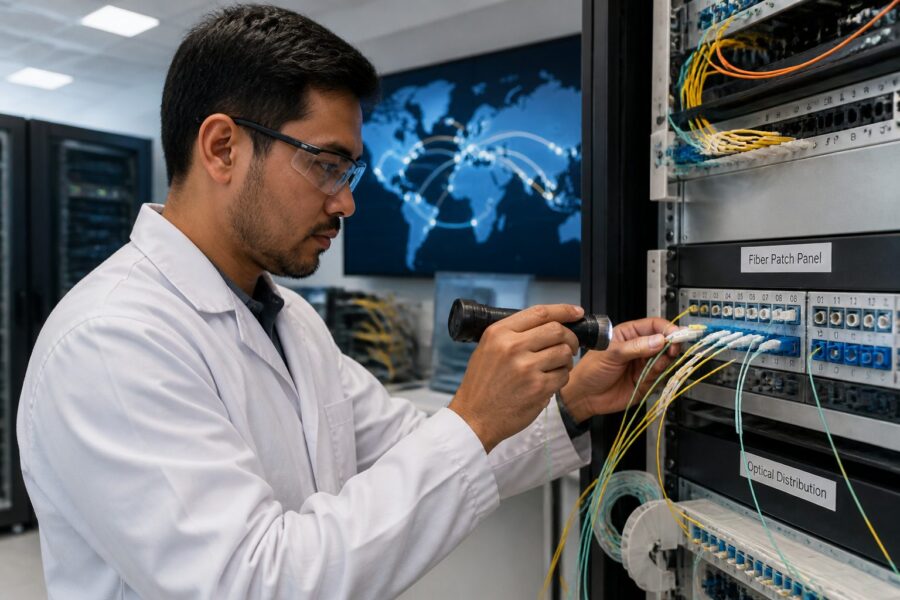
In the digital age, our lives are increasingly intertwined with technology, and at the heart of this connectivity lies a critical component: fiber optic cables. These thin strands of glass or plastic are responsible for transmitting vast amounts of data across the globe, enabling everything from streaming videos to international phone calls.
Understanding the role of fiber optic cables in telecommunications is essential for grasping the infrastructure that supports our modern world. This article will explore the inner workings, applications, and benefits of these essential cables, as well as their impact on the future of communication technology.
The use of fiber optic cables in telecommunications has revolutionized the way we communicate and access information. From enhancing internet speeds to improving the reliability of data transmission, fiber optics have become an indispensable part of our daily lives.
The Backbone of Modern Communication
Fiber optic cables are the unsung heroes of modern telecommunications, forming the very foundation of our interconnected world. They provide the means for high-speed data transmission, enabling us to communicate, access information, and conduct business with unprecedented efficiency.
Without fiber optics, the internet as we know it would simply not exist. These cables are responsible for carrying the bulk of internet traffic across continents and oceans, connecting data centers, businesses, and homes to the global network.
Consider the sheer volume of data that traverses the internet every second. Streaming services deliver high-definition videos, social media platforms facilitate instant communication, and businesses transfer large files across vast distances.
Fiber optic cables are the only technology capable of handling this immense data load with the speed and reliability that modern applications demand. Copper cables, the traditional alternative, simply cannot keep up with the bandwidth requirements of today’s internet.
The internet’s reliance on fiber optics underscores its critical role in supporting global commerce and communication. Financial transactions, international collaborations, and real-time data analysis all depend on the high-speed connectivity provided by these cables.
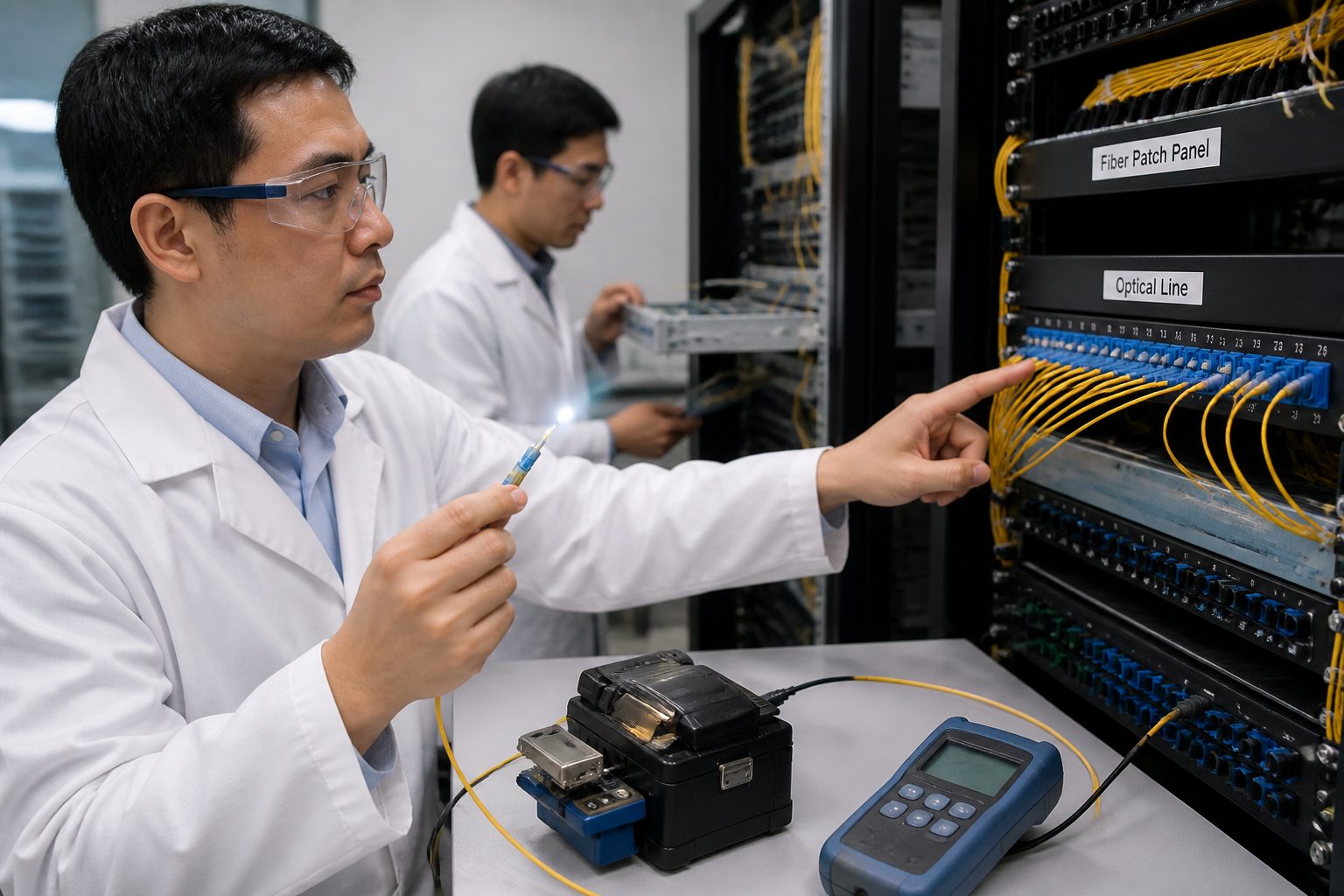

Furthermore, fiber optic networks enable the development and deployment of emerging technologies such as cloud computing and artificial intelligence. These technologies require massive amounts of data to be processed and transmitted quickly and efficiently.
The increasing demand for bandwidth is a testament to the importance of fiber optics in sustaining our digital lifestyle. As more devices connect to the internet and data-intensive applications become more prevalent, the need for high-speed data transmission will only continue to grow.
Fiber optic cables provide the necessary infrastructure to support this growth, ensuring that we can continue to communicate, collaborate, and access information seamlessly. They are truly the backbone of modern communication, enabling the interconnected world we live in today.
The development of smart cities also relies heavily on fiber optic infrastructure. These urban centers utilize interconnected devices and systems to improve efficiency and quality of life.
Fiber optics provides the necessary bandwidth and reliability to support these complex networks, enabling real-time data analysis and intelligent decision-making. From traffic management to energy conservation, fiber optics is essential for creating truly smart and sustainable cities.
How Fiber Optic Cables Work
Fiber optic cables work on the principle of total internal reflection, a phenomenon that allows light to travel through a transparent medium by bouncing off its inner surfaces. This process enables the transmission of data over long distances with minimal signal loss.
Each fiber optic cable consists of an extremely thin core, made of glass or plastic, surrounded by a cladding layer with a slightly lower refractive index. When light enters the core at a specific angle, it strikes the boundary between the core and the cladding and is reflected back into the core.
This reflection process repeats continuously as the light travels along the length of the fiber, effectively guiding the light and the data it carries. The data is encoded as pulses of light, which are generated by lasers or light-emitting diodes (LEDs).
At the receiving end, a photodetector converts the light pulses back into electrical signals, which are then decoded to retrieve the original data. The use of light for data transmission offers several advantages over traditional electrical signals, including higher bandwidth, lower signal loss, and immunity to electromagnetic interference.
The core of a fiber optic cable is incredibly thin, often measured in microns, which is smaller than the diameter of a human hair. This small size allows for greater flexibility and ease of installation in various environments.
The cladding layer is crucial for ensuring total internal reflection by creating a refractive index difference between the core and the cladding. This difference causes the light to bounce back into the core, preventing it from escaping and minimizing signal loss.
The lasers or LEDs used to generate the light pulses are highly precise and efficient, allowing for the rapid transmission of data. Different wavelengths of light can be used to transmit multiple data streams simultaneously, further increasing the bandwidth capacity of the fiber.
Photodetectors are designed to be highly sensitive to light, enabling them to accurately convert the light pulses back into electrical signals. This conversion process is essential for retrieving the original data and ensuring the integrity of the transmitted information.
The immunity of fiber optic cables to electromagnetic interference is a significant advantage over copper cables. Electrical signals in copper cables can be disrupted by external electromagnetic fields, leading to data errors and reduced performance.
Fiber optic cables, on the other hand, are not affected by electromagnetic interference, ensuring reliable data transmission even in noisy environments. This makes them ideal for use in industrial settings and other areas with high levels of electromagnetic activity.
Applications in Internet Infrastructure
Fiber optic cables play a crucial role in various components of internet infrastructure. From long-haul submarine cables to local area networks, fiber optics provide the backbone for high-speed data transfer.
These cables facilitate the seamless flow of information across the globe. Here’s a closer look at their applications in different areas of internet infrastructure.
| Application Area | Description | Impact |
|---|---|---|
| Submarine Cables | Transoceanic cables connecting continents | Enables global internet connectivity |
| Data Centers | Interconnecting servers and networking equipment | Supports high-speed data processing and storage |
| Backbone Networks | High-capacity networks linking major cities and regions | Facilitates long-distance data transmission |
| Last-Mile Connections | Connecting homes and businesses to the internet | Provides high-speed internet access to end-users |
The versatility and performance of fiber optic cables make them indispensable for building a robust and efficient internet infrastructure. As demand for bandwidth continues to grow, fiber optics will remain at the forefront of network technology.
Submarine cables are essential for connecting continents and enabling global internet connectivity. These cables are laid on the ocean floor and can span thousands of miles, carrying vast amounts of data across the globe.
Data centers rely on fiber optic cables to interconnect servers and networking equipment, supporting high-speed data processing and storage. The rapid transfer of data within data centers is critical for cloud computing, artificial intelligence, and other data-intensive applications.
Backbone networks use fiber optic cables to link major cities and regions, facilitating long-distance data transmission. These high-capacity networks form the core of the internet, enabling the seamless flow of information across vast distances.
Last-mile connections utilize fiber optic cables to connect homes and businesses to the internet, providing high-speed internet access to end-users. These connections are crucial for delivering bandwidth-intensive services such as streaming video, online gaming, and video conferencing.
The ongoing expansion of fiber optic networks is essential for supporting the growing demand for bandwidth and enabling the development of new technologies. As more devices connect to the internet and data-intensive applications become more prevalent, the need for high-speed, reliable internet access will only continue to grow.
Using Fiber Optics for Data Transmission
Fiber optics have transformed data transmission across various sectors, offering unparalleled speed, reliability, and security. Their use extends beyond internet infrastructure to include telecommunications, healthcare, and defense.
In telecommunications, fiber optic cables enable crystal-clear phone calls and high-definition video conferencing. Healthcare benefits from the ability to transmit large medical images and patient data securely and rapidly.
The defense industry relies on fiber optics for secure communication networks and advanced surveillance systems. Fiber optic cables are also used in cable television networks, providing high-bandwidth delivery of video and audio content to millions of homes.
Moreover, fiber optics are essential in connecting remote areas to the internet, bridging the digital divide and enabling access to education, healthcare, and economic opportunities. The technology’s ability to handle large data volumes with minimal loss makes it ideal for these diverse applications.
In the financial sector, fiber optics enables high-speed trading and secure data transfer between financial institutions. The speed and reliability of fiber optic networks are critical for executing transactions quickly and accurately.
Manufacturing industries utilize fiber optics for controlling automated systems and monitoring production processes. The high bandwidth and low latency of fiber optic networks enable real-time data analysis and efficient control of machinery.
Transportation systems rely on fiber optics for traffic management, surveillance, and communication between vehicles. Fiber optic networks enable real-time monitoring of traffic conditions and provide secure communication channels for emergency services.
The energy sector utilizes fiber optics for monitoring power grids and controlling energy distribution. Fiber optic networks enable real-time monitoring of energy consumption and provide secure communication channels for managing power generation and distribution.
The versatility of fiber optics makes it an essential technology for a wide range of industries and applications. As data transmission requirements continue to grow, the demand for fiber optic networks will only increase.
Benefits of Fiber Optic Cables
Fiber optic cables offer a multitude of advantages over traditional copper cables, making them the preferred choice for modern telecommunications. These benefits range from higher bandwidth and lower signal loss to increased security and durability.
Understanding these advantages helps explain why fiber optics have become so prevalent in today’s networks. Let’s delve into the specific ways fiber optic cables outperform their copper counterparts.
- Higher bandwidth capacity
- Lower signal attenuation over long distances
- Immunity to electromagnetic interference
- Increased data security
- Greater durability and longer lifespan
These benefits collectively contribute to a more efficient, reliable, and secure communication infrastructure. As technology advances, the advantages of fiber optic cables will only become more pronounced, solidifying their role as the foundation of modern telecommunications.
The higher bandwidth capacity of fiber optic cables allows for the transmission of more data at faster speeds. This is essential for supporting bandwidth-intensive applications such as streaming video, online gaming, and cloud computing.
The lower signal attenuation of fiber optic cables means that data can be transmitted over longer distances without significant signal loss. This reduces the need for repeaters and amplifiers, simplifying network design and reducing costs.
The immunity of fiber optic cables to electromagnetic interference ensures reliable data transmission even in noisy environments. This is particularly important in industrial settings and other areas with high levels of electromagnetic activity.
The increased data security of fiber optic cables makes them more difficult to tap into and intercept data. This is crucial for protecting sensitive information in industries such as finance, healthcare, and defense.
The greater durability and longer lifespan of fiber optic cables reduce maintenance costs and ensure long-term reliability. Fiber optic cables are less susceptible to corrosion and other environmental factors that can damage copper cables.
The Growing Demand for Bandwidth
The relentless increase in bandwidth demand is a driving force behind the widespread adoption of fiber optic cables. As our reliance on data-intensive applications grows, the need for faster and more reliable data transmission becomes paramount.
Streaming high-definition video, online gaming, and cloud computing all require significant bandwidth. The rise of the Internet of Things (IoT), with its billions of connected devices, further exacerbates the demand for bandwidth.
Fiber optic cables are uniquely positioned to meet these growing demands, offering virtually unlimited bandwidth capacity. Unlike copper cables, which suffer from significant signal degradation at high frequencies, fiber optics can transmit data at much higher rates over longer distances.
This scalability makes fiber optics a future-proof solution for telecommunications infrastructure. As new technologies emerge and bandwidth requirements continue to escalate, fiber optic cables will remain the cornerstone of high-speed data transmission.
The increasing popularity of virtual reality (VR) and augmented reality (AR) applications is also driving the demand for bandwidth. These immersive experiences require massive amounts of data to be transmitted in real-time.
The growth of e-commerce and online shopping is further contributing to the demand for bandwidth. Online transactions and digital payments require secure and reliable data transmission.
The increasing use of video conferencing and online collaboration tools is also driving the demand for bandwidth. Remote work and virtual meetings require high-quality video and audio transmission.
The expansion of smart cities and the deployment of smart infrastructure are further exacerbating the demand for bandwidth. Smart devices and sensors generate vast amounts of data that need to be transmitted and analyzed in real-time.
The ongoing shift towards cloud-based services and applications is also driving the demand for bandwidth. Cloud computing requires high-speed data transmission between users and data centers.
Fiber Optics in 5G and Beyond
The rollout of 5G wireless networks is heavily dependent on fiber optic infrastructure. While 5G promises faster speeds and lower latency, these benefits can only be realized with a robust fiber optic backbone.
5G base stations require high-bandwidth connections to handle the increased data traffic generated by mobile devices. Fiber optic cables provide the necessary capacity to support these connections, ensuring seamless and reliable 5G service.
Moreover, as we move beyond 5G towards future generations of wireless technology, the role of fiber optics will only become more critical. These advanced wireless systems will require even greater bandwidth and lower latency, pushing the limits of existing infrastructure.
Fiber optic cables will be essential for enabling these next-generation wireless networks, supporting applications such as augmented reality, virtual reality, and autonomous vehicles. The synergy between fiber optics and wireless technology will drive innovation and transform the way we communicate and interact with the world.
Fiber optics provides the necessary backhaul infrastructure for 5G networks, connecting base stations to the core network. This backhaul infrastructure must be able to handle the massive amounts of data generated by 5G devices.
The low latency of fiber optic networks is crucial for enabling real-time applications such as autonomous driving and remote surgery. These applications require extremely fast response times, which can only be achieved with fiber optic infrastructure.
The deployment of 5G networks is driving the expansion of fiber optic infrastructure in urban areas and rural communities. This expansion is creating new opportunities for businesses and individuals to access high-speed internet services.
The integration of fiber optics with edge computing is enabling new applications and services that require low latency and high bandwidth. Edge computing involves processing data closer to the source, reducing the need to transmit data over long distances.
The development of new fiber optic technologies such as silicon photonics is further enhancing the performance and efficiency of fiber optic networks. Silicon photonics integrates optical components onto silicon chips, reducing the cost and size of fiber optic devices.
Challenges and Considerations
Despite their numerous advantages, the deployment and maintenance of fiber optic cables present certain challenges. The initial cost of installation can be higher compared to copper cables, particularly in areas where existing infrastructure is limited.
Splicing and repairing fiber optic cables require specialized equipment and skilled technicians. The fragility of glass fibers also necessitates careful handling during installation and maintenance.
Another consideration is the potential for damage from digging and construction activities. Protecting buried fiber optic cables from accidental cuts and breaks is essential for ensuring network reliability.
However, ongoing advancements in fiber optic technology and installation techniques are helping to address these challenges. Innovations such as micro-trenching and aerial fiber deployment are reducing installation costs and minimizing disruption.
The cost of deploying fiber optic infrastructure can be a significant barrier, especially in rural areas. Government subsidies and private investment are needed to overcome this challenge.
The availability of skilled technicians is another challenge facing the fiber optic industry. Training programs and apprenticeship opportunities are needed to ensure a sufficient supply of qualified workers.
The permitting process for installing fiber optic cables can be lengthy and complex, delaying deployment timelines. Streamlining the permitting process is essential for accelerating the expansion of fiber optic networks.
The security of fiber optic networks is also a concern. Protecting fiber optic cables from physical damage and cyberattacks is crucial for ensuring network reliability and data security.
The environmental impact of fiber optic cable manufacturing and disposal is another consideration. Sustainable practices are needed to minimize the environmental footprint of the fiber optic industry.
The Future of Telecommunications
Fiber optic cables are poised to play an even more significant role in the future of telecommunications. As bandwidth demands continue to surge and new technologies emerge, fiber optics will remain at the forefront of network infrastructure.
The development of new fiber optic materials and transmission techniques will further enhance their performance and reduce costs. Quantum computing, with its potential to revolutionize data processing and communication, will likely rely on advanced fiber optic networks for secure and high-speed data transfer.
Moreover, the integration of fiber optics with artificial intelligence (AI) and machine learning (ML) will enable smarter and more efficient network management. AI-powered systems can optimize network performance, predict potential issues, and automate maintenance tasks, ensuring seamless and reliable communication.
The future of telecommunications is inextricably linked to the continued innovation and deployment of fiber optic technology. As we move towards an increasingly connected world, fiber optics will serve as the foundation for a high-speed, reliable, and secure communication infrastructure.
The development of new fiber optic sensors will enable real-time monitoring of infrastructure and environmental conditions. These sensors can be used to detect structural damage, monitor pollution levels, and improve safety.
The integration of fiber optics with blockchain technology will enhance the security and transparency of data transmission. Blockchain can be used to verify the integrity of data and prevent tampering.
The development of new fiber optic amplifiers will extend the reach of fiber optic networks and reduce the need for repeaters. These amplifiers can boost the signal strength without introducing noise or distortion.
The use of fiber optics in space-based communication systems will enable high-speed data transfer between satellites and ground stations. This is essential for supporting space exploration and scientific research.
The convergence of fiber optics with other emerging technologies such as nanotechnology and biotechnology will create new possibilities for innovation and development. These technologies can be used to create even more efficient and powerful communication systems.
Conclusion
Fiber optic cables have revolutionized telecommunications, providing the bandwidth and reliability necessary for modern communication technology. Their ability to transmit vast amounts of data over long distances with minimal signal loss has made them indispensable for internet infrastructure, data transmission, and various other applications.
As bandwidth demands continue to grow and new technologies emerge, fiber optic cables will remain at the forefront of network infrastructure. Embracing and investing in fiber optic technology is essential for building a future-proof communication network that can support the ever-increasing demands of our digital world.