
Hydrogels have emerged as a captivating class of biomaterials, garnering significant attention across diverse fields. Their unique characteristics make them exceptionally well-suited for a wide array of biomedical applications, positioning them at the forefront of scientific innovation.
From drug delivery systems to tissue engineering scaffolds, these versatile materials offer unparalleled potential. The capacity of hydrogels to mimic the natural extracellular matrix, coupled with their biocompatibility and tunable properties, makes them ideal candidates for addressing various medical challenges.
This article explores the fascinating realm of hydrogels, shedding light on their fundamental properties and diverse applications in biomedicine. We will examine their use in targeted drug delivery, tissue regeneration, and advanced wound care, while also discussing the existing challenges and exciting future directions in this dynamic field.
What are Hydrogels?
Hydrogels are three-dimensional networks of cross-linked polymers, capable of absorbing and retaining large amounts of water or biological fluids. These materials are characterized by their high water content, often ranging from 90% to 99%, which imparts a soft, rubbery consistency akin to that of living tissues.
The cross-linking of polymer chains, either through chemical bonds or physical interactions, provides structural integrity and prevents dissolution in aqueous environments. This unique combination of properties makes hydrogels highly desirable for various biomedical applications, offering a biocompatible and versatile platform for interacting with biological systems.
Hydrogels can be synthesized from a wide range of natural or synthetic polymers, each offering distinct advantages and tailored properties. Natural polymers such as collagen, gelatin, and hyaluronic acid exhibit inherent biocompatibility and biodegradability, promoting cell adhesion and tissue integration.
Synthetic polymers like polyethylene glycol (PEG), poly(vinyl alcohol) (PVA), and poly(N-isopropylacrylamide) (PNIPAAm) offer greater control over mechanical properties, degradation rates, and functionalization capabilities. The choice of polymer dictates the hydrogel’s overall performance, influencing its suitability for specific biomedical applications and desired therapeutic outcomes.
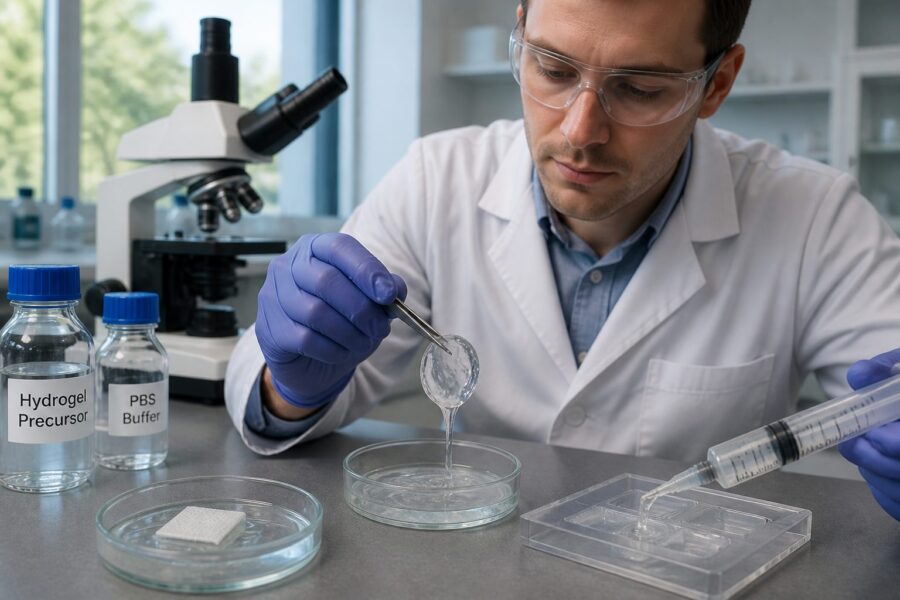
The ability of hydrogels to swell in water is a crucial aspect of their functionality. This swelling allows for the diffusion of nutrients and waste products, supporting cell viability within the hydrogel matrix.

Furthermore, the swelling behavior can be tailored to control the release of drugs or other therapeutic agents. The crosslinking density of the polymer network plays a significant role in determining the swelling capacity and mechanical strength of the hydrogel.
Hydrogels can be classified based on their source, crosslinking mechanism, and ionic charge. These classifications help in understanding their properties and selecting the appropriate hydrogel for a specific application.
For example, charged hydrogels can interact with charged molecules, enabling controlled release of drugs or capture of specific biomolecules. The versatility of hydrogels stems from the wide range of available polymers and crosslinking methods, allowing for customization to meet specific needs.
Key Properties of Hydrogels
Hydrogels possess a unique set of properties that make them exceptionally well-suited for biomedical applications. Their high water content closely mimics the natural environment of tissues, facilitating cell viability and minimizing foreign body responses.
The porous structure of hydrogels allows for the diffusion of nutrients, oxygen, and waste products, supporting cell growth and tissue regeneration. Moreover, the mechanical properties of hydrogels can be tailored to match those of specific tissues, providing structural support and promoting cell differentiation.
Biocompatibility is a crucial attribute of hydrogels, ensuring minimal adverse reactions upon implantation or contact with biological systems. Surface modification techniques can further enhance biocompatibility by reducing protein adsorption and cell adhesion, minimizing inflammation and promoting tissue integration.
The biodegradability of hydrogels is another important consideration, allowing for controlled degradation and elimination from the body over time. Biodegradable hydrogels can be designed to release therapeutic agents during degradation, providing sustained drug delivery and promoting tissue regeneration.
The mechanical properties of hydrogels, such as elasticity and stiffness, are crucial for their function in tissue engineering. These properties can be tuned by varying the polymer concentration, crosslinking density, and the type of crosslinker used.
For example, hydrogels used for cartilage regeneration require a certain level of elasticity to withstand compressive forces. Similarly, hydrogels used for bone regeneration need to be relatively stiff to provide structural support for new bone formation.
The degradation rate of biodegradable hydrogels is another important parameter to consider. The degradation rate should match the rate of new tissue formation to ensure proper integration and function of the engineered tissue.
The pore size of hydrogels also plays a critical role in cell migration and nutrient transport. Larger pore sizes facilitate cell infiltration and vascularization, while smaller pore sizes can restrict cell movement and limit nutrient supply.
Applications in Drug Delivery
Hydrogels have revolutionized drug delivery systems, offering precise control over drug release kinetics and targeted delivery to specific tissues or cells. Their ability to encapsulate and protect therapeutic agents from degradation, combined with their tunable release mechanisms, makes them ideal for enhancing drug efficacy and minimizing side effects.
Hydrogels can be administered through various routes, including injection, implantation, or topical application, depending on the target site and desired therapeutic outcome. Stimuli-responsive hydrogels, which respond to changes in pH, temperature, or ionic strength, enable on-demand drug release at the site of action, maximizing therapeutic benefits and reducing systemic exposure.
| Drug Delivery Application | Hydrogel Type | Drug Released |
|---|---|---|
| Cancer Therapy | pH-sensitive hydrogels | Chemotherapeutic agents |
| Diabetes Management | Glucose-responsive hydrogels | Insulin |
| Pain Management | Temperature-sensitive hydrogels | Local anesthetics |
| Ocular Drug Delivery | Biodegradable hydrogels | Antibiotics, anti-inflammatory drugs |
The encapsulation of drugs within hydrogels can protect them from degradation in the body, increasing their bioavailability. This is particularly important for drugs that are sensitive to pH, enzymes, or other biological factors.
The release of drugs from hydrogels can be controlled by various mechanisms, including diffusion, degradation, and swelling. Diffusion-controlled release involves the movement of drug molecules through the hydrogel matrix.
Degradation-controlled release involves the release of drugs as the hydrogel degrades over time. Swelling-controlled release involves the release of drugs as the hydrogel swells in response to changes in the surrounding environment.
Targeted drug delivery can be achieved by using hydrogels that are responsive to specific stimuli present at the target site. For example, pH-sensitive hydrogels can release drugs in the acidic environment of tumors, while temperature-sensitive hydrogels can release drugs in response to local heating.
Applications in Tissue Engineering
Hydrogels serve as promising scaffolds for tissue engineering, providing a three-dimensional environment that mimics the natural extracellular matrix (ECM) and supports cell growth, differentiation, and tissue regeneration. Their biocompatibility, biodegradability, and tunable mechanical properties make them ideal candidates for creating functional tissues and organs in vitro and in vivo.
Hydrogels can be seeded with cells and growth factors to promote tissue formation, or they can be used as injectable scaffolds to fill tissue defects and stimulate endogenous tissue regeneration. The ability to tailor the hydrogel’s properties to match those of the target tissue is crucial for achieving optimal tissue integration and functionality.
In bone tissue engineering, hydrogels can be combined with calcium phosphate ceramics to create composite scaffolds that promote bone cell adhesion, proliferation, and mineralization. These composite scaffolds provide structural support and osteoinductive cues, facilitating bone regeneration in critical-sized defects.
For cartilage tissue engineering, hydrogels can be formulated with chondrocytes and growth factors to create constructs that mimic the mechanical and biochemical properties of native cartilage. These hydrogel-based constructs can be implanted into damaged cartilage to promote tissue repair and alleviate pain and inflammation.
The ECM is a complex network of proteins and polysaccharides that provides structural support and biochemical signals to cells. Hydrogels can be designed to mimic the ECM by incorporating ECM components, such as collagen, fibronectin, and laminin.
The mechanical properties of hydrogels can be tuned to match those of the target tissue by varying the polymer concentration, crosslinking density, and the type of crosslinker used. This is important for promoting cell differentiation and tissue formation.
Growth factors are signaling molecules that stimulate cell growth, differentiation, and migration. Hydrogels can be loaded with growth factors to promote tissue regeneration. The controlled release of growth factors from hydrogels can further enhance their therapeutic efficacy.
Vascularization is the formation of new blood vessels, which is essential for tissue survival and function. Hydrogels can be designed to promote vascularization by incorporating angiogenic factors or by creating porous structures that allow for blood vessel ingrowth.
Applications in Wound Healing
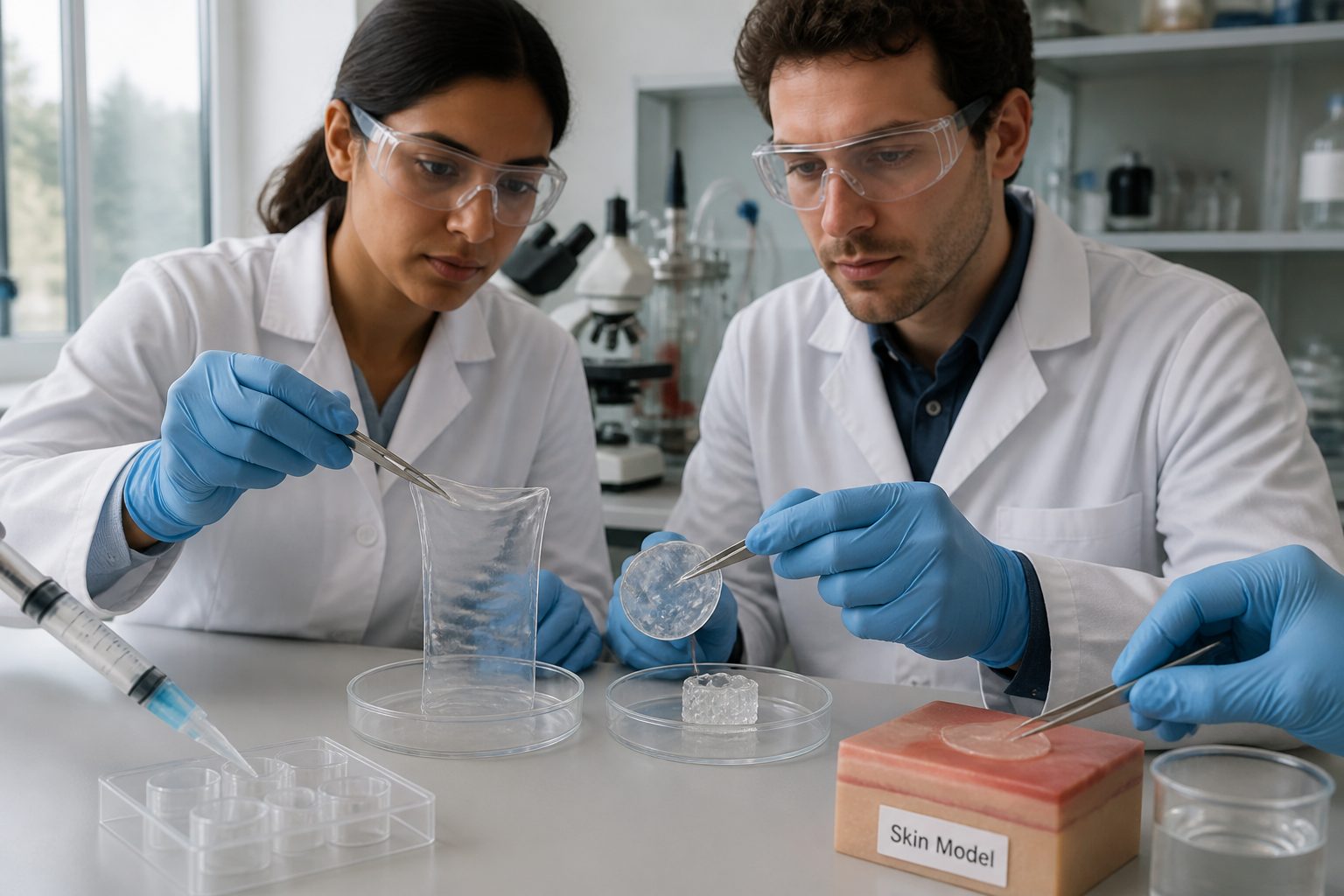
Hydrogels have emerged as effective wound dressings, providing a moist environment that promotes cell migration, angiogenesis, and tissue regeneration. Their ability to absorb excess wound exudate, while maintaining hydration, creates an optimal environment for wound healing and reduces the risk of infection.
Hydrogels can be loaded with antimicrobial agents, growth factors, or other therapeutic compounds to further enhance wound healing and prevent complications. These bioactive hydrogels offer a sustained release of therapeutic agents, promoting faster wound closure and reducing scarring.
- Promote moist wound healing
- Absorb excess exudate
- Deliver therapeutic agents
- Reduce risk of infection
- Minimize scarring
Maintaining a moist wound environment is crucial for promoting cell migration and tissue regeneration. Dry wounds can impede cell movement and delay the healing process.
Hydrogels can absorb excess wound exudate, preventing maceration of the surrounding skin. Maceration can lead to further tissue damage and increase the risk of infection.
Antimicrobial agents can be incorporated into hydrogels to prevent infection. Common antimicrobial agents include silver nanoparticles, antibiotics, and antiseptics.
Growth factors can be incorporated into hydrogels to stimulate cell growth and tissue regeneration. Common growth factors include epidermal growth factor (EGF), platelet-derived growth factor (PDGF), and transforming growth factor beta (TGF-β).
Hydrogels in 3D Bioprinting
3D bioprinting is a revolutionary technology that combines additive manufacturing techniques with biomaterials and living cells to create complex, three-dimensional tissue constructs. Hydrogels play a crucial role in 3D bioprinting, serving as bioinks that provide structural support and a conducive environment for cell survival and proliferation.
The printability, biocompatibility, and mechanical properties of hydrogels make them ideal for creating intricate tissue architectures with controlled cell distribution. By precisely depositing cells and biomaterials layer by layer, 3D bioprinting enables the fabrication of functional tissues and organs for regenerative medicine and drug screening applications.
Hydrogels used in 3D bioprinting can be modified with cell adhesion ligands, growth factors, and other bioactive molecules to enhance cell-matrix interactions and promote tissue development. Cross-linking techniques, such as photo-crosslinking or enzymatic crosslinking, can be used to solidify the printed constructs and maintain their structural integrity.
The combination of hydrogels and 3D bioprinting holds tremendous potential for creating personalized tissue implants, disease models, and drug testing platforms. As the technology advances, it is expected to revolutionize healthcare by enabling the fabrication of customized tissues and organs for transplantation and regenerative therapies.
Bioinks must possess specific rheological properties to be printable. These properties include viscosity, shear thinning behavior, and gelation kinetics.
Cell viability is a critical factor in 3D bioprinting. The printing process can expose cells to shear stress and other environmental factors that can reduce their viability.
Post-printing maturation is necessary to allow the printed tissue constructs to develop their full functionality. This may involve culturing the constructs in a bioreactor to provide nutrients and mechanical stimulation.
3D bioprinting can be used to create complex tissue structures with multiple cell types. This is important for creating functional tissues and organs that mimic the native architecture.
Stimuli-Responsive Hydrogels
Stimuli-responsive hydrogels, also known as “smart” hydrogels, exhibit dramatic changes in their physical or chemical properties in response to external stimuli, such as temperature, pH, light, or magnetic fields. This unique behavior makes them highly attractive for controlled drug delivery, biosensing, and tissue engineering applications.
Temperature-sensitive hydrogels, such as those based on poly(N-isopropylacrylamide) (PNIPAAm), undergo a phase transition at a specific temperature, causing them to shrink or swell. This property can be utilized to encapsulate and release drugs in response to temperature changes, enabling targeted drug delivery to specific tissues or organs.
pH-sensitive hydrogels, which contain ionizable groups, respond to changes in pH by swelling or shrinking. These hydrogels can be used to deliver drugs to specific locations in the body, such as the stomach or intestines, where the pH is different from that of the bloodstream.
Light-responsive hydrogels contain photo-sensitive molecules that undergo structural changes upon exposure to light, leading to changes in the hydrogel’s properties. These hydrogels can be used to control drug release or cell behavior with high spatial and temporal precision, enabling advanced therapeutic interventions.
Magnetic field-responsive hydrogels contain magnetic nanoparticles that respond to magnetic fields. These hydrogels can be used to deliver drugs to specific locations in the body or to control cell behavior.
Enzyme-responsive hydrogels contain enzyme-cleavable linkers that are broken down by specific enzymes. These hydrogels can be used to deliver drugs to specific locations in the body where the enzyme is present.
The sensitivity of stimuli-responsive hydrogels can be tuned by varying the composition and structure of the hydrogel. This allows for the creation of hydrogels that respond to a wide range of stimuli.
Stimuli-responsive hydrogels can be used to create closed-loop drug delivery systems. These systems automatically release drugs in response to changes in the patient’s condition.
Hydrogel Composites
Hydrogel composites combine the advantages of hydrogels with those of other materials, such as ceramics, nanoparticles, or fibers, to create materials with enhanced mechanical properties, bioactivity, or functionality. These composite materials offer a versatile platform for tailoring the properties of hydrogels to meet the specific requirements of various biomedical applications.
The incorporation of ceramics, such as hydroxyapatite or calcium phosphate, into hydrogels can improve their mechanical strength and osteoconductivity, making them suitable for bone tissue engineering applications. Nanoparticles, such as gold nanoparticles or carbon nanotubes, can be incorporated into hydrogels to enhance their drug delivery capabilities or provide imaging contrast.
The addition of fibers, such as collagen fibers or synthetic fibers, can improve the mechanical strength and anisotropy of hydrogels, mimicking the structure and properties of native tissues. These fiber-reinforced hydrogels are particularly useful for creating scaffolds for load-bearing tissues, such as cartilage or tendons.
By carefully selecting the components and controlling their interactions, hydrogel composites can be designed to exhibit a wide range of properties and functionalities, making them ideal for addressing complex biomedical challenges and improving patient outcomes.
The mechanical properties of hydrogel composites can be tailored by varying the type and amount of reinforcement material. This allows for the creation of composites with a wide range of stiffness and strength.
The bioactivity of hydrogel composites can be enhanced by incorporating bioactive molecules, such as growth factors or cell adhesion ligands. This can promote cell attachment, proliferation, and differentiation.
The degradation rate of hydrogel composites can be controlled by varying the type and amount of degradable components. This allows for the creation of composites that degrade at a rate that matches the rate of tissue regeneration.
Hydrogel composites can be used to create scaffolds for a wide range of tissues, including bone, cartilage, skin, and blood vessels. These scaffolds can be used to repair or replace damaged tissues.
Challenges and Future Directions
Despite the remarkable progress in hydrogel research and development, several challenges remain that need to be addressed to fully realize their potential in biomedical applications. One major challenge is the limited mechanical strength of many hydrogels, which restricts their use in load-bearing applications.
Another challenge is the difficulty in controlling the degradation rate and drug release kinetics of hydrogels, which can lead to unpredictable therapeutic outcomes. Future research efforts should focus on developing new hydrogel materials with improved mechanical properties, controlled degradation, and enhanced bioactivity.
Advancements in 3D bioprinting and microfabrication techniques will enable the creation of complex hydrogel structures with precise control over cell distribution and tissue architecture. The integration of hydrogels with other advanced technologies, such as gene therapy and immunotherapy, holds great promise for developing novel therapeutic strategies for a wide range of diseases.
The optimization of hydrogel formulations for specific clinical applications will require a multidisciplinary approach involving materials scientists, engineers, biologists, and clinicians. By addressing the existing challenges and exploring new avenues of research, hydrogels will continue to play a transformative role in biomedicine, improving patient health and quality of life.
Developing hydrogels with improved mechanical properties is a major focus of current research. This includes exploring new polymer chemistries and crosslinking techniques.
Controlling the degradation rate and drug release kinetics of hydrogels is another important area of research. This includes developing stimuli-responsive hydrogels that release drugs on demand.
Enhancing the bioactivity of hydrogels is crucial for promoting tissue regeneration. This includes incorporating growth factors, cell adhesion ligands, and other bioactive molecules into hydrogels.
Translating hydrogel technologies from the laboratory to the clinic is a major challenge. This requires rigorous preclinical and clinical testing to ensure safety and efficacy.
Conclusion
Hydrogels have emerged as a versatile class of biomaterials with immense potential in various biomedical applications. Their unique combination of properties, including high water content, biocompatibility, and tunable mechanical properties, makes them ideal candidates for drug delivery, tissue engineering, and wound healing.
As research and development efforts continue to advance, hydrogels are poised to revolutionize healthcare by enabling the development of novel therapeutic strategies and regenerative medicine approaches. With ongoing innovation and collaboration, hydrogels will undoubtedly play a central role in shaping the future of biomedicine and improving human health.
The future of hydrogels in biomedicine is bright. With continued research and development, hydrogels will play an increasingly important role in improving patient health and quality of life.
Hydrogels are a promising platform for developing personalized medicine approaches. By tailoring the properties of hydrogels to meet the specific needs of individual patients, we can improve therapeutic outcomes.