
The field of fiber science and polymer engineering is experiencing a significant transformation with the emergence of smart textiles, a truly fascinating area of innovation. These intelligent fabrics go far beyond traditional materials, incorporating electronic functionality directly into their structure. We are no longer limited to passive fabrics; instead, we are developing materials that can sense, react, and adapt to their environment or wearer.
This fusion of textile manufacturing with advanced electronics opens up possibilities once confined to science fiction. Examples include clothing monitoring vital signs, uniforms communicating with integrated systems, or curtains adjusting opacity based on light. The integration of smart textiles electronic functionality promises to revolutionize various industries, from healthcare to defense and everyday consumer goods.
The journey to create these sophisticated materials involves complex polymer science, novel fiber spinning techniques, and innovative methods for embedding electronic components. Understanding the underlying principles and manufacturing challenges is key to appreciating the immense potential of this burgeoning technology. This article will explore the core technologies, applications, and future directions for these remarkable materials.
Defining Smart Textiles and Their Core Technologies
Smart textiles, often referred to as e-textiles, are fabrics that interact with their surroundings or users by sensing and reacting to various stimuli. This interaction integrates electronic components, sensors, actuators, and communication technologies directly into the textile structure. This integration transforms fabrics from inert materials into active, intelligent systems.
Core smart textile technologies blend advanced materials science with microelectronics. Polymers create flexible, durable substrates for delicate circuits. This requires innovative material design for textile-electronic compatibility. The aim is to retain textile comfort and flexibility while adding high-tech capabilities.
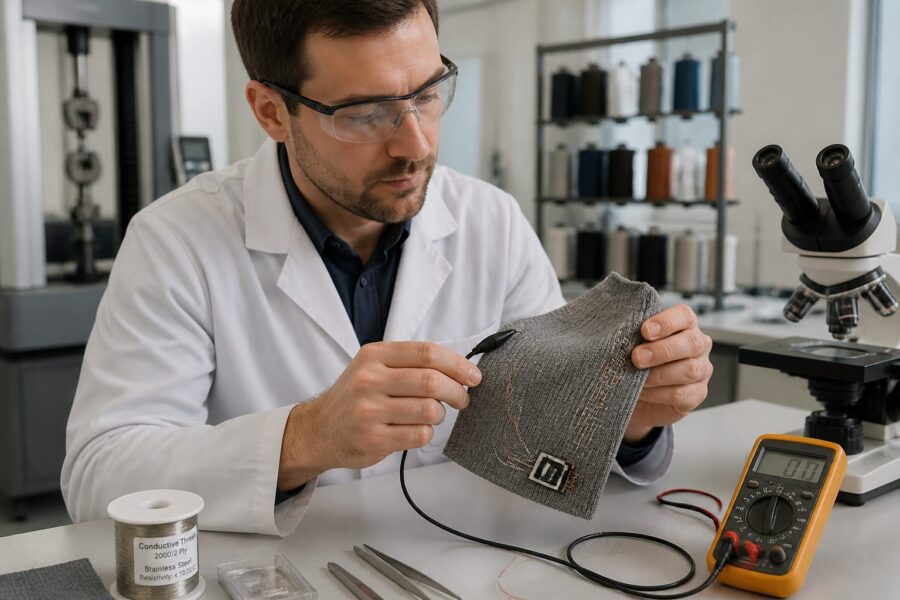
One primary aspect involves the development of conductive fibers and yarns, which serve as the electrical pathways within the fabric itself. These specialized fibers can transmit electrical signals or power, forming the backbone of the electronic system. Without robust and flexible conductive pathways, the concept of a truly integrated electronic textile would remain largely theoretical.
Miniaturized sensors and actuators are embedded or woven into fabric. They gather environmental data or perform actions. Sensor/actuator choice depends on desired smart textiles electronic functionality, from simple temperature detection to complex biometric monitoring.
Power management and data transmission pose significant technological hurdles. Smart textiles require compact, flexible power sources and efficient wireless or integrated data transmission. Researchers explore miniature batteries, energy harvesting, and robust wireless protocols.
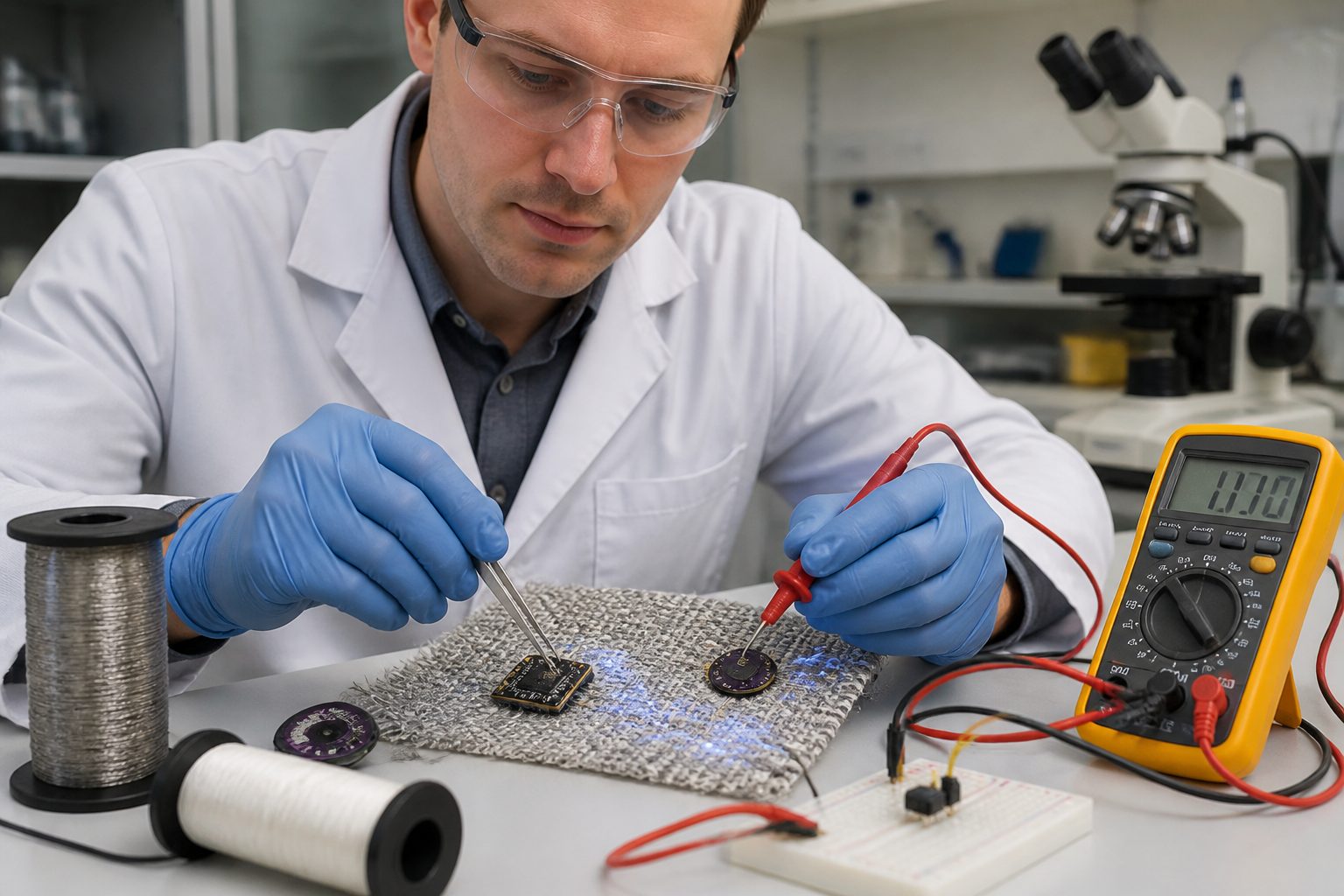
The field demands sophisticated manufacturing for traditional textile processes and delicate electronic integration. Methods must not compromise textile integrity or component functionality. Scalable, cost-effective solutions are needed for widespread adoption.
Smart textile definitions evolve with new materials and integration. The constant ambition is creating comfortable, aesthetic fabrics capable of complex electronic tasks. This development will reshape daily interactions with textile products.
Conductive Fibers and Yarns as Electrical Pathways
The backbone of any smart textile lies in its ability to conduct electricity, and this is primarily achieved through the innovative use of conductive fibers and yarns. These specialized materials replace traditional metal wires, offering unparalleled flexibility, comfort, and seamless integration into fabric structures. They are essential for transmitting power, data, and signals throughout the e-textile system, enabling its various electronic functions.
Several approaches create conductive fibers, each with advantages and challenges. Methods range from conductive coatings on fibers to inherently conductive polymers spun into yarns. Method choice depends on desired conductivity, mechanical properties, and cost-effectiveness for specific smart textiles electronic functionality.
| Method of Conductive Fiber Production | Key Materials Used | Typical Conductivity (S/cm) |
|---|---|---|
| Metallic Wire Integration | Copper, Silver, Stainless Steel | 10^4 – 10^6 |
| Conductive Polymer Coating | Polypyrrole, PEDOT:PSS, Carbon Nanotubes | 10^-2 – 10^2 |
| In-situ Polymerization | Aniline (for Polyaniline), Pyrrole (for Polypyrrole) | 10^-1 – 10^1 |
| Metal-Coated Fibers | Nickel, Silver, Copper plated onto Nylon, Polyester | 10^2 – 10^4 |
| Carbon-Based Composite Fibers | Graphene, Carbon Black, Carbon Nanofibers in polymers | 10^-3 – 10^1 |
| Intrinsic Conductive Polymers | Polyaniline, Polyacetylene, Polythiophene | 10^-4 – 10^3 |
Sensing Functions: Temperature, Pressure, and Biometric Monitoring
Smart textiles’ ability to sense environment and wearer physiology is a compelling application. Functional textile sensors integrate seamlessly into clothing, offering discreet, continuous data without bulky devices. This transforms personal health monitoring and athletic performance analysis.
Temperature sensing, a useful function, uses embedded thermistors or thermochromic materials. Sensors monitor body temperature for health or environmental temperature for adaptive clothing. Imagine a jacket adjusting insulation for optimal comfort.
Smart textile pressure sensors detect physical contact and force, with diverse applications. Uses include footwear gait analysis, seating posture monitoring, or medical bandage pressure assessment. Data provides insights for rehabilitation, ergonomics, and injury prevention.
Biometric monitoring is a key strength of smart textiles, continuously tracking vital signs from clothing. Fabrics incorporate electrodes for ECG, EMG, or respiratory rate tracking via fabric stretch. This non-invasive monitoring provides health data for professionals and individuals.
Beyond vital signs, researchers develop functional textile sensors detecting sweat biomarkers or monitoring glucose via skin contact. These capabilities position smart textiles as diagnostic tools, potentially offering early health issue detection. Their discreet nature makes them ideal for long-term, non-disruptive monitoring.
Sensing integration relies on materials science advancements, especially in stretchable, washable electronic components. Sensors must remain accurate and reliable after repeated bending, stretching, and washing. Durability is paramount for practical smart textiles electronic functionality in everyday wear.
Data from functional textile sensors requires efficient processing and transmission. This integrates miniature microcontrollers and wireless communication modules into the fabric. The system must seamlessly collect, process, and transmit data to a connected device or cloud for analysis, while remaining comfortable.
Actuating Functions: Shape Change and Haptic Feedback
Beyond sensing, smart textiles actuate, actively changing properties or providing physical feedback. This opens new dimensions for interactive clothing and adaptive textiles. Fabrics move from passive observers to active participants in user interaction and environmental response.
Shape change is a fascinating actuating function, where textiles alter form in response to electrical, thermal, or chemical stimuli. Materials can stiffen, soften, expand, contract, or fold into predefined shapes. Applications range from adaptive architectural shading to garments adjusting fit for comfort or performance.
Thermoelectric actuators woven into fabrics provide localized heating or cooling. Imagine a jacket automatically warming or cooling specific body areas. This active temperature management enhances smart textiles electronic functionality beyond traditional insulation.
Haptic feedback is another powerful actuating capability, generating tactile sensations for the wearer. Achieved via small vibratory motors or specialized electroactive polymers embedded in fabric. Haptic feedback provides discreet navigation cues, alerts, or enhances VR experiences, adding a new layer to wearable electronics integration.
Haptic elements strategically guide users without visual or auditory input, useful in noisy environments or for visually impaired individuals. A smart glove could vibrate fingers for directions or digital object interaction. This subtle communication advances human-computer interaction.
Electroactive polymers (EAPs) are key enablers for actuating smart textiles. EAPs change shape/size with applied voltage, offering flexible, lightweight actuation. Researchers refine EAP materials for improved response time, force generation, and durability in textiles.
Integrating actuators without compromising comfort or washability presents significant engineering challenges. Components must be thin, flexible, and robust for textile use. Overcoming these hurdles is essential for widespread adoption of actuating smart textiles.
Manufacturing Approaches for Smart Textile Integration
Integrating electronics into textiles requires sophisticated manufacturing, bridging traditional fabric production and advanced electronics fabrication. Methods must ensure durability, flexibility, and scalability, maintaining fabric comfort and aesthetics. This fusion defines modern e-textile production.
A common approach is “stitch-and-sew,” attaching pre-fabricated electronic modules to textiles with conductive threads or sewing. This is straightforward, allowing easy repair or replacement. However, it can result in bulkier garments and less seamless integration for complex smart textiles electronic functionality.
- Weaving conductive yarns directly into the fabric structure
- Knitting electronic components and sensors into seamless garments
- Embedding flexible circuits onto textile substrates using lamination
- Printing conductive inks and active materials onto fabric surfaces
- Applying specialized coatings to impart electrical or sensing properties
- Encapsulating delicate electronics within polymer layers for protection
- Utilizing advanced embroidery techniques with conductive threads
Applications in Healthcare, Military, and Consumer Wearables
Smart textile applications are diverse, spanning healthcare, defense, and consumer products. These intelligent fabrics fundamentally change interaction with clothing and environment, offering unprecedented monitoring, protection, and convenience. Widespread adoption of smart textiles electronic functionality is on the horizon.
In healthcare, smart textiles promise continuous patient monitoring, especially for chronic conditions or elderly care. Garments track vital signs (heart rate, respiration, body temperature), transmitting data wirelessly to caregivers or professionals. This enables proactive intervention, reduces invasive devices, and improves quality of life.
Rehabilitation is another key area; smart fabrics provide biofeedback for posture correction or movement monitoring during physical therapy. Functional textile sensors in bandages detect wound healing or pressure points, preventing bedsores. Their discreet nature makes these wearable electronics integration solutions ideal for long-term, non-clinical use.
For military and first responders, smart textiles offer enhanced protection, communication, and situational awareness in hazardous environments. Uniforms integrate sensors to detect chemical/biological threats, monitor soldier fatigue, or provide real-time location tracking. E-textiles become crucial soldier equipment, improving safety and operational effectiveness.
Beyond sensing, military smart textiles incorporate active heating/cooling for thermal regulation in extreme climates. They also include integrated antennas for secure communication or self-repairing capabilities for increased field durability. Integrating many functions into a single garment provides a significant tactical advantage, making wearable electronics integration essential.
In the consumer market, smart wearables gain traction, from fitness tracking to fashion. Athletic wear monitors performance metrics (stride length, muscle activity, calorie expenditure), offering personalized coaching. Imagine running shorts providing immediate haptic feedback for form correction.
Fashion designers explore aesthetic and interactive possibilities: clothing that changes color, lights up, or displays dynamic patterns. These e-textiles blur technology and art, offering new personal expression. Convenience like phone charging from a jacket or integrated sleeve navigation highlights smart textiles electronic functionality appeal.
Smart textiles extend to smart home applications: intelligent upholstery detecting occupancy or curtains adjusting for natural light. The vast potential transforms everyday objects into interactive, responsive living space elements. This broad spectrum demonstrates the versatility and impact of these advanced materials.
Challenges and Advancements in Smart Textile Science
Despite progress, smart textile development and adoption face significant challenges researchers and engineers address. Hurdles span material science, manufacturing, and user acceptance, requiring multidisciplinary innovation. Overcoming these is paramount for realizing full smart textiles electronic functionality.
A major challenge is durability and washability of integrated electronic components. Traditional electronics are rigid and sensitive to moisture and mechanical stress, inherent in textile use. Developing flexible, robust, washable e-textiles demands novel encapsulation and materials to withstand repeated laundering without performance compromise.
Effective, discreet powering of smart textiles remains complex. Current batteries are bulky, rigid, and have limited lifespans, contradicting seamless wearable integration. Researchers explore energy harvesting (thermoelectric, solar, triboelectric nanogenerators) for sustainable, integrated fabric power.
Data security and privacy are growing concerns, especially as functional textile sensors collect sensitive personal/biometric information. Secure transmission, storage, and processing are critical for user trust and regulatory compliance. Robust encryption and privacy protocols within e-textiles are essential for ethical deployment.
Manufacturing scalability and cost-effectiveness are crucial for moving smart textiles from prototypes to mass-market. Current electronic integration methods are complex and expensive, limiting adoption. Advancements in roll-to-roll processing, advanced printing, and automation are vital for reducing costs, increasing output, and making wearable electronics integration accessible.
Material compatibility and interface engineering are ongoing research areas, focusing on microscopic interaction of conductive fibers, sensors, and polymers. Ensuring long-term reliability and preventing degradation from mismatches or exposure requires deep understanding of interfacial phenomena. This understanding drives more robust, reliable e-textiles.
Despite challenges, significant advancements emerge from polymer engineering and materials science. New inherently conductive polymers with improved mechanical properties and processing are constantly developed. Flexible substrates and stretchable electronics make components more textile-friendly, pushing smart fabric capabilities.
The Future of Smart Textiles and Polymer Engineering
The future of smart textiles points to greater sophistication, integration, and autonomy, driven by polymer engineering and materials science innovation. We anticipate clothing and textile environments becoming active, intelligent interfaces seamlessly blending into lives. This redefines our relationship with everyday objects.
An exciting future direction is self-powered, energy-autonomous smart textiles. Imagine fabrics generating electricity from movement, body heat, or ambient light, eliminating external charging. This enhances e-textile practicality and convenience, from functional sensors to complex actuating garments.
Further miniaturization and enhanced flexibility of electronic components will enable virtually invisible integration, making smart textiles indistinguishable from conventional fabrics. Sensors, actuators, and processing units will become as thin and pliable as fibers. Seamlessness is crucial for widespread consumer acceptance and comfort in wearable electronics integration.
Convergence of smart textiles with AI and machine learning will unlock advanced functionalities. Fabrics could learn preferences, adapt intelligently to environments, and provide predictive health insights from long-term data. This adaptive intelligence will transform interaction with clothing and surroundings.
Personalized medicine will benefit profoundly from customized smart textiles for individual patient needs: monitoring, drug delivery, or rehabilitation. Imagine a bandage releasing medication based on real-time wound conditions or a vest delivering targeted therapy. These bespoke solutions will revolutionize healthcare, leveraging advanced smart textiles electronic functionality.
Beyond personal wearables, smart textiles will expand into infrastructure, automotive interiors, and space exploration. Intelligent fabrics could monitor building structural integrity, provide adaptive vehicle safety, or offer advanced astronaut life support and communication. Their versatility ensures broad impact across numerous high-stakes applications.
Continued collaboration among textile engineers, polymer scientists, electrical engineers, and designers is crucial for this complex future. Interdisciplinary research will drive breakthroughs to overcome limitations and explore new functional material frontiers. This collaborative spirit is essential for translating research into practical, impactful products.
Conclusion
Smart textiles are a transformative area where fabric comfort meets electronics’ dynamic capabilities. This fusion is a paradigm shift in how we conceive and interact with materials. Smart textiles electronic functionality promises to reshape industries and enhance daily life profoundly.
From conductive fibers to functional textile sensors, these intelligent fabrics push textile boundaries. Actuating functions expand utility with dynamic responses like shape change and haptic feedback. We move towards clothing actively participating in our well-being and environmental interaction.
Diverse manufacturing approaches, from weaving conductive yarns to advanced printing, highlight versatility and innovation. These methods enable seamless electronic component integration, making wearable electronics integration a reality. The challenge remains efficient, cost-effective scaling for mass production.
Applications in healthcare, military, and consumer wearables demonstrate the wide-ranging impact and enormous potential. Smart textiles are poised to provide continuous health monitoring, enhance soldier safety, and deliver personalized user experiences. Benefits span improved medical diagnostics to more interactive, comfortable personal items.
While durability, power management, and scalability challenges persist, rapid advancements in polymer engineering and materials science offer promising solutions. The future is bright, pointing to self-powered, highly integrated, AI-enhanced fabrics redefining our material world. This evolution will create exciting opportunities for scientists and engineers.