
Polymers are everywhere, from the plastics in our cars to the fabrics of our clothes. Understanding how they handle heat is more important than ever. Polymer thermal conductivity is a critical property that dictates how well a polymer can transfer heat.
This is especially relevant in applications ranging from electronics packaging to thermal insulation. We will explore the basics of thermal conductivity, the factors that influence it, and how it’s measured.
Additionally, we’ll discuss methods for enhancing thermal conductivity and the diverse applications of polymers based on their thermal properties. Finally, we will examine the role of fillers in modifying and improving the thermal conductivity of polymers.
Basics of Thermal Conductivity in Polymers
Thermal conductivity is a material’s ability to conduct heat. It is defined as the quantity of heat transmitted through a unit thickness in a direction normal to a surface of unit area, due to a unit temperature gradient.
In simpler terms, it measures how easily heat flows through a substance. Materials with high thermal conductivity, like metals, rapidly transfer heat, while those with low thermal conductivity, such as polymers, act as insulators.
Polymers, unlike metals, are typically poor conductors of heat due to their molecular structure. Their long, chain-like molecules are held together by weak van der Waals forces or stronger covalent bonds.
Heat transfer in polymers primarily occurs through vibrational modes of the polymer chains, known as phonons. These phonons scatter easily due to the disordered nature of amorphous polymers, hindering efficient heat transfer.
The thermal conductivity is typically denoted by the symbol ‘k’ and is measured in units of Watts per meter-Kelvin (W/m·K). A higher ‘k’ value indicates a greater ability to conduct heat. Understanding this basic principle is crucial for selecting the right polymer for specific thermal management applications.
The molecular structure of polymers significantly affects their ability to conduct heat. The arrangement and bonding within the polymer chains determine how efficiently phonons can propagate through the material.
In crystalline polymers, the ordered arrangement of molecules facilitates more efficient phonon transport, leading to higher thermal conductivity compared to amorphous polymers. Amorphous polymers, with their disordered structure, impede phonon movement, resulting in lower thermal conductivity.
The type of bonding within the polymer also plays a critical role. Polymers with strong covalent bonds and rigid backbones tend to have higher thermal conductivity than those with weaker intermolecular forces.
Furthermore, the presence of impurities or defects within the polymer structure can disrupt phonon transport and reduce thermal conductivity. Therefore, controlling the purity and structural integrity of polymers is essential for optimizing their thermal performance.
Factors Affecting Polymer Thermal Conductivity
Several factors influence the thermal conductivity of polymers. These include the chemical structure of the polymer, its molecular weight, crystallinity, and the presence of additives or fillers.
The chemical structure dictates the strength and nature of the bonds between atoms in the polymer chain. Polymers with strong covalent bonds and rigid backbones tend to have higher thermal conductivity.
Molecular weight also plays a role; longer polymer chains can facilitate more efficient phonon transport, increasing thermal conductivity. Crystallinity is another key factor, as crystalline regions in polymers provide a more ordered pathway for heat transfer compared to amorphous regions.
Additives and fillers can significantly alter thermal conductivity. Introducing highly conductive materials like metal particles or carbon nanotubes into the polymer matrix can enhance its ability to transfer heat.
The orientation of polymer chains can also affect thermal conductivity. Aligned polymer chains, often achieved through stretching or drawing processes, can enhance heat transfer along the direction of alignment.
The degree of cross-linking in a polymer network can also influence its thermal conductivity. Cross-linking can restrict the movement of polymer chains, potentially affecting phonon transport.
External factors such as temperature and pressure can also impact polymer thermal conductivity. In general, thermal conductivity tends to increase with temperature due to increased molecular vibrations.
However, at very high temperatures, polymer degradation can occur, leading to a decrease in thermal conductivity. Pressure can also affect thermal conductivity by altering the density and packing of polymer chains.
The presence of moisture or other solvents in the polymer can also affect thermal conductivity. These substances can disrupt the polymer structure and hinder phonon transport.
Measuring Thermal Conductivity: Experimental Methods
Measuring thermal conductivity accurately is crucial for understanding and optimizing the thermal performance of polymers. Several experimental methods are available, each with its own advantages and limitations.
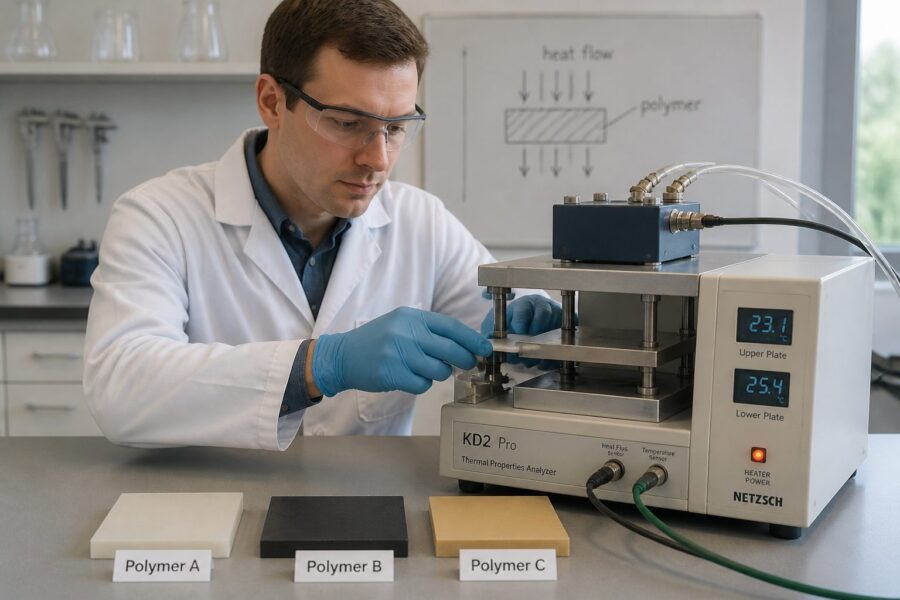
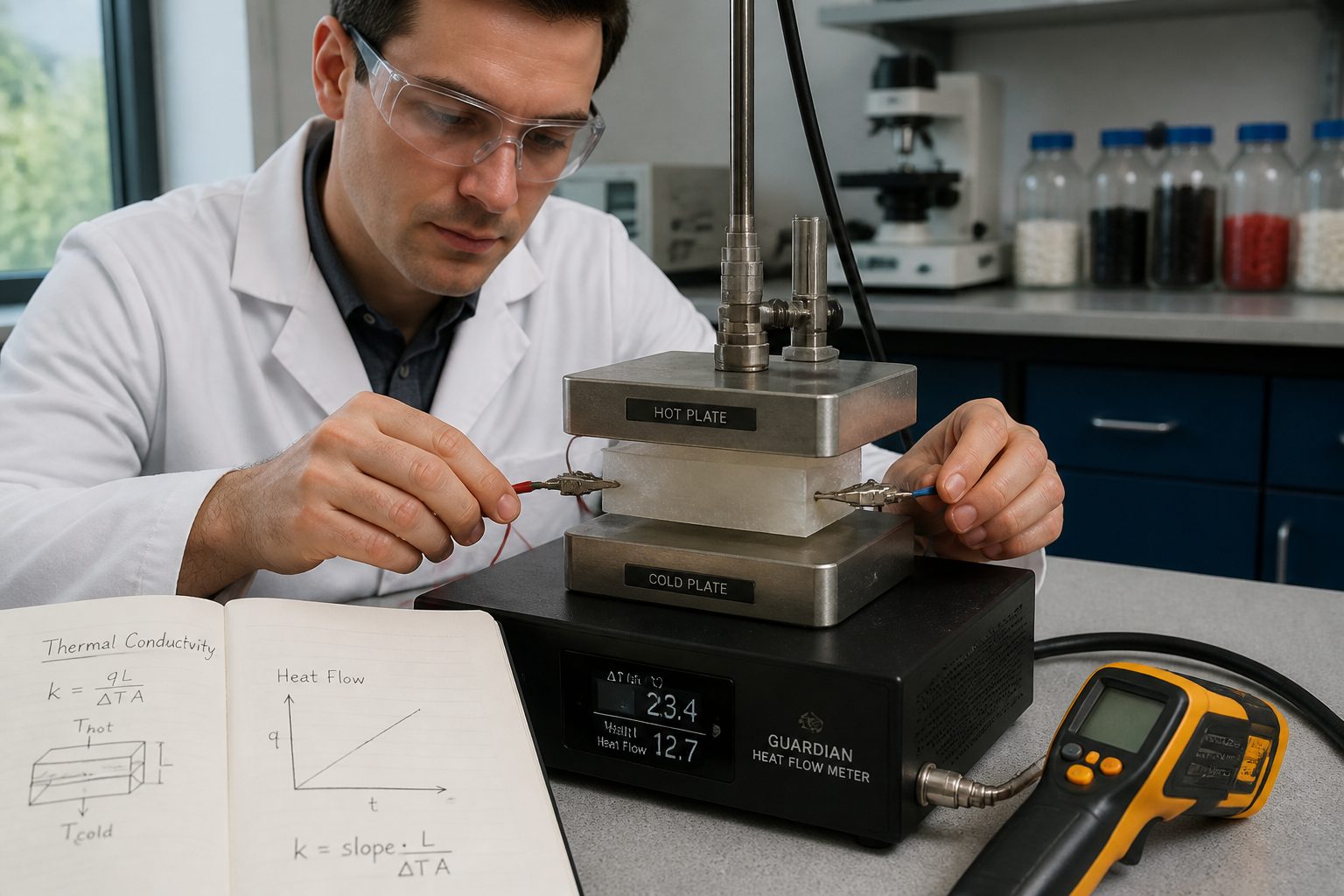
The guarded hot plate method is a steady-state technique widely used for measuring the thermal conductivity of flat samples. It involves placing the sample between two plates, one heated and the other cooled, and measuring the heat flow through the sample once a steady temperature gradient is established.
| Method | Material Type | Temperature Range | Accuracy |
|---|---|---|---|
| Guarded Hot Plate | Solids, Films | Low to Moderate | High |
| Laser Flash Analysis | Solids, Liquids, Powders | Wide | Moderate |
| Transient Hot Wire | Liquids, Pastes | Moderate | High |
| Differential Scanning Calorimetry (DSC) | Polymers, Composites | Low to Moderate | Moderate |
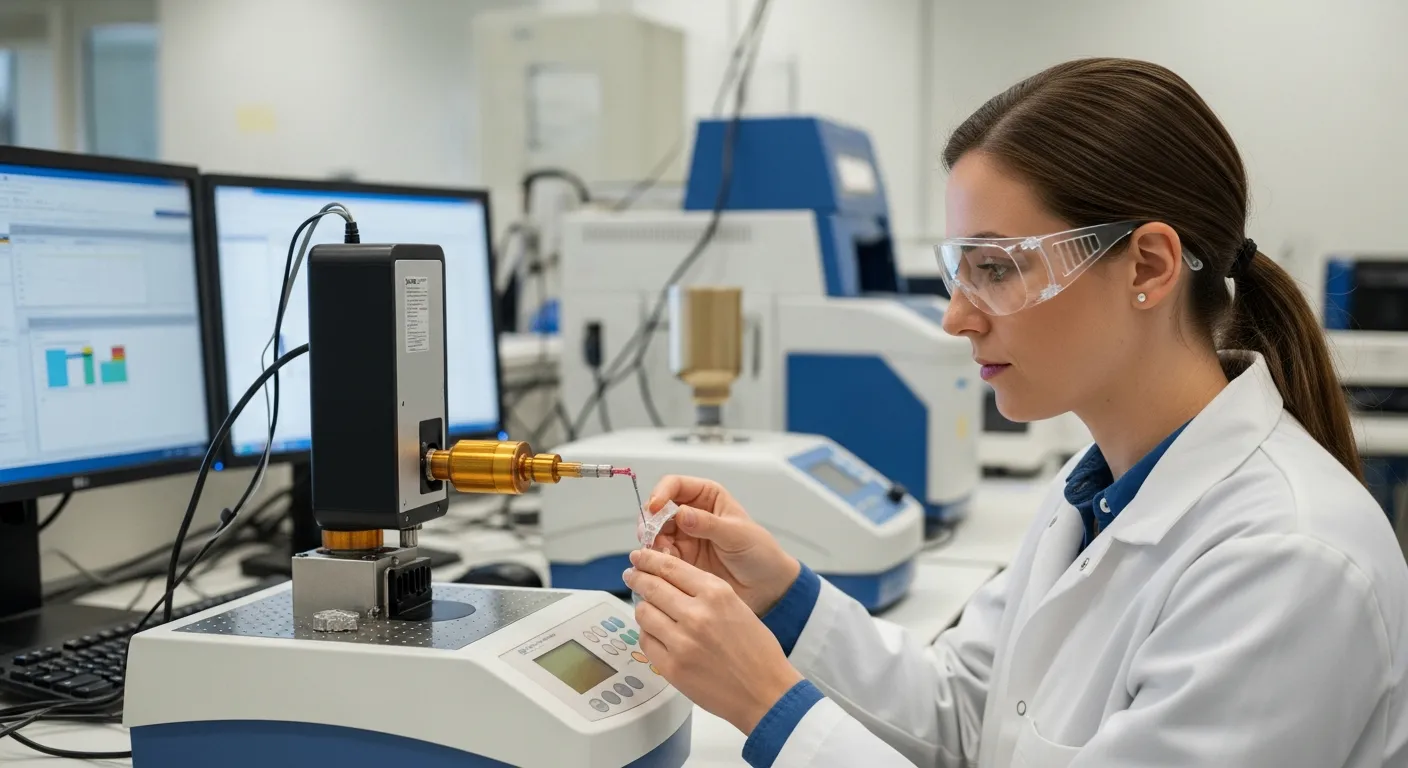
Laser flash analysis (LFA) is a transient method that measures the thermal diffusivity of a material. A short laser pulse heats the front surface of the sample, and the temperature rise on the rear surface is measured. Thermal conductivity can then be calculated from the thermal diffusivity, density, and specific heat capacity of the material.
The transient hot wire method is commonly used for measuring the thermal conductivity of liquids and pastes. A thin wire is immersed in the sample and heated with a constant power. The temperature rise of the wire is measured over time, and the thermal conductivity is calculated based on the heat transfer characteristics.
Differential scanning calorimetry (DSC) can also be used to estimate the thermal conductivity of polymers and composites. DSC measures the heat flow required to maintain a sample at a constant temperature or to increase its temperature at a constant rate. By analyzing the heat flow data, thermal conductivity can be estimated.
Each of these methods has its own set of advantages and disadvantages in terms of accuracy, sample preparation, and temperature range. The choice of method depends on the specific requirements of the measurement and the characteristics of the material being tested.
Enhancing Polymer Thermal Conductivity
Enhancing the thermal conductivity of polymers is essential for expanding their applications in various industries. Several strategies can be employed to improve their heat transfer capabilities.
One common method is the incorporation of thermally conductive fillers. Materials like metal particles (e.g., aluminum, copper), carbon nanotubes, graphene, and ceramic particles can be added to the polymer matrix to create a composite material with enhanced thermal conductivity.
The effectiveness of these fillers depends on their concentration, size, shape, and dispersion within the polymer matrix. Higher concentrations of fillers generally lead to greater improvements in thermal conductivity, but can also affect other mechanical properties of the polymer.
Another approach involves manipulating the polymer’s molecular structure. Increasing the crystallinity of the polymer can improve thermal conductivity by providing more ordered pathways for phonon transport.
Surface modification of fillers can also enhance their effectiveness. Coating fillers with surfactants or polymers can improve their dispersion and compatibility with the polymer matrix.
The alignment of fillers within the polymer matrix can also significantly impact thermal conductivity. Techniques such as magnetic alignment or shear flow can be used to orient fillers in a preferred direction, maximizing heat transfer along that direction.
Another strategy involves the use of polymer blends. Blending polymers with different thermal conductivities can create materials with tailored thermal properties.
The use of chemical modification techniques can also enhance polymer thermal conductivity. Introducing specific functional groups to the polymer chain can improve its ability to interact with thermally conductive fillers or enhance phonon transport.
Applications of Polymers Based on Thermal Properties
The thermal properties of polymers dictate their suitability for a wide range of applications. Polymers with low thermal conductivity are ideal for thermal insulation, while those with enhanced thermal conductivity find use in heat dissipation applications.
In the construction industry, polymers like polystyrene and polyurethane are used as insulation materials in walls and roofs to reduce heat transfer and energy consumption. These materials have low heat transfer coefficient, making them effective at maintaining stable indoor temperatures.
In electronics, polymers are used in packaging and encapsulation to protect sensitive components from heat damage. Thermally conductive polymers help dissipate heat generated by electronic devices, preventing overheating and ensuring reliable performance.
Automotive applications also benefit from the thermal properties of polymers. Polymers are used in engine components, interior parts, and thermal management systems to improve fuel efficiency and reduce weight.
In the aerospace industry, polymers are used in thermal protection systems for spacecraft and aircraft. These materials must withstand extreme temperatures and provide effective insulation to protect sensitive equipment and personnel.
Polymers are also used in medical devices and equipment where thermal management is critical. For example, thermally conductive polymers are used in heat sinks for medical lasers and cooling systems for MRI machines.
In the textile industry, polymers are used in the production of thermally insulating clothing and blankets. These materials help to regulate body temperature and provide comfort in cold environments.
Polymers with tailored thermal properties are also finding use in energy storage devices such as batteries and fuel cells. These materials help to manage heat generated during operation and improve the efficiency and lifespan of the devices.
The Role of Fillers in Thermal Conductivity
Fillers play a crucial role in modifying and enhancing the thermal conductivity of polymers. By incorporating materials with high thermal conductivity into the polymer matrix, the overall thermal performance of the composite material can be significantly improved.
Different types of fillers offer varying degrees of enhancement. The choice of filler depends on the desired thermal properties, cost, and application requirements.
- Metal Particles: High conductivity, but can increase weight and cost.
- Carbon Nanotubes: Excellent conductivity, but dispersion can be challenging.
- Graphene: High conductivity and lightweight, but expensive.
- Ceramic Particles: Good balance of conductivity and cost.
- Boron Nitride: Excellent insulation and thermal conductivity.
The size and shape of the filler particles can also affect thermal conductivity. Smaller particles generally provide a larger surface area for heat transfer, but can also be more difficult to disperse uniformly.
The aspect ratio of the filler (the ratio of its length to its diameter) can also influence thermal conductivity. High aspect ratio fillers, such as carbon nanotubes and graphene, can form a network within the polymer matrix, facilitating efficient heat transfer.
The dispersion of fillers within the polymer matrix is crucial for achieving optimal thermal conductivity. Agglomeration of fillers can create hotspots and reduce the overall thermal performance of the composite material.
Surface treatment of fillers can improve their dispersion and compatibility with the polymer matrix. Coating fillers with surfactants or polymers can enhance their wetting and adhesion to the polymer.
Understanding Thermal Resistance and Polymer Insulation
Thermal resistance is a measure of a material’s ability to resist the flow of heat. It is the inverse of thermal conductance and is an essential parameter for evaluating the effectiveness of polymer insulation.
Polymers with high thermal resistance are excellent insulators, preventing heat transfer and maintaining temperature stability. This property is crucial in applications such as building insulation, where minimizing heat loss or gain is essential for energy efficiency.
The thermal resistance of a polymer depends on its thickness and thermal conductivity. Thicker materials and those with lower thermal conductivity offer higher thermal resistance.
Factors such as air gaps, material density, and moisture content can also affect the overall thermal resistance of a polymer insulation system. Proper design and installation are crucial for maximizing the effectiveness of polymer insulation.
Thermal resistance is typically measured in units of Kelvin per Watt (K/W) or degrees Celsius per Watt (°C/W). A higher thermal resistance value indicates a greater ability to resist heat flow.
The concept of thermal resistance is analogous to electrical resistance. Just as electrical resistance opposes the flow of electric current, thermal resistance opposes the flow of heat.
The total thermal resistance of a composite structure is the sum of the thermal resistances of its individual components. This principle is used to design and optimize insulation systems for buildings and other applications.
Understanding thermal resistance is crucial for selecting the appropriate polymer insulation material and determining the required thickness to achieve a desired level of thermal performance. Proper insulation can significantly reduce energy consumption and improve comfort in buildings.
Advanced Techniques for Thermal Management in Polymers
Advanced techniques are continually being developed to improve thermal management in polymers. These methods aim to enhance thermal conductivity, reduce thermal resistance, and optimize heat dissipation.
One promising approach is the use of nanocomposites, where nanoscale fillers are incorporated into the polymer matrix. Nanomaterials like carbon nanotubes and graphene offer exceptional thermal conductivity and can significantly enhance the thermal performance of polymers even at low concentrations.
Another technique involves the use of phase change materials (PCMs) within the polymer matrix. PCMs absorb and release heat during phase transitions, providing thermal energy storage and temperature regulation.
Surface modification techniques can also improve thermal management. Applying coatings or treatments to the polymer surface can enhance its ability to radiate heat or reduce thermal contact resistance.
The use of microfluidic channels within polymers is another advanced technique for thermal management. These channels allow for the circulation of cooling fluids, providing efficient heat removal from the polymer material.
Another promising approach is the development of self-healing polymers with enhanced thermal conductivity. These materials can repair damage caused by heat or mechanical stress, maintaining their thermal performance over time.
The use of 3D printing techniques allows for the creation of complex polymer structures with tailored thermal properties. This enables the design of custom heat sinks and other thermal management devices.
Advanced computational modeling and simulation tools are also being used to optimize the thermal performance of polymers. These tools can predict the thermal behavior of polymers under various conditions and guide the development of new materials and techniques.
Future Trends in Polymer Thermal Conductivity Research
Research in polymer thermal conductivity is continuously evolving, driven by the demand for high-performance materials in various applications. Several trends are shaping the future of this field.
One key trend is the development of new thermally conductive fillers. Researchers are exploring novel materials with superior thermal properties, such as two-dimensional materials like MXenes and advanced carbon-based materials.
Another trend is the optimization of filler dispersion and alignment within the polymer matrix. Achieving uniform dispersion and alignment of fillers can significantly enhance thermal conductivity and mechanical properties.
Computational modeling and simulation are also playing an increasingly important role. These tools enable researchers to predict the thermal behavior of polymers and optimize their composition and structure.
The development of sustainable and bio-based polymers with enhanced thermal conductivity is also a growing area of interest. Researchers are exploring the use of renewable resources to create thermally conductive polymers that are environmentally friendly.
Another trend is the integration of thermal management functionalities into polymer coatings and films. These coatings can be applied to surfaces to enhance heat dissipation or provide thermal insulation.
The development of self-sensing polymers that can monitor their own temperature and thermal conductivity is also an emerging area of research. These materials can provide real-time feedback on their thermal performance.
The use of artificial intelligence and machine learning is also being explored to accelerate the discovery and development of new thermally conductive polymers. These techniques can analyze large datasets and identify promising material combinations and processing conditions.
Challenges and Considerations in Polymer Thermal Applications
While polymers offer many advantages in thermal applications, several challenges and considerations must be addressed. These include material selection, processing techniques, and long-term stability.
Choosing the right polymer for a specific application requires careful consideration of its thermal properties, mechanical strength, chemical resistance, and cost. Processing techniques can also significantly impact the thermal performance of polymers.
Factors such as molding temperature, cooling rate, and filler dispersion can affect the final thermal conductivity of the material. Long-term stability is another important consideration.
Polymers may degrade over time due to exposure to heat, UV radiation, or chemicals, which can affect their thermal properties. Addressing these challenges is crucial for ensuring the reliable and effective use of polymers in thermal applications.
The cost of thermally conductive fillers can also be a significant consideration. Some fillers, such as carbon nanotubes and graphene, are relatively expensive, which can limit their use in certain applications.
The toxicity and environmental impact of some thermally conductive fillers are also important considerations. It is important to select fillers that are safe and environmentally friendly.
The compatibility of fillers with the polymer matrix is another challenge. Poor compatibility can lead to agglomeration of fillers and reduced thermal performance.
The mechanical properties of polymer composites can also be affected by the addition of fillers. It is important to optimize the filler content and dispersion to maintain the desired mechanical properties.
Conclusion
Understanding polymer thermal conductivity is essential for designing and optimizing materials for a wide range of applications. From thermal insulation to heat dissipation, the thermal properties of polymers play a crucial role in determining their performance.
By carefully selecting polymers, incorporating thermally conductive fillers, and employing advanced thermal management techniques, it’s possible to tailor the thermal properties of polymers to meet specific application requirements. Ongoing research and development efforts are continuously pushing the boundaries of polymer thermal conductivity, paving the way for new and innovative applications in the future.
The ability to manipulate and enhance the thermal properties of polymers opens up exciting possibilities for creating more efficient and sustainable technologies. As demand for high-performance materials continues to grow, research in polymer thermal conductivity will remain a critical area of focus.