
Polymer recycling is more than a trend; it’s a necessity for a sustainable future. The sheer volume of plastic waste generated globally demands innovative solutions.
We can’t keep burying our problems, so let’s explore the various polymer recycling technologies available today. Understanding these methods is the first step toward creating a circular economy for plastics.
This article will examine mechanical recycling, chemical recycling, and energy recovery, along with the challenges and opportunities in each approach. It’s time to get serious about how we handle plastic waste, and technology offers some promising avenues.
The Importance of Polymer Recycling
The accumulation of plastic waste poses a significant threat to our environment. From overflowing landfills to polluted oceans, the consequences of our throwaway culture are undeniable.
Polymer recycling technologies offer a pathway to mitigate these impacts by transforming waste into valuable resources. Reducing our reliance on virgin plastics is key to conserving fossil fuels and minimizing carbon emissions.
Recycling also helps to decrease the amount of waste sent to landfills, which are often sources of soil and water contamination. The environmental benefits alone make investing in and improving polymer recycling technologies a worthwhile endeavor.
Beyond the environmental aspects, there are also economic incentives to consider. Polymer recycling technologies can create new industries and jobs, boosting local economies.
Furthermore, the development and implementation of advanced recycling methods can lead to technological advancements. This can enhance a nation’s competitiveness in the global market.

The extraction of raw materials for virgin plastic production often involves environmentally damaging practices. Polymer recycling technologies can significantly reduce the need for these extraction processes.
By reducing the demand for virgin plastics, we can protect ecosystems and biodiversity. This includes forests, oceans, and other natural habitats that are often impacted by resource extraction.
The long-term benefits of polymer recycling extend beyond immediate environmental and economic gains. It fosters a culture of sustainability and responsibility.
Educating future generations about the importance of recycling is crucial for ensuring a sustainable future. By promoting responsible waste management practices, we can create a more environmentally conscious society.
The transition to a circular economy for plastics requires a fundamental shift in how we design, use, and dispose of these materials. Polymer recycling technologies are at the heart of this transformation.
Mechanical Recycling: Processing Waste Plastics
Mechanical recycling is perhaps the most well-known and widely used method of polymer recycling. This process involves physically treating plastic waste to create new products.
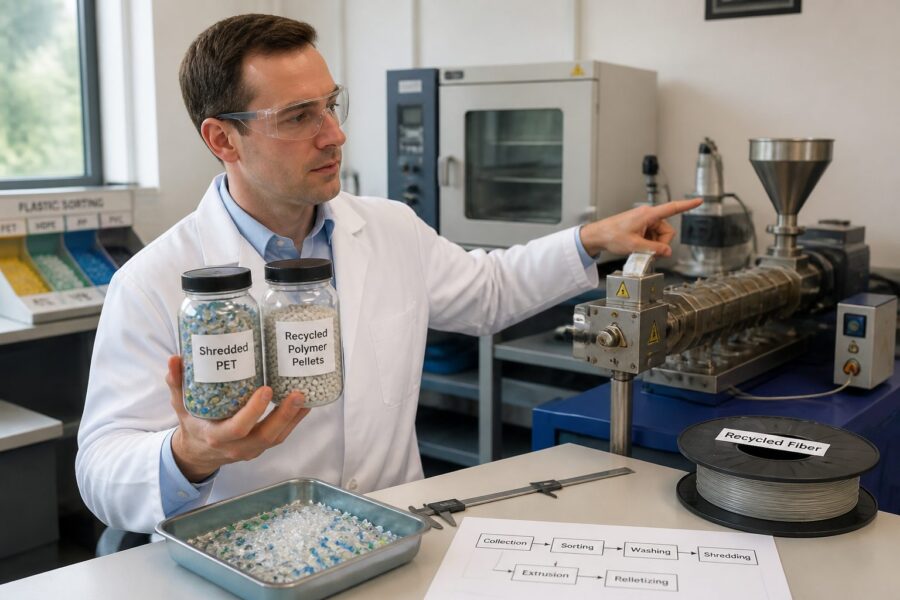
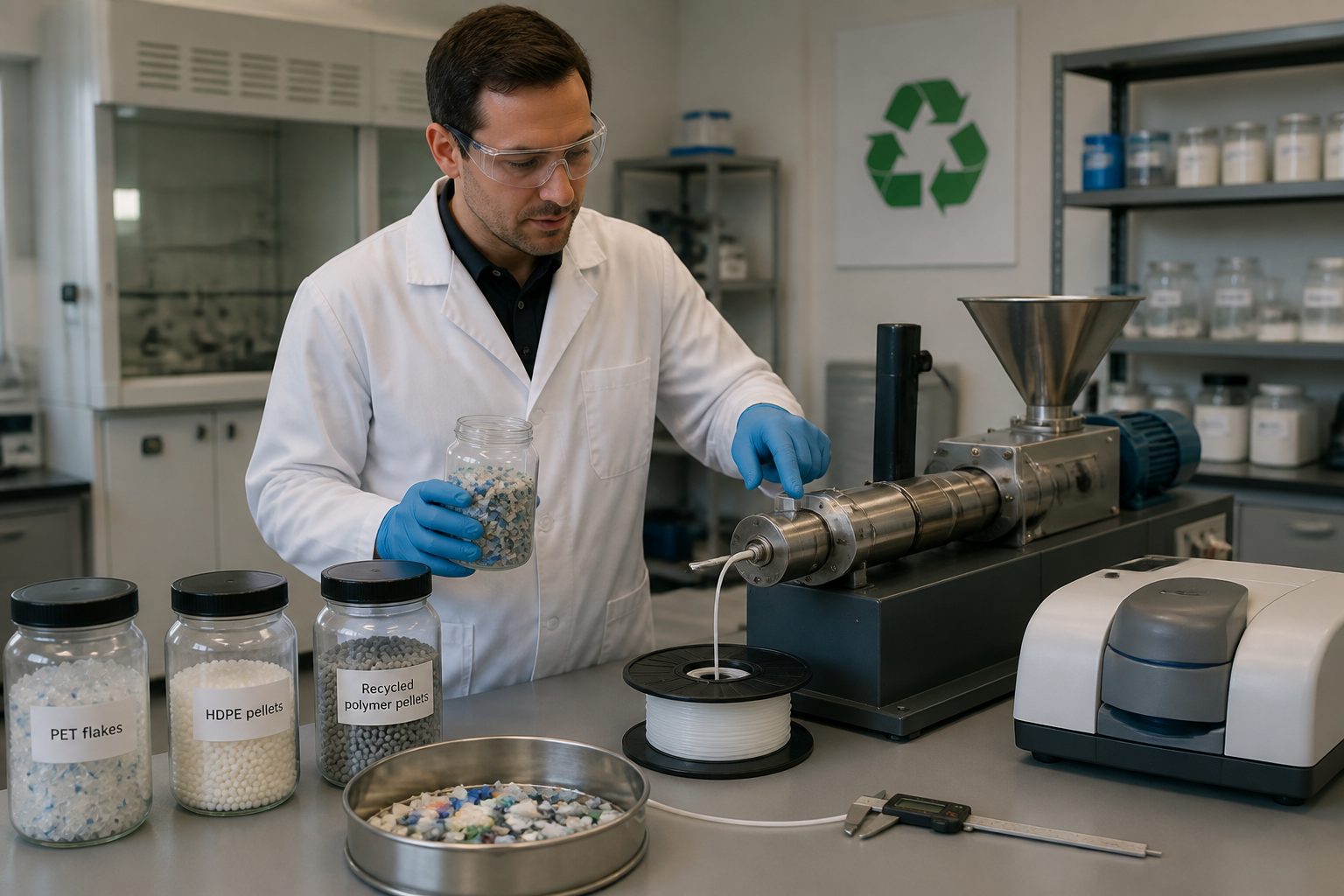
The steps typically include sorting, cleaning, shredding, melting, and pelletizing the plastic. The resulting pellets can then be used to manufacture a variety of items, from plastic lumber to new packaging.
One of the main advantages of mechanical recycling is its relative simplicity and lower cost compared to other methods. It’s a straightforward approach that can be implemented with existing infrastructure in many areas.
However, mechanical recycling also has limitations, particularly when dealing with mixed plastic waste streams. Contamination and degradation can reduce the quality of the recycled material, limiting its applications.
| Plastic Type | Recycling Code | Common Applications |
|---|---|---|
| Polyethylene Terephthalate (PET) | 1 | Bottles, containers, fibers |
| High-Density Polyethylene (HDPE) | 2 | Milk jugs, detergent bottles, toys |
| Polyvinyl Chloride (PVC) | 3 | Pipes, siding, flooring |
| Low-Density Polyethylene (LDPE) | 4 | Plastic bags, films, wraps |
| Polypropylene (PP) | 5 | Containers, auto parts, fibers |
| Polystyrene (PS) | 6 | Foam cups, packaging, insulation |
Despite these challenges, mechanical recycling remains a crucial component of any comprehensive waste management strategy. Advancements in sorting and cleaning technologies are helping to improve the quality of mechanically recycled plastics.
Mechanical recycling is a practical solution for dealing with large volumes of relatively clean and uniform plastic waste. It’s a good start, but it’s not the whole answer for polymer recycling technologies.
Effective sorting is paramount in mechanical recycling. Advanced optical sorting systems can identify and separate different types of plastics with high accuracy.
This ensures that the recycled material is of consistent quality and suitable for a wider range of applications. Proper cleaning is also essential to remove contaminants that can degrade the final product.
Innovative cleaning techniques, such as supercritical fluid extraction, can effectively remove stubborn contaminants. This results in a cleaner and more valuable recycled plastic.
The particle size and shape of the shredded plastic can also affect the efficiency of the recycling process. Optimizing these parameters can improve the flow and handling of the material.
Melting and pelletizing are critical steps in mechanical recycling. These processes transform the shredded plastic into a usable form.
Careful control of temperature and pressure is necessary to prevent degradation of the plastic during melting. The resulting pellets can be used as a direct replacement for virgin plastic in many applications.
Chemical Recycling: Breaking Down Polymers
Chemical recycling, also known as advanced recycling, offers a different approach to dealing with plastic waste. Instead of simply reshaping the plastic, chemical recycling breaks down polymers into their constituent monomers or other valuable chemicals.
These building blocks can then be used to create new plastics or other products, effectively closing the loop. Several different chemical recycling technologies are used, including pyrolysis, gasification, and depolymerization.
Pyrolysis involves heating plastic waste in the absence of oxygen, producing a mixture of oils, gases, and char. The oils can be further refined into fuels or used as feedstock for new plastics, a useful application of polymer recycling technologies.
Gasification converts plastic waste into a syngas, which can be used to produce electricity, fuels, or chemicals. Depolymerization specifically targets certain polymers, such as PET, and breaks them down into their original monomers, which can then be repolymerized into virgin-quality plastic.
Chemical recycling has the advantage of being able to handle mixed and contaminated plastic waste streams. It can also produce high-quality recycled materials that are indistinguishable from virgin plastics.
However, chemical recycling technologies are typically more complex and expensive than mechanical recycling. They also require significant energy inputs, which can offset some of the environmental benefits.
Despite these challenges, chemical recycling is a promising solution for dealing with plastic waste that cannot be mechanically recycled. As technology improves and costs decrease, chemical recycling is likely to play an increasingly important role in polymer recycling.
The ability of chemical recycling to handle mixed plastic waste streams is a major advantage. This reduces the need for extensive sorting and cleaning.
Pyrolysis is a versatile technology that can be applied to a wide range of plastic types. The resulting oils can be used as a feedstock for the production of new plastics, fuels, and chemicals.
Gasification offers a way to convert plastic waste into a clean and versatile energy source. The syngas produced can be used to generate electricity or to produce valuable chemicals.
Depolymerization is particularly effective for recycling PET plastics. It allows for the recovery of high-quality monomers that can be used to create new PET products.
The development of more energy-efficient chemical recycling processes is crucial. This will help to reduce the environmental impact of these technologies.
Further research is needed to optimize chemical recycling processes and reduce costs. This will make these technologies more economically viable.
Energy Recovery: Incineration and Waste-to-Energy
Energy recovery, also known as waste-to-energy (WtE), is another method for dealing with plastic waste. This process involves incinerating plastic waste to generate heat, which can then be used to produce electricity or steam.
Modern WtE facilities are equipped with advanced emission control technologies to minimize air pollution. Energy recovery can reduce the volume of waste sent to landfills and provide a source of renewable energy.
However, energy recovery is not without its drawbacks. Incineration can release harmful pollutants into the air if not properly controlled.
There are also concerns about the potential for heavy metals and other toxins to be released during the process. Public perception of incineration is often negative, due to concerns about air quality and potential health impacts.
Despite these concerns, energy recovery can be a useful tool for managing plastic waste, especially in areas where landfill space is limited. When implemented with strict environmental controls, WtE can provide a cleaner alternative to traditional waste disposal methods.
It’s not a perfect solution, but it can be part of a broader strategy for dealing with plastic waste. Energy recovery is a pragmatic approach that can help to reduce our reliance on fossil fuels while also managing waste.
Advanced emission control technologies are essential for minimizing air pollution from WtE facilities. These technologies can remove particulate matter, heavy metals, and other harmful pollutants from the flue gas.
WtE facilities can generate electricity and heat, providing a reliable source of renewable energy. This can help to reduce our reliance on fossil fuels and lower carbon emissions.
The ash produced by WtE facilities can be used as a construction material, further reducing waste. This can help to conserve natural resources and reduce the environmental impact of construction.
Public education is crucial for addressing concerns about the health and environmental impacts of WtE. Providing accurate information about the technologies used and the emission control measures in place can help to build public trust.
WtE can be a valuable tool for managing plastic waste in areas where landfill space is limited. It can provide a cleaner alternative to traditional waste disposal methods.
However, it is important to implement WtE with strict environmental controls and public engagement. This will help to ensure that it is a sustainable and responsible waste management solution.
Challenges and Opportunities in Polymer Recycling
Polymer recycling technologies face numerous challenges that need to be addressed to achieve a truly circular economy for plastics. One of the biggest hurdles is the lack of standardized collection and sorting systems.
Different regions have different recycling programs, and the types of plastics that are accepted vary widely. This inconsistency makes it difficult to efficiently collect and process plastic waste.
- Improving sorting technologies
- Developing more efficient chemical recycling processes
- Creating standardized recycling programs
- Increasing public awareness and participation
- Encouraging the use of recycled plastics in manufacturing
Despite these challenges, there are also significant opportunities for growth and innovation in the field of polymer recycling. Advances in sorting technologies are making it possible to separate different types of plastics more accurately.
Chemical recycling technologies are becoming more efficient and cost-effective, offering new ways to deal with difficult-to-recycle plastics. Consumer demand for sustainable products is growing, creating a market for recycled plastics.
The development of standardized recycling programs is essential for improving collection rates. This requires collaboration between governments, industries, and communities.
Investing in research and development of new sorting technologies can significantly improve the efficiency of recycling processes. This includes the use of artificial intelligence and machine learning to identify and separate different types of plastics.
Creating incentives for manufacturers to use recycled plastics in their products can drive demand for these materials. This can help to create a more sustainable market for recycled plastics.
Educating the public about the importance of recycling and how to properly sort their waste is crucial for increasing participation rates. This can be achieved through public awareness campaigns and educational programs.
The development of more efficient chemical recycling processes can help to deal with difficult-to-recycle plastics. This includes mixed plastic waste streams and contaminated plastics.
Addressing the challenges and seizing the opportunities in polymer recycling requires a collaborative effort from all stakeholders. This includes governments, industries, consumers, and researchers.
The Role of Policy and Regulation
Government policies and regulations play a crucial role in promoting polymer recycling. Extended Producer Responsibility (EPR) schemes hold manufacturers accountable for the end-of-life management of their products.
These programs can incentivize companies to design products that are easier to recycle and to invest in recycling infrastructure. Deposit refund systems, where consumers pay a deposit on plastic bottles and receive a refund when they return them, can significantly increase collection rates.
Bans on single-use plastics can also reduce the amount of plastic waste generated in the first place. Tax incentives and subsidies can encourage the development and adoption of polymer recycling technologies.
Regulations that set minimum recycled content standards for new products can create a demand for recycled plastics. Policies that promote standardization of recycling programs across different regions can improve efficiency and reduce confusion.
EPR schemes can be designed to encourage eco-design, making products easier to recycle. This reduces the burden on recycling facilities.
Deposit refund systems are highly effective at increasing collection rates for beverage containers. They provide a financial incentive for consumers to return their empty bottles and cans.
Bans on single-use plastics can reduce the amount of plastic waste entering the environment. This encourages the use of reusable alternatives.
Tax incentives and subsidies can help to make polymer recycling technologies more economically viable. This encourages investment in these technologies.
Minimum recycled content standards can create a market for recycled plastics. This drives demand for these materials.
Standardized recycling programs can improve efficiency and reduce confusion for consumers. This makes it easier for people to recycle properly.
The Importance of Consumer Behavior
Consumer behavior is a critical factor in the success of polymer recycling efforts. Educating consumers about the importance of recycling and how to properly sort their waste is essential.
Clear and consistent labeling on plastic products can help consumers make informed decisions about recycling. Encouraging consumers to reduce their consumption of single-use plastics and to choose products made from recycled materials can also make a big difference.
Supporting businesses that prioritize sustainability and use recycled plastics can further drive demand for these materials. Participating in local recycling programs and advocating for better waste management policies can help to create a more circular economy.
Ultimately, changing consumer behavior requires a combination of education, incentives, and convenient recycling options. Making recycling easy and accessible is key to increasing participation rates.
Clear and consistent labeling is essential for helping consumers identify recyclable plastics. This reduces confusion and increases the likelihood that plastics will be recycled properly.
Reducing consumption of single-use plastics is a key step in reducing plastic waste. This can be achieved by using reusable alternatives, such as water bottles, shopping bags, and food containers.
Choosing products made from recycled materials helps to drive demand for these materials. This supports the development of a circular economy for plastics.
Supporting businesses that prioritize sustainability sends a message to the market that consumers value environmentally responsible practices. This encourages other businesses to adopt similar practices.
Participating in local recycling programs helps to reduce the amount of waste sent to landfills. It also supports the development of local recycling infrastructure.
Advocating for better waste management policies can help to create a more sustainable future for plastics. This includes supporting policies that promote recycling, reduce plastic waste, and hold manufacturers accountable for the end-of-life management of their products.
Innovations in Polymer Recycling Technologies
Ongoing research and development efforts are leading to exciting innovations in polymer recycling technologies. New chemical recycling processes are being developed that are more efficient and environmentally friendly.
These include enzymatic recycling, which uses enzymes to break down polymers, and solvent-based recycling, which uses solvents to dissolve and separate different types of plastics. Artificial intelligence (AI) is being used to improve sorting and identification of plastics in waste streams.
Biodegradable plastics are being developed that can break down naturally in the environment, reducing the need for recycling. However, these plastics often require specific conditions to degrade properly, and they may not be suitable for all applications.
Closed-loop recycling systems are being implemented where plastic waste is collected, recycled, and used to create new products within the same company or industry. These innovations are helping to make polymer recycling more efficient, cost-effective, and sustainable.
Enzymatic recycling offers a promising alternative to traditional chemical recycling methods. Enzymes can break down polymers under mild conditions, reducing energy consumption and environmental impact.
Solvent-based recycling can effectively separate different types of plastics, even in mixed waste streams. This allows for the recovery of high-quality recycled materials.
AI can be used to improve the accuracy and efficiency of sorting systems. This reduces contamination and increases the value of recycled plastics.
Biodegradable plastics can reduce the amount of plastic waste entering the environment, but they require specific conditions to degrade properly. It’s important to ensure that these plastics are properly composted or disposed of in appropriate facilities.
Closed-loop recycling systems can create a more sustainable supply chain for plastics. This reduces reliance on virgin plastics and minimizes waste.
Further research and development are needed to optimize these innovative technologies and make them more commercially viable. This will help to accelerate the transition to a circular economy for plastics.
The Future of Polymer Recycling
The future of polymer recycling looks promising, with ongoing advancements in technology, policy, and consumer awareness. As chemical recycling technologies become more commercially viable, they will play a larger role in dealing with plastic waste.
Standardized recycling programs and EPR schemes will help to improve collection and sorting rates. Increased consumer demand for sustainable products will drive the market for recycled plastics.
Ultimately, the goal is to create a circular economy for plastics, where waste is minimized and resources are used efficiently. This will require a collaborative effort from governments, industries, and consumers.
Investing in research and development of new polymer recycling technologies is crucial for achieving this vision. The shift towards a more sustainable approach to plastic management is not just desirable, it’s essential for the health of our planet.
Chemical recycling will likely become a more significant part of the recycling landscape. This will help to address the challenges of mixed and contaminated plastic waste.
Standardized recycling programs will improve efficiency and reduce confusion for consumers. This will lead to higher recycling rates.
Increased consumer demand for sustainable products will drive the market for recycled plastics. This will incentivize manufacturers to use recycled materials.
Collaboration between governments, industries, and consumers is essential for creating a circular economy for plastics. This will require a shared commitment to sustainability.
Investing in research and development will lead to new and improved polymer recycling technologies. This will help to make recycling more efficient and cost-effective.
The future of polymer recycling depends on our collective efforts to create a more sustainable world. This requires a fundamental shift in how we design, use, and dispose of plastics.
Conclusion
Polymer recycling technologies are essential for addressing the growing problem of plastic waste. Mechanical recycling, chemical recycling, and energy recovery each offer unique advantages and disadvantages.
Overcoming the challenges and embracing the opportunities in this field will require a concerted effort from all stakeholders. By investing in innovation, implementing effective policies, and changing consumer behavior, we can create a more sustainable future for plastics.
A combination of mechanical recycling, chemical recycling, and energy recovery is needed to address the diverse challenges of plastic waste management. Each technology has a role to play in creating a circular economy for plastics.
Innovation is essential for developing more efficient and cost-effective recycling technologies. This requires ongoing research and development efforts.
Effective policies are needed to incentivize recycling and reduce plastic waste. This includes EPR schemes, deposit refund systems, and bans on single-use plastics.
Changing consumer behavior is crucial for increasing recycling rates and reducing plastic consumption. This requires education, incentives, and convenient recycling options.
A collaborative effort from all stakeholders is needed to create a more sustainable future for plastics. This includes governments, industries, consumers, and researchers.
By working together, we can overcome the challenges and seize the opportunities in polymer recycling. This will help to protect our environment and create a more sustainable future for generations to come.