
The polymer extrusion process is a cornerstone of modern manufacturing, responsible for creating a vast array of plastic products we use every day. From simple pipes to complex automotive components, understanding the ins and outs of this process is essential for anyone involved in polymer science and engineering.
This guide will take you through every aspect of the polymer extrusion process, covering everything from the basic principles to common issues and their solutions. Whether you’re a student, a seasoned engineer, or simply curious about how plastics are made, this article will provide a comprehensive overview of the world of polymer extrusion.
We’ll explore the different types of extrusion, the equipment involved, and the materials commonly used. So, get ready to expand your knowledge and discover the fascinating world of the polymer extrusion process.
What is Polymer Extrusion?
Polymer extrusion is a high-volume manufacturing process where raw plastic material is melted and formed into a continuous profile. Think of it like squeezing toothpaste out of a tube, but on a much larger and more controlled scale.
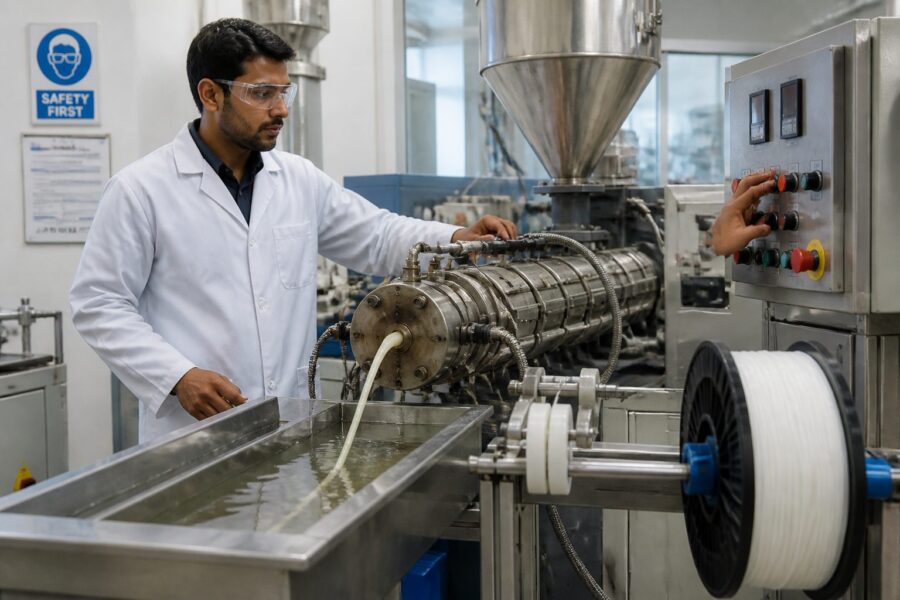
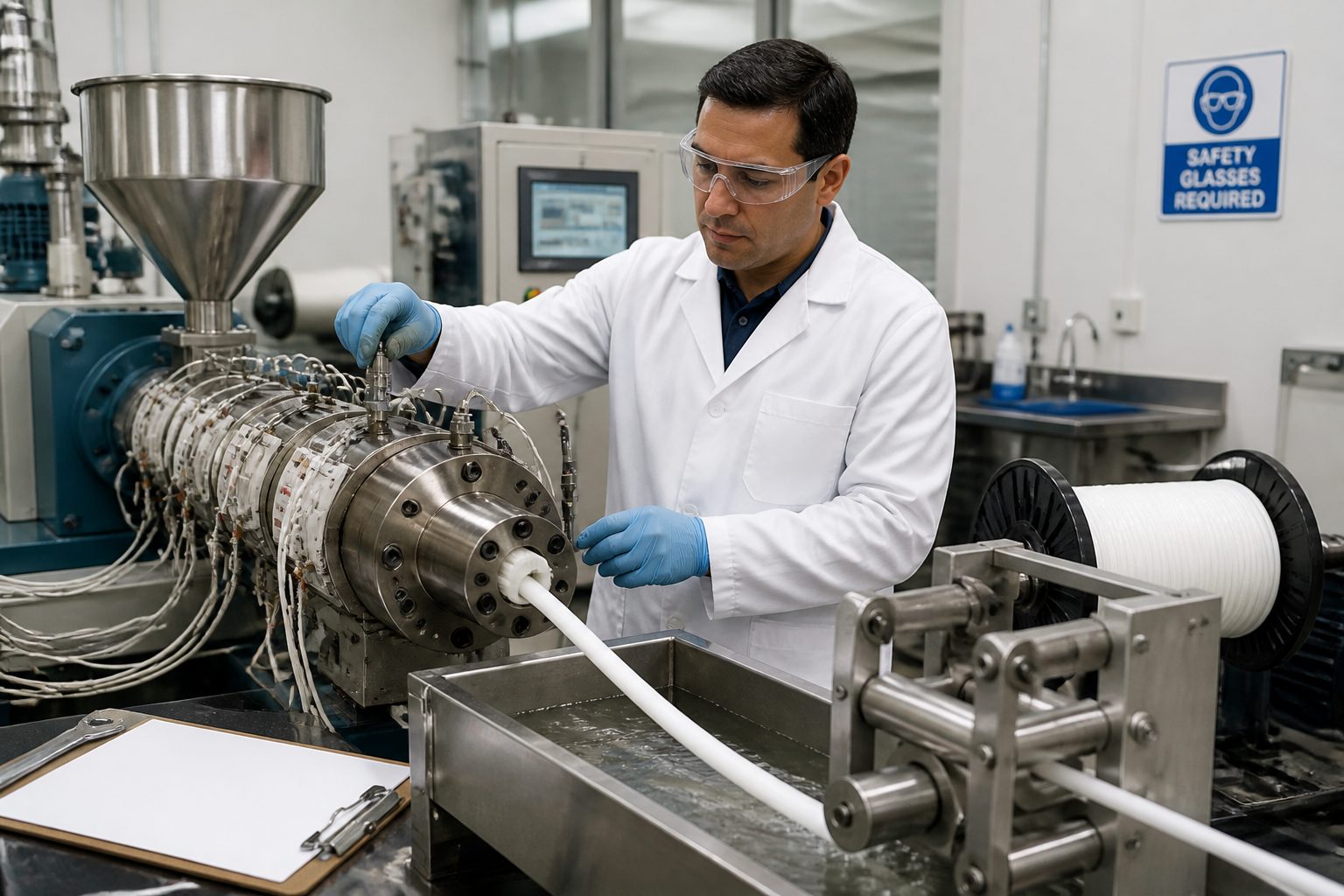
The process begins with plastic pellets or granules being fed into an extruder, a machine containing a rotating screw within a heated barrel. As the screw turns, it conveys the plastic forward, while the heat from the barrel melts the polymer.
The molten plastic is then forced through a die, a specially shaped opening that determines the final profile of the extruded product. After exiting the die, the plastic is cooled and solidified, maintaining the desired shape.
The plastic extrusion process is used to create a wide range of products, including pipes, tubing, films, sheets, profiles, and coatings. It is a versatile method that allows for the production of complex shapes with consistent dimensions and properties.
In essence, polymer extrusion transforms solid plastic feedstock into a continuous, shaped product. This continuous nature makes it ideal for high-volume production runs.

The process allows for a high degree of control over the final product’s dimensions and properties. This is achieved through careful management of temperature, pressure, and screw speed.
Different polymers can be used in the extrusion process, each offering unique characteristics. The choice of polymer depends on the desired properties of the final product, such as strength, flexibility, and chemical resistance.
The versatility of polymer extrusion extends to the complexity of the shapes that can be produced. From simple circular pipes to intricate profiles with multiple internal channels, the possibilities are vast.
Furthermore, the process is relatively efficient in terms of material usage and energy consumption. This makes it a cost-effective manufacturing method for many applications.
The continuous nature of the process also lends itself well to automation. This can further reduce costs and improve production rates.
Polymer extrusion is a fundamental process that underpins many aspects of modern life. Its impact is felt across industries and in countless everyday products.
Understanding the fundamentals of this process is crucial for anyone involved in the design, manufacturing, or application of plastic products.
Components of an Extrusion System
An extrusion system is more than just a single machine; it’s a carefully integrated assembly of components working together. Each part plays a crucial role in ensuring the process runs smoothly and the final product meets the required specifications.
Let’s take a closer look at the key components that make up a typical extrusion system. Understanding the function of each component is essential for optimizing the extrusion process and troubleshooting any potential issues.
| Component | Function | Key Considerations |
|---|---|---|
| Hopper | Holds and feeds raw material into the extruder | Capacity, material compatibility, flow rate |
| Extruder Screw | Conveys, melts, and mixes the plastic | Screw design, L/D ratio, material of construction |
| Heated Barrel | Provides heat to melt the plastic | Temperature control, heating zones, insulation |
| Die | Shapes the molten plastic into the desired profile | Die design, material selection, surface finish |
| Cooling System | Solidifies the extruded product | Cooling method (air, water), temperature control, line speed |
| Puller/Haul-off | Pulls the extruded product at a constant rate | Traction, speed control, alignment |
| Winder/Cutter | Winds the extruded product onto a roll or cuts it to length | Tension control, cutting accuracy, automation |
The hopper is the entry point for the raw material, typically plastic pellets or granules, ensuring a consistent supply to the extruder. The extruder screw is the heart of the system, responsible for conveying, melting, and mixing the plastic as it moves through the barrel.
The heated barrel provides the necessary heat to melt the plastic, often with multiple heating zones for precise temperature control. The die is the tool that shapes the molten plastic into the desired profile, requiring careful design and material selection for optimal performance.
The hopper’s design is critical for ensuring a consistent and uninterrupted flow of material into the extruder. Bridging or clogging in the hopper can lead to inconsistencies in the final product.
The extruder screw’s length-to-diameter (L/D) ratio is a key parameter that affects the melting and mixing efficiency. A higher L/D ratio generally provides better mixing and temperature uniformity.
The heated barrel’s temperature profile is carefully controlled to ensure optimal melting and prevent degradation of the plastic. Different heating zones allow for precise temperature adjustments along the barrel’s length.
The die’s design is crucial for achieving the desired shape and dimensions of the extruded product. Complex die designs may require specialized manufacturing techniques and materials.
The cooling system plays a vital role in solidifying the molten plastic and maintaining its shape. The cooling rate can affect the final product’s properties, such as its crystallinity and strength.
The puller or haul-off unit ensures that the extruded product is pulled at a constant rate, preventing stretching or sagging. Precise speed control is essential for maintaining consistent dimensions.
The winder or cutter is used to collect the extruded product in a convenient form. Tension control during winding is important to prevent deformation or damage to the product.
Each component of the extrusion system must be carefully selected and maintained to ensure optimal performance and product quality. Regular maintenance and inspections can help prevent costly downtime and ensure consistent production.
The Extrusion Process: Step-by-Step
Now that we’ve covered the basic principles and components, let’s walk through the polymer extrusion process step-by-step. This will give you a clear understanding of how the process works from start to finish.
The process can be broken down into several key stages, each with its own set of parameters and considerations. Understanding these steps is crucial for optimizing the process and achieving the desired product quality.
First, the raw plastic material, in the form of pellets or granules, is loaded into the hopper. From there, it flows into the extruder barrel, where it encounters the rotating screw.
As the screw rotates, it pushes the plastic forward through the heated barrel. The combination of heat and mechanical shear from the screw melts the plastic, transforming it into a viscous fluid.
The molten plastic is then forced through a screen pack, which filters out any contaminants and ensures a uniform melt flow. After the screen pack, the plastic enters the die, where it is shaped into the desired profile.
As the extruded product exits the die, it is cooled and solidified using air, water, or a combination of both. Finally, the cooled product is pulled through the system by a puller or haul-off unit and then wound onto a roll or cut to length.
The screw design plays a critical role in the melting and mixing process. Different screw designs are used for different polymers and applications.
The temperature profile of the heated barrel is carefully controlled to ensure optimal melting and prevent polymer degradation. Too high a temperature can lead to burning or discoloration.
The screen pack not only filters out contaminants but also helps to build back pressure, which improves mixing and melt uniformity. The mesh size of the screens is chosen based on the material and application.
The die design is a critical factor in determining the final shape and dimensions of the extruded product. The die must be carefully designed to account for die swell and other factors.
The cooling process is essential for solidifying the molten plastic and maintaining its shape. The cooling rate can affect the final product’s properties, such as its crystallinity and strength.
The puller or haul-off unit ensures that the extruded product is pulled at a constant rate, preventing stretching or sagging. Precise speed control is essential for maintaining consistent dimensions.
The winding or cutting process is the final step in the extrusion process. The extruded product is either wound onto a roll for later use or cut to a specific length.
Each step in the extrusion process is carefully controlled to ensure optimal performance and product quality. Regular monitoring and adjustments are necessary to maintain consistent production.
Types of Extrusion
The polymer extrusion process isn’t a one-size-fits-all solution, as different types of extrusion are used for various applications. Each type has its own set of advantages and limitations, making it suitable for specific products and materials.
Let’s explore some of the most common types of extrusion and their unique characteristics. Knowing the differences between these methods allows you to select the most appropriate technique for your particular needs.
One common type is profile extrusion, which is used to create continuous shapes with a constant cross-section. Think of products like pipes, tubing, window frames, and decorative trim.
Sheet extrusion is another important type, used to produce thin, flat sheets of plastic. These sheets can then be used for thermoforming, packaging, or other applications.
Blown film extrusion is a specialized process for creating thin plastic films, commonly used for packaging and bags. In this process, a tube of molten plastic is extruded and then inflated with air, stretching it into a thin film.
Coextrusion is a more advanced technique that involves extruding two or more different materials simultaneously. This allows for the creation of multi-layered products with unique properties, such as barrier packaging with different layers providing moisture resistance and structural support.
Profile extrusion is a relatively simple and cost-effective method for producing a wide variety of shapes. The die design is critical for achieving the desired profile accuracy.
Sheet extrusion often involves a calendaring process to ensure uniform thickness and surface finish. The sheet can be further processed by thermoforming, cutting, or printing.
Blown film extrusion allows for the production of seamless films with excellent barrier properties. The film thickness is controlled by adjusting the air pressure and line speed.
Coextrusion is a versatile technique for creating multi-layered products with tailored properties. The different layers can be made of different materials or different grades of the same material.
Each type of extrusion has its own set of advantages and limitations. The choice of extrusion method depends on the specific product requirements and application.
Understanding the different types of extrusion is essential for selecting the most appropriate manufacturing process. This will ensure optimal performance and product quality.
The selection of the appropriate extrusion method also depends on the material being used. Some materials are better suited for certain extrusion methods than others.
The tooling and equipment required for each type of extrusion can vary significantly. This is an important consideration when selecting an extrusion method.
Common Extrusion Defects and Troubleshooting
Like any manufacturing process, polymer extrusion is not without its potential problems. Extrusion defects can arise from a variety of factors, including material issues, equipment malfunctions, and process variations.
Being able to identify and troubleshoot these defects is essential for maintaining product quality and minimizing downtime. Let’s examine some of the most common extrusion defects and how to address them.
- Die Swell: The extrudate expands after exiting the die
- Surface Roughness: The extrudate surface is not smooth
- Waviness: The extrudate has an uneven, wavy appearance
- Voids: Air pockets or bubbles are present in the extrudate
- Burn Marks: The extrudate shows signs of burning or degradation
- Inconsistent Dimensions: The extrudate dimensions vary along its length
Die swell, for example, occurs when the extrudate expands after exiting the die, often due to the elastic recovery of the polymer. Surface roughness can be caused by a variety of factors, including improper melt temperature, die imperfections, or material contamination.
Waviness, or an uneven surface, can result from inconsistent cooling or variations in the extrusion rate. Voids, or air pockets, can be caused by moisture in the material, insufficient back pressure, or improper screw design.
Die swell can be minimized by optimizing the die design and adjusting the processing parameters. Increasing the die land length can help reduce die swell.
Surface roughness can be improved by ensuring proper melt temperature, using a clean die, and filtering the material. Adjusting the screw speed and back pressure can also help.
Waviness can be corrected by ensuring consistent cooling and maintaining a stable extrusion rate. Adjusting the puller speed and cooling air flow can help.
Voids can be eliminated by drying the material, increasing the back pressure, and optimizing the screw design. Using a vacuum system to remove air from the melt can also help.
Burn marks can be prevented by ensuring proper temperature control and avoiding excessive shear. Reducing the screw speed and optimizing the heating profile can help.
Inconsistent dimensions can be caused by a variety of factors, including variations in material feed, temperature fluctuations, and puller speed inconsistencies. Monitoring and controlling these parameters is essential for maintaining dimensional accuracy.
Regular maintenance and inspections of the extrusion equipment can help prevent many of these defects. Proper training of operators is also crucial for identifying and addressing potential problems.
Applications of Polymer Extrusion
The polymer extrusion process is incredibly versatile, making it suitable for a wide range of applications across various industries. From construction to packaging to automotive, extruded plastic products are everywhere.
Let’s take a look at some of the most common applications of polymer extrusion and the specific products it creates. You might be surprised at just how many everyday items rely on this process.
In the construction industry, polymer extrusion is used to produce pipes, tubing, siding, window frames, and other building materials. These products offer durability, weather resistance, and ease of installation.
The packaging industry relies heavily on polymer extrusion for creating films, sheets, and containers for food, beverages, and other products. Extruded plastic packaging provides protection, barrier properties, and aesthetic appeal.
In the automotive industry, polymer extrusion is used to manufacture hoses, seals, weather stripping, and interior trim components. These extruded parts contribute to vehicle performance, safety, and comfort.
The medical industry utilizes polymer extrusion to produce tubing, catheters, and other disposable medical devices. Extruded medical products must meet stringent quality and safety standards.
Pipes and tubing are used for a variety of applications, including water distribution, drainage, and gas transportation. Different polymers are used depending on the application requirements.
Extruded siding provides a durable and low-maintenance alternative to traditional wood siding. It is available in a variety of colors and styles.
Window frames made from extruded plastic offer excellent insulation and weather resistance. They are also resistant to rot and insect damage.
Extruded films and sheets are used for a wide variety of packaging applications, including food packaging, shrink wrap, and blister packs. They provide protection from moisture, oxygen, and other contaminants.
Hoses and seals are critical components in automotive systems, providing fluid transfer and preventing leaks. They must be resistant to high temperatures and pressures.
Weather stripping made from extruded plastic helps to seal doors and windows, preventing drafts and reducing energy consumption. It also helps to reduce noise and dust infiltration.
Medical tubing is used for a variety of applications, including intravenous fluid delivery, blood transfusion, and surgical drainage. It must be biocompatible and resistant to sterilization.
Emerging Trends in Polymer Extrusion
The polymer extrusion industry is constantly evolving, with new technologies and trends emerging to improve efficiency, sustainability, and product performance. Staying up-to-date with these advancements is crucial for remaining competitive and meeting the changing demands of the market.
Let’s explore some of the most exciting emerging trends in polymer extrusion. These innovations are shaping the future of the industry and opening up new possibilities for product design and manufacturing.
One significant trend is the increasing use of recycled plastics in the extrusion process. As environmental concerns grow, manufacturers are seeking ways to reduce waste and promote a circular economy.
Another trend is the development of more sophisticated extrusion equipment with advanced control systems. These systems allow for tighter process control, improved product quality, and reduced waste.
The use of Industry 4.0 technologies, such as sensors, data analytics, and artificial intelligence, is also gaining traction in the extrusion industry. These technologies enable real-time monitoring, predictive maintenance, and process optimization.
Furthermore, there is growing interest in the development of new and innovative extrusion processes, such as additive extrusion, which combines extrusion with 3D printing techniques. This allows for the creation of complex, customized parts with unique properties.
The use of recycled plastics presents challenges in terms of material consistency and contamination. Advanced sorting and cleaning technologies are needed to ensure the quality of recycled materials.
Advanced control systems allow for precise temperature and pressure control, resulting in improved product quality and reduced waste. These systems can also be used to monitor and optimize energy consumption.
Industry 4.0 technologies enable real-time monitoring of the extrusion process, allowing for early detection of potential problems. Predictive maintenance can help prevent equipment failures and reduce downtime.
Additive extrusion offers the potential to create complex, customized parts with unique properties. This technology is still in its early stages of development, but it has the potential to revolutionize the extrusion industry.
Another emerging trend is the development of bio-based polymers for extrusion. These polymers are derived from renewable resources and offer a more sustainable alternative to traditional petroleum-based plastics.
The development of new and improved die designs is also an ongoing trend in the extrusion industry. These designs can improve product quality, reduce waste, and increase production rates.
The use of simulation software is becoming increasingly common in the extrusion industry. This software allows engineers to simulate the extrusion process and optimize the design of dies and screws.
Conclusion
The polymer extrusion process is a vital manufacturing technique that plays a critical role in producing a wide array of plastic products. From its basic principles to its various applications, understanding this process is essential for anyone involved in polymer science and engineering.
We’ve explored the different types of extrusion, the components of an extrusion system, common defects and troubleshooting techniques, and emerging trends in the industry. By grasping these concepts, you can gain a deeper appreciation for the complexities and possibilities of polymer extrusion.
As the industry continues to evolve, with new materials, technologies, and applications emerging, staying informed and adaptable is key. The future of polymer extrusion is bright, with opportunities for innovation and growth in sustainability, efficiency, and product performance.
So, whether you’re designing new products, optimizing manufacturing processes, or simply curious about how things are made, the polymer extrusion process offers a fascinating and rewarding field of study. Keep exploring, keep learning, and keep pushing the boundaries of what’s possible with polymer extrusion.
The knowledge gained from understanding polymer extrusion can be applied to a wide range of industries and applications. It provides a solid foundation for innovation and problem-solving in the field of polymer science and engineering.
The continuous advancements in materials, equipment, and processes make polymer extrusion a dynamic and exciting field to be involved in. There are always new challenges to overcome and new opportunities to explore.
By embracing new technologies and sustainable practices, the polymer extrusion industry can continue to play a vital role in shaping the future of manufacturing. It is a field with endless possibilities for innovation and growth.
The polymer extrusion process is a testament to human ingenuity and the power of engineering. It is a process that has transformed the way we live and work, and it will continue to do so for many years to come.