
Polymer permeability is a critical property that dictates the suitability of a material for various applications. It describes the rate at which gases, vapors, or liquids can pass through a polymeric material. Understanding and controlling this property is essential in industries ranging from packaging to biomedical engineering.
This article will explore the science behind polymer permeability, the factors influencing it, and the methods used to measure it. We will also discuss the importance of polymer permeability testing and how it impacts real-world applications.
Finally, we’ll examine techniques for modifying and controlling permeability to meet specific performance requirements. Let’s begin by defining what we mean by polymer permeability.
Understanding Polymer Permeability
Polymer permeability is defined as the measure of how easily a gas or liquid can penetrate and diffuse through a polymer matrix. It is a complex phenomenon governed by the interplay of several molecular-level processes. These include sorption, diffusion, and desorption.
Sorption is the process by which the permeant (the gas or liquid) dissolves into the polymer at the surface. Diffusion is the movement of the permeant molecules through the polymer bulk, driven by a concentration gradient. Desorption is the release of the permeant from the polymer surface on the opposite side.
The permeability coefficient (P) quantifies the overall permeability of a polymer. It is related to the diffusion coefficient (D) and the solubility coefficient (S) by the equation: P = D x S. This equation highlights the importance of both diffusion and solubility in determining the overall permeability.
A high permeability coefficient indicates that the permeant can easily pass through the polymer, while a low coefficient indicates a strong barrier. The units for permeability coefficients vary depending on the permeant and the units used for pressure and thickness.
The solubility coefficient (S) represents the concentration of the permeant in the polymer at a given pressure. It is a measure of how well the permeant dissolves into the polymer. The diffusion coefficient (D) represents the rate at which the permeant moves through the polymer matrix.
The overall permeability is therefore a combination of how well the permeant dissolves in the polymer and how quickly it moves through the polymer. Understanding these individual components is crucial for designing polymers with specific permeability characteristics. Different polymers will have different solubility and diffusion coefficients for the same permeant.
The permeability of a polymer is also affected by the morphology of the polymer. Crystalline polymers tend to have lower permeability than amorphous polymers. This is because the crystalline regions are more densely packed and less permeable to gases and liquids.
The orientation of the polymer chains can also affect permeability. Oriented polymers, where the polymer chains are aligned in a specific direction, can exhibit different permeability properties depending on the direction of permeation. Therefore, both the chemical structure and the physical morphology of the polymer play a crucial role in determining its permeability.
Factors Affecting Polymer Permeability
Several factors influence the permeability of polymers, and understanding these factors is crucial for material selection and design. The chemical structure of the polymer plays a significant role. Polymers with flexible backbones and weak intermolecular forces tend to have higher permeability.
For example, polymers like silicone rubber are known for their high gas permeability due to their flexible siloxane chains. Conversely, polymers with rigid backbones and strong intermolecular forces, such as aromatic polyamides, exhibit lower permeability. The size and shape of the permeant molecule are also important.
Smaller molecules generally diffuse more easily through the polymer matrix than larger ones. The interaction between the permeant and the polymer also affects permeability. If the permeant has a strong affinity for the polymer, it will dissolve more readily, increasing the solubility coefficient and thus the permeability.
Temperature and pressure also affect polymer permeability. Higher temperatures generally increase permeability by increasing both the diffusion coefficient and the solubility coefficient. Higher pressures can also increase permeability, especially for gases, by increasing the concentration of the permeant at the polymer surface.
The presence of plasticizers in the polymer can also significantly increase permeability. Plasticizers are additives that increase the flexibility and reduce the glass transition temperature of the polymer. This increased flexibility allows permeant molecules to move more easily through the polymer matrix.
The degree of cross-linking in the polymer also affects permeability. Higher cross-linking density reduces permeability by restricting the movement of polymer chains and creating a tighter network. The degree of crystallinity also plays a crucial role.
Highly crystalline polymers tend to have lower permeability due to the densely packed structure of the crystalline regions. The presence of defects or voids in the polymer matrix can also increase permeability. These defects provide pathways for permeant molecules to bypass the polymer chains.
The aging of the polymer can also affect permeability. Over time, polymers can undergo degradation, leading to changes in their chemical structure and physical properties, which can affect permeability. Exposure to UV radiation, heat, or chemicals can accelerate this degradation process.
Experimental Techniques for Measuring Permeability
Several experimental techniques are available for measuring polymer permeability, each with its own advantages and limitations. The choice of technique depends on the type of permeant (gas or liquid), the desired accuracy, and the available resources. Let’s explore some common techniques.
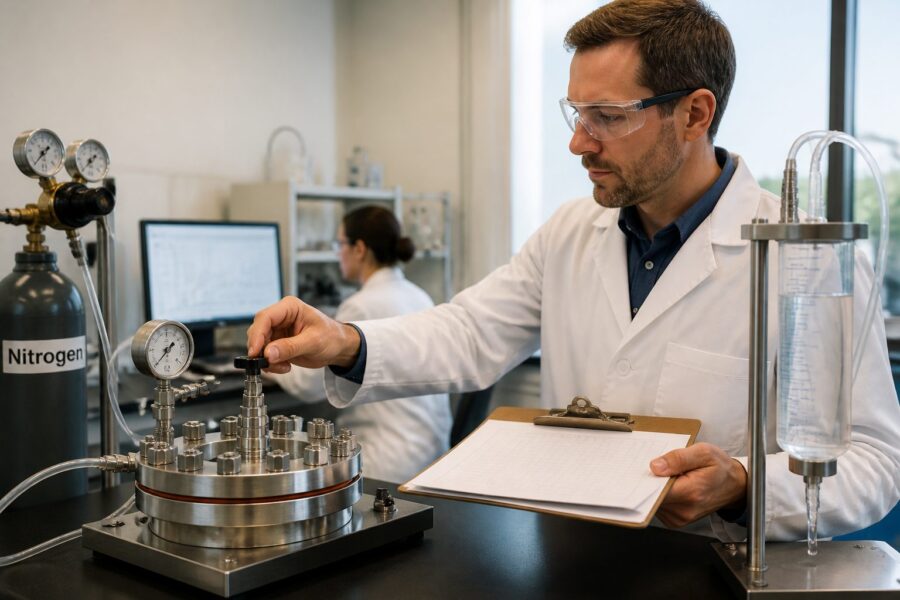
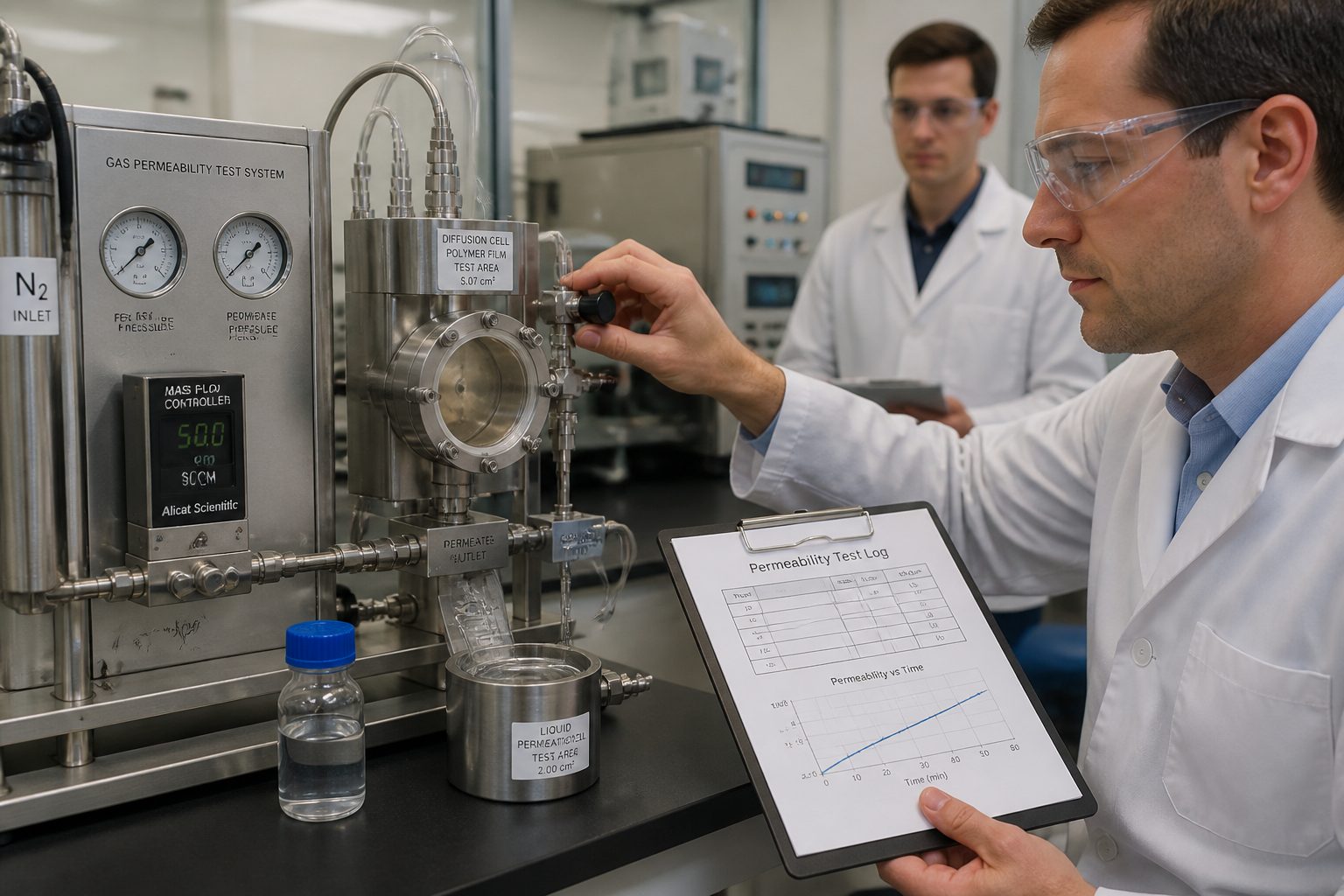
Gas permeability testing is often performed using a constant-volume/variable-pressure method or a variable-volume/constant-pressure method. Liquid permeability is typically measured using gravimetric methods or specialized diffusion cells. Now here’s a table describing a few different methods.
| Technique | Permeant | Principle | Advantages | Limitations |
|---|---|---|---|---|
| Constant-Volume/Variable-Pressure | Gas | Measure pressure increase in a closed volume | Simple, inexpensive | Limited to gases, requires careful calibration |
| Variable-Volume/Constant-Pressure | Gas | Measure volume change at constant pressure | Accurate, suitable for various gases | More complex setup, requires precise volume measurement |
| Gravimetric Method | Liquid | Measure weight gain of polymer film | Simple, direct measurement | Time-consuming, sensitive to environmental conditions |
| Diffusion Cell | Liquid | Measure permeant concentration in a receiving chamber | Suitable for low permeability liquids | Complex setup, requires sensitive concentration measurement |
In the constant-volume/variable-pressure method, a known volume of gas is introduced on one side of the polymer film, and the pressure increase on the other side is measured over time. This pressure increase is directly related to the permeability of the polymer. The variable-volume/constant-pressure method involves maintaining a constant pressure on one side of the polymer film and measuring the volume of gas that permeates through the film over time.
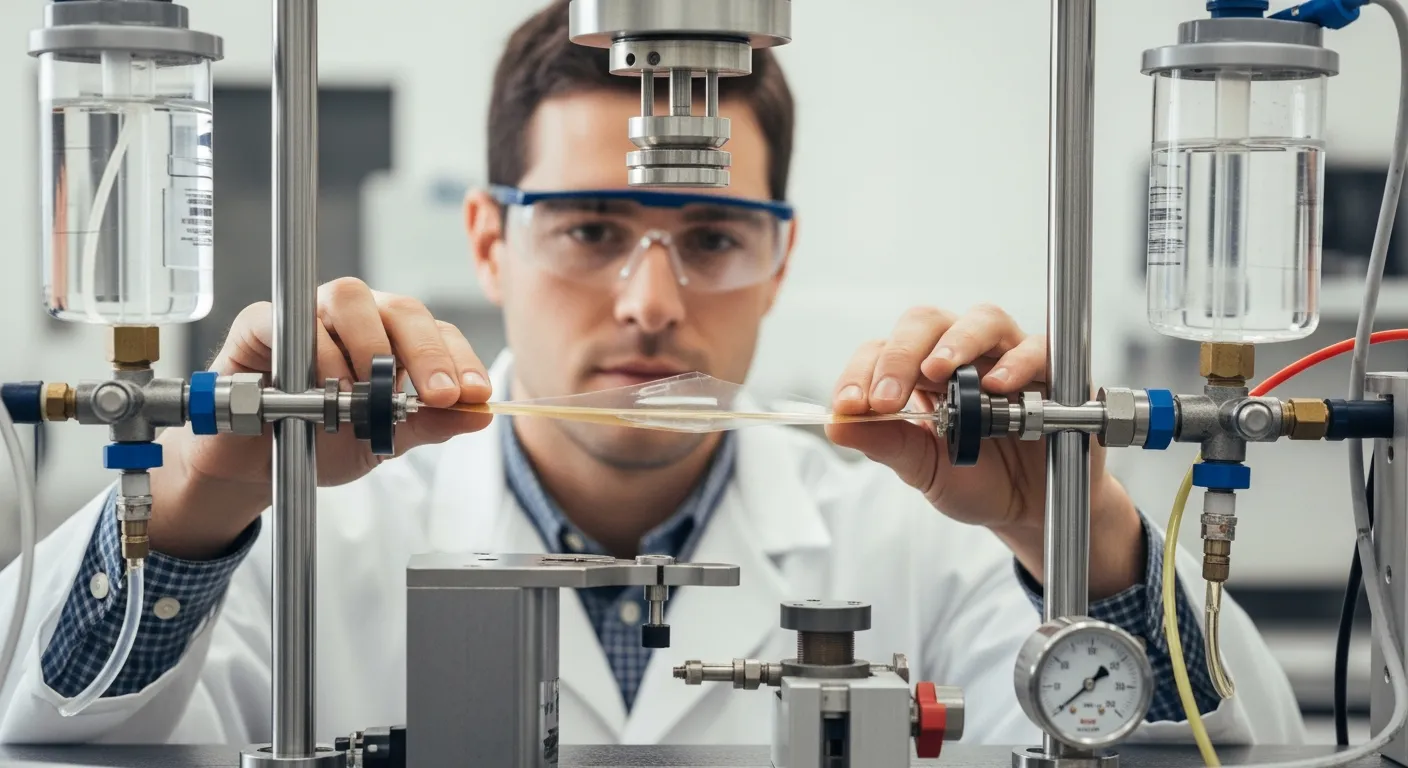
Gravimetric methods for liquid permeability involve placing a polymer film in contact with a liquid and measuring the weight gain of the film as the liquid permeates through it. This method is relatively simple but can be time-consuming, especially for polymers with low permeability. Diffusion cells for liquid permeability consist of two chambers separated by the polymer film.
One chamber is filled with the liquid, and the concentration of the liquid in the other chamber is measured over time. This method is more accurate than gravimetric methods but requires more sophisticated equipment. The selection of a suitable method depends on the specific application and the required accuracy of the permeability measurement.
For gas permeability measurements, it is important to control the temperature and humidity of the testing environment. Temperature can significantly affect the permeability of polymers, and humidity can affect the solubility of gases in the polymer. For liquid permeability measurements, it is important to ensure that the liquid is pure and free of contaminants.
Applications Where Permeability is Important
Polymer permeability plays a crucial role in a wide range of applications across various industries. In the food packaging industry, controlling permeability is essential for maintaining product freshness and extending shelf life. Packaging materials with low oxygen permeability prevent spoilage by limiting oxidation.
In the pharmaceutical industry, permeability is critical for controlled drug release and transdermal drug delivery systems. Polymers used in these applications must have specific permeability characteristics to ensure the drug is released at the desired rate. Biomedical implants also require careful consideration of permeability.
For example, membranes used in artificial organs must allow the transport of nutrients and waste products while preventing the passage of harmful substances. In the automotive industry, fuel lines and seals require low fuel permeability to prevent evaporative emissions. High fuel permeability can lead to increased emissions and reduced fuel efficiency.
Protective clothing and gear rely on selective permeability, allowing moisture to escape while preventing external liquids from penetrating. Polymer permeability testing is used in all these areas.
In the agricultural sector, polymer films are used for greenhouse covers and soil mulching. The permeability of these films to water vapor and gases affects the growth of crops. Low water vapor permeability can lead to excessive humidity inside the greenhouse, while high oxygen permeability can promote root rot.
In the construction industry, polymers are used in roofing membranes and waterproofing materials. Low water permeability is essential to prevent water damage to buildings. In the electronics industry, polymers are used as encapsulants for electronic components.
The permeability of these encapsulants to moisture and gases can affect the reliability of the electronic components. In the energy sector, polymers are used in fuel cells and batteries. The permeability of the polymer membranes used in these devices affects their efficiency and performance.
The selection of polymers for specific applications requires careful consideration of their permeability properties. Polymer permeability testing is essential for ensuring that the selected polymer meets the performance requirements of the application. The environmental conditions in which the polymer will be used must also be considered.
Controlling Polymer Permeability
Controlling polymer permeability is essential for tailoring materials to specific applications. There are several strategies to modify and control the permeability of polymers. One common approach is to alter the chemical structure of the polymer.
Introducing bulky side groups or increasing the crystallinity of the polymer can reduce permeability. Blending polymers with different permeability characteristics is another effective method. For example, blending a high-permeability polymer with a low-permeability polymer can create a material with intermediate permeability.
Adding fillers or reinforcing agents to the polymer matrix can also modify permeability. Fillers can create a tortuous path for the permeant, reducing the effective diffusion coefficient. Surface treatments, such as coating the polymer with a thin layer of a low-permeability material, can provide an additional barrier.
Cross-linking the polymer chains can also decrease permeability by reducing the mobility of the polymer segments. Understanding these control methods allows for the design of materials with optimized permeability properties.
Another method for controlling polymer permeability is to use multilayer films. These films consist of multiple layers of different polymers, each with its own permeability characteristics. By carefully selecting the polymers and the thickness of each layer, it is possible to create a film with specific permeability properties.
The use of nanocomposites is also an emerging technique for controlling polymer permeability. Nanocomposites consist of a polymer matrix reinforced with nanoscale fillers, such as clay nanoparticles or carbon nanotubes. These nanoscale fillers can significantly reduce permeability by creating a tortuous path for the permeant molecules and increasing the barrier properties of the polymer.
The orientation of the polymer chains can also be controlled to modify permeability. By stretching or drawing the polymer film, the polymer chains can be aligned in a specific direction, which can affect the permeability in different directions. Surface modification techniques, such as plasma treatment or chemical grafting, can also be used to alter the surface properties of the polymer and control permeability.
The choice of the appropriate method for controlling polymer permeability depends on the specific application and the desired permeability properties. It is important to consider the cost, ease of processing, and long-term stability of the modified polymer. Polymer permeability testing is essential to verify the effectiveness of the control method.
The Role of Fillers in Permeability
Fillers play a significant role in modifying the permeability of polymers. By incorporating fillers into a polymer matrix, the permeability can be reduced due to the creation of a more tortuous path for the permeant molecules. This is because the filler particles act as barriers, increasing the effective path length that the permeant must travel.
The shape, size, and concentration of the fillers all influence the extent of permeability reduction. Here are some ways to control permeability.
- Increase filler concentration
- Use larger filler particles
- Employ fillers with high aspect ratio
- Ensure uniform filler dispersion
- Select fillers with low permeability
The type of filler also plays a crucial role in determining the permeability of the composite material. Inorganic fillers, such as silica, alumina, and calcium carbonate, are commonly used to reduce permeability. These fillers are generally impermeable to gases and liquids, providing an effective barrier to permeation.
The aspect ratio of the filler, which is the ratio of its length to its thickness, is an important factor in determining its effectiveness in reducing permeability. Fillers with high aspect ratios, such as clay nanoparticles and carbon nanotubes, are particularly effective in creating a tortuous path for permeant molecules. These fillers tend to align themselves in the polymer matrix, creating a layered structure that significantly reduces permeability.
The dispersion of the filler in the polymer matrix is also critical. Poor dispersion can lead to agglomeration of the filler particles, which can create pathways for permeant molecules and reduce the effectiveness of the filler in reducing permeability. Surface treatment of the filler can improve its dispersion in the polymer matrix and enhance its ability to reduce permeability.
The interaction between the filler and the polymer matrix also affects permeability. Strong interactions between the filler and the polymer can improve the adhesion between the two phases and reduce the formation of voids at the interface, which can reduce permeability. The addition of compatibilizers can improve the interaction between the filler and the polymer matrix.
Gas Permeability in Polymers
Gas permeability in polymers is a crucial property in many applications, particularly in packaging and protective coatings. Different gases exhibit varying degrees of permeability depending on their molecular size and interaction with the polymer. Oxygen permeability is a primary concern in food packaging.
Reducing oxygen permeability helps to prevent oxidation and spoilage, extending the shelf life of the product. Carbon dioxide permeability is important in beverage packaging, where maintaining carbonation is essential. Nitrogen permeability is relevant in modified atmosphere packaging, where nitrogen is used to displace oxygen and extend shelf life.
Water vapor permeability is a critical factor in many packaging and coating applications. High water vapor permeability can lead to moisture uptake, causing degradation of the packaged product or coating. Polymers with low gas permeability are essential for applications requiring gas barrier properties.
Examples include fuel tanks, gas pipelines, and inflatable structures. Polymer permeability testing is crucial for selecting the right material.
The gas permeability of a polymer is influenced by several factors, including the size and shape of the gas molecules, the chemical structure of the polymer, and the temperature. Smaller gas molecules, such as helium and hydrogen, tend to permeate more readily through polymers than larger gas molecules, such as oxygen and nitrogen.
Polymers with flexible backbones and weak intermolecular forces tend to have higher gas permeability than polymers with rigid backbones and strong intermolecular forces. Higher temperatures generally increase the gas permeability of polymers by increasing the diffusion rate of the gas molecules. The partial pressure of the gas also affects permeability.
The solubility of the gas in the polymer is another important factor. Gases that are highly soluble in the polymer will exhibit higher permeability. The presence of fillers or additives in the polymer can also affect gas permeability. Fillers can create a tortuous path for the gas molecules, reducing the effective diffusion coefficient.
The degree of crystallinity of the polymer also plays a role. Crystalline polymers tend to have lower gas permeability than amorphous polymers due to the densely packed structure of the crystalline regions. The orientation of the polymer chains can also affect gas permeability. Oriented polymers can exhibit different permeability properties depending on the direction of permeation.
Liquid Permeability in Polymers
Liquid permeability in polymers is a key consideration in applications involving contact with liquids, such as chemical storage, protective clothing, and biomedical devices. The permeability of polymers to liquids depends on the chemical nature of the liquid and the polymer. Polar liquids, such as water and alcohols, tend to permeate more readily through polar polymers.
Non-polar liquids, such as hydrocarbons, tend to permeate more readily through non-polar polymers. Chemical resistance is closely related to liquid permeability. Polymers with low permeability to specific chemicals are more resistant to degradation and swelling.
In applications such as fuel lines and chemical storage tanks, it is essential to select polymers with low permeability to the specific liquid being handled. In biomedical applications, the permeability of polymers to biological fluids is an important consideration for biocompatibility. The diffusion coefficient of liquids through polymers is influenced by temperature.
Higher temperatures generally increase the diffusion rate, leading to higher permeability. The solubility of liquids in polymers also affects permeability. Liquids that are highly soluble in the polymer will exhibit higher permeability.
The size and shape of the liquid molecules also influence permeability. Smaller molecules generally diffuse more easily through the polymer matrix than larger ones. The presence of cross-linking in the polymer can reduce liquid permeability by restricting the movement of polymer chains.
The degree of crystallinity of the polymer also affects liquid permeability. Crystalline polymers tend to have lower liquid permeability than amorphous polymers due to the densely packed structure of the crystalline regions. The presence of fillers or additives in the polymer can also affect liquid permeability.
The interaction between the liquid and the polymer matrix is also important. Strong interactions between the liquid and the polymer can lead to swelling of the polymer, which can increase permeability. The aging of the polymer can also affect liquid permeability. Over time, polymers can undergo degradation, leading to changes in their chemical structure and physical properties, which can affect permeability.
Advanced Techniques in Permeability Measurement
Beyond the traditional methods, advanced techniques are emerging to measure polymer permeability with greater precision and efficiency. These techniques often involve sophisticated instrumentation and data analysis. One such technique is time-lag permeation, which involves measuring the time it takes for the permeant to reach a steady-state concentration on the downstream side of the polymer film.
This method provides a more accurate determination of the diffusion coefficient and solubility coefficient. Another advanced technique is gas chromatography-mass spectrometry (GC-MS), which can be used to identify and quantify the permeating species. This is particularly useful for complex mixtures of gases or liquids.
Quartz crystal microbalance (QCM) is a highly sensitive technique that measures the mass change of a polymer film due to permeation. This method can be used to measure very low permeability values. Positron annihilation lifetime spectroscopy (PALS) provides information about the free volume within the polymer matrix, which is related to permeability.
These advanced techniques offer valuable insights into the permeation process and can be used to develop more effective barrier materials. Polymer permeability testing continues to evolve.
Another advanced technique is the use of molecular dynamics simulations. These simulations can be used to model the permeation process at the molecular level, providing insights into the mechanisms of permeation and the factors that affect permeability. These simulations can also be used to predict the permeability of new polymers before they are synthesized.
Atomic force microscopy (AFM) can be used to study the surface morphology of polymer films and to identify defects that can affect permeability. AFM can also be used to measure the adhesion between different layers in multilayer films, which can affect their barrier properties. Ellipsometry is a technique that measures the thickness and refractive index of thin films.
Ellipsometry can be used to monitor the swelling of polymer films in contact with liquids, which can provide information about their permeability. Inverse gas chromatography (IGC) is a technique that measures the interaction between a gas and a polymer surface. IGC can be used to determine the solubility of gases in polymers and to study the effects of temperature and pressure on gas solubility.
These advanced techniques provide a more comprehensive understanding of the permeation process and can be used to develop more effective methods for controlling polymer permeability. The combination of experimental measurements and computer simulations is a powerful approach for designing new materials with optimized permeability properties. Polymer permeability testing benefits from these new approaches.
Conclusion
Polymer permeability is a complex and critical property that affects the performance of polymeric materials in a wide range of applications. Understanding the factors that influence permeability and the methods used to measure it is essential for material selection and design. Polymer permeability testing helps ensure materials meet requirements.
By controlling permeability through techniques such as polymer blending, filler addition, and surface treatment, it is possible to tailor materials to specific needs. Continued research and development in this area will lead to even more advanced materials with optimized permeability properties.
The future of polymer permeability research will likely focus on the development of new materials with enhanced barrier properties. This will involve the use of advanced techniques such as nanotechnology and molecular modeling. The development of sustainable and biodegradable polymers with controlled permeability is also an important area of research.
The use of polymers in new and emerging applications, such as flexible electronics and energy storage devices, will also drive innovation in polymer permeability research. The development of more accurate and efficient methods for measuring polymer permeability will also be crucial for advancing the field. Polymer permeability testing will remain vital.