
Polymers play an increasingly important role in modern technology, especially in electrical applications. Understanding their behavior under electric fields is essential for designing efficient and reliable devices. This article will explore the fundamentals of polymer dielectric properties, the factors that influence them, and their applications in electrical insulation.
We’ll also discuss methods for measuring these properties and strategies for enhancing them. Finally, we will examine the role of fillers in modifying the dielectric response of polymers.
By understanding the nuances of polymer dielectric properties, engineers and scientists can unlock new possibilities in electrical and electronic systems. The goal is to provide a comprehensive overview of the topic, useful for both newcomers and experienced professionals in the field.
Fundamentals of Polymer Dielectric Properties
Dielectric properties describe a material’s ability to store electrical energy when subjected to an electric field. This behavior is crucial in applications ranging from capacitors to high-voltage insulation.
Two key parameters define these properties: the dielectric constant (ε’) and the dielectric loss (ε”). The dielectric constant, also known as relative permittivity, indicates how much electric energy a material can store compared to a vacuum.
A higher dielectric constant means the material can store more energy. The dielectric loss, on the other hand, represents the energy dissipated as heat within the material when subjected to an alternating electric field.
In polymers, these properties arise from the polarization of the material’s molecules. When an electric field is applied, the polymer’s molecules align themselves with the field, storing energy in the process.
This polarization can occur through several mechanisms, including electronic, atomic, and dipolar polarization. Each mechanism contributes differently to the overall dielectric response, depending on the frequency of the applied field and the polymer’s molecular structure.
Electronic polarization is the displacement of electrons relative to the nucleus of an atom under an electric field. This type of polarization is very fast and occurs at high frequencies.
Atomic polarization involves the displacement of atoms within a molecule. It is slower than electronic polarization and occurs at lower frequencies.
Dipolar polarization arises from the orientation of permanent dipoles within the polymer molecule. This is the slowest type of polarization and is highly temperature-dependent.
Understanding these different polarization mechanisms is crucial for tailoring the dielectric properties of polymers for specific applications. By controlling the molecular structure and morphology of the polymer, it is possible to optimize its dielectric response.
For example, polymers with a high density of polar groups, such as carbonyl or hydroxyl groups, will exhibit a higher dielectric constant due to increased dipolar polarization. The arrangement of these groups along the polymer chain also influences the overall dielectric behavior.
Factors Affecting Dielectric Constant and Loss
Several factors influence the dielectric constant and loss of polymers. These factors can be broadly categorized into intrinsic properties of the polymer and external conditions.
The chemical structure of the polymer plays a significant role. Polymers with polar groups, such as carbonyl (C=O) or hydroxyl (O-H) groups, tend to have higher dielectric constants due to their ability to align with the electric field.
The arrangement of polymer chains, or morphology, also affects dielectric properties. Crystalline regions, where polymer chains are highly ordered, generally have different dielectric properties than amorphous regions, where the chains are disordered.
External conditions such as temperature and frequency of the applied electric field also play crucial roles. As temperature increases, the mobility of polymer chains increases, which can affect their ability to align with the electric field.
The frequency of the applied field determines which polarization mechanisms can contribute to the dielectric response. At high frequencies, only electronic and atomic polarization may be able to keep up with the field, while at lower frequencies, dipolar polarization can also contribute.
Specifically, the presence and concentration of polar groups directly impact the dielectric constant. A higher concentration of these groups generally leads to a higher dielectric constant, but also potentially higher dielectric loss if the dipoles cannot respond quickly enough to the alternating field.
Polymer morphology, including crystallinity and orientation, influences the packing density and chain mobility. Highly crystalline polymers may exhibit lower dielectric constants due to restricted chain movement, while amorphous regions allow for greater polarization.
Temperature affects the polymer’s free volume and chain mobility, altering the dielectric constant and loss. Higher temperatures usually increase the dielectric constant as chains become more mobile, but can also increase dielectric loss due to increased relaxation processes.
Frequency dependence arises because different polarization mechanisms operate at different frequencies. Electronic polarization is effective at very high frequencies, while ionic and dipolar polarization are more significant at lower frequencies.
Moisture content can also significantly influence dielectric properties. Water molecules are highly polar and can increase both the dielectric constant and loss of the polymer. Therefore, controlling the moisture content is often crucial in dielectric applications.
Measuring Dielectric Properties: Experimental Methods
Accurate measurement of dielectric properties is essential for characterizing polymers and predicting their performance in electrical applications. Several experimental techniques are available for this purpose.
These techniques vary in terms of frequency range, temperature control, and sample preparation requirements. Each method offers unique advantages and limitations, making it crucial to select the most appropriate technique for a given material and application.
| Technique | Frequency Range | Advantages | Limitations |
|---|---|---|---|
| Capacitance Measurement | Low to Medium | Simple, inexpensive | Limited frequency range |
| Impedance Spectroscopy | Broad | Versatile, detailed analysis | Complex data interpretation |
| Resonant Cavity Perturbation | High | High accuracy at specific frequencies | Requires specialized equipment |
| Time Domain Reflectometry (TDR) | Broadband | Fast, non-destructive | Lower accuracy compared to resonant methods |
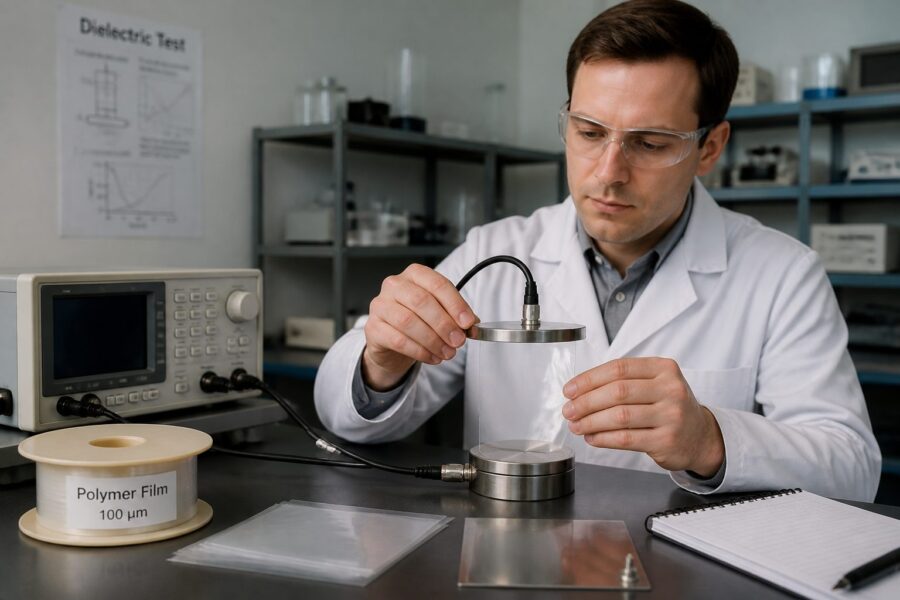
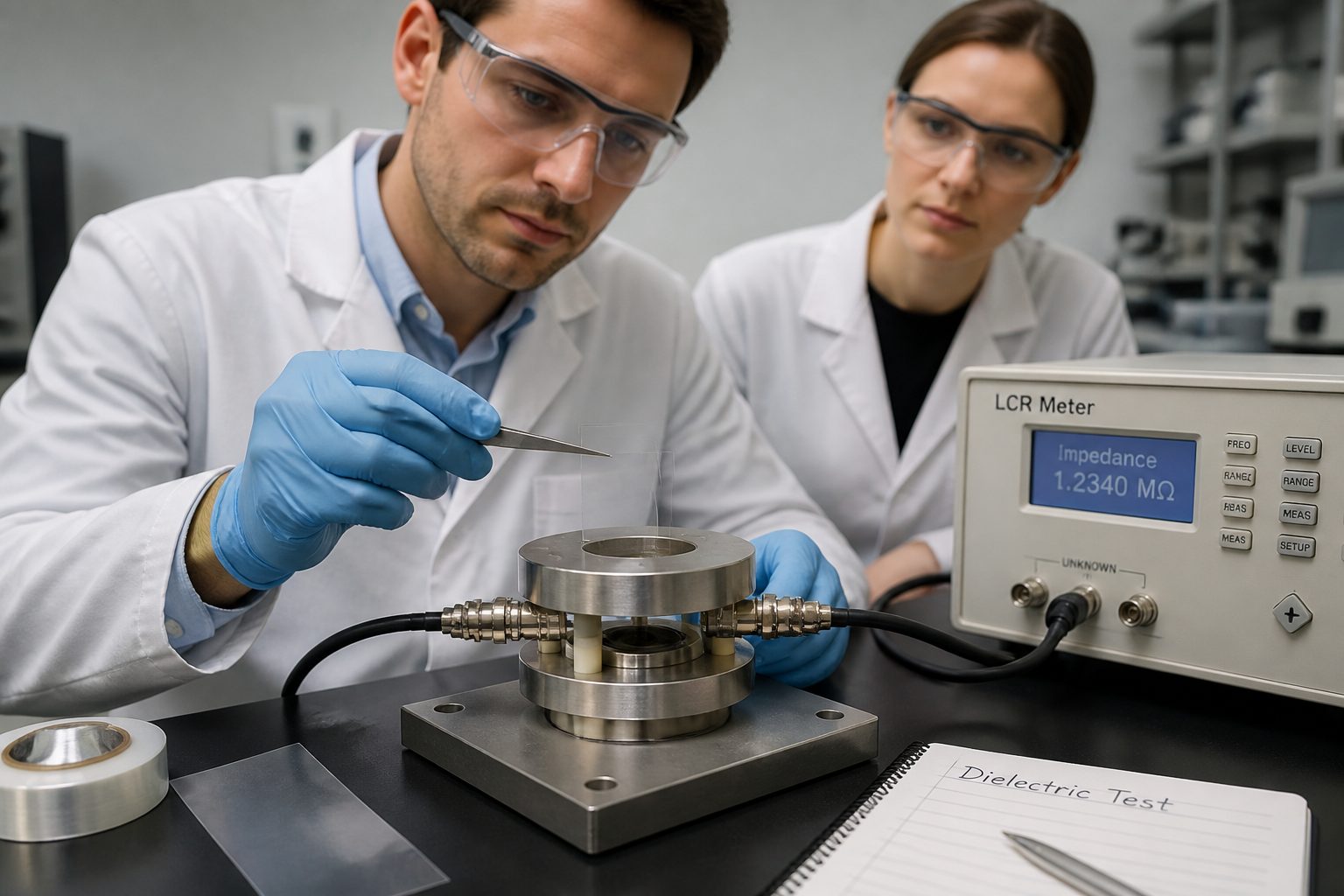
Capacitance measurement involves determining the capacitance of a sample placed between two electrodes. This method is relatively simple and inexpensive but is limited to lower frequencies.
Impedance spectroscopy measures the impedance of a material over a wide range of frequencies. This technique provides detailed information about the dielectric constant and loss as a function of frequency.
Resonant cavity perturbation is a highly accurate method for measuring dielectric properties at specific frequencies. It involves placing the sample in a resonant cavity and measuring the change in resonant frequency and quality factor.
Time domain reflectometry (TDR) is a broadband technique that measures the reflection of a pulse of electromagnetic energy from the sample. This method is fast and non-destructive but offers lower accuracy compared to resonant methods.
Sample preparation is critical for accurate dielectric measurements. The sample should be free of voids and defects, and the surfaces should be smooth and parallel.
Applications of Polymers in Electrical Insulation
Polymers are widely used as electrical insulators due to their high electrical resistance and ability to prevent current leakage. They are essential components in cables, wires, and electronic devices, ensuring safe and reliable operation.
The choice of polymer for a specific insulation application depends on several factors, including the operating voltage, temperature, and environmental conditions. Different polymers offer different levels of electrical strength, thermal stability, and chemical resistance.
Polyethylene (PE) and polyvinyl chloride (PVC) are commonly used for low-voltage applications, such as household wiring. These polymers are inexpensive, flexible, and provide adequate insulation for typical household voltages.
For high-voltage applications, such as power transmission cables, polymers with higher electrical strength and thermal stability are required. Cross-linked polyethylene (XLPE) and ethylene propylene rubber (EPR) are often used in these applications due to their superior performance under high electrical stress and elevated temperatures.
In electronic devices, polymers are used as insulators in capacitors, circuit boards, and integrated circuits. These applications require polymers with specific dielectric properties, such as high dielectric constant for capacitors and low dielectric loss for high-frequency circuits.
Beyond cables and wires, polymers serve as insulators in motor windings and transformer insulation. They are also found in switchgear and other high-voltage equipment.
The selection of a polymer for electrical insulation must consider the long-term performance under electrical stress. Factors such as partial discharge resistance and breakdown strength are crucial.
Increasingly, polymers are used in demanding environments, such as aerospace and automotive applications. These require materials with exceptional thermal and mechanical properties in addition to good electrical insulation.
The development of new polymer blends and composites is expanding the range of applications for polymeric insulators. These materials offer tailored properties to meet specific performance requirements.
Considerations such as flame retardancy and environmental impact are also becoming increasingly important in the selection of polymeric insulation materials. Sustainable and halogen-free options are gaining popularity.
Enhancing Polymer Dielectric Properties
In many applications, it is desirable to enhance the dielectric properties of polymers to meet specific performance requirements. Several strategies can be employed to achieve this, including chemical modification, blending, and the incorporation of fillers.
Chemical modification involves altering the polymer’s molecular structure to increase its polarity or improve its thermal stability. This can be achieved through techniques such as grafting, copolymerization, and cross-linking.
Blending involves mixing two or more polymers to create a material with improved properties. For example, blending a polymer with a high dielectric constant with one with good mechanical properties can result in a composite material with both desirable characteristics.
The incorporation of fillers, such as ceramic particles or carbon nanotubes, is another effective way to modify polymer dielectric properties. Fillers can increase the dielectric constant, improve thermal conductivity, and enhance mechanical strength.
However, the choice of filler and its concentration must be carefully considered to avoid increasing dielectric loss or compromising other desirable properties. The dispersion of the filler within the polymer matrix is also crucial for achieving optimal performance.
Grafting involves attaching polar groups to the polymer backbone, increasing the overall polarity and dielectric constant. This can be achieved by reacting the polymer with a monomer containing polar functional groups.
Copolymerization involves polymerizing two or more different monomers together. By selecting monomers with different dielectric properties, it is possible to tailor the dielectric constant and loss of the resulting copolymer.
Cross-linking involves creating chemical bonds between polymer chains. This can improve the thermal stability and mechanical strength of the polymer, as well as affect its dielectric properties.
When blending polymers, it is important to consider the compatibility of the different polymers. Incompatible polymers may phase separate, leading to poor mechanical properties and reduced dielectric performance.
Surface treatment of fillers can improve their dispersion within the polymer matrix and enhance their interaction with the polymer chains. This can lead to improved dielectric properties and mechanical strength.
The Role of Fillers in Dielectric Behavior
Fillers play a significant role in modifying the dielectric behavior of polymers. By incorporating fillers with specific dielectric properties, it is possible to tailor the overall performance of the composite material.
The type, size, shape, and concentration of the filler all influence the dielectric constant and loss of the composite. High-dielectric-constant ceramic fillers, such as barium titanate (BaTiO3) and calcium copper titanate (CCTO), can significantly increase the dielectric constant of the polymer matrix.
- Increase dielectric constant
- Improve thermal conductivity
- Enhance mechanical strength
- Reduce dielectric loss
- Tailor dielectric response
However, achieving a uniform dispersion of the filler within the polymer matrix is critical to avoid agglomeration and ensure optimal performance. Surface modification of the filler particles can improve their compatibility with the polymer and promote better dispersion.
The shape of the filler particles can also influence the dielectric properties. For example, high aspect ratio fillers, such as carbon nanotubes, can create a percolated network within the polymer matrix, leading to a significant increase in the dielectric constant.
The concentration of the filler is also an important factor. Increasing the filler concentration generally increases the dielectric constant, but beyond a certain point, it can lead to agglomeration and reduced mechanical properties.
The interface between the filler and the polymer matrix plays a crucial role in determining the overall dielectric behavior. A strong interface can promote better stress transfer and improve the mechanical properties of the composite.
The dielectric properties of the filler itself are also important. High-dielectric-constant fillers will generally lead to a higher dielectric constant for the composite, while low-dielectric-loss fillers will help to reduce the overall dielectric loss.
The processing method used to fabricate the composite can also affect the filler dispersion and orientation. Techniques such as melt blending and solution casting can be used to achieve different levels of filler dispersion.
Advanced Polymer Materials for Dielectric Applications
The demand for high-performance dielectric materials has driven the development of advanced polymer composites. These materials often incorporate novel fillers and sophisticated processing techniques to achieve exceptional dielectric properties.
One promising area of research involves the use of nanoparticles as fillers. Nanoparticles offer a high surface area to volume ratio, which can enhance their interaction with the polymer matrix and improve the overall dielectric performance.
For example, carbon nanotubes (CNTs) and graphene have been explored as fillers in polymer composites for various applications. These materials offer high electrical conductivity, mechanical strength, and thermal stability, making them attractive candidates for enhancing dielectric properties.
However, achieving a uniform dispersion of nanoparticles in the polymer matrix remains a significant challenge. Agglomeration of nanoparticles can lead to reduced performance and compromised mechanical properties.
Surface functionalization of nanoparticles can improve their compatibility with the polymer and promote better dispersion. This involves chemically modifying the surface of the nanoparticles to introduce functional groups that interact favorably with the polymer chains.
Metal-organic frameworks (MOFs) are another class of promising fillers for dielectric applications. MOFs are porous materials with high surface areas and tunable pore sizes, which can be used to encapsulate guest molecules and enhance the dielectric constant of the composite.
Two-dimensional (2D) materials, such as MXenes and transition metal dichalcogenides (TMDs), are also being explored as fillers in polymer composites. These materials offer high electrical conductivity, mechanical strength, and flexibility, making them attractive candidates for flexible dielectric devices.
Advanced processing techniques, such as electrospinning and layer-by-layer assembly, can be used to fabricate polymer composites with controlled filler orientation and distribution. These techniques offer the potential to create materials with tailored dielectric properties for specific applications.
Self-healing polymers are also being developed for dielectric applications. These materials can repair damage caused by electrical breakdown or mechanical stress, extending the lifetime of the device.
The development of new polymer architectures, such as hyperbranched polymers and dendrimers, is also opening up new possibilities for dielectric materials. These polymers offer unique properties, such as high branching density and controlled molecular weight, which can be used to tailor their dielectric behavior.
Dielectric Breakdown and Aging in Polymers
Dielectric breakdown refers to the catastrophic failure of an insulating material under high electric fields. This phenomenon occurs when the electric field exceeds the material’s dielectric strength, leading to a sudden increase in current and irreversible damage.
Understanding the mechanisms of dielectric breakdown is crucial for designing reliable electrical insulation systems. Several factors can contribute to dielectric breakdown in polymers, including the presence of defects, impurities, and voids.
Aging, or the gradual degradation of polymer properties over time, can also affect dielectric performance. Environmental factors such as temperature, humidity, and exposure to ultraviolet (UV) radiation can accelerate the aging process.
Thermal aging can lead to chain scission, oxidation, and cross-linking, altering the polymer’s molecular structure and reducing its dielectric strength. UV radiation can also cause chain scission and discoloration, affecting the polymer’s electrical and mechanical properties.
To mitigate the effects of aging, stabilizers and antioxidants are often added to polymer formulations. These additives can protect the polymer from degradation and extend its service life.
The presence of impurities, such as ionic contaminants, can create localized regions of high electric field, leading to premature breakdown. Careful control of the polymer purity is essential for ensuring high dielectric strength.
Voids and microcracks can also act as initiation sites for dielectric breakdown. These defects can concentrate the electric field and provide pathways for charge carriers to propagate.
Electrical treeing is a phenomenon that can occur in polymers under prolonged exposure to high electric fields. It involves the formation of branched channels of degradation within the polymer, which can eventually lead to dielectric breakdown.
Surface flashover is another type of dielectric breakdown that can occur along the surface of an insulating material. This phenomenon is influenced by the surface roughness, contamination, and humidity.
The dielectric strength of a polymer is typically measured using a standardized test method, such as ASTM D149. This test involves applying an increasing voltage to the sample until breakdown occurs.
Applications in High-Frequency Electronics
The demand for high-frequency electronic devices has spurred interest in polymers with low dielectric loss. In high-frequency circuits, energy dissipation due to dielectric loss can significantly degrade performance.
Polymers with low dielectric loss are essential for applications such as antennas, microwave circuits, and high-speed interconnects. These materials must exhibit minimal energy dissipation at high frequencies to ensure efficient signal transmission.
Fluoropolymers, such as polytetrafluoroethylene (PTFE), are known for their low dielectric loss and excellent chemical resistance. These materials are widely used in high-frequency applications where low energy dissipation is critical.
Other polymers, such as polyolefins and silicones, can also be tailored for high-frequency applications through chemical modification and the incorporation of low-loss fillers. The key is to minimize the presence of polar groups and impurities that can contribute to dielectric loss.
The design and optimization of polymer formulations for high-frequency applications require careful consideration of the trade-offs between dielectric properties, mechanical strength, and processability. Advanced characterization techniques, such as impedance spectroscopy and resonant cavity perturbation, are used to evaluate the performance of these materials at high frequencies.
In high-frequency circuits, the dielectric constant of the insulating material also plays a crucial role. A lower dielectric constant can reduce signal propagation delay and improve circuit performance.
The skin effect, which is the tendency of high-frequency currents to flow near the surface of a conductor, can also affect the performance of high-frequency circuits. Polymers with smooth surfaces and low surface roughness can help to minimize the skin effect.
The thermal management of high-frequency electronic devices is also important. Polymers with high thermal conductivity can help to dissipate heat and prevent overheating.
Flexible printed circuits (FPCs) are increasingly used in high-frequency applications. Polymers with good flexibility and low dielectric loss are essential for FPCs.
The development of new polymer blends and composites is expanding the range of materials available for high-frequency electronics. These materials offer tailored properties to meet specific performance requirements.
Future Trends in Polymer Dielectric Research
Polymer dielectric research continues to evolve, driven by the increasing demands of advanced electronic and electrical applications. Several emerging trends promise to shape the future of this field.
One key trend is the development of new polymer composites with enhanced dielectric properties. This involves exploring novel fillers, such as two-dimensional materials and metal-organic frameworks, and developing advanced processing techniques to achieve uniform dispersion and optimal performance.
Another trend is the development of biodegradable and sustainable polymers for dielectric applications. As environmental concerns grow, there is increasing interest in replacing traditional petroleum-based polymers with bio-based alternatives.
Researchers are also exploring the use of additive manufacturing, or 3D printing, to fabricate complex dielectric structures with tailored properties. Additive manufacturing offers the potential to create customized insulation components with precise control over geometry and material composition.
Finally, the integration of artificial intelligence (AI) and machine learning (ML) is expected to accelerate the discovery and optimization of new polymer dielectric materials. AI and ML algorithms can be used to predict the dielectric properties of polymer composites based on their composition and processing conditions, reducing the need for costly and time-consuming experiments.
The development of energy storage devices, such as capacitors and supercapacitors, is driving research into high-dielectric-constant polymers. These materials are needed to increase the energy density of these devices.
The miniaturization of electronic devices is also creating a need for thinner and more flexible dielectric films. Researchers are exploring new techniques for fabricating these films with controlled thickness and uniformity.
The development of self-healing dielectric materials is another area of active research. These materials can repair damage caused by electrical breakdown or mechanical stress, extending the lifetime of electronic devices.
The use of polymers in harsh environments, such as high-temperature and high-humidity conditions, is also driving research into more robust and durable dielectric materials. These materials must be able to withstand extreme conditions without degrading their performance.
The integration of sensors and actuators into dielectric materials is opening up new possibilities for smart electronic devices. These materials can be used to create devices that respond to changes in their environment.
Conclusion
Polymer dielectric properties are critical for a wide range of electrical and electronic applications. Understanding the fundamentals of these properties, the factors that influence them, and the methods for measuring and enhancing them is essential for designing efficient and reliable devices.
Ongoing research and development efforts are focused on creating advanced polymer composites with tailored dielectric properties, biodegradable materials, and innovative manufacturing techniques. These advances promise to unlock new possibilities in electrical insulation, high-frequency electronics, and energy storage.
The future of polymer dielectrics is bright, with many exciting opportunities for innovation and discovery. By continuing to push the boundaries of materials science and engineering, we can create new materials that will enable the next generation of electronic and electrical devices.
The development of sustainable and environmentally friendly polymer dielectrics is also crucial for ensuring a responsible and sustainable future. By using bio-based materials and developing recyclable polymers, we can reduce the environmental impact of electronic devices.
Ultimately, the goal of polymer dielectric research is to create materials that are not only high-performing but also sustainable, affordable, and accessible to all. This will require a collaborative effort between researchers, engineers, and policymakers.