
Selecting the right polymer for an engineering application is a complex decision, often boiling down to fundamental material characteristics. Engineers and designers face a critical choice between two broad categories: thermoplastics and thermosets. Understanding their inherent differences is essential for optimizing product performance and manufacturing efficiency.
This thermoplastic vs thermoset polymer comparison explores the unique properties, processing methods, and performance attributes of each material class. We will examine how molecular structure dictates behavior, influencing everything from melt flow to ultimate strength. Ultimately, this polymer material selection guide aims to equip you with the knowledge to make informed decisions for your next project.
The distinction between these two polymer types impacts design flexibility, recyclability, and even the final cost of a component. Choosing wisely can prevent costly failures and unlock new possibilities in product development. Let’s break down what sets them apart.
Defining Thermoplastics and Thermosets
Polymers are long chains of repeating molecular units called monomers, and their arrangement fundamentally dictates their classification. Thermoplastics are polymers that soften and melt when heated, becoming moldable and then solidifying upon cooling. This process can be repeated multiple times without significant degradation of the material’s properties.
Think of plastics like polyethylene (PE) or polypropylene (PP), which are common examples of thermoplastics. These materials are easily recycled because they can be melted down and reprocessed into new forms. Their ability to undergo thermoplastic reprocessing makes them highly attractive for sustainability initiatives and circular economy models.
Thermosets, by contrast, undergo an irreversible chemical change when heated, forming a rigid, cross-linked network structure. Once cured, these materials cannot be remelted or reshaped without degrading or burning. This thermoset curing process creates a material with exceptional thermal stability and mechanical strength.
Epoxies, phenolics, and polyimides are classic examples of thermoset polymers. These materials find applications where high heat resistance and structural integrity are paramount. Their permanent molecular architecture sets them apart from the more flexible nature of thermoplastics.
The core difference lies in their response to heat. Thermoplastics soften and flow, while thermosets harden permanently. This fundamental characteristic drives their suitability for various applications.
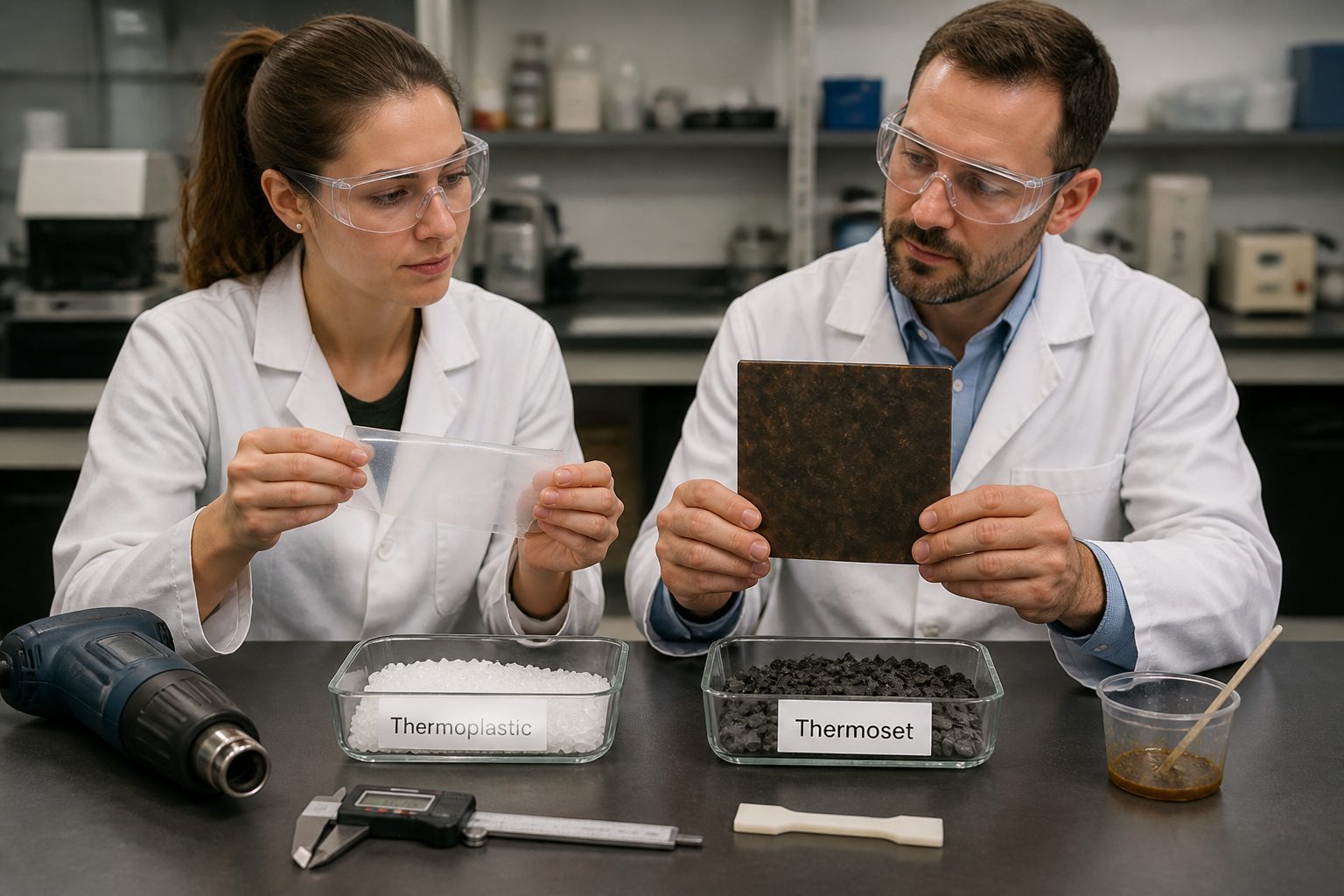
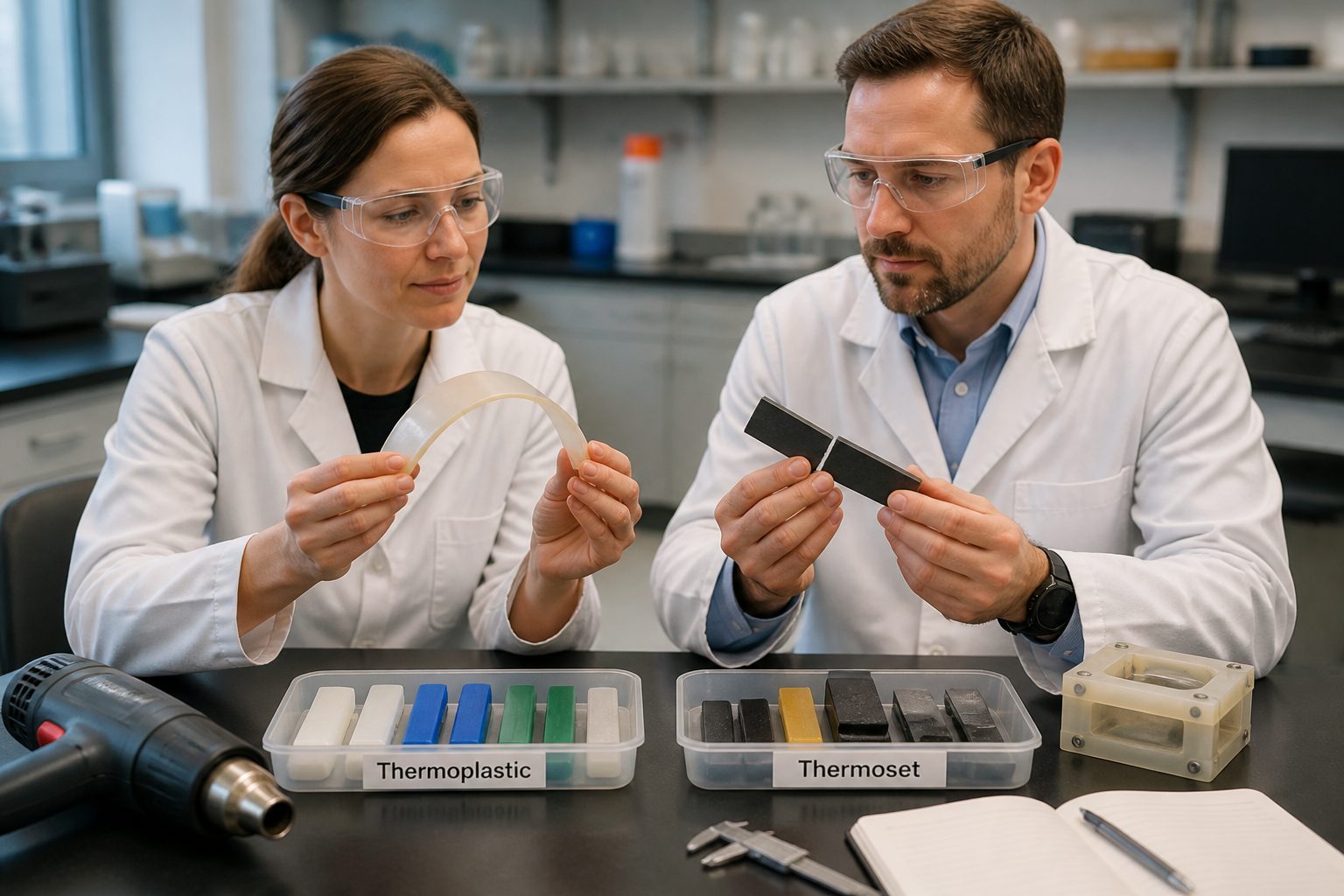
This distinction directly influences how products are manufactured and how they behave in service. A clear understanding of these categories is the first step in any effective polymer material selection guide. We need to look deeper into the molecular differences to grasp the full picture.
Considering the end-of-life scenario for a product also highlights this critical difference. Thermoplastics offer avenues for mechanical or chemical recycling, extending their useful life. Thermosets, once formed, generally do not possess this same inherent recyclability, presenting unique challenges for waste management.
How Molecular Structure Determines Polymer Behavior
The macroscopic properties of a polymer are a direct consequence of its molecular architecture. Thermoplastics consist of linear or branched polymer chains held together primarily by weak intermolecular forces. These forces, like Van der Waals forces or hydrogen bonds, break down when heated, allowing the chains to slide past each other.
When cooled, these intermolecular forces reform, locking the chains back into a solid structure. This reversible behavior is why thermoplastics can be repeatedly melted and solidified. The absence of permanent chemical bonds between chains gives them their characteristic melt-and-reform capability.
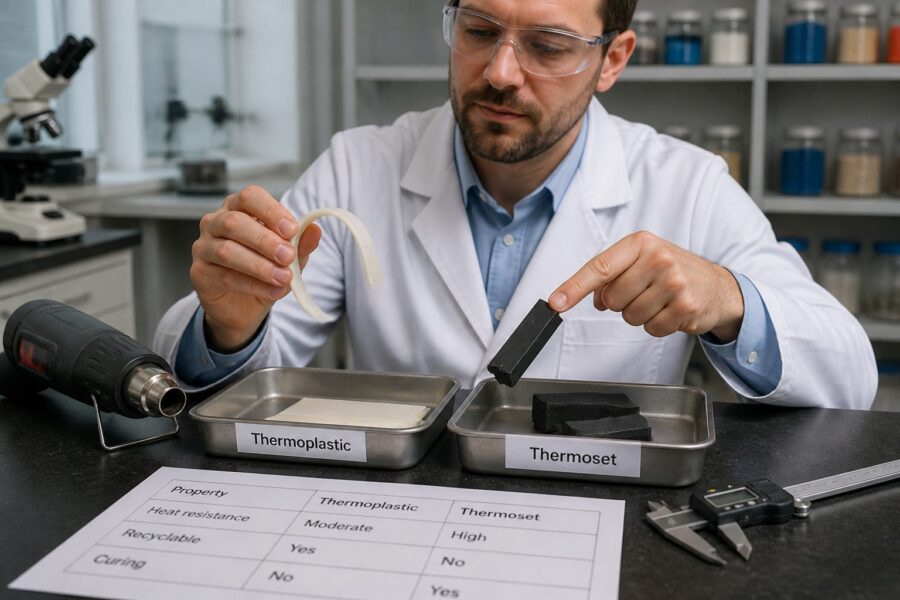
| Property | Thermoplastics | Thermosets |
|---|---|---|
| Molecular Structure | Linear or branched chains | Cross-linked network |
| Response to Heat | Softens, melts, flows | Hardens, degrades at high temperatures |
| Reprocessing | Yes, generally recyclable | No, irreversible curing |
| Bonding Type | Weak intermolecular forces | Strong covalent cross-links |
| Typical Rigidity | Flexible to rigid | Very rigid, brittle |
| Solubility | Can be dissolved by solvents | Insoluble after curing |
Processing Thermoplastics: Melt and Reform Capabilities
The ability of thermoplastics to melt and reform is a cornerstone of modern manufacturing. Processes like injection molding, extrusion, and blow molding rely heavily on this characteristic. These methods allow for high-volume production of complex parts with excellent precision.
During injection molding, polymer pellets are heated until molten and then injected under high pressure into a mold cavity. The material cools and solidifies, taking the shape of the mold, after which the part is ejected. This efficient process is ideal for mass-producing items from automotive components to consumer goods.
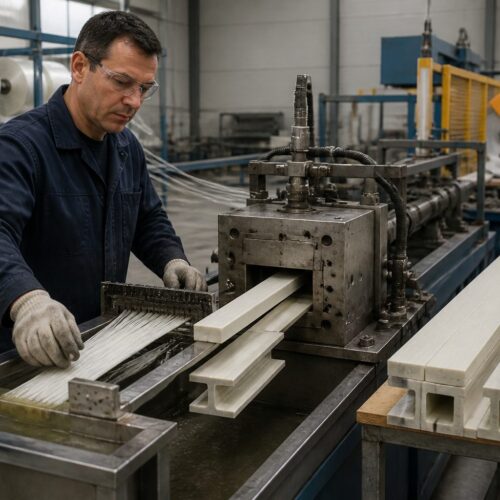
Extrusion involves melting a thermoplastic and forcing it through a die to create continuous profiles, such as pipes, sheets, or films. This method is incredibly versatile for producing long, uniform products. The ease of thermoplastic reprocessing allows manufacturers to collect and reuse scrap material from these operations, minimizing waste.
Blow molding, used for hollow parts like bottles, begins with an extruded tube of molten thermoplastic. Air is then blown into the tube, expanding it against a mold to form the desired shape. All these processes benefit immensely from the reversible nature of thermoplastic polymers.
The energy required for thermoplastic reprocessing is generally lower than for producing virgin materials, making it an environmentally sound practice. Engineers often consider the ease of processing and recyclability when undertaking a thermoplastic vs thermoset polymer comparison. This factor significantly impacts both production costs and environmental footprint.
Designers appreciate the flexibility thermoplastics offer in terms of part geometry and post-processing. Parts can be joined using welding techniques, for example, which is not possible with thermosets. This enables complex assemblies and multi-material designs.
The inherent ductility of many thermoplastics also allows for a degree of flexibility in finished products. This property can be a significant advantage in applications requiring impact resistance or some level of elastic deformation. Material selection often balances these processing advantages with the required end-use properties.
The versatility of thermoplastic processing extends to additive manufacturing, where materials like ABS or PLA are melted and deposited layer by layer. This enables rapid prototyping and the creation of highly customized components. Such methods continue to expand the application space for these adaptable polymers.
Understanding these melt-and-reform capabilities is a core component of any comprehensive polymer material selection guide. It helps engineers predict manufacturing feasibility and cost. The ability to reclaim and reuse material is a powerful economic and environmental driver.
Curing Thermosets: Irreversible Network Formation
Thermosets undergo a chemical reaction during processing that fundamentally changes their molecular structure. This reaction, known as curing, forms a dense, three-dimensional network of covalent bonds between polymer chains. Once this network is established, the material becomes permanently rigid.
The thermoset curing process can be initiated by heat, catalysts, or a combination of both. For example, epoxy resins typically involve mixing a resin with a hardener, which then reacts to form the cross-linked structure. This reaction is exothermic, meaning it generates heat, and careful control is often necessary to prevent overheating.
Compression molding is a common technique for thermosets, where a pre-measured amount of material is placed into a heated mold cavity. The mold is then closed, and pressure is applied, causing the material to flow and cure into the desired shape. This method is effective for producing high-strength, intricate parts.
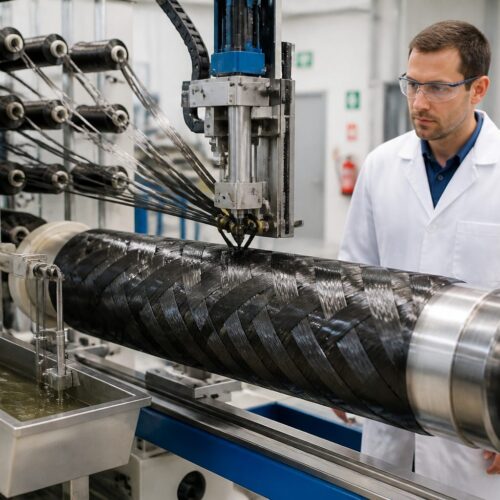
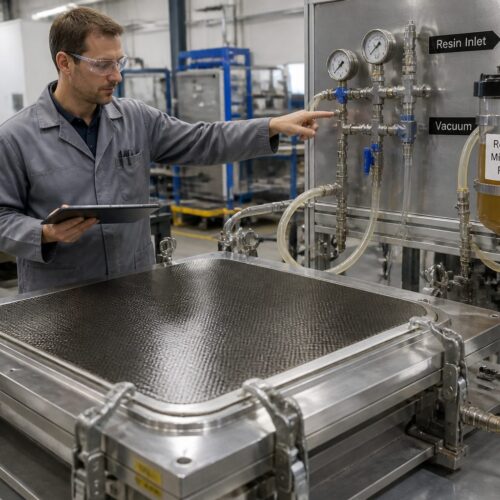
Another prevalent method is resin transfer molding (RTM), particularly for fiber-reinforced composites. Liquid thermoset resin is injected into a mold containing a dry fiber preform, impregnating the fibers before curing. This creates strong, lightweight structures often used in aerospace and automotive industries.
The irreversible nature of the thermoset curing process means that once a part is formed, it cannot be melted and reshaped. This characteristic is a double-edged sword: it grants superior thermal and chemical resistance but complicates recycling efforts. Scrap from thermoset manufacturing typically cannot be reprocessed in the same way as thermoplastic waste.
The cross-linked structure gives thermosets their excellent dimensional stability and resistance to creep under load. They do not soften significantly at elevated temperatures until they reach their decomposition point. This makes them ideal for applications demanding sustained performance in harsh environments.
Engineers must carefully consider the pot life and cure time of thermoset resins during manufacturing. These parameters dictate how long the material remains workable before hardening. Incorrect handling can lead to premature curing or incomplete cross-linking, compromising the final product’s integrity.
The robust chemical bonds formed during the thermoset curing process also contribute to their superior chemical resistance. They are often less susceptible to attack from solvents or corrosive agents compared to many thermoplastics. This property is critical for components exposed to aggressive chemicals.
Understanding the intricacies of thermoset processing is vital for anyone engaged in a thermoplastic vs thermoset polymer comparison. The trade-offs between processability and end-use performance are stark, guiding engineers toward the optimal material choice. This permanent transformation defines their application space.
Comparing Mechanical and Thermal Performance
When evaluating polymers for high-performance applications, mechanical and thermal properties are often the primary drivers. The fundamental molecular differences between thermoplastics and thermosets lead to distinct performance profiles. This makes their comparison a critical step in any polymer material selection guide.
Thermosets generally exhibit higher strength, stiffness, and hardness compared to most thermoplastics. Their rigid, cross-linked network resists deformation much more effectively under stress. This makes them preferred for structural components that require high load-bearing capabilities.
In terms of thermal performance, thermosets excel in high-temperature environments. Once cured, they maintain their structural integrity and mechanical properties even at temperatures where thermoplastics would soften or melt. Their decomposition temperature is typically much higher than their service temperature, providing a wide operating window.
Thermoplastics, on the other hand, tend to be more ductile and tougher, meaning they can absorb more energy before fracturing. This characteristic makes them suitable for applications requiring impact resistance, like bumpers or protective casings. They do, however, have a defined melting point or glass transition temperature, limiting their upper service temperature.
Creep resistance, the tendency of a material to deform permanently under sustained stress, is another area where thermosets often outperform thermoplastics. The robust cross-linked structure of thermosets provides superior resistance to long-term deformation. This is a critical factor for components under constant load, such as in aerospace or industrial machinery.
The dimensional stability of thermosets is also generally superior, particularly at elevated temperatures. They exhibit lower coefficients of thermal expansion compared to thermoplastics, meaning they change size less dramatically with temperature fluctuations. This property is crucial for precision components where tight tolerances must be maintained.
However, the rigidity of thermosets can also make them brittle. They often have lower elongation at break and can be more susceptible to sudden fracture under impact or rapid deformation. Thermoplastics, with their ability to yield and deform, might offer a more forgiving failure mode in certain scenarios.
Electrical insulation properties vary widely within both classes, but some thermosets, like epoxies and phenolics, are renowned for their excellent dielectric strength and arc resistance. These materials are indispensable in electrical and electronic applications where high voltages or extreme conditions are present. This makes the thermoplastic vs thermoset polymer comparison critical for electrical engineers.
Flammability is another significant consideration. While many polymers are inherently flammable, thermosets can often be formulated to be more fire-resistant or self-extinguishing due to their char-forming tendencies upon decomposition. This property is vital for applications in construction, transportation, and consumer electronics.
The specific grade and formulation within each category heavily influence these properties. For example, a highly engineered PEEK (thermoplastic) can outperform a basic polyester (thermoset) in certain mechanical aspects. A thorough polymer material selection guide always involves detailed property data sheets and application-specific testing.
Choosing Between Thermoplastics and Thermosets for Your Application
The decision to use a thermoplastic or a thermoset polymer hinges on a careful evaluation of application requirements and economic factors. There is no single “better” material; only the most appropriate one for a given set of conditions. Engineers must weigh performance, cost, processability, and environmental impact.
Consider the operating temperature range first. If your component needs to maintain structural integrity above 150-200°C, a thermoset is likely the only viable option. However, for applications at ambient or moderately elevated temperatures, thermoplastics offer a wider range of choices and processing advantages.
- High temperature resistance is critical
- Superior strength-to-weight ratio is needed
- Dimensional stability under load is paramount
- Chemical resistance to aggressive media is required
- Irreversible shape is acceptable or desired
- Lower weight is a primary design goal
- Electrical insulation properties are essential
- Long-term creep resistance is a concern
- Excellent surface finish is a priority
- Cost-effective mass production is less important than performance
Choosing Between Thermoplastics and Thermosets for Your Application (Continued)
Processing considerations play a huge role in the final selection. If high-volume, rapid manufacturing with complex geometries is a priority, the melt-and-reform capabilities of thermoplastics often make them the frontrunner. Their ability to be injection molded quickly leads to lower cycle times and thus lower piece part costs.
For applications where parts need to be joined or repaired using welding, thermoplastics are the clear choice. The permanent nature of the thermoset curing process means that mechanical fasteners or adhesives are typically required for assembly. This can add complexity and cost to the manufacturing process.
The environmental footprint also deserves serious attention in a modern polymer material selection guide. The potential for thermoplastic reprocessing and recycling offers significant advantages for sustainability. While research into thermoset recycling is advancing, it remains more challenging than for thermoplastics.
Cost is always a factor, and it is not always straightforward. While raw thermoset resins can sometimes be more expensive per pound, their superior performance might allow for thinner, lighter parts, reducing overall material usage. The cost of tooling and processing equipment also differs significantly between the two classes.
Specific examples help illustrate these choices. For aircraft structural components requiring high strength, stiffness, and heat resistance, carbon fiber reinforced epoxies (thermosets) are standard. Meanwhile, for automotive dashboards or consumer electronics casings, ABS or polypropylene (thermoplastics) are preferred for their ease of molding, aesthetics, and impact resistance.
When considering a thermoplastic vs thermoset polymer comparison, engineers also look at the required service life and anticipated environmental exposure. A part exposed to constant UV radiation or harsh chemicals might necessitate a robust thermoset, even if processing is more involved. Durability in these conditions often outweighs initial manufacturing convenience.
The ability to customize properties through fillers and reinforcements is present in both categories. However, thermosets often integrate high volumes of fiber reinforcement more seamlessly, leading to truly composite materials with exceptional specific strength and stiffness. This makes them indispensable in many advanced engineering fields.
Ultimately, a thorough understanding of the end-use conditions, production volume, budget constraints, and sustainability goals drives the optimal selection. No polymer is universally superior, and the best choice is always application-specific. This careful analysis ensures functional and economical success.
Engineers consistently weigh these factors, balancing the advantages of thermoplastic reprocessing against the robust performance of thermosets. The continuous evolution of both material classes means that this polymer material selection guide is always a dynamic process. New formulations constantly push the boundaries of what is possible.
Conclusion
The choice between thermoplastics and thermosets is a foundational decision in polymer engineering, influencing everything from manufacturing processes to end-product performance. Their distinct molecular structures dictate their unique responses to heat and stress. Thermoplastics offer melt-and-reform capabilities and thermoplastic reprocessing, making them ideal for high-volume, recyclable applications.
Thermosets, conversely, undergo an irreversible thermoset curing process, forming rigid, cross-linked networks that deliver superior thermal stability, mechanical strength, and chemical resistance. This robust performance comes at the cost of reprocessing ease, presenting different challenges and opportunities. A comprehensive thermoplastic vs thermoset polymer comparison is always necessary.
Ultimately, the optimal polymer material selection guide involves a deep dive into specific application requirements, including operating environment, mechanical loads, desired service life, and economic considerations. By understanding the fundamental differences and trade-offs, engineers can confidently select the material that best meets their design goals. The right material ensures successful product development and long-term performance.
The ongoing advancements in polymer science continue to expand the capabilities of both material classes. New formulations and processing techniques constantly emerge, offering enhanced properties and improved sustainability. Staying informed about these developments is key for anyone working with high-performance fibers and polymers.