
Wind turbines stand as a beacon of clean energy, converting the kinetic energy of the wind into electricity. The efficiency and reliability of these turbines depend heavily on the materials used in their construction, especially the blades.
High-performance fibers play a critical role in ensuring that wind turbine blades are strong, lightweight, and durable. These advanced materials enable the blades to withstand extreme weather conditions and maximize energy capture, contributing to the overall sustainability of renewable energy.
This article will examine the use of high performance fibers in wind turbine blades, exploring the types of fibers used, the design considerations, and the benefits they provide. We will also discuss the challenges in manufacturing these blades and the future of wind energy as technology advances.
The Importance of Strong Wind Turbine Blades
Wind turbine blades are subjected to immense forces during operation. They must withstand constant bending, twisting, and fluctuating loads caused by wind gusts and changes in wind direction.
Blade failure can lead to significant downtime, costly repairs, and potential safety hazards. Therefore, ensuring the structural integrity of wind turbine blades is paramount for the efficient and safe operation of wind farms, highlighting the need for high performance fibers in wind turbine blades.
The size of wind turbine blades has been steadily increasing over the years to capture more wind energy. Longer blades experience even greater forces, making the choice of materials even more critical for structural integrity and longevity.
The materials must be lightweight to reduce the overall weight of the turbine and minimize stress on the tower and other components. Balancing strength and weight is a key challenge in blade design, one that high performance fibers in wind turbine blades help to address.
The aerodynamic efficiency of the blades also plays a crucial role in maximizing energy capture. Strong and stiff blades maintain their shape under load, ensuring optimal aerodynamic performance.
The lifespan of a wind turbine blade is typically 20-25 years. The materials used must be able to withstand years of exposure to harsh weather conditions, including UV radiation, moisture, and temperature extremes.
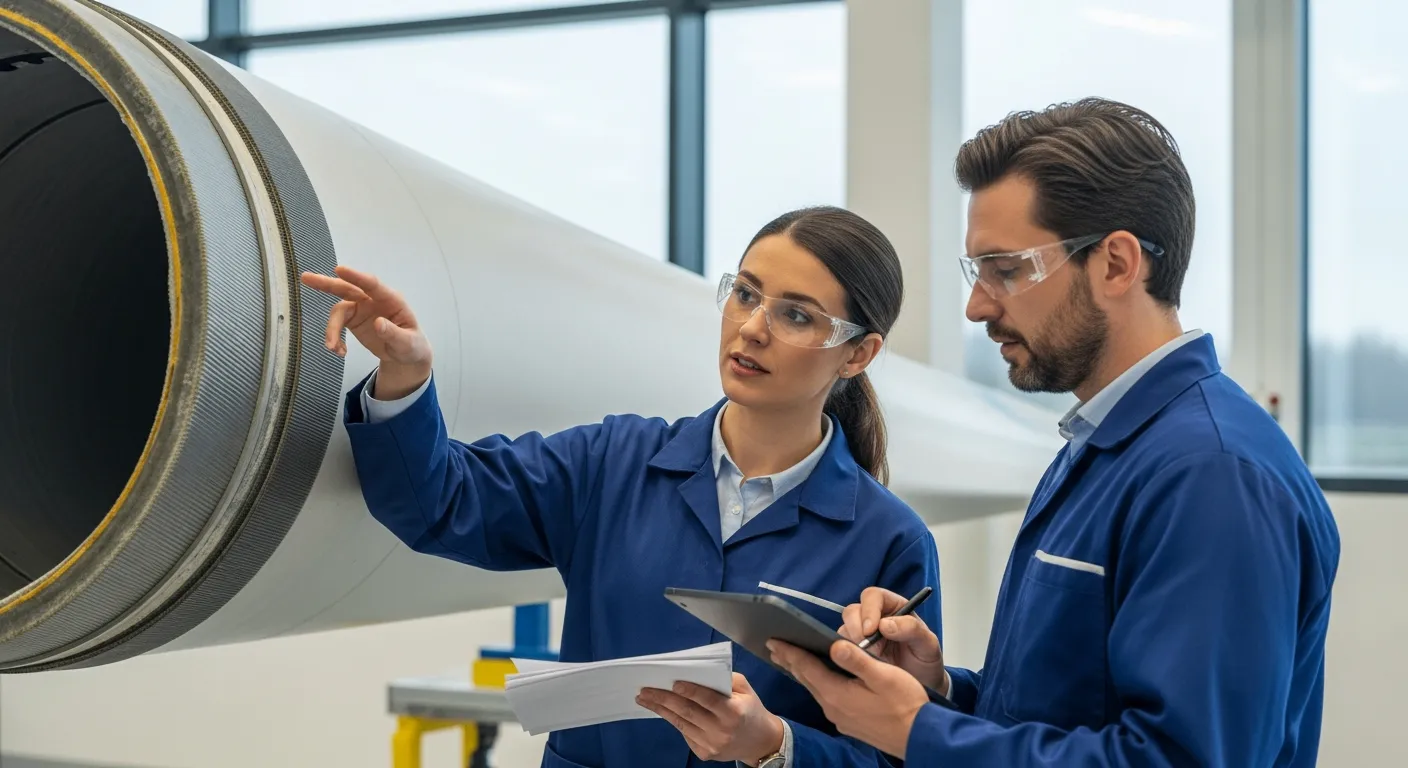
The increasing demand for wind energy is driving the development of larger and more powerful turbines. This trend necessitates the use of even stronger and more durable materials in blade construction.
Innovations in materials science are constantly pushing the boundaries of what is possible in wind turbine blade design. New high-performance fibers and composite materials are being developed to meet the evolving needs of the wind energy industry.
Fiber Types Used in Wind Turbine Blades
Several types of high-performance fibers are commonly used in wind turbine blades, each offering a unique combination of strength, stiffness, and cost-effectiveness. The most common types include fiberglass, carbon fiber, and aramid fiber.
Fiberglass is the most widely used material due to its relatively low cost and good mechanical properties. It provides sufficient strength and stiffness for many blade designs, making it a popular choice for smaller to medium-sized wind turbines.
Carbon fiber offers significantly higher strength and stiffness compared to fiberglass, but it comes at a higher cost. It is often used in the spar caps of the blades, where maximum strength is required, and in larger blades to reduce weight and increase performance.
Aramid fiber, such as Kevlar, provides excellent impact resistance and is sometimes used in combination with other fibers to improve the blade’s ability to withstand damage from lightning strikes or foreign object impact. These fibers play a crucial role in enhancing the overall durability and safety of wind turbine blades.
Basalt fiber is emerging as a promising alternative to fiberglass, offering improved strength and environmental performance. It is made from volcanic rock and has a lower carbon footprint than fiberglass.
Natural fibers, such as flax and hemp, are also being explored as sustainable alternatives to synthetic fibers. These fibers are renewable and biodegradable, but they typically have lower strength and stiffness compared to fiberglass or carbon fiber.
The selection of fiber type depends on a variety of factors, including the size of the turbine, the wind conditions at the site, and the cost constraints of the project. Engineers carefully consider these factors to optimize the performance and cost-effectiveness of the wind turbine blades.
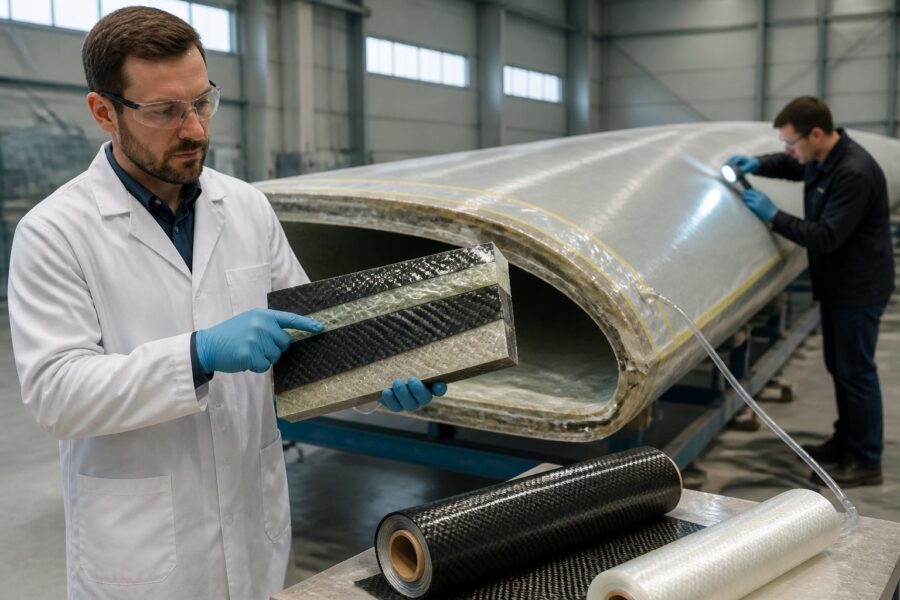
Hybrid composite materials, which combine different types of fibers, are often used to achieve the desired balance of properties. For example, a blade might use carbon fiber in the spar caps for high strength and fiberglass in the skin for lower cost.
Material Properties Comparison
Different materials offer varying levels of strength, stiffness, and density, influencing their suitability for wind turbine blade construction. Choosing the right material is a careful balance between performance and cost.
The table below compares the key properties of fiberglass, carbon fiber, and aramid fiber. This information is vital for engineers selecting high performance fibers in wind turbine blades.
| Property | Fiberglass | Carbon Fiber | Aramid Fiber |
|---|---|---|---|
| Tensile Strength (MPa) | 2000-3500 | 4000-7000 | 2800-3600 |
| Tensile Modulus (GPa) | 70-90 | 200-400 | 60-180 |
| Density (g/cm³) | 2.5-2.6 | 1.7-1.9 | 1.4-1.5 |
| Cost (Relative) | 1 | 5-10 | 3-5 |
Tensile strength refers to the maximum stress a material can withstand before breaking under tension. Carbon fiber has the highest tensile strength, making it ideal for applications where high strength is required.
Tensile modulus, also known as Young’s modulus, measures the stiffness of a material. Carbon fiber also has the highest tensile modulus, indicating that it is the stiffest of the three materials.
Density is the mass per unit volume of a material. Aramid fiber has the lowest density, making it the lightest of the three materials.
Cost is a significant factor in material selection. Fiberglass is the least expensive, while carbon fiber is the most expensive.
Other important material properties include fatigue resistance, impact resistance, and corrosion resistance. These properties are also considered when selecting materials for wind turbine blades.
Blade Design and Fiber Placement
The design of wind turbine blades is a complex process that involves optimizing the aerodynamic shape, structural integrity, and material selection. Finite element analysis is used to simulate the stresses and strains on the blade under various loading conditions.
The placement and orientation of fibers within the blade structure are carefully engineered to maximize strength and stiffness while minimizing weight. Different fiber orientations are used in different parts of the blade to tailor the mechanical properties to the specific loading requirements.
For example, unidirectional fibers are often used in the spar caps to provide high tensile strength along the length of the blade. Woven fabrics are used in the skin of the blade to provide shear strength and prevent buckling, showcasing the careful design of high performance fibers in wind turbine blades.
The use of composite materials allows for the creation of complex shapes and tailored mechanical properties that are not possible with traditional materials like steel or aluminum. This design flexibility is crucial for optimizing the performance of wind turbine blades.
The spar cap is the primary structural element of the blade, responsible for carrying the bending loads. It typically consists of multiple layers of unidirectional carbon fiber or fiberglass.
The shear web connects the spar caps and provides shear strength to the blade. It is typically made of woven fiberglass or carbon fiber.
The skin of the blade provides the aerodynamic shape and protects the internal structure from the environment. It is typically made of fiberglass or a combination of fiberglass and carbon fiber.
Lightning protection systems are integrated into the blade design to prevent damage from lightning strikes. These systems typically consist of conductive wires embedded in the blade structure.
Benefits of Fiber Reinforced Composites
Fiber reinforced composites offer several advantages over traditional materials in wind turbine blade construction. Their high strength-to-weight ratio allows for the creation of longer, lighter blades that can capture more wind energy.
The use of composite materials also enables the creation of blades with complex aerodynamic shapes that optimize energy capture and reduce noise. These materials contribute to the overall efficiency and sustainability of wind energy.
Composites exhibit excellent fatigue resistance, which is crucial for withstanding the constant cyclic loading experienced by wind turbine blades. This reduces the risk of failure and extends the lifespan of the blades, enhancing the reliability of renewable energy.
Fiber reinforced composites also offer good corrosion resistance, which is particularly important for offshore wind turbines that are exposed to harsh marine environments. This durability minimizes maintenance costs and ensures long-term performance.
The lightweight nature of composite materials reduces the loads on the turbine tower and foundation, leading to lower construction costs. This makes wind energy more economically competitive.
Composite materials can be tailored to meet specific performance requirements. This allows engineers to optimize the blade design for different wind conditions and turbine sizes.
The use of composite materials reduces the need for maintenance and repairs. This lowers the operating costs of wind farms and improves their overall profitability.
The long lifespan of composite wind turbine blades contributes to the sustainability of wind energy. This reduces the environmental impact of electricity generation.
Challenges in Wind Turbine Blade Manufacturing
Manufacturing wind turbine blades from composite materials presents several challenges. The blades are very large, often exceeding 80 meters in length, requiring specialized manufacturing facilities and equipment.
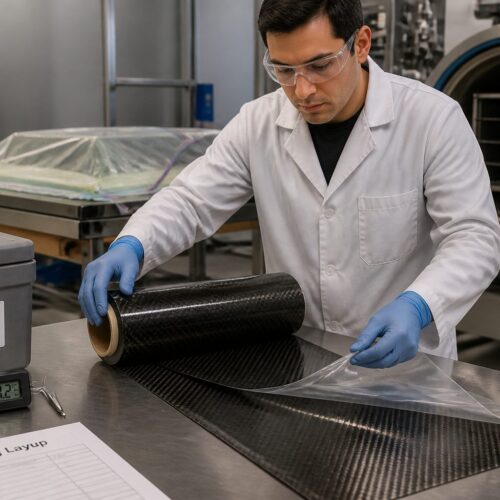
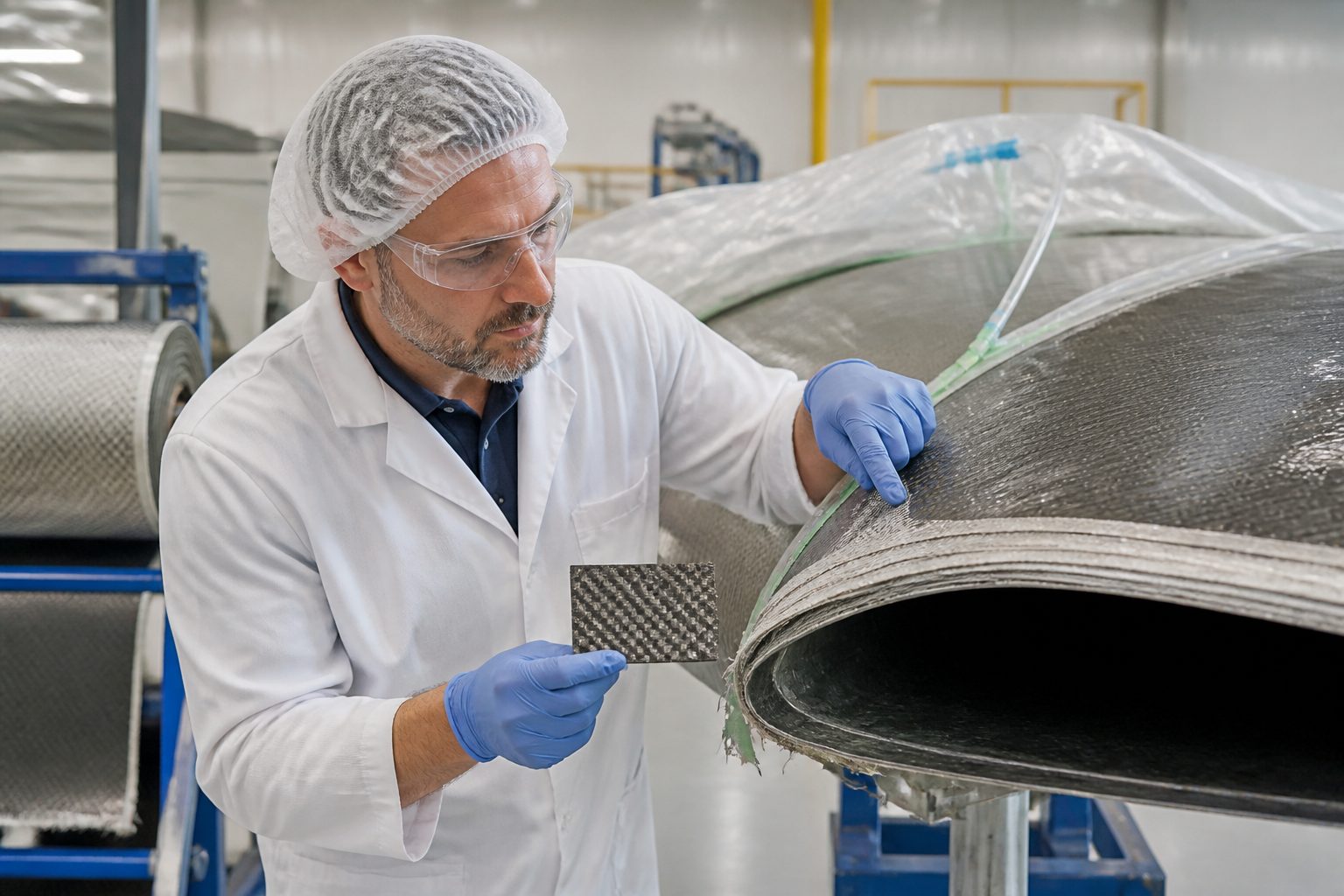
The manufacturing process involves laying up multiple layers of fiber reinforced materials in a mold, followed by curing to solidify the composite structure. Ensuring consistent quality and avoiding defects during the layup and curing processes is critical for the structural integrity of the blade.
- Precise fiber alignment
- Consistent resin impregnation
- Controlled curing temperatures
- Minimizing voids and defects
- Efficient manufacturing processes
The disposal of wind turbine blades at the end of their lifespan is also a growing environmental concern. Recycling composite materials is challenging, and most blades end up in landfills, a problem the industry is actively trying to solve.
The manual layup process is labor-intensive and can be prone to errors. Automation is being implemented to improve the speed and accuracy of the manufacturing process.
The curing process can be time-consuming and energy-intensive. New curing techniques are being developed to reduce the curing time and energy consumption.
The transportation of large wind turbine blades can be challenging and expensive. New transportation methods are being developed to reduce the cost and complexity of blade transportation.
The cost of raw materials can be a significant factor in the overall cost of wind turbine blades. Efforts are being made to reduce the cost of high-performance fibers and resins.
Advancements in Materials and Manufacturing
Ongoing research and development efforts are focused on improving the materials and manufacturing processes used in wind turbine blade production. New resin systems are being developed to improve the mechanical properties and reduce the curing time of composite materials.
Automated layup techniques, such as automated fiber placement (AFP), are being implemented to increase manufacturing speed and reduce labor costs. These advancements are essential for making wind energy more cost-competitive and sustainable.
Researchers are also exploring the use of bio-based resins and recyclable composite materials to reduce the environmental impact of wind turbine blades. These innovative materials offer the potential for a more circular economy in the wind energy sector.
Advanced monitoring systems are being developed to detect damage in wind turbine blades early on, enabling proactive maintenance and preventing catastrophic failures. These systems use sensors embedded in the blade structure to monitor strain, temperature, and vibration.
3D printing is being explored as a potential manufacturing technique for wind turbine blades. This technology could enable the creation of complex shapes and customized designs.
Self-healing composite materials are being developed to repair damage automatically. These materials could extend the lifespan of wind turbine blades and reduce maintenance costs.
Artificial intelligence (AI) is being used to optimize the design and manufacturing of wind turbine blades. AI algorithms can analyze large datasets and identify patterns that can improve blade performance and reduce manufacturing costs.
Nanomaterials are being incorporated into composite materials to enhance their mechanical properties. These nanomaterials can increase the strength, stiffness, and fatigue resistance of wind turbine blades.
The Role of High-Performance Fibers in Renewable Energy
High-performance fibers are not only critical for wind turbine blades but also play an important role in other renewable energy technologies. They are used in solar panel frames, hydroelectric dams, and geothermal energy systems.
The use of these advanced materials helps to improve the efficiency, durability, and sustainability of renewable energy infrastructure. As the world transitions to a low-carbon economy, high-performance fibers will continue to play a vital role in enabling the widespread adoption of renewable energy technologies.
The increasing demand for renewable energy is driving innovation in the materials science and engineering fields, leading to the development of even more advanced fibers and composite materials. These innovations will further enhance the performance and cost-effectiveness of renewable energy systems.
The integration of high-performance fibers in renewable energy infrastructure demonstrates the importance of materials science in addressing global challenges related to climate change and energy security. These materials are essential for building a sustainable future.
In solar energy, high-performance fibers are used in the support structures for solar panels. They provide the necessary strength and stiffness to withstand wind loads and other environmental factors.
In hydroelectric dams, high-performance fibers are used in the construction of the dam walls and spillways. They provide the necessary strength and durability to withstand the immense pressure of the water.
In geothermal energy systems, high-performance fibers are used in the pipes that transport hot water and steam from the earth. They provide the necessary corrosion resistance to withstand the harsh geothermal environment.
The use of high-performance fibers in energy storage systems, such as batteries and flywheels, is also increasing. These materials help to improve the energy density and lifespan of these systems.
The Future of Wind Energy
Wind energy is poised to play an increasingly important role in the global energy mix. Technological advancements are driving down the cost of wind energy, making it more competitive with traditional fossil fuels.
Larger, more efficient wind turbines are being developed to capture more wind energy and reduce the levelized cost of energy (LCOE). Offshore wind farms are also expanding, taking advantage of stronger and more consistent winds over the ocean.
Floating wind turbines are being developed to access deeper waters where fixed-bottom turbines are not feasible. These innovations are opening up new areas for wind energy development, highlighting the versatility of high performance fibers in wind turbine blades.
The integration of wind energy with energy storage systems, such as batteries and pumped hydro, is also becoming more common to address the intermittency of wind power. These hybrid systems provide a more reliable and dispatchable source of renewable energy.
The development of smart grids is enabling the integration of wind energy into the electricity grid more efficiently. Smart grids use advanced sensors and control systems to manage the flow of electricity and optimize the use of renewable energy sources.
The electrification of transportation is increasing the demand for renewable energy, including wind energy. Electric vehicles (EVs) can be powered by wind energy, reducing greenhouse gas emissions from the transportation sector.
The increasing awareness of climate change is driving the demand for renewable energy. Governments and businesses are setting ambitious targets for reducing greenhouse gas emissions and transitioning to a low-carbon economy.
The development of new policies and regulations is supporting the growth of the wind energy industry. These policies include tax incentives, renewable energy standards, and carbon pricing mechanisms.
Conclusion
High-performance fibers are essential components of modern wind turbine blades, providing the strength, stiffness, and durability needed to withstand extreme conditions. The use of fiberglass, carbon fiber, and aramid fiber in composite materials enables the creation of longer, lighter, and more efficient blades.
Ongoing research and development efforts are focused on improving the materials and manufacturing processes used in wind turbine blade production, driving down the cost of wind energy and making it more sustainable. As the world transitions to a low-carbon economy, high-performance fibers will continue to play a vital role in enabling the widespread adoption of renewable energy technologies and the continued improvement of high performance fibers in wind turbine blades.