
Polymer fracture mechanics is a fascinating and critically important field. It deals with how cracks initiate and propagate in polymeric materials, ultimately leading to failure.
Understanding these mechanisms is essential for designing durable and reliable products across various industries. The complexity of polymer behavior under stress requires a deep understanding of material science and engineering principles.
From aerospace components to medical implants, the integrity of polymers under stress is paramount. This article will provide a comprehensive overview of polymer fracture mechanics, exploring the underlying principles, influencing factors, experimental techniques, and modeling approaches.
We will delve into the various methods used to assess and predict the lifespan of polymeric materials. Furthermore, we will discuss the challenges and opportunities in this rapidly evolving field.
We will also examine strategies for enhancing fracture resistance and present real-world case studies to illustrate the practical applications of this knowledge. Ultimately, a deeper understanding of polymer fracture mechanics allows us to predict and prevent failures, ensuring the longevity and safety of polymer-based products.
This knowledge is crucial not only for engineers and scientists but also for policymakers and consumers. By promoting awareness and understanding, we can contribute to the development of safer and more sustainable products.
Understanding Fracture Mechanics in Polymers
Fracture mechanics is the study of how cracks behave in materials under stress. Unlike traditional strength of materials approaches, fracture mechanics considers the presence of pre-existing flaws or cracks within the material.
These pre-existing flaws can be inherent to the manufacturing process or develop during service. Ignoring these flaws can lead to inaccurate predictions of structural integrity.
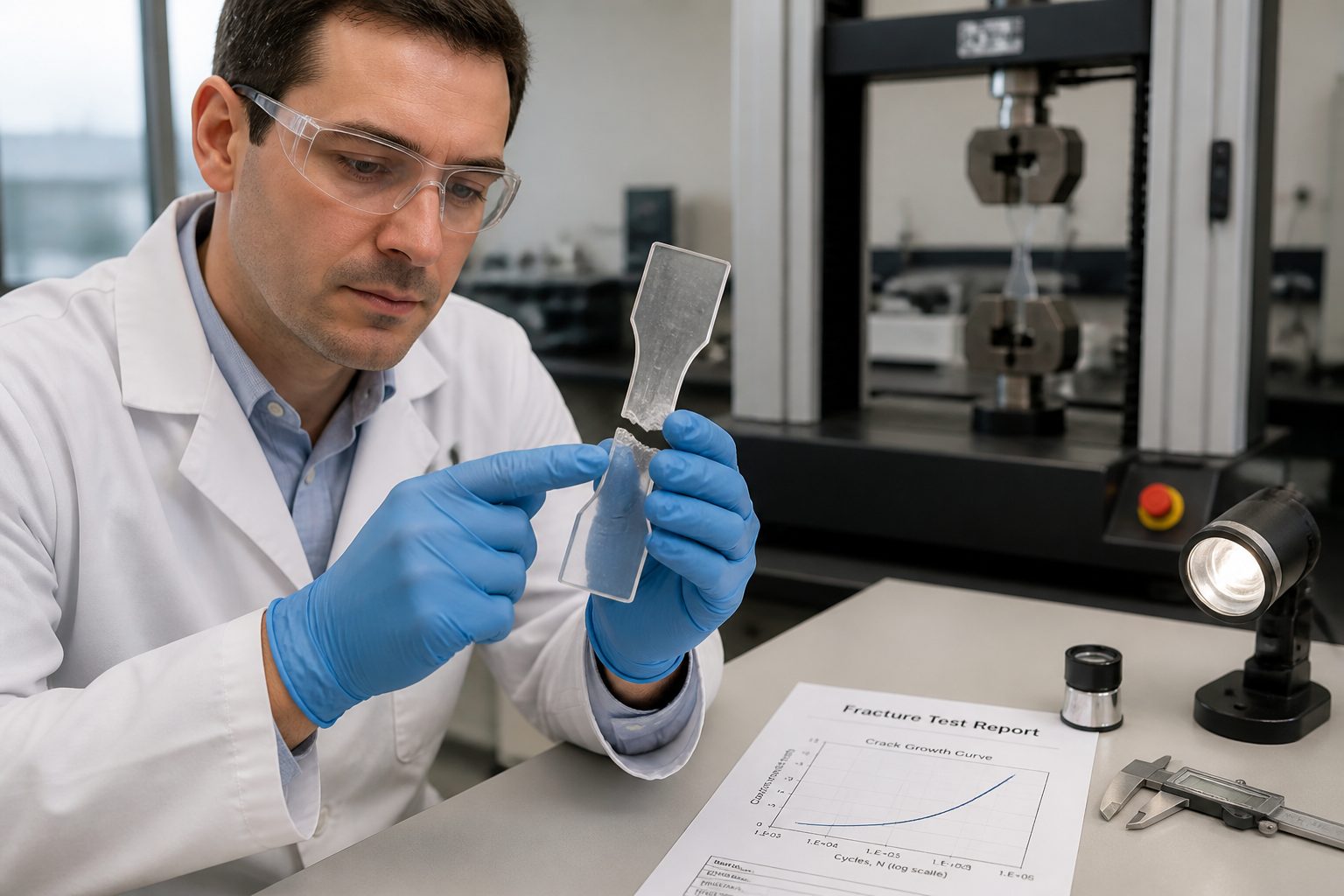
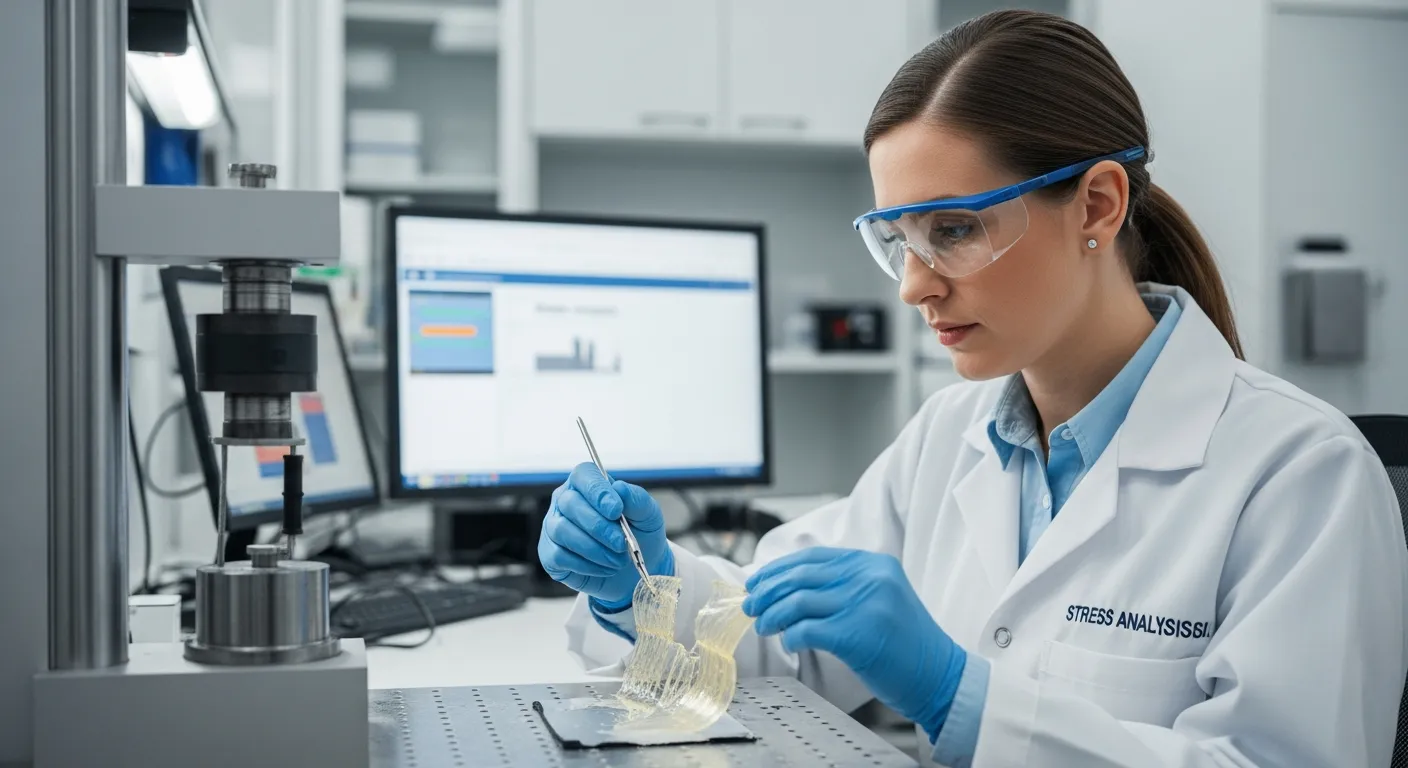
These flaws, even if microscopic, can significantly reduce the load-bearing capacity of a component. The field focuses on determining the stress intensity factor at the crack tip, which quantifies the stress concentration and drives crack propagation.
The stress intensity factor is a function of the applied stress, the crack size, and the geometry of the component. Understanding its calculation and implications is fundamental to fracture mechanics.
In polymers, fracture mechanics becomes particularly complex due to their viscoelastic nature. Polymers exhibit time-dependent behavior, meaning their response to stress depends on the rate at which the load is applied.
This time-dependent behavior is a result of the polymer chains’ ability to rearrange and dissipate energy under stress. This makes predicting fracture behavior more challenging than in purely elastic materials.
This viscoelasticity affects both crack initiation and crack propagation. Furthermore, the molecular structure of polymers, including chain length, branching, and crosslinking, plays a crucial role in their fracture behavior.
The molecular structure dictates the polymer’s ability to deform and resist crack growth. Factors such as the degree of crystallinity and the presence of plasticizers also influence fracture behavior.
Factors Influencing Polymer Fracture
Several factors can influence the fracture behavior of polymers. These factors can be broadly categorized into material properties, environmental conditions, and loading conditions.
Each of these categories encompasses a range of specific parameters that must be considered. A comprehensive understanding of these factors is crucial for accurate failure prediction.
Material properties include the polymer’s molecular weight, crystallinity, and the presence of fillers or additives. Higher molecular weight generally leads to improved fracture toughness.
Longer polymer chains provide more entanglement, increasing the energy required for crack propagation. This is a key factor in enhancing the durability of polymeric materials.
Crystallinity can either increase or decrease fracture toughness depending on the specific polymer and the orientation of the crystalline regions. Fillers and additives can modify the polymer’s mechanical properties, potentially enhancing or reducing its resistance to crack propagation.
For instance, rigid fillers can increase stiffness but may also reduce ductility, leading to brittle fracture. The type and concentration of fillers must be carefully selected to achieve the desired balance of properties.
Environmental conditions, such as temperature and humidity, also play a significant role. Increased temperature can soften some polymers, making them more susceptible to crack growth, while humidity can cause swelling and plasticization, altering their mechanical response.
The effects of temperature and humidity can be particularly pronounced in polymers with high water absorption. Understanding these environmental effects is crucial for designing components that will perform reliably in real-world conditions.
Loading conditions, including the magnitude and rate of applied stress, are critical. Rapid loading, such as impact, often leads to brittle fracture, whereas slow, sustained loading can result in creep and eventual failure.
The rate of loading affects the polymer’s ability to dissipate energy and deform before fracture. Creep, a time-dependent deformation under constant stress, can weaken the material and lead to crack initiation.
Measuring Fracture Toughness: Experimental Techniques
Fracture toughness is a critical material property that quantifies a material’s resistance to crack propagation. Several experimental techniques are used to measure the fracture toughness of polymers.
The choice of experimental technique depends on the specific polymer, the expected loading conditions, and the desired level of accuracy. Each technique has its own advantages and limitations.
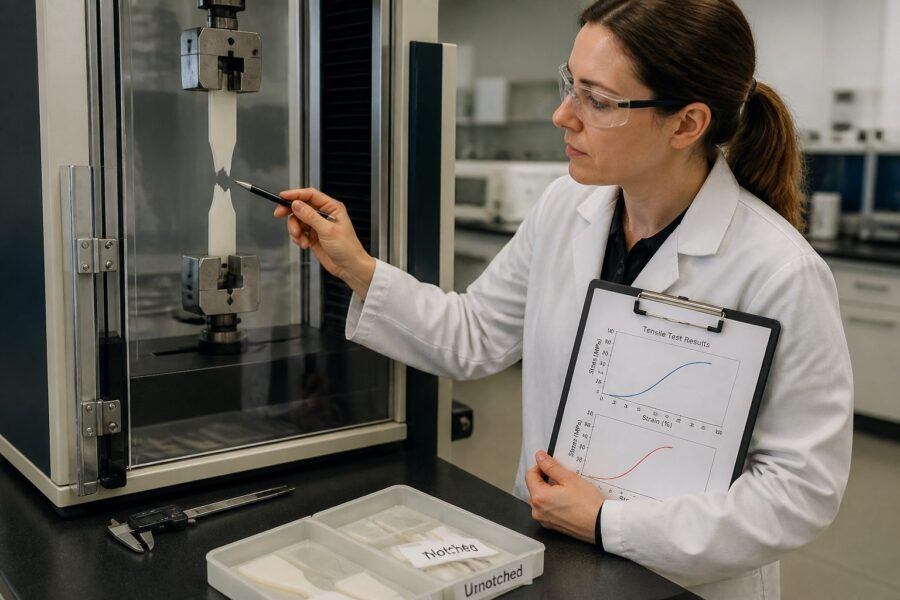
These techniques typically involve introducing a sharp crack into a specimen and then applying a load until the crack begins to grow. The critical stress intensity factor, denoted as KIC, is then calculated from the applied load and the crack geometry.
KIC represents the stress intensity at which crack propagation becomes unstable and leads to catastrophic failure. It is a fundamental parameter for characterizing the fracture resistance of materials.
| Technique | Specimen Geometry | Advantages | Disadvantages |
|---|---|---|---|
| Single-Edge Notch Bend (SENB) | Rectangular bar with a notch | Simple specimen preparation, widely used | Sensitive to notch sharpness |
| Compact Tension (CT) | Compact specimen with a hole and notch | Stable crack growth, relatively small specimen size | Complex specimen preparation |
| Essential Work of Fracture (EWF) | Double-edge notched tension specimen | Separates crack initiation and propagation energies | Requires careful data analysis |
| J-Integral | Various geometries | Applicable to non-linear elastic materials | Complex analysis, requires specialized equipment |
Each of these techniques provides valuable information about the fracture behavior of polymers. The selection of the appropriate technique depends on the specific application and the type of material being tested.
Modeling Crack Propagation in Polymers
Modeling crack propagation in polymers is a challenging but essential aspect of fracture mechanics. Accurate models can predict the lifetime of polymer components under various loading conditions and guide the design of more durable materials.
The complexity of polymer behavior requires sophisticated modeling techniques that can capture the viscoelastic and non-linear characteristics of these materials. These models are crucial for optimizing the design and performance of polymer-based products.
Several approaches are used to model crack propagation, ranging from simple analytical models to complex numerical simulations. Analytical models, such as the Griffith theory and the Irwin modification, provide a fundamental understanding of the relationship between stress, crack size, and material properties.
These analytical models offer a simplified representation of crack behavior and can be useful for preliminary design calculations. However, they often lack the accuracy needed for complex geometries and loading conditions.
However, these models often rely on simplifying assumptions and may not accurately capture the complex behavior of polymers. Numerical simulations, such as finite element analysis (FEA), can account for the viscoelasticity of polymers, the geometry of the crack, and the presence of stress concentrations.
FEA allows for a more detailed and realistic representation of the stress and strain fields around the crack tip. This enables more accurate predictions of crack growth and failure.
Cohesive zone models (CZMs) are also frequently employed to simulate crack propagation in polymers. CZMs introduce a cohesive zone ahead of the crack tip, which represents the material’s resistance to separation.
The cohesive zone is characterized by a traction-separation law that describes the relationship between the stress and displacement across the crack faces. This approach is particularly useful for modeling ductile fracture in polymers.
These models can capture the energy dissipation associated with crack growth and provide insights into the fracture mechanisms at the microscale. Molecular dynamics simulations offer another approach, allowing researchers to study crack propagation at the atomic level.
Molecular dynamics simulations provide valuable insights into the fundamental processes that govern crack propagation in polymers. However, they are computationally intensive and limited to small length scales.
Stress Concentration and its Role
Stress concentration is a critical concept in polymer fracture mechanics. It refers to the amplification of stress around geometric discontinuities, such as holes, notches, or cracks.
Understanding stress concentration is crucial for designing components that can withstand high loads without failing prematurely. Minimizing stress concentrations is a key principle in engineering design.
These stress concentrations can significantly exceed the average stress applied to the component, leading to premature failure. The magnitude of stress concentration depends on the geometry of the discontinuity and the applied load.
The stress concentration factor (Kt) quantifies the ratio of the maximum stress at the discontinuity to the average stress. Higher Kt values indicate a greater degree of stress amplification.
Sharp corners and narrow notches create higher stress concentrations than rounded corners and wide notches. In polymers, stress concentration can initiate crazing, a precursor to crack formation. Crazes are microcracks bridged by fibrils of oriented polymer chains.
Crazing is a common failure mechanism in amorphous polymers subjected to tensile stress. The fibrils within the craze provide some resistance to crack growth, but eventually, the craze can break down and form a macroscopic crack.
These crazes can grow and coalesce, eventually leading to macroscopic crack propagation. Understanding and mitigating stress concentrations is essential for designing durable polymer components. This can be achieved through careful design, such as avoiding sharp corners and using materials with high fracture toughness.
Techniques such as fillet radii and stress-relieving grooves can be used to reduce stress concentrations. Selecting materials with high inherent toughness can also improve the component’s ability to withstand stress concentrations.
Strategies for Improving Polymer Fracture Resistance
Improving the fracture resistance of polymers is a crucial goal in materials science and engineering. Several strategies can be employed to enhance the toughness and durability of polymeric materials.
These strategies often involve modifying the polymer’s molecular structure, adding reinforcing agents, or controlling the processing conditions. The specific approach depends on the desired properties and the intended application.
These strategies include modifying the polymer’s molecular structure, adding reinforcing fillers, and controlling the processing conditions. Increasing the polymer’s molecular weight can improve its entanglement density, making it more difficult for cracks to propagate.
Higher molecular weight polymers generally exhibit increased toughness and resistance to crack growth. However, increasing molecular weight can also increase viscosity and make processing more difficult.
- Blending with a rubbery phase
- Adding rigid fillers (e.g., glass fibers)
- Crosslinking to increase chain entanglement
- Controlling crystallinity
- Surface treatments to reduce stress concentrations
Each of these strategies offers a unique way to improve the fracture resistance of polymers. The optimal approach depends on the specific application and the desired balance of properties.
Polymer Blends and Composites
Polymer blends and composites offer versatile approaches to tailor the fracture properties of materials. Blending different polymers can create synergistic effects, leading to enhanced toughness and impact resistance.
The key to successful blending is to achieve good compatibility between the different polymers. Incompatible blends can result in phase separation and reduced mechanical properties.
For example, blending a brittle polymer with a rubbery polymer can introduce energy-absorbing mechanisms, such as shear yielding and cavitation, that hinder crack propagation. Composites, on the other hand, involve incorporating reinforcing fillers into a polymer matrix.
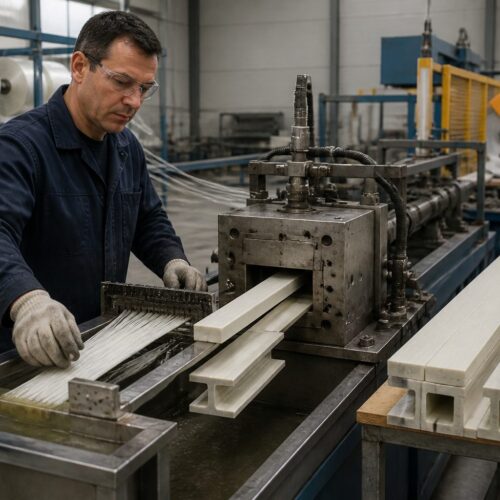
The choice of filler material and its concentration can significantly affect the composite’s mechanical properties. Proper dispersion of the filler within the polymer matrix is crucial for achieving optimal performance.
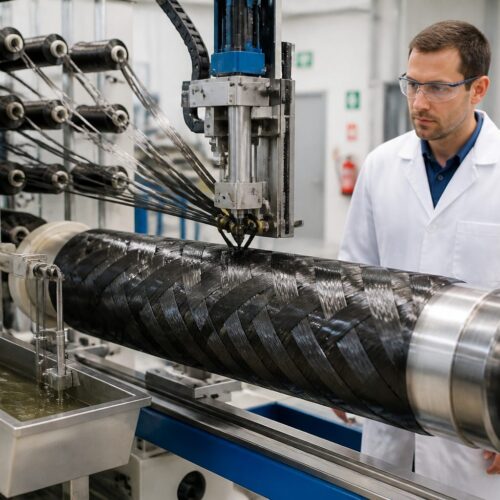
These fillers can be in the form of particles, fibers, or platelets, and they serve to increase the stiffness and strength of the composite material. Fiber-reinforced polymers, such as carbon fiber-reinforced epoxy, are widely used in aerospace and automotive applications due to their high strength-to-weight ratio and excellent fracture resistance.
Carbon fiber-reinforced polymers offer exceptional strength and stiffness, making them ideal for lightweight structural applications. However, they can be relatively expensive and may be susceptible to impact damage.
The orientation and distribution of the reinforcing fillers play a crucial role in determining the composite’s mechanical properties. Proper interfacial bonding between the filler and the polymer matrix is also essential for effective stress transfer and improved fracture performance.
Surface treatments can be used to improve the interfacial bonding between the filler and the polymer matrix. Strong interfacial bonding ensures that stress is effectively transferred from the polymer matrix to the reinforcing filler.
Case Studies: Polymer Fracture in Real-World Applications
Understanding polymer fracture mechanics is crucial for ensuring the reliability and safety of various products. Numerous case studies highlight the importance of considering fracture behavior in design and manufacturing.
Analyzing real-world failures provides valuable insights into the mechanisms of polymer fracture. These insights can be used to improve design practices and prevent future failures.
One example is the failure of polyethylene pipes used in natural gas distribution. Stress cracking, a form of slow crack growth induced by environmental factors and sustained stress, can lead to leaks and explosions.
The presence of residual stresses and exposure to certain chemicals can accelerate stress cracking in polyethylene pipes. Regular inspection and maintenance are essential for preventing these failures.
Another case involves the fracture of polymeric hip implants. These implants are subjected to cyclic loading and can fail due to fatigue crack propagation. Understanding the effects of material properties, loading conditions, and environmental factors is essential for preventing such failures.
The design of hip implants must consider the complex loading conditions and the potential for wear and corrosion. Selecting materials with high fatigue resistance and biocompatibility is crucial for ensuring long-term implant performance.
In the automotive industry, the fracture of plastic bumpers and dashboards can compromise vehicle safety. Designing these components with high impact resistance and resistance to crack propagation is crucial for protecting occupants in the event of a collision.
Automotive components must be able to withstand a wide range of temperatures and environmental conditions. Impact modifiers and reinforcing fillers are often used to improve the fracture resistance of plastic bumpers and dashboards.
The aerospace industry also relies heavily on polymers and composites, and the fracture of these materials can have catastrophic consequences. Therefore, rigorous testing and modeling are employed to ensure the structural integrity of polymer-based aircraft components.
Aircraft components are subjected to extreme temperatures, pressures, and vibrations. Redundancy and fail-safe designs are often incorporated to minimize the risk of catastrophic failure.
The Future of Polymer Fracture Mechanics
The field of polymer fracture mechanics is constantly evolving, driven by the development of new materials and advanced modeling techniques. Future research will likely focus on developing more accurate and efficient methods for predicting crack propagation in complex polymer systems.
The increasing use of polymers in demanding applications requires continuous improvement in our understanding of their fracture behavior. This will lead to the development of more durable and reliable polymer-based products.
This includes incorporating machine learning and artificial intelligence into fracture mechanics models to improve their predictive capabilities. Another area of focus will be the development of self-healing polymers, which can repair cracks and extend the lifetime of polymer components.
Self-healing polymers offer the potential to significantly extend the lifespan of polymer components and reduce maintenance costs. These materials can autonomously repair cracks and other damage, preventing catastrophic failure.
Furthermore, researchers are exploring the use of bio-based and sustainable polymers, which offer environmentally friendly alternatives to traditional petroleum-based materials. Understanding the fracture behavior of these new materials is essential for their successful implementation in various applications.
Bio-based polymers offer a sustainable alternative to traditional polymers derived from fossil fuels. However, their mechanical properties and fracture behavior may differ from those of traditional polymers, requiring further research and development.
Nanotechnology also holds promise for enhancing the fracture resistance of polymers. Incorporating nanoparticles, such as carbon nanotubes and graphene, can significantly improve the mechanical properties and fracture toughness of polymeric materials.
Nanoparticles can act as reinforcing agents, increasing the stiffness and strength of polymers. They can also improve the resistance to crack initiation and propagation.
Conclusion
Polymer fracture mechanics is a complex and multifaceted field with significant implications for various industries. By understanding the underlying principles, influencing factors, and experimental techniques, we can effectively predict and prevent failures in polymer-based products.
A thorough understanding of polymer fracture mechanics is essential for engineers, scientists, and designers working with polymeric materials. This knowledge enables them to make informed decisions about material selection, design, and manufacturing processes.
Continued research and development in this area will lead to more durable, reliable, and sustainable polymeric materials, ensuring the safety and longevity of products that rely on their performance.
By investing in research and education in polymer fracture mechanics, we can ensure the continued advancement of this critical field. This will lead to safer, more efficient, and more sustainable products for the benefit of society.