

Polymer nanocomposites are revolutionizing materials science, offering enhanced properties and novel applications across various industries. These advanced materials combine the benefits of polymers with the unique characteristics of nanomaterials, creating a synergistic effect that surpasses the capabilities of individual components.
Understanding the science behind these composites is crucial for unlocking their full potential and addressing the challenges associated with their development. This article explores the fascinating world of polymer nanocomposites, discussing their composition, manufacturing techniques, applications, and the hurdles that researchers and engineers face in this rapidly evolving field.
Specifically, we will examine the types of nanofillers used, the methods for achieving optimal dispersion, and the importance of interfacial interactions. By delving into these aspects, we can gain insights into how polymer nanocomposites applications are transforming industries and what the future holds for these advanced materials.
What are Polymer Nanocomposites?
Polymer nanocomposites are materials where a polymer matrix is reinforced with nanomaterials. These nanomaterials, also known as nanofillers, typically have at least one dimension in the nanometer scale (1-100 nm).
The incorporation of nanofillers into a polymer matrix can lead to significant improvements in various properties, such as mechanical strength, thermal stability, electrical conductivity, and barrier properties. These enhancements are often achieved at relatively low nanofiller concentrations, typically ranging from 1% to 10% by weight.
The effectiveness of polymer nanocomposites depends on several factors, including the type of nanofiller, its dispersion within the polymer matrix, and the interfacial interactions between the nanofiller and the polymer. Proper dispersion ensures that the nanofillers are uniformly distributed throughout the polymer, maximizing their reinforcing effect.
Interfacial interactions, on the other hand, determine how well the nanofiller and polymer adhere to each other, which is crucial for efficient stress transfer and overall composite performance. When these factors are optimized, polymer nanocomposites can exhibit properties superior to those of conventional composites or neat polymers.
The polymer matrix provides the structural framework, while the nanofillers act as reinforcing agents. This combination allows for the creation of materials with tailored properties for specific applications.


The advantages of using polymer nanocomposites extend beyond improved mechanical properties. They also offer the potential for enhanced functionality, such as self-healing capabilities and responsiveness to external stimuli.
The development of polymer nanocomposites requires a multidisciplinary approach, involving expertise in polymer chemistry, materials science, and nanotechnology. Careful selection of the polymer and nanofiller is essential for achieving the desired properties.
Furthermore, the processing conditions play a critical role in determining the final structure and properties of the nanocomposite. Understanding these factors is key to designing and manufacturing high-performance polymer nanocomposites.
Types of Nanofillers Used in Polymers
A wide range of nanofillers are used in polymer nanocomposites, each offering unique advantages and properties. These nanofillers can be broadly classified into several categories, including layered silicates, carbon-based nanomaterials, metal and metal oxide nanoparticles, and quantum dots.
Layered silicates, such as montmorillonite clay, are among the most commonly used nanofillers due to their high surface area and ability to exfoliate into individual layers. Carbon-based nanomaterials, including carbon nanotubes and graphene, are prized for their exceptional mechanical strength, electrical conductivity, and thermal conductivity.
Metal and metal oxide nanoparticles, such as titanium dioxide (TiO2) and silver (Ag) nanoparticles, can impart unique properties such as UV resistance, antimicrobial activity, and enhanced refractive index. Quantum dots, which are semiconductor nanocrystals, are used for their unique optical and electronic properties, making them suitable for applications in displays, sensors, and biomedical imaging.
The selection of the appropriate nanofiller depends on the desired properties of the resulting composite and the specific application. For example, if high mechanical strength is required, carbon nanotubes or graphene may be preferred, while for UV resistance, TiO2 nanoparticles may be a better choice. The compatibility of the nanofiller with the polymer matrix is also a critical consideration.
Beyond these common categories, other nanofillers like cellulose nanocrystals (CNCs) are gaining popularity due to their renewable nature and high aspect ratio. These bio-based nanofillers offer a sustainable alternative to traditional materials.
The shape and size of the nanofillers also play a significant role in determining the properties of the nanocomposite. For instance, one-dimensional nanofillers like carbon nanotubes are particularly effective at enhancing mechanical strength along their axis.
Two-dimensional nanofillers, such as graphene, provide excellent barrier properties and can improve electrical conductivity. Zero-dimensional nanofillers, like quantum dots, are primarily used for their optical and electronic characteristics.
The surface chemistry of the nanofiller is another important factor to consider. Surface modification can improve the dispersion of the nanofiller in the polymer matrix and enhance interfacial adhesion.
Comparison of Common Nanofillers
Different nanofillers offer distinct advantages and disadvantages when used in polymer nanocomposites applications. A comparative analysis helps in selecting the most suitable nanofiller for specific needs.
Understanding these differences is crucial for tailoring the properties of the resulting nanocomposite. The table below summarizes the key characteristics of some common nanofillers.
| Nanofiller Type | Key Properties | Advantages | Disadvantages |
|---|---|---|---|
| Layered Silicates (e.g., Montmorillonite) | High surface area, layered structure | Improved mechanical properties, barrier properties, low cost | Dispersion challenges, limited conductivity |
| Carbon Nanotubes (CNTs) | High strength, high conductivity | Excellent mechanical reinforcement, high electrical and thermal conductivity | High cost, dispersion challenges, potential toxicity |
| Graphene | High strength, high conductivity, 2D structure | Exceptional mechanical, electrical, and thermal properties | High cost, dispersion challenges, scalability issues |
| Metal Nanoparticles (e.g., Ag, Au) | Plasmon resonance, catalytic activity | Antimicrobial properties, enhanced optical properties | High cost, potential toxicity, agglomeration |
| Metal Oxide Nanoparticles (e.g., TiO2, ZnO) | UV absorption, photocatalytic activity | UV resistance, photocatalysis, improved mechanical properties | Photocatalytic degradation of polymers, potential toxicity |
Expanding on the table, it’s important to note that the choice of nanofiller often involves a trade-off between cost, performance, and processability. For example, while carbon nanotubes offer superior mechanical properties, their high cost and dispersion challenges can limit their use in certain applications.
Layered silicates, on the other hand, are more cost-effective and easier to process, but their reinforcing effect is not as pronounced as that of carbon nanotubes. Graphene occupies a middle ground, offering a good balance of properties and cost, but its scalability remains a challenge.
Metal and metal oxide nanoparticles are primarily used for their functional properties, such as antimicrobial activity and UV resistance, rather than for mechanical reinforcement. Their potential toxicity and tendency to agglomerate are important considerations.
Ultimately, the selection of the most appropriate nanofiller depends on a careful evaluation of the specific requirements of the application and the properties of the polymer matrix. Understanding the strengths and weaknesses of each type of nanofiller is crucial for designing high-performance polymer nanocomposites.
Improving Polymer Properties with Nanocomposites
The incorporation of nanofillers into a polymer matrix can significantly enhance a range of properties, making polymer nanocomposites attractive for various applications. These improvements stem from the unique characteristics of the nanofillers and their interactions with the polymer matrix.
One of the most notable benefits is the enhancement of mechanical properties, such as tensile strength, Young’s modulus, and impact resistance. Nanofillers like carbon nanotubes and graphene are particularly effective in reinforcing polymers due to their exceptional strength and stiffness.
Thermal stability is another area where polymer nanocomposites excel. Nanofillers can increase the decomposition temperature and reduce the coefficient of thermal expansion of polymers, making them suitable for high-temperature applications.
Barrier properties, such as resistance to gas and liquid permeation, can also be significantly improved with the addition of nanofillers. Layered silicates, for example, create a tortuous path for gas molecules, reducing their permeability through the polymer matrix. Additionally, electrical conductivity can be imparted to otherwise insulating polymers by incorporating conductive nanofillers like carbon nanotubes or metal nanoparticles, enabling applications in electronics and sensors.
Furthermore, the addition of nanofillers can improve the flame retardancy of polymers. Certain nanofillers, such as clay and metal oxides, can act as barriers to heat and oxygen, slowing down the combustion process.
Optical properties can also be tailored by incorporating specific nanofillers. For example, the addition of titanium dioxide nanoparticles can increase the refractive index of a polymer, making it suitable for optical applications.
The degree of improvement in polymer properties depends on several factors, including the type and concentration of nanofiller, the dispersion quality, and the interfacial adhesion between the nanofiller and the polymer. Optimizing these factors is crucial for achieving the desired performance.
In addition to enhancing existing properties, nanofillers can also impart new functionalities to polymers. For example, the incorporation of antimicrobial nanoparticles can create self-sterilizing surfaces, while the addition of magnetic nanoparticles can make polymers responsive to magnetic fields.
Dispersion and Interfacial Interactions
Achieving uniform dispersion of nanofillers within the polymer matrix is crucial for realizing the full potential of polymer nanocomposites. Poor dispersion can lead to agglomeration of nanofillers, which reduces their effective surface area and hinders their ability to reinforce the polymer.
Several techniques are used to improve nanofiller dispersion, including mechanical mixing, sonication, and surface modification. Mechanical mixing involves using high-shear mixers to physically break down nanofiller agglomerates and distribute them throughout the polymer.
Sonication uses high-frequency sound waves to disrupt agglomerates and promote dispersion, while surface modification involves chemically treating the nanofiller surface to enhance its compatibility with the polymer matrix. Interfacial interactions between the nanofiller and the polymer also play a critical role in determining the properties of the resulting composite.
Strong interfacial adhesion ensures efficient stress transfer from the polymer to the nanofiller, maximizing the reinforcing effect. Surface modification of nanofillers can improve interfacial adhesion by creating chemical bonds or physical entanglements between the nanofiller and the polymer.
Surface modification techniques include grafting polymer chains onto the nanofiller surface, coating the nanofiller with a compatibilizer, or chemically functionalizing the nanofiller with reactive groups. These modifications can improve the wettability of the nanofiller by the polymer and promote stronger interfacial bonding.
The choice of dispersion technique depends on the type of nanofiller and polymer, as well as the processing method used to manufacture the nanocomposite. For example, melt mixing requires high-shear forces to break down agglomerates, while solution mixing relies on the use of solvents to disperse the nanofiller.
Characterizing the dispersion quality is essential for optimizing the manufacturing process. Techniques such as transmission electron microscopy (TEM) and scanning electron microscopy (SEM) can be used to visualize the distribution of nanofillers within the polymer matrix.
Rheological measurements can also provide insights into the dispersion quality and interfacial interactions. A well-dispersed nanocomposite will typically exhibit a higher viscosity and a more pronounced shear-thinning behavior.
Manufacturing Techniques for Polymer Nanocomposites
Various manufacturing techniques are employed to produce polymer nanocomposites, each with its own advantages and limitations. These techniques can be broadly classified into melt mixing, solution mixing, and in-situ polymerization.
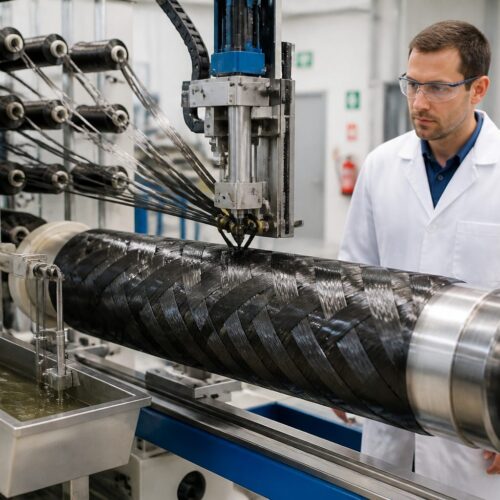
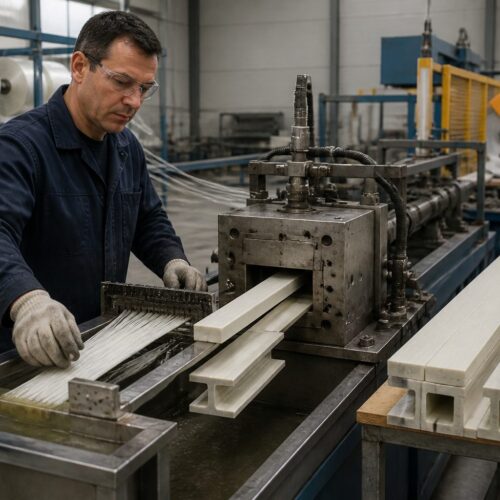
Melt mixing is a widely used method that involves blending the polymer and nanofiller in the molten state, typically using twin-screw extruders or internal mixers. Solution mixing involves dispersing the nanofiller in a solvent, followed by the addition of the polymer and subsequent removal of the solvent.
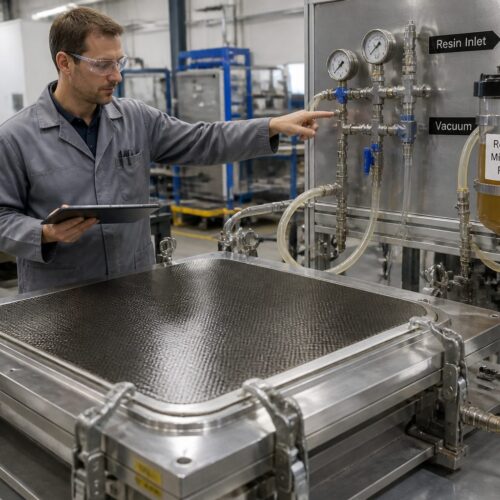
In-situ polymerization involves polymerizing the monomer in the presence of the nanofiller, allowing for intimate mixing and strong interfacial interactions. Each technique offers unique control over the dispersion and orientation of the nanofillers within the polymer matrix.
The choice of manufacturing technique depends on factors such as the type of polymer and nanofiller, the desired properties of the composite, and the scale of production. For example, melt mixing is well-suited for large-scale production of thermoplastic nanocomposites, while in-situ polymerization is often used for thermosetting nanocomposites where strong interfacial bonding is desired.
Melt mixing is advantageous for its simplicity and scalability, but it can be challenging to achieve uniform dispersion, especially with high nanofiller loadings. Solution mixing offers better control over dispersion, but it involves the use of solvents, which can be environmentally unfriendly and require additional processing steps.
In-situ polymerization can lead to the formation of well-dispersed nanocomposites with strong interfacial bonding, but it is often limited to specific polymer-nanofiller combinations. Other manufacturing techniques include electrospinning, layer-by-layer assembly, and self-assembly.
Electrospinning is used to produce nanofiber-reinforced composites, while layer-by-layer assembly is used to create thin films with controlled composition and structure. Self-assembly involves using intermolecular forces to organize nanofillers into ordered structures within the polymer matrix.
The selection of the appropriate manufacturing technique is crucial for achieving the desired properties and performance of the polymer nanocomposite. Careful optimization of the processing parameters is also essential for ensuring uniform dispersion and strong interfacial bonding.
Applications of Polymer Nanocomposites Across Industries
Polymer nanocomposites are finding increasing use in a wide array of industries due to their enhanced properties and versatility. These materials are revolutionizing sectors ranging from automotive and aerospace to electronics and biomedicine.
In the automotive industry, polymer nanocomposites are used to produce lightweight and high-strength components, such as bumpers, dashboards, and body panels, which can improve fuel efficiency and reduce emissions. The aerospace industry utilizes these materials for aircraft structures, interior components, and coatings, taking advantage of their high strength-to-weight ratio and thermal stability.
Here are a few examples of applications across industries:
- Lightweight automotive parts
- High-performance aerospace components
- Conductive packaging for electronics
- Antimicrobial coatings for medical devices
- Enhanced drug delivery systems
In the electronics industry, polymer nanocomposites are used for conductive inks, flexible displays, and electromagnetic interference (EMI) shielding. The biomedical field utilizes these materials for drug delivery systems, tissue engineering scaffolds, and biosensors.
Polymer nanocomposites are also finding applications in the packaging industry, where they are used to create barrier films that extend the shelf life of food products. In the construction industry, these materials are used for high-performance coatings, adhesives, and structural components.
The versatility of polymer nanocomposites stems from their ability to be tailored to specific applications by selecting the appropriate polymer matrix and nanofiller. For example, a nanocomposite designed for automotive applications may require high strength and impact resistance, while a nanocomposite designed for biomedical applications may require biocompatibility and antimicrobial properties.
The ongoing development of new nanofillers and processing techniques is further expanding the range of applications for polymer nanocomposites. As these materials become more cost-effective and easier to process, their adoption across various industries is expected to continue to grow.
Future Trends in Polymer Nanocomposite Research
The field of polymer nanocomposites is continuously evolving, with ongoing research focused on developing novel materials and applications. Several key trends are shaping the future of this field, including the development of bio-based nanocomposites, the use of advanced characterization techniques, and the exploration of new nanofillers.
Bio-based nanocomposites, which utilize renewable resources such as cellulose nanocrystals and lignin, are gaining attention as sustainable alternatives to traditional petroleum-based materials. Advanced characterization techniques, such as atomic force microscopy and X-ray scattering, are providing deeper insights into the structure and properties of polymer nanocomposites, enabling the design of materials with tailored properties.
The exploration of new nanofillers, such as MXenes and two-dimensional transition metal dichalcogenides, is opening up new possibilities for creating nanocomposites with unprecedented properties. These trends suggest a promising future for polymer nanocomposites, with potential for significant advancements in various fields.
Specifically, we can expect to see more sophisticated applications in flexible electronics, energy storage, and environmental remediation. The ongoing research efforts are focused on addressing the current limitations and enhancing the performance of these materials, paving the way for their wider adoption.
Another emerging trend is the development of self-healing polymer nanocomposites. These materials can repair damage autonomously, extending their lifespan and reducing maintenance costs.
The use of computational modeling and simulation is also becoming increasingly important in the design of polymer nanocomposites. These tools can predict the properties of nanocomposites based on their composition and structure, accelerating the development process.
Furthermore, there is growing interest in developing multifunctional polymer nanocomposites that combine multiple functionalities into a single material. For example, a nanocomposite could be both mechanically strong and electrically conductive.
The development of new processing techniques, such as 3D printing, is also opening up new possibilities for manufacturing polymer nanocomposites with complex shapes and structures. These advancements are paving the way for the next generation of high-performance polymer nanocomposites.
Challenges in Polymer Nanocomposite Development
Despite their numerous advantages, the development of polymer nanocomposites faces several challenges that need to be addressed to fully realize their potential. These challenges include achieving uniform nanofiller dispersion, controlling interfacial interactions, and ensuring cost-effective manufacturing.
Uniform nanofiller dispersion is often difficult to achieve due to the tendency of nanofillers to agglomerate, which reduces their effective surface area and hinders their reinforcing effect. Controlling interfacial interactions is also crucial, as weak adhesion between the nanofiller and the polymer can lead to poor stress transfer and reduced composite performance.
Cost-effective manufacturing is another important consideration, as many nanofillers and processing techniques are expensive, limiting the widespread adoption of polymer nanocomposites. Addressing these challenges requires innovative approaches to nanofiller surface modification, processing techniques, and material design.
Furthermore, ensuring the long-term stability and durability of polymer nanocomposites under various environmental conditions is essential for their reliable performance in real-world applications. Overcoming these hurdles will pave the way for the broader use of these advanced materials.
Another significant challenge is the potential toxicity of some nanofillers. Careful evaluation of the health and environmental impacts of nanofillers is essential for ensuring the safe and sustainable development of polymer nanocomposites.
The lack of standardized characterization methods for polymer nanocomposites also poses a challenge. Developing reliable and reproducible methods for measuring the properties of these materials is crucial for ensuring quality control and facilitating their commercialization.
The scale-up of manufacturing processes from the laboratory to industrial production is another hurdle that needs to be overcome. Developing cost-effective and scalable manufacturing techniques is essential for making polymer nanocomposites more accessible to a wider range of industries.
Addressing these challenges requires a collaborative effort between researchers, engineers, and industry partners. By working together, we can overcome the barriers to the widespread adoption of polymer nanocomposites and unlock their full potential.
Conclusion
Polymer nanocomposites represent a significant advancement in materials science, offering enhanced properties and diverse applications across numerous industries. The combination of polymers with nanomaterials creates synergistic effects that surpass the capabilities of individual components.
Understanding the science behind these composites, including the types of nanofillers, dispersion techniques, and interfacial interactions, is crucial for unlocking their full potential. While challenges remain in terms of dispersion, interfacial control, and cost-effective manufacturing, ongoing research and development efforts are paving the way for wider adoption of polymer nanocomposites in the future.